

UM6P Hosts UJALA Conference on Evidence-Based Agricultural Policy
Policymakers, researchers, and practitioners met at Mohammed VI Polytechnic University’s Rabat campus to discuss how scientific evidence can shape agricultural policy across Africa.
Rural Africa faces interconnected challenges, from climate change adaptation to soil restoration and others, that require more than isolated disciplinary responses. Addressing these complex issues demands research that is both methodologically rigorous and deeply grounded in local realities. Yet too often, research remains technical and fragmented across fields, limiting its capacity to inform holistic, policy-relevant solutions.
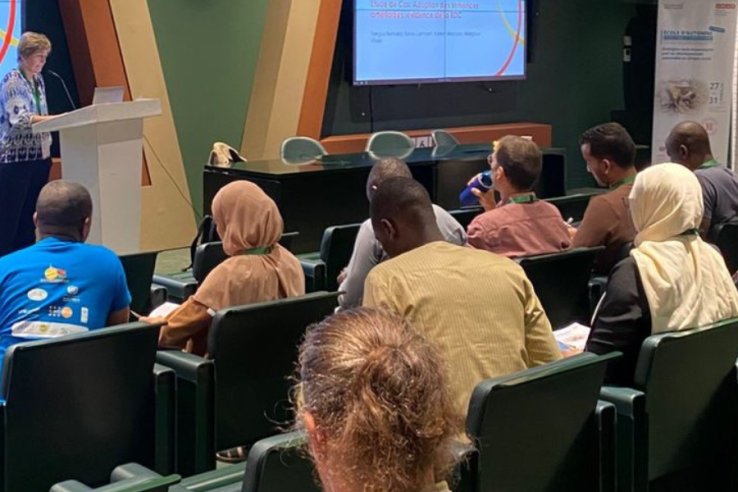
In an effort to bridge this divide between statistical rigor and contextual understanding, the University Mohammed VI Polytechnic (UM6P) hosted the Autumn School “Stratégies socio-économiques pour un développement soutenable en Afrique rurale,” an international, interdisciplinary, one-week doctoral training program that combines academic learning, practice workshops, and networking around rural development challenges in Africa. The first edition was held from October 27 to 31, 2025, at UM6P Benguerir campus.
Co-organized by the Graduate School of Economics & Management at Université Paris-Saclay and UM6P, the program brought together more than 25 speakers and 30 PhD students for an intensive week of interdisciplinary exchange focused on rural resilience, climate adaptation, and agricultural transformation. As a partner of the Autumn School, our UM6P-J-PAL Applied Lab for Agriculture (UJALA) led practical sessions on impact evaluation, helping participants design and refine randomized controlled trials through a case-based approach.
This blog draws on the key insights from the Autumn School, and explores UJALA’s contribution to the program, the broader significance of impact evaluation in agricultural programs, and how these lessons can inform future research on rural resilience and sustainable development in Africa.
The Autumn School combined plenaries, technical trainings, and collaborative workshops to connect theory, methods, and real-world policy application. Early sessions emphasized the need to analyze development projects through both statistical reasoning and contextual understanding. Roundtables and interdisciplinary workshops explored public policy challenges in rural regions and systemic approaches to resilience and well-being.
In the following sessions, participants examined how climate change scenarios can be translated into actionable adaptation strategies, engaging with climate modeling, econometric analysis of land-use adaptation, soil restoration as a climate solution, and long-term retrospectives of agricultural systems. Technical sessions also introduced advanced tools for spatial data analysis, evaluation of non-market goods and services, and forward-looking scenario planning.
Within this broader framework, UJALA’s contribution centered on measuring the impacts of interventions through rigorous evaluation methods. The randomized evaluation workshop introduced a case study based on “Adoption of Improved Seeds and Deforestation in the Democratic Republic of Congo” by Tanguy Bernard, Sylvie Lambert, Karen Macours, and Margaux Vinez.
Participants were first asked to design an evaluation addressing the same development challenge: small farmers’ access to improved seeds and its implications for agricultural productivity and land use.
Karen Macours’ plenary session then built directly on this exercise. Drawing on the original study, she walked participants through the key components of rigorous evaluation design (i.e., defining the evaluation question, articulating a clear theory of change, identifying data sources, structuring the randomization process, ensuring balance and stratification, and selecting the appropriate unit of randomization). By grounding each concept in the concrete case study and comparing it with participants’ proposed designs, the session made the evaluation design more practical and decision-oriented, rather than purely theoretical.
Throughout the week, doctoral students refined their approaches and reflected on how methodological choices influence both results and policy conclusions, culminating in presentations during a final session. For this closing exercise, groups of participants were tasked with proposing a policy-oriented response to a challenge presented in an assigned case study. The session provided an opportunity for participants to apply what they had learned throughout the week, presenting their analyses and discussing how disciplinary perspectives and methodological tools shaped their proposed solutions.
The value of the Autumn School lay above all in its interdisciplinary design. Participants first worked within their own disciplinary groups before exchanging perspectives with colleagues from other fields. This structured dialogue (i.e., moving from within-discipline reflection to cross-disciplinary exchange) was central to the program. It encouraged researchers to question assumptions, confront trade-offs, and better understand how different analytical approaches interact when applied to complex rural challenges.
A key takeaway was that methods should not be applied in isolation or mechanically. Climate modeling, econometric analysis, systems approaches, and impact evaluation each offer powerful insights, but only when carefully matched to the specific policy question, institutional setting, and local context. Rather than starting with a method, participants were encouraged to start with the problem: What decision needs to be informed? What constraints shape implementation? What contextual factors matter most?
By embedding methodological rigor within interdisciplinary dialogue and contextual reflection, the Autumn School reinforced an essential principle: sustainable rural development requires both technical rigor, contextual understanding, and collaboration across fields.
The Autumn School represents an important step toward strengthening African-led research capacity in resilience, adaptation, and sustainable rural development. By investing in doctoral training and fostering North–South academic collaboration, the program contributes to building a new generation of researchers equipped to navigate complex socio-economic and climate challenges.
Through its partnership in this initiative, UJALA continues to support the integration of rigorous impact evaluation within interdisciplinary efforts aimed at transforming agricultural systems in Africa.
Interested in finding out more about UJALA and collaborating with us? Visit our web page to learn more and get in touch with the team.
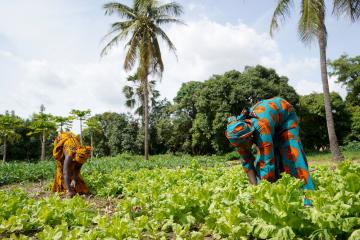
Policymakers, researchers, and practitioners met at Mohammed VI Polytechnic University’s Rabat campus to discuss how scientific evidence can shape agricultural policy across Africa.
Last year we launched a new J-PAL policy lab: The UM6P-J-PAL Applied Lab for Agriculture (UJALA), which generates rigorous, policy-relevant evidence to answer critical questions around small-scale agriculture and food security worldwide. The lab, launched in collaboration with OCP Africa and led by J-PAL staff, is based at University Mohammed VI Polytechnic (UM6P) in Rabat, Morocco.
In 2023, we launched a new J-PAL policy lab: The UM6P-J-PAL Applied Lab for Agriculture (UJALA), which generates rigorous, policy-relevant evidence to answer critical questions around small-scale agriculture and food security worldwide. The lab, launched in collaboration with OCP Africa and led by J-PAL staff, is based at University Mohammed VI Polytechnic (UM6P) in Rabat, Morocco.
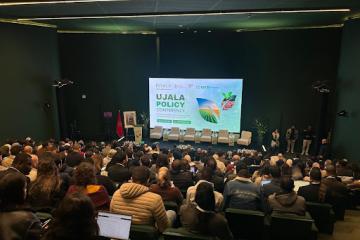
On January 12, 2026, UM6P Rabat hosted the UM6P-J-PAL Applied Lab for Agriculture Policy Conference, bringing together J-PAL affiliated researchers and UM6P academics, OCP executives, and policymakers to contribute to the future of evidence-informed agricultural policymaking.
The conference featured opening remarks from key institutional and research leaders, who emphasized that rigorous evidence must be embedded in real delivery systems and inform public policy decisions. Speakers also affirmed how scaling agricultural solutions must begin with farmers’ realities, ensuring that innovation responds to conditions on the ground.
The panels that followed examined agricultural transformation through three complementary lenses: multi-dimensional constraints to smallholder productivity, the design and use of digital solutions, and the role of soil health in sustaining long-term gains.
“J-PAL was created to translate rigorous experimentation into real-world policies and practices, ultimately scaling impact.”
Esther Duflo, Co-founder and Director, J-PAL
“UJALA is the first major partnership of J-PAL working with a private entity, and when we think about scaling out interventions from evidence to policy, this is a great opportunity to reach that goal.”
- Alison Fahey, Global Director of Partnerships and Strategic Initiatives, J-PAL
Speakers: Hajar Alafifi, CEO of OCP Africa; Andrew Dillon, J-PAL affiliate and Professor at Kellogg School of Management; Bruno Gérard, Dean of College of Agriculture and Environmental Sciences, UM6P; Jesko Hentschel, Affiliate Professor at the UM6P Faculty of Governance, Economics, and Social Sciences, Former World Bank Country Director in Africa; Jeremy Magruder, J-PAL affiliate, UJALA Co-Chair, and Professor at UC Berkeley.
The panel discussed research findings that suggest multiple factors jointly shape adoption, rather than a single binding constraint. Credit and liquidity, savings and insurance, information, infrastructure, transaction costs, and access to labor and land all influence farmers’ adoption of inputs and reduce incentives to invest in productivity-enhancing practices.
Affiliate Andrew Dillon, furthering the discussion, showed that timing matters as much as agricultural components. Interventions that address only one constraint, such as lowering input prices, may be insufficient to generate sustained improvements. Even when inputs and markets are available, agronomic conditions can block gains, as depleted soils often respond weakly to fertilizer.
Behavioral constraints further slow adoption. Jeremy Magruder underscored that agriculture is a noisy environment. Therefore, trust—in advisors, input quality, and delivery systems—is central to reducing uncertainty and enabling learning.
From OCP Africa’s perspective, recognizing this multi-constraint reality has transformed its role. As Hajar Alafifi, CEO of OCP Africa, explained, productivity gains must happen on the field, but they depend on broader systems that include finance, insurance, mechanization, markets, and policy.
The concept of bundling emerged as a critical point of convergence between research and policy that might enhance impact. Hajar stressed that “impact means partnerships,” noting that delivering such bundles at scale requires strong institutional alignment and long-term commitment. She also emphasized that productivity gains alone do not guarantee durable welfare improvements: stability, inclusive institutions, functioning markets, and public investment are essential to sustain gains and ensure that productivity growth translates into lasting poverty reduction.
Speakers: Jenny Aker, J-PAL affiliate, DigiFI Africa Co-Chair, and Professor at Tufts University; Waseem Rashid, Executive Vice President of Digital Solutions at OCP Nutricrops; Faissal Sehbaoui, CEO of AgriEdge; Tavneet Suri, J-PAL affiliate, UJALA Co-Chair, and Professor at MIT; and Philipp Zimmer, Consultant, Data Scientist, Development Impact Group at the World Bank.
Digital solutions are often promoted as scalable alternatives to traditional extension programs. As Tavneet Suri noted at the event, “Digital tools help farmers better access information, but the information needs to be actionable for the farmer to increase productivity and improve their livelihoods.” Their value depends on integration with extension, input access, and financing. Ultimately, it is not the digital nature of these tools that drives change, but their ability to address farmers’ real constraints.
One key insight shared by J-PAL affiliate Jenny Aker was that connectivity gains often masked deep inequalities through the variability of infrastructure quality. She emphasized that weak or unreliable connectivity determines both digital services function and who benefits from them. Designing digital tools, therefore, involves a trade-off between precision and inclusion: systems that rely on constant connectivity risk reinforcing disparities, while successful ecosystems often prioritize robustness and accessibility for the median farmer.
Participants also discussed how digital tools could inform both higher-level and farmer-level decision-making. World Bank panelist Philipp Zimmer stressed that despite a growing body of evidence and the availability of AI-based digital tools, governments and financial institutions often inform food security policies through high-stakes or large-scale decisions, based on limited information. He highlighted how these AI-based digital tools can serve as early warning systems to key policy issues when embedded in clear decision protocols that translate information into action.
At the farm level, digital tools matter only when they deliver practical, actionable guidance. Speakers from OCP Nutricrops and AgriEdge affirmed how farmers think in terms of decisions that affect yields, rather than in terms of digital platforms. AI-driven tools were most effective at the last mile when they support specific decisions at the right moment, reduce cognitive load, and build trust through simplicity, local relevance, and explainability. Hence, there is a need to design digital systems that absorb agronomic complexity and align recommendations with input availability, timing, and field realities.
Speakers: Hope Michelson, J-PAL affiliate and Professor at University of Illinois at Urbana-Champaign; Robert Darko Osei, J-PAL affiliate, DAISI Co-Chair, and Professor at the University of Ghana; David Spielman, Director, Innovation, Policy and Scaling Unit at IFPRI; Nawfel Roudies, J-PAL affiliate, UJALA Co-Chair and Professor at MIT; and Leonardus Vergutz, Chief Scientific Officer at OCP Nutricrops.
Soil health offers a third lens through which to examine agricultural productivity. From an agronomic perspective, soil sustains productivity only when its essential functions—soil’s organic matter, balanced nutrition, and good structure—work together to allow roots to develop, water to be retained, and nutrients to be absorbed.
This insight suggests that sustainable soil management requires shifting the farmer’s question from “what should I apply?” to “what does my soil need?”, building these properties gradually through practices such as conservation agriculture combined with appropriate fertilizer use. However, adoption and learning are cumulative, and system-level impact often takes 15 to 25 years to materialize.
At the event, David Spielman stressed that “Policymakers operate within annual budget cycles and limited implementation capacity, and evidence needs to speak directly to those constraints if it is to inform real policy choices,” which affirms the need for long-term program design, policy engagement, and realistic evaluation timelines.
From the farmer’s perspective, soil health is both an agronomic and economic decision. J-PAL affiliated professor and DAISI Co-Chair Robert Darko Osei explained that soil-improving practices involve upfront costs and delayed, uncertain returns, and that liquidity constraints, competing household needs, and risk tend to limit farmers’ ability to act—even when recommendations are understood. Trust and learning are therefore essential.
Affiliate Hope Michelson's research shows that farmers are more likely to persist with soil practices when they receive repeated feedback, observe visible yield improvements, and rely on credible messengers. Hope emphasized that “information only works when farmers trust the messenger and the system delivering it. Even accurate recommendations can fail to generate impact when distrust in input quality or advisory services remains unresolved.”
Aligning rigorous research with policy realities and implementation constraints is essential to move from isolated successes to sustainable, scalable impact. Bringing research, policy, and practice together offers a rare opportunity to examine agricultural transformation from complementary perspectives, and affirms how it is advanced not from isolated innovations, but from sustained alignment across evidence generation, policy design, and field implementation.
Building on these multi-lens insights, UJALA looks forward to supporting researchers ready to take on exciting, policy-relevant projects in collaboration with practitioners and implementing partners of their choice. Opening the door to fresh ideas, innovative pilots, and real-world impact, and fostering collaborations that translate rigorous evidence into actionable impact.
J-PAL and University Mohammed VI Polytechnic (UM6P) are partnering to form the UM6P-J-PAL Applied Lab for Agriculture (UJALA). Hosted at UM6P in Morocco, UJALA funds research to rigorously evaluate agricultural technologies and practices designed to increase small-scale farmers’ food security, productivity, and profitability.
Small-scale farmers face a myriad of production decisions that they need to address throughout the agricultural cycle, such as whether to adopt a new seed variety, how much fertilizer to apply, which of the information sources to trust, where to sell their output for the highest possible price, how to pay for production investments, among many others. With the rise of global food insecurity, resulting from changes in the global market, climate, and political economic forces, understanding how to improve food systems is an essential step along the path to reducing poverty and securing livelihoods across the globe. In response to this growing uncertainty, clear policies and programs that support farmers to invest in higher-yielding, more profitable, and more innovative technologies are essential. Yet, many questions remain unanswered, and these questions are changing as evolving global market and climatic conditions shift.
UJALA aims to answer critical questions related to designing and delivering effective food and agricultural subsidies, assessing the value of fertilizer customization to crop needs and soil nutrients, reducing low-income households’ reliance on imported food, alleviating farmers’ constraints to adopting and maintaining new agricultural technologies and practices, and connecting farmers to markets that sell at competitive prices.
Eligibility:
Open to J-PAL affiliated professors, all active invited researchers to any J-PAL initiative or J-PAL regional office, and UJALA African Scholars
Contact:
UJALA is currently accepting matchmade proposals on a rolling basis. If you are an eligible researcher interested in partnering on an impact evaluation, please reach out to [email protected].
Malik Abaddi, Policy Manager and Delivery Lead
Fatima Zahra Bendriss, Research Associate
Yasmine Bouchareb, Research and Training Manager
Mohamed Yassir Chaknan, Operations Associate
Hicham El Azami, Lab Director
Carlos Guzman, Senior Finance and Operations Manager
Rimane Jdaini, Policy Associate
Hamza Rkaina, Senior Finance and Operations Associate
The UM6P-J-PAL Applied Lab for Agriculture (UJALA) aims to generate rigorous, policy-relevant evidence to answer critical questions around small-scale agriculture and food security worldwide.