Gender norms and women's work: Reflecting on current evidence and policy opportunities
As the world continues to grapple with the impacts of Covid-19, policy and research conversations on enhancing gender equality and women’s economic empowerment have also gained momentum. While the challenges women face in entering and remaining in the labor market are not new, they have worsened in the wake of the pandemic. Even those who remain in the labor market face greater challenges achieving their full potential compared to men.
One of the barriers to women’s economic empowerment and labor market participation is restrictive gender norms relating to the acceptability of women working outside the home and the division of care and domestic work responsibilities inside the home. Consequently, researchers are seeking answers on how to address these challenges and ensure women’s economic empowerment globally.
To help policymakers effectively address these challenges, the J-PAL Gender and Economic Agency (GEA) Initiative and the International Development Research Centre (IDRC) Growth and Economic Opportunities for Women (GrOW) East Africa hosted a webinar earlier this summer to discuss research on gender norms and attitudes relating to women’s work and economic empowerment globally.
There is limited evidence on strategies to effectively challenge and change attitudes and norms on women’s labor force participation, a key reason why both the GEA and GrOW initiatives have made this a core theme in their research portfolios. But as the evidence base on gender norms grows, it is essential to share emerging insights with decision-makers on what works to address and challenge restrictive norms and attitudes on unpaid care and domestic work, along with norms and beliefs about women working outside the home.
Addressing the burden of unpaid care and domestic work
Unpaid care and domestic work is a pressing challenge locking women out of the labor force and minimizing the economic potential of those already in the labor force. But gender norms result in women often sharing a disproportionate burden of this unpaid work.
At the event, Grace Bantebya shared preliminary findings from an ongoing study, funded by IDRC and in partnership with Makerere University School of Women and Gender Studies, showing that both men and women believed equally that household work is for women. Further, men and women almost equally felt that men should be shamed for doing certain kinds of unpaid care work. Meanwhile, women who don’t participate in unpaid care work face repercussions, including gender-based violence and shame.
Likewise former J-PAL Policy and Research Advisor Joy Kiiru found that in Kenya, while norms are not homogenous across cultures and age, some women are worried about the consequences of men doing domestic work. To shift these norms, “reference groups,” influential actors such as elders, community leaders, husbands, and parents, are a key mechanism for positive change. (These results are not yet published.)
In Rwanda, which has been quite progressive in promoting gender equality, Dickson Malunda shared preliminary findings in his IDRC-funded study on unpaid care work, suggesting that women’s economic empowerment remains largely constrained by unequal distribution of such work. Men are more likely to work for a wage compared to women, who spend considerably more time on domestic chores.
To challenge and mitigate these norms, policymakers should look to the results of Dickson’s and Grace’s ongoing evaluations.
Dickson’s study on unpaid care work is assessing whether a holistic participatory program can reduce and redistribute this work among women in Rwanda. Grace is testing the impact of the “POWER model,” a multidimensional program which aims to shift gender norms associated with unpaid care work. The “POWER model” comprises five areas: women’s empowerment; engaging men and boys; community dialogue, activism and action; local level duty bearers and service providers; and reaching and influencing decision makers.
The growing evidence base on effective strategies to address unpaid care and domestic work will be invaluable to policymakers who are keen on addressing this disproportionate burden on women.
Understanding beliefs about women working outside the home
Beyond unpaid care and domestic work, gender norms related to the acceptability of women working outside the home can restrict women’s economic opportunities and empowerment.
Alessandra L. González discussed her and co-authors’ study in Saudi Arabia on misperceived norms on women working outside the home. In Saudi Arabia, male guardianship of their wives is a longstanding custom, and consequently, men’s perspectives on whether women should work outside the home greatly influence women’s labor force participation. Researchers evaluated whether information changed behavior regarding norms among over 500 married men.
The study found that participants underestimated peer support for women’s work outside the home. When researchers shared information that there was actually greater support for women’s work outside of the home than anticipated, men were more likely to sign their wives up for a job matching platform and for driving lessons. Their wives were also more likely to apply for a job.
In a follow-up study, researchers found that women were more likely to pursue a job when given this same information. A key insight from this study is that while social norms play a key role in constraining female labor force participation, providing simple information may shift perceptions favorably.
Also at the event, J-PAL affiliated professor Rebecca Dizon-Ross presented an ongoing replication and adaptation of the Saudi Arabia study in India. This new study, funded by GEA, explores how contextual differences may be useful for new knowledge. For instance, in India labor force participation is lower than in Saudi Arabia, and the caste system plays a significant role as it influences whose beliefs matter. Researchers will measure people’s beliefs, as well as their beliefs about others’ beliefs, about women’s labor force participation.
Similar to the Saudi Arabia study, researchers will later deliver information to men about what other men truly believe in regards to women working outside of the home; they will then measure whether this information impacts women’s labor market participation. The replication and adaptation of this study in a new context will provide valuable information about misperceptions and gender norms.
Opportunities for evidence to inform policy decisions
A key goal for both GEA and GrOW is establishing and maintaining close relationships with policymakers who are key users of the study results. As part of the webinar, policymakers from Kenya and Uganda discussed how their respective governments are considering challenges around norms and attitudes on women’s economic empowerment, and efforts towards key policy decisions are already in motion.
In Kenya, for example, Florence Chemutai, Deputy Director of the Socioeconomic Empowerment Directorate at the State Department for Gender (situated within the Ministry of Public Service, Gender, Senior Citizens and Special Programmes) spoke about the forthcoming National Policy on Women’s Economic Empowerment. This policy will address gender norms and attitudes that hinder women’s economic empowerment, among other challenges. The State Department for Gender is also developing a new policy specifically focused on unpaid care and domestic work.
Similarly, Angela Nakafeero, the Commissioner, Gender and Women Affairs at the Uganda Ministry of Gender, Labor and Social Development, spoke about the Uganda Women’s Entrepreneurship Program (UWEP) as a key initiative that will benefit from the research insights presented.
Angela also highlighted the Succession Law, where some of the attitudes relating to women’s entitlement to property are being challenged. This is an area in which the Ministry is seeking more evidence to ensure this law is adequately reviewed. She further pointed that, presently, Uganda’s program implementation action plans have not adequately ensured barriers to women’s economic empowerment are addressed, a gap J-PAL and other research institutions could help fill.
Scaling effective approaches
In India, J-PAL South Asia has collaborated with the Government of Punjab on integrating an adolescent gender sensitization curriculum, designed by the NGO Breakthrough, into the syllabus for all 4500 government schools in Punjab. In a randomized evaluation conducted between 2014–2016 in 314 government schools in Haryana, India, researchers found that the curriculum shifted the gender attitudes and behaviors of both boys and girls, and also led to students enacting more gender-equitable behavior.
At the event, Anna Rego, a senior policy manager at J-PAL South Asia, emphasized the value of J-PAL’s longstanding institutional partnership with the Government of Punjab in driving the success of the Breakthrough partnership. Based on this engagement, one of the open research questions for the J-PAL South Asia team is understanding what high-impact programs can be directed at men to shift attitudes regarding women’s economic empowerment.
As policymakers continue to confront the myriad barriers to women’s economic empowerment, understanding and addressing restrictive gender norms and attitudes, as well as tackling the disproportionate burden of unpaid care and domestic work will be critical. Emerging research findings provide helpful insights to tackle these challenges.
However, more research is needed to support policymakers to enact evidence-informed policies to counter these challenges. For instance, understanding the effectiveness of interventions as well as mechanisms for impact are especially useful in ensuring women enter the labor force and achieve their full potential. The nature of funding models for these investments is also a critical consideration with governments facing competing priorities and limited funding for development initiatives.
GEA is seeking forward-looking funding partners to enable robust, policy-relevant research and unlock scaling opportunities. To learn more about J-PAL’s Gender and Economic Agency (GEA) Initiative and explore opportunities for collaboration, visit the GEA page or email us.
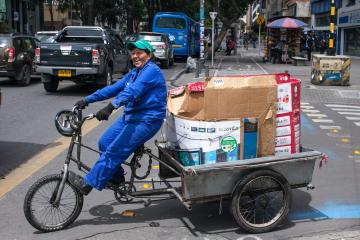
Women face even greater challenges to labor force participation than usual due to the pandemic. J-PAL’s new Gender and Economic Agency Initiative (GEA) launches to support innovative research on strategies to promote women’s work and enhance women’s economic agency.
As COVID-19 triggers unprecedented economic disruptions, women are bearing the brunt of the hardship.
Women face even greater challenges to labor force participation than usual due to the pandemic. Thanks to generous support from the Bill & Melinda Gates Foundation, J-PAL’s new Gender and Economic Agency Initiative (GEA) launches to support innovative research on strategies to promote women’s work and enhance women’s economic agency.
Women’s jobs are at risk: 527 million employed women globally work in sectors hit hardest by the pandemic like food service, retail, and entertainment. Informal workers—58 percent of employed women—are particularly vulnerable, as they often faced low wages, poor conditions, and limited protections before the pandemic.
With closure of schools and daycares, women are also burdened with additional unpaid care and domestic responsibilities. This hinders their ability to engage in the labor force. Already before the pandemic, women performed three times more unpaid work than men.
GEA’s work is even more critical as the COVID-19 pandemic has worsened the already-marginalized position that women often face in the labor force. Women around the world participate in the labor force at much lower rates than men: 47 percent of women are in the labor force compared to 74 percent of men. If a woman enters the labor force, she earns on average 77 cents to every dollar a man earns. She’s also more likely to be unemployed or work in the informal sector.
Responses to this crisis must consider its disproportionate impact on women and the unique barriers they face. Rigorous evidence can help policymakers ensure that pandemic response and recovery support women’s work and economic agency.
Launching the Gender and Economic Agency Initiative
Increasing women’s labor force participation is key to achieving the Sustainable Development Goals (SDG5 and 8), however, policymakers and the private sector lack evidence on what works, where, and why. Consequently, women continue to suffer inequalities in the labor market that hinder their economic agency. GEA helps to address this gap through rigorous research.
Led by Lori Beaman (Northwestern) and Seema Jayachandran (Northwestern; Chair, J-PAL Gender Sector), GEA is funding randomized evaluations on women’s work and economic agency in East Africa and South Asia over the next three years. This policy-relevant research can help inform policies and programs on women’s labor force participation in GEA’s five priority countries: Ethiopia, Kenya, India, Uganda, and Tanzania.
Drawing upon our literature review on women’s agency, we’ve identified three themes for potential research:
- Creating work opportunities that are attractive to and supportive of women;
- Preparing women with the necessary skills to secure work and advance in their careers, including in self-employment; and
- Addressing restrictive gender norms and attitudes related to women’s work.
To learn more about potential topics of interest to GEA, please refer to our overview paper.
Research is only one part of GEA’s approach to supporting evidence-informed policies in East Africa and South Asia. We are also synthesizing evidence to share with policymakers and inform their strategies on women’s work and economic agency, building on the findings of a recent literature review on ways to increase women’s agency. Recognizing a growing need, we’re also working to identify and test better measurements of women’s agency that can be used in future research.
Each of GEA’s five priority countries has unique policy opportunities and challenges related to women’s work. For instance, a higher percentage of women work in the East African countries (64-79 percent) than in India (23 percent), suggesting women face different constraints to employment. For more information on the policy landscape in each country, please refer to the appendix of the overview paper.
In addition to the five priority countries, there is limited additional funding available for research in other countries in East Africa and South Asia.
Evaluating potential responses to the COVID-19 crisis
To better understand the impact of the pandemic on women’s economic agency and identify effective responses, GEA launched a special round of funding on COVID-19.
Women and men may experience job loss and recovery differently due to the types of occupations in which they work. Jobs primarily held by women, like healthcare or teaching, may also create additional health risks. Finally, women’s care responsibilities may hinder their ability to search for a job and work. Building upon ongoing studies, researchers are testing whether a job search assistance platform in Pakistan is especially valuable in helping women quickly return to the job search and employment.
Another study is looking at encouraging paid sick leave among female garment workers in Bangladesh. During a pandemic, paid sick leave is more important than ever to help prevent the spread of the virus. It may be especially vital to retain women in the labor force as they are generally responsible for taking care of sick family members. Yet, employees often fear backlash for taking leave. Researchers are partnering with a manufacturing firm to send text messages to workers stating its commitment to employees’ health and the use of sick leave when needed. The evaluation will examine the impacts of the messages on workers’ health and job satisfaction.
What’s next?
Through strong partnerships with researchers and policymakers, GEA aims to build inclusive work opportunities for women in East Africa and South Asia. Stay tuned over the next few months as we share publications and host events on our future work!
If you’re interested in partnering with us to shape policies on women’s work, please contact Mikaela Rabb.
As the world enters its third year with Covid-19, gender inequalities that existed before the pandemic continue to impact women around the world. Since its creation in 2020, the Gender and Economic Agency Initiative has been seeking to address gender inequalities related to women's labor force participation through research and evidence sharing in East Africa and South Asia.
As the world enters its third year with Covid-19, gender inequalities that existed before the pandemic continue to impact women around the world. Globally, the pandemic led to a 4.2 percent drop in women’s employment, which represents over 54 million jobs lost. This has only exacerbated the gender gap in the labor force, especially for women working in the informal economy or in female-dominated sectors. Understanding the forces that have driven this and what can be done is critical to mitigating Covid-19-related consequences for women’s work.
Since its creation in 2020, the Gender and Economic Agency (GEA) Initiative has been seeking to address gender inequalities related to women's labor force participation through research and evidence sharing in East Africa and South Asia. With generous support from the Target Foundation, in GEA's third and most recent funding competition we were able to fund additional projects in South Asia and expand the initiative's geographic reach into Latin America and the Caribbean (LAC). By expanding GEA’s geographic scope, J-PAL is increasing the generation of evidence on gender equity enhancing programs throughout the world.
Enhancing women’s economic agency
In Latin America, a region with one of the widest employment gaps in the world, women’s labor force participation was historically low prior to the pandemic. Although the gap had been slowly narrowing in recent decades, pandemic conditions set back gender equality at work and created new challenges to women’s advancement. Many barriers prevent women from entering the workforce in this region including gender norms, domestic duties, and low education levels.
South Asia, one of the fastest growing regions in the world, faces similar issues. As of 2020, only 24 percent of women were employed or actively seeking employment, compared to 71 percent of men. According to the 2022 edition of the World Economic Forum Global Gender Gap Report, it will take 197 years to close the global gender gap.
Increasing our understanding through rigorous evidence of programs and policies to address this challenge in different contexts is vital to increasing women’s economic agency. The lack of evidence on the effectiveness of programs hinders policymakers’ ability to bring about solutions. GEA seeks to help fill this gap by funding innovative research on strategies to promote women’s work and enhance women’s economic agency.
Supporting research in South Asia and expanding into Latin America and the Caribbean
Given that Mexico, Colombia, and Central America were new regions for GEA, the initiative and J-PAL LAC teams worked together to map local programs and policymakers, identify researchers interested in the region, and most importantly, share relevant evidence for addressing gender economic agency challenges. The GEA and J-PAL LAC teams organized multiple outreach and evidence-sharing activities, including a virtual launch of the Spanish-language translation of A Practical Guide for Measuring Women’s and Girls’ Empowerment, which provides insights from the experiences of J-PAL affiliated researchers and offers practical tips for how to measure women's and girls’ empowerment. Through these efforts, the GEA team spread the word about the availability of GEA’s research funds and helped bring together researchers and policymakers interested in contributing to evidence-informed policymaking.
At the same time, GEA has continued to fund studies in other regions of the world. During the initiative’s third funding competition, GEA awarded funds to five studies based in Bangladesh, India, Pakistan, Colombia, and Mexico. Below, we highlight the studies in South Asia and Latin America that were awarded funding.
In India, unequal gender norms within male-dominated agencies like law enforcement can affect women’s employment opportunities. Researchers leading the randomized evaluation, Does Women's Leadership Matter in Law Enforcement: Evidence From Haryana (India), seek to understand how placing women in supervisor positions at police stations impacts outcomes for junior female police officers. Women’s economic empowerment can have widespread economic impacts by boosting growth and diversification. Additionally, organizations with more women in leadership tend to have higher productivity.
Youth unemployment is also a major concern in low- and middle-income countries around the world, especially for girls’ economic participation, which can be hindered by social and cultural barriers. In a new GEA-funded evaluation in Bangladesh, researchers leading the Youth Employment and Gender: Evaluating the Skills to Succeed Program in Bangladesh evaluation are investigating the gendered effects of job skills training on at-risk youth. Programs, like the one in this study, that seek to increase the skills level of women and girls are vital for empowering women and creating more inclusive economic growth.
Having a better grasp of what prevents women from participating in the labor market is vital for increasing women’s employment. In the evaluation, Gender Norms, Couples' Labor Supply Decisions, and Flexibility in Working Conditions in Colombia, researchers are seeking to understand how personal factors, such as family and social norms, and external factors, such as the flexibility of work contracts, differently impact women’s likelihood of seeking employment.
Moreover, lack of opportunities for women’s advancement can dampen women’s career aspirations and negatively affect the well-being and productivity of the workforce overall. In Colombia, half of working women are employed in the service industry, but the majority occupy low-wage frontline positions rather than managerial positions. Researchers leading the randomized evaluation, Overcoming the Gender Bias in Training: An Empirical Approach in the Latin American Quick-Service Restaurant Industry (Colombia), are seeking to understand how managerial training programs that don’t emphasize male-centric approaches impact firm-level outcomes, such as sales and productivity. A better understanding of how to remove barriers that prevent women from being promoted in the workplace could have large effects on women’s economic empowerment and the economy as a whole.
Lastly, in a similar setting, previous research found that women who participated in skills training with an imagery-based curriculum had better psychological and economic outcomes compared to those who participated in a more traditional program. The researchers leading the evaluation, Learning to See a World of Opportunities: Unpacking Gender Effect (Colombia), are aiming to better understand why women learn better from the imagery-based curriculum. Gaining a deeper insight could inform the design and help increase the effectiveness of future business skill training programs aimed at women.
Sustained research in these regions will provide a deeper understanding of the unique challenges that women face in these different contexts. The many proposals GEA received from various countries in these regions demonstrates the unmet demand for research in these areas. GEA will continue to support evidence generation on women’s economic agency in these regions, while also trying to increase its geographic scope.
Future regional focus: Southeast Asia
Another area of focus for generating policy-relevant evidence on women’s economic empowerment is Southeast Asia. Like in Latin America, women in Southeast Asia tend to have higher labor force participation rates. According to the World Bank, in 2021 59 percent of women in the region were employed or seeking employment compared to 75 percent of men. Although more women enter the labor market than in other regions globally, gender imbalances that affect their economic opportunities still exist. Additionally, women in Southeast Asia are more likely to do unpaid care work or hold jobs that make them more economically vulnerable. For example, women in Cambodia and Laos do four times more unpaid work in the household than men. Therefore, it is imperative that policymakers and researchers gain a better understanding of ways to better economically empower women in this region.
As part of these efforts, GEA is accepting off-cycle funding requests from projects based in SEA. The GEA team plans to conduct targeted outreach to researchers from SEA, with the aim to award these funds by Fall 2022. By targeting funding to evaluations based in Southeast Asia, GEA is continuing to advance its goal of better understanding gender inequalities faced by women in the region and supporting the development of more effective policies and programs.
GEA has completed its second full funding round, supporting nineteen research teams to produce evidence that addresses critical knowledge gaps on what works to support women’s economic agency. Read about the funded projects.
Policymakers and the private sector increasingly recognize the importance of improving women’s labor market and economic outcomes, and are eager to implement policies that support women’s economic agency. However, a lack of evidence on effective interventions, as well as where and why they work, makes it challenging to implement policies that meaningfully improve the lives of women.
In response, J-PAL’s Gender and Economic Agency Initiative (GEA), launched in 2020, is pushing forward innovative research on strategies to promote women’s work and enhance women’s economic agency.
The Covid-19 pandemic continues to negatively impact women’s labor force participation and economic agency around the world. Recent surveys have found that, across the globe, women-owned micro- and small businesses have closed at higher rates than those owned by men. School closures and increased care duties caused by the pandemic have been challenging for women entrepreneurs and workers, as women disproportionately share the burden of these responsibilities. Meanwhile, surveys from South Asia and Latin America show that the sectors that most commonly employ women have experienced the largest reductions in employment.
Testing new interventions to support working women and address restrictive gender norms
Covid-19-induced setbacks to women’s economic agency has amplified gender inequities that pre-date the pandemic. It has also increased the urgency to better understand these inequities and to identify effective strategies to address them and to support working women.
While we have some insights from researchers and policymakers on how to support women workers during the pandemic, many open questions remain. As part of our efforts to fill that evidence gap, we are pleased to share an update on GEA’s growing portfolio of cutting-edge research projects.
With the generous support of the Bill & Melinda Gates Foundation and the Target Foundation, GEA has completed its second full funding round, supporting nineteen research teams to produce evidence that addresses critical knowledge gaps on what works to support women’s economic agency.
The projects are located throughout South Asia and East Africa and fall under three priority research topics: improving workplace arrangements and labor policies to promote formal and informal employment for women; enhancing women’s labor potential and work readiness; and addressing restrictive gender norms and attitudes related to women’s work. The projects funded in the Summer 2021 round build upon the set of exciting projects funded by GEA earlier this year. Click on the sub-categories below to explore the projects within each area.
Projects on workplace arrangements and labor policies to promote formal and informal employment for women:
- Friendly Workplaces for Working Mothers: Do Lactation Rooms Promote Women's Labor Force Participation and Productivity? (Kenya)
- Differences in Competition and the Gender Wage Gap: Experimental Evidence from Tanzanian Factories
- A Field Experiment to Improve Women's Mobility in Pakistan
- Bringing Work Home: Internet-Mediated Gig Work & Women's Employment (India)
- Can Workfare Keep Women Working During a Crisis? The Long-Term Effects of Female-Friendly MGNREGS Reform During COVID-19
- Child Care and Educated Women’s Labor Market Behavior: Evidence from Kerala (India)
- Whistleblowing and Worker Well-being: Evidence from Bangladesh's Garments Sector
- The Role of Informal Labor Arrangements in Facilitating Formal Employment for Women (India)
Projects on enhancing women’s labor potential and work readiness:
- Does Group-based Therapy (With or Without Cash Transfers) Improve Economic Outcomes for Adolescent Females in Uganda?
- The Community-, Household-, and Individual-Level Impacts of Female Industrial Work (Ethiopia)
- Broadening Women's Job Search to Improve Their Employment (India)
- Career and Leadership Skill-building for Muslim Women in India
Projects on addressing restrictive gender norms and attitudes related to women’s work:
- Debiasing Law Enforcement: Effects of an Expressive Arts Intervention in India
- Impact of Education of the X&Y Chromosomes on Women’s Agency and Experience of Domestic Violence (India)
- Evaluating a Secondary-School Program to Change Gender Attitudes in India Five Years Later
- Social Norms and Firm Productivity: Evidence from Bangladeshi Knitwear Factories
- The Gender (Dis)comfort Gap: The Effects of Gender on Everyday Interactions in Pakistan
- The Power of Elites in Encouraging Women's Work: Evidence from Rohingya Refugee Camps (Bangladesh)
- A New Coworker: Better a Male, a Female or a Friend? (Uganda)
Involving local researchers
We believe that research is strengthened when it is informed by deep contextual knowledge and diverse perspectives, which is why J-PAL is committed to increasing diversity in our research network and strengthening inclusion in our research and partnerships. GEA has made concerted efforts to strengthen the body of research through partnership with the Indian Scholars Program (ISP), expanding funding opportunities to Indian scholars for research in India, and through supporting research collaborations between local researchers and policymakers.
ISP was launched in 2021 by J-PAL South Asia. Similar to J-PAL’s African Scholars Program, ISP provides research funding, training, and networking opportunities for researchers and academics in India, with the goal of supporting them to drive India's development policy research agenda.
GEA earmarked grant money in the Summer 2021 funding cycle for high-quality research proposals from the ISP, and we were able to fund two exciting projects by Indian Scholars, which examine the impacts of gender norms and explore how child care impacts women’s labor force participation. ISP scholars with funded projects will receive support from the J-PAL South Asia office for the duration of their studies through mentorship, webinars, and training opportunities.
What’s next for GEA
GEA-funded research will help policymakers identify evidence-informed strategies to increase women’s economic empowerment. We look forward to sharing and synthesizing research findings from our portfolio, as well as expanding the portfolio in upcoming funding cycles. GEA is hosting our next request for proposals this winter, with an eye towards funding projects in two of our new priority areas, Southeast Asia and Central America. More details on the funding opportunities, deadlines, and eligibility can be found on our website.
If you are interested in partnering with us to shape research and policies on women’s work, please contact [email protected].