


Catalyzing research partnerships: matchmaking from A to Z
At J-PAL, we help promote evidence-based policies by ensuring that decision-makers have access to scientific evidence on the questions that matter. But what spurs these research-policy connections in the first place? When setting up new research initiatives, we try to connect researchers to organizations that want to better understand the effectiveness of their programs or find innovative solutions to the social problems they seek to address, with the goal of generating evidence that will produce insights for a broad group of actors. This effort takes time: mapping out the landscape of actors, introducing many to the use of rigorous impact evaluations, collaborating to identify and refine research questions, and helping organizations consider how they might design and learn from an evaluation. The end goal is not just to launch new randomized evaluations, but to promote the use of evidence more broadly.
Lessons from Europe
In early 2019, J-PAL Europe launched the European Social Inclusion Initiative to identify new lessons about which programs are effective at promoting the inclusion of migrants in Europe. Across Europe, this is a policy issue that often provokes strong emotional and ideological responses but without much rigorous evidence, underscoring the need for cutting-edge research to inform more effective policies.
In preparation for this initiative, we wrote a 2018 literature review of key levers for social inclusion, which highlighted the lack of evidence on what migrant inclusion programs work best as well as some guiding questions. How can job training programs be better targeted to migrants’ needs (and to available jobs)? How can immigrants be best supported to acquire host-country language skills? What policies can prevent the formation of ethnic enclaves with limited access to services and jobs?
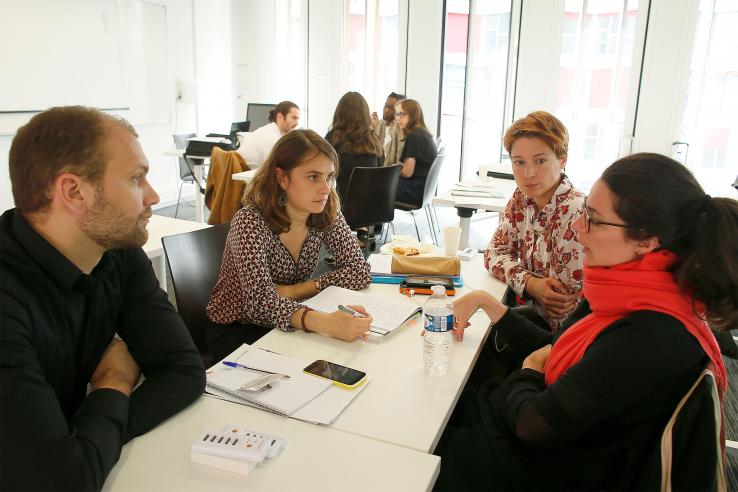
Based on the research gaps identified in the review paper, we began an intensive matchmaking process to identify organizations in Europe seeking to measure and improve the impact of their programs through rigorous impact evaluations. Over the course of a few months, we engaged with hundreds of organizations across Europe, explaining why, when and how the power of randomized evaluations can be harnessed to transform policymaking here in Europe. Reflecting on this process, we found some lessons that we think are relevant to others seeking to forge research-policy partnerships.
Lesson #1. Start with a broad topic and narrow down as you go
In a field with little rigorous evidence—both thematically and geographically—we discovered new policy-relevant research topics every day. We quickly learned that information travels fast and, despite language and territorial frontiers, networks of organizations working on similar issues exist. Once identified, we were able to snowball from one to the next. We asked organizations to recommend other implementers with whom we could connect for follow-up conversations, which help build momentum and expand our field of potential partners.
Lesson #2. Take time to build trust as you engage with new actors
For most governments and NGOs in Europe, RCT methodology is entirely new, and it takes time to build trust in the method and in J-PAL as an organization. Of course, we know adapting evidence-based policymaking does not happen overnight and often involves a culture shift, but for those enthusiastic about finding the best versions of their programs, taking the extra time to form a connection with staff and develop a deep engagement is worth the while.
Lesson #3. Bring people together
As part of the matchmaking process, we brought together more than 200 representatives of governments, NGOs, and foundations working across ten European countries, together with international organizations interested in rigorous evidence, for the ESII launch conference in 2019. This proved a useful opportunity for researchers and practitioners to connect in person for the first time, and it allowed organizations to connect the dots between them and many others working on similar issues in different contexts.
Marc Gurgand, @JPAL_Europe scientific director, offers a review of the limited existing evidence on migrant inclusion in Europe, including one study by @michelacarlana @elianalaferrara and Paolo Pinotti on the impact of career counseling + tutoring for immigrant students in Italy pic.twitter.com/1ZY1VB8Zsm
— Cillian Nolan (@ccjnolan) March 26, 2019
Lesson #4. Invest time in detailed project development
After the launch conference, we hosted a Project Incubator workshop to help organizations interested in forming a research partnership to better understand what conducting a randomized evaluation entails in practice. Through support from two donor partners, Community Jameel and Porticus, we were able to waive all workshop fees for every participant, opening up the training to a larger number of organizations. We were joined by representatives from 25 governments, international organizations, and NGOs across Europe. Over three days, participants worked through a range of concepts related to impact evaluation, from basic theory of change to the technical design of a randomized evaluation. Spending time with other organizations facing similar challenges and working with dedicated staff helped them identify concrete research questions and get more comfortable with the logistics of running a research project.
Last month professionals from organizations working to improve the inclusion of migrants and refugees in ten European countries joined us for a training on how to conduct randomized evaluations. The event was organized @PSEinfo with the support of @CommunityJameel and Porticus. pic.twitter.com/5SNx3MmKPT
— J-PAL Europe (@JPAL_Europe) June 28, 2019
We’ve learned through the incubator that trainings are more likely to generate new research projects when a sufficient number of training staff can be dedicated to each project. We were fortunate to count on the support of J-PAL affiliated researchers who, together with senior J-PAL staff, worked in detail with each participating organization to develop a tailored research design.
Not all organizations who participated in the incubator were ready to start a randomized evaluation. Some organizations needed more time to pilot their program before launching an evaluation, others were not yet operating at a scale that would make a randomized evaluation feasible, while others struggled to get their other implementing partners on board. But by preparing them for what an evaluation entails in practice, we’re seeking to lay the groundwork for future partnerships.
Encouraging cultural shifts
Many organizations working with migrants and refugees are active innovators with ideas they want to test and programs they want to improve. But courage and technical guidance usually aren’t enough to get an evaluation off the ground. To help establish a culture of evidence-use in policymaking in Europe, we have to create systems like the European Social Inclusion Initiative to make it easier for governments and NGOs to work together with researchers. In addition to building capacity and generating and sharing evidence, ensuring funds are available for these innovative organizations is essential.
Directions for future research
This extensive matchmaking process resulted in three partnerships to strengthen social inclusion and generate insights applicable across the continent. These partnerships will answer urgent policy questions: Can role models from diverse ethnic backgrounds reduce discrimination in the classroom? How can social interactions support inclusion? Can helping students from refugee and local communities understand one another’s perspectives promote a sense of community?
Each study will take a few years to complete. In the meantime, we are forging ahead with more projects: the second round of ESII Request for Proposals will be announced in the upcoming months. For updates on our work on social inclusion in Europe, visit the ESII page.
A child who grows up in a low-income family is less likely to thrive in school, be in good health, and earn a decent income as an adult. In Europe, this is especially true of children with a migrant background, who are more than twice as likely to grow up in poverty as children with native-born parents. The economic and social isolation these individuals face is often called “social exclusion.”
Social exclusion is not a small-scale issue occurring at the margins of European society. Over 118 million people, or about 24 percent of the population, live at risk of poverty in Europe. For migrants, the risk of poverty can be as high as 51 percent, depending on their country of origin. Many programs and policies across the continent aim to tackle exclusion- and poverty-related issues, but there is little evidence of which approaches work and which do not.
To better understand this knowledge gap, we conducted a systemic literature review of more than 2,100 experimental and quasi-experimental studies focusing on social inclusion. Our review focused on three key potential levers for social inclusion in the European context:
- Education
- Skills for youth
- Migrant inclusion
Taking stock of the current evidence—and evidence gaps—in these three areas provides an important starting point for more targeted social inclusion approaches in Europe. This post presents some of our key findings and introduces J-PAL’s European Social Inclusion Initiative (ESII)—our newly launched research and policy initiative that aims to generate evidence to help address issues of social exclusion in Europe.
1. Education for social inclusion
Understanding the many factors that lead to a disadvantaged child’s educational success is a challenging task. We identified six key areas of research speaking to the question: early childhood interventions, home environment and parental support, motivation, peer effects, crime, and school systems and education supply.
In early childhood education, many studies point to the importance of early investments for obtaining long term results, particularly for disadvantaged children. Yet, while many of these studies have been conducted in the US or in developing countries, in Europe—where early childcare and schooling are widespread—there is still little we know. For example, under what conditions may access to early pre-school programs be more beneficial than providing childcare either through centers or at home?
Other promising education interventions include providing conditional cash transfers tied to attendance or achievement or encouraging parents from lower socioeconomic backgrounds to participate more actively in their children’s education. Some of this evidence has been incorporated into policy decisions, such as an intervention on parental involvement in France, which is now offered by the French Ministry of Education to all public schools in the country on a voluntary basis.
However, new questions constantly emerge, and some old questions are still unanswered. For example, important knowledge gaps persist regarding the role of peers in the classroom, the role of a child’s home environment, and the right type of, and exposure to, schooling for students from disadvantaged backgrounds.
2. Building skills to help youth transition from school to work
It is widely understood that youth need a solid foundation of skills to successfully transition from school to the workforce. Yet, we lack evidence on the types of programs that effectively build such skills.
Schools can play an important role in this transition by providing students with professional skills that employers seek, offering them information about employer requirements, and encouraging them to gain valuable work experience.
But traditional school-based approaches are not the only way to help youth transition into the labor market. With more than 12 percent of young men and almost 9 percent of young women leaving school early in Europe, there is also a need for extracurricular programs that can provide young people with a second chance. Such programs, like the Job Corps, have shown encouraging results in the US but have not yet been tested in the European context.
3. Inclusion for migrants
Existing evidence suggests that programs tailored to migrants’ needs better promote their inclusion in society. However, many interventions that reach migrants do not target them directly, making it difficult to understand how such programs specifically affect migrant communities.
Active labor market policies offer one promising approach. These policies, which often include training or job-search assistance, have generated larger employment and wage gains for migrants.
Yet more research is needed on the topic of migrant inclusion in order to equip European policymakers with the tools and information they need to respond to this important policy issue. There remain important gaps in our understanding of how to help migrants enter and remain in the labor force, to fight discrimination, and to provide targeted access to information about social assistance and transfer programs to increase take-up.
Introducing the European Social Inclusion Initiative
To respond to the knowledge gaps highlighted in our review, J-PAL Europe is launching the European Social Inclusion Initiative (ESII). ESII is a multi-year initiative that aims to generate new evidence by funding new research and sharing emerging lessons for programs and policies seeking to foster the social inclusion of marginalized populations. In its first year, ESII will focus on education programs aimed at improving the inclusion of first- and second-generation migrants and refugees in Europe.
To this end, we are seeking to engage a wide range of policymakers and practitioners across Europe—such as governments, NGOs, multilateral organizations, and businesses—who are interested in measuring the impact of their programs through rigorous impact evaluation. In addition to funding randomized evaluations, ESII will help implementing organizations build greater capacity for evidence-based policymaking and disseminate emerging policy insights on social inclusion in Europe.
To learn more about these findings or the initiative, read the review paper and visit the ESII page.
To express your interest in getting involved in the initiative through participating in trainings, policy events, or as an evaluation partner, please refer to our request for Letters of Interest.
Back in February of this year, J-PAL hit a milestone: our affiliates collectively conducted over 1,000 randomized evaluations. Six months later, we revisit this milestone with a new perspective.
Back in February of this year, J-PAL hit a milestone: our affiliates collectively conducted over 1,000 randomized evaluations.
Six months later, we revisit this milestone with a new perspective. As the pandemic drags on, our body of work has expanded to include over two dozen new evaluations aimed at generating urgently needed evidence for the fight against COVID-19. We have also leveraged our affiliates’ expertise and our extensive library of evaluations to provide evidence-based insights to inform the design of policies to support the world’s poorest and most vulnerable in this time.
Our ability to respond quickly to urgent demands for evidence during the COVID-19 pandemic is due to this impressive body of pre-existing research. These 1,000+ evaluations are the result of the vision and dedication of our affiliated professors, but also a veritable army of behind-the-scenes contributors. To run a randomized evaluation in the field requires so much more than an interesting research question: The commitment of implementers, the data collection expertise of local enumerators, the trust and participation of local communities, and the hard work of research staff.
J-PAL was created in part to help strengthen the partnerships and research infrastructure to make this research possible. When Abhijit Banerjee, Esther Duflo, and Sendhil Mullainathan co-founded J-PAL in 2003, our first cohort of affiliates consisted of just five professors with (at the time) only a handful of randomized evaluations to their names: Marianne Bertrand, Dean Karlan, Michael Kremer, Dan Levy, and Edward Miguel.
Since then, our network of researchers has grown to include 194 professors committed to rigor, purpose, and innovation in their randomized evaluations. But the movement to bring scientific evidence into policymaking has grown far beyond the participation of our affiliates. J-PAL and Innovations for Poverty Action (IPA), along with many other organizations, have expanded into an infrastructure of over a thousand talented staff committed to making a difference at every step of the research-to-policy process.
Every single one of the 1,000 evaluations we celebrate today was made possible by teams of hardworking enumerators, field team managers, and research assistants, as well as the goodwill and patience of the hundreds of thousands of respondents who participated in the research. A strong local research infrastructure is essential not only to carrying out successful data collection, but also to ensuring that research is grounded in the local context and implemented with respect.
Our research staff has been the backbone of J-PAL’s regional offices. For instance, Shobhini Mukerji was one of our earliest field staff, starting as a research assistant in the Odisha clean cookstoves project. Today, she is among the longest-serving staff members of J-PAL. Now the Executive Director of J-PAL South Asia, she heads J-PAL’s largest office and manages its significant expansion into policy outreach and capacity building.
In addition to supporting research in the field, J-PAL’s research and training staff work to create the next generation of evaluators and equip them with the resources and tools they need. This dedicated team develops research resources that are accessible to all; supports research design and implementation, providing crucial support to projects on the ground in dozens of countries around the world; and trains the next generation of local researchers in randomized evaluation methodology.
Some of our earliest evaluations have had a profound influence on J-PAL’s direction. An early partnership with the Indian NGO Pratham to evaluate the “Balsakhi” remedial tutoring program (Banerjee et al. 2007) grew into an over two decades-long collaboration to test, adapt, and scale up what came to be known as the Teaching at the Right Level approach.
Kremer and Miguel’s (2003) evaluation of primary school-based deworming produced experimental evidence showing that deworming is one of the simplest and most effective ways to help children stay healthy and remain in school. Subsequent evaluations and resolute efforts by Kremer, Evidence Action, and others to scale the intervention led to over 292 million children being dewormed. These early evaluations, along with many others (Duflo, Kremer, and Robinson 2008, Kremer, Miguel, and Thornton 2009, and Dupas 2011, to name a few), helped open doors for high-potential research efforts and policy collaborations.
A fundamental aspect of J-PAL’s work is to make evidence from randomized evaluations accessible to broader audiences. To this end, we’ve written hundreds of jargon-free summaries of results of evaluations and published them to our website. (Some of the 1,000 evaluations are ongoing, so don’t yet have summaries—stay tuned!)
In addition, with the guidance of our academic co-chairs, we’ve synthesized evidence from across evaluations to produce actionable policy insights and practical recommendations, as well as produced several rapid-response notes highlighting evidence to inform COVID-19 response policies.
And we’ve written up a series of case studies documenting just a few of the many ways in which evidence from randomized evaluations is changing how we understand and address problems related to poverty.
In addition to documenting and synthesizing research, J-PAL staff serve as “matchmakers,” helping connect our affiliated professors with implementing partners to catalyze new research and innovation. We are also connecting our affiliates to policymakers seeking expert advising on their COVID-19 response policies, which has already led to several innovative new social programs.
Also to this end, and with the generous support of our donors, we run competitive funding initiatives for researchers to support randomized evaluations that seek solutions to policy challenges in governance, post-primary education, healthcare delivery, and financial inclusion, to name just a few. We have also been able to run off-cycle rounds to fund rapid, useful, and safe COVID-19 research.
As we look to the future, we are focused on expanding our library of research resources and training courses, drawing out even more critical lessons that provide practical guidance for policymakers, supporting scale-ups of effective programs, and expanding the evidence base on key issues like health care delivery, social protection, climate change, and labor.
We are incredibly grateful for the passion and dedication of our ever-growing affiliate network and the many, many staff and partners who constitute the movement to bring scientific evidence into the conversation around poverty alleviation, without whom J-PAL would only be an ambitious idea. And thank you, reader, for accompanying us on this seventeen-year journey.