
Should government payments be digitized?
The COVID-19 pandemic and the associated economic restrictions are likely to result in an increase in poverty for the first time in the past 20 years. This has catalyzed a worldwide increase in social protection measures—such as government cash grants and other public measures to ensure a basic level of welfare. As of May 2020, 190 countries/territories had planned, launched, or modified their social protection safety net programs, often cash-based, in response to the pandemic. These reforms have highlighted a growing need for the expansion or adoption of digital government social protection payments, also known as government-to-person (G2P) payments, to better serve their constituents. Decision makers have looked to digital payment tools during the pandemic to decrease the implementation challenges created through in-person physical cash distribution.
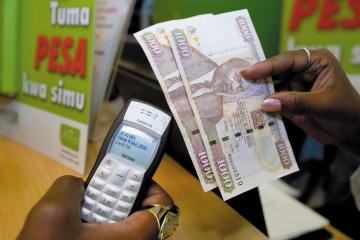
Digitization allows governments to send money without having to transfer physical cash and has proven particularly useful during the pandemic to reduce in-person contact and limit the spread of disease, while maintaining critical economic relief measures. Many countries in Africa had started digitizing government transfers prior to the pandemic. South Africa was one of the first countries to do so by introducing a biometric identification (ID) and debit card grant payment disbursement system. With the spread of mobile money, particularly in East Africa, governments, and large nonprofits such as GiveDirectly have been using mobile money to distribute cash grants to beneficiaries. In addition, many sub-Saharan Africa countries have or are considering rolling out digital ID systems and coupling them with social protection programs to uniquely identify individuals and provide a system for authentication of the beneficiaries.
The digitization of G2P payments can occur at different stages of the payment chain: selection of beneficiaries, such as through digital IDs, management of payment systems through digitized, high-frequency data collection, or money distribution, for example using mobile money or direct bank transfers. Many countries are aiming to digitize their economies in the hope that this will allow them to centralize systems, make them more efficient, and reach a wider range of beneficiaries, among other benefits. While there is some relevant evidence on the merits and weaknesses of digitization G2P payments, there is still a great deal left to be studied and understood.
What are the possible effects of the digitization of G2P payments on beneficiaries?
Digitization of social protection programs could potentially transform the relationship between citizens and the state, if it allowed for more effective distribution, including:
Reduced cost to collect social protection payment: The digitization of payments can reduce the costs of payment collection for the recipient. These costs include not having to wait in line to collect the money, along with a saving on any transport cost. In addition, there may be tangible impacts of the time/money saved for other individuals within the household. A study in Niger found that households who received mobile transfers (as opposed to traditional cash transfers) had greater diet diversity and that their children ate more food. These impacts are likely due to reduced time and travel costs to obtain their transfers, as well as increased decision-making power for women.
Reduced delays and uncertainty in payments: When the existing infrastructure is strong, digital payments can reduce delays and uncertainty of G2P payments. Physical cash is difficult to transport over long distances. There may be delays in the delivery of the money due to weather or road infrastructure, especially in the rainy season. Not only is the digital transfer beneficial to reduce the stress of not knowing if the next payment will arrive, but the improved predictability and reliability of payments could allow individuals and households to plan and invest with a longer-term view.
Improved access to financial products and services: Digitized G2P payments could lead to greater financial inclusion through improved access to other financial products, such as loans and savings products. It is argued that once a bank or mobile money account is opened for the G2P payments, there is a higher likelihood that individuals would have access to other financial products. G2P payments are thought to be a gateway for financial inclusion, however more research would need to be conducted to support this claim.
More flexible payment modalities: Digitization allows for increased flexibility of G2P payment modalities in terms of the value of the payment and the timing. Digitized payments can more easily be made in lump sums or incrementally over time. Payment timing of when the money arrives can be adjusted more easily in digital payment systems compared with a physical cash-based form. Individuals may have a preference for smaller payments over time to limit their spending, or to have it arrive as a lump sum on a certain date to coincide with large payments, such as school fees. In addition, different schemes can be applied on top of the G2P payment to encourage healthy financial behaviors. For example, the labeling of accounts, which is easier to implement digitally than when in physical form, has shown to have positive effects on long-term saving behavior as shown through this study.
However, technology is but a tool and, if not used properly, could instead exacerbate the existing problems that beneficiaries face, or create new ones:
Exclusion of beneficiaries: If beneficiaries are not able to navigate the system of digital G2P payments, they may not be able to access their grants even when eligible, as seen in Jharkhand, India. In India, the use of Aadhaar—a digital biometric identification card—as a digital tool to authenticate beneficiaries, reduced the benefits for those who had not registered for an ID. Given that more vulnerable people are often also those who have less access to knowledge on technology, this could mean the most vulnerable are particularly susceptible to exclusion when shifting to a digital payment mechanism.
Predatory systems that leverage lack of digital (financial) literacy: The digital systems could undermine the intention of the cash transfer if poorly structured or have predatory financial inclusion elements. G2P payments can facilitate connection with other financial products; however, without adequate digital financial literacy, beneficiaries could be led into unwittingly connecting their accounts to financial products they do not require. As with the exclusion concern (above), this issue is particularly important as those who are the most vulnerable groups of people are also more likely to not have access to digital financial training. For example, in South Africa, Torkelson notes under Net 1’s biometric system, social protection beneficiaries had to place their fingers on multiple scanners without understanding why. This process, along with broader dubious practices and mass public outcry, led Net 1 to be charged at the Constitutional Court.
Privacy concerns: There may be privacy concerns when digitally collecting beneficiary data through the G2P program. Once the G2P program moves towards a digital distribution, the ease of surveillance is far greater. Beneficiaries who receive G2P payments may not fully comprehend the value of their data and the ways in which it could be used in a digital format. There are ethical questions around informed consent, linking of databases with other departments, and the ability for governments to discriminate based on the digital information. In countries where the program has to roll out quickly, before a strong privacy framework is available and enforceable, is a particular concern.
What are the effects of digitization of G2P payments on Government institutions?
Individuals who receive digital G2P payments are not the only group to benefit, governments who implement the systems could also realize positive gains from these reforms. Digital payments and IDs may help overcome systemic challenges, along with other implementation benefits through moving to a digital platform.
Reduction in leakages: In many low- and middle-income countries, pervasive corruption and tax evasion can undermine the provision of public programs, causing leakages and other service delivery delays and failures, and reduce the fiscal capacity of government agencies. For example, a 1996 Public Expenditure Tracking Surveys (PETS) survey of public schools in Uganda showed a leakage rate of 87 percent in Uganda’s education spending, which fell to 20 percent after the publication of the findings: in Tanzania, a 1997 PETS found 57 percent leakage in education and 41 percent in health spending; and in Ghana, a 2000 PETS found 50 percent leakage in education and 80 percent leakage in health. Evidence from India shows that digitization has the potential to reduce discretion and increase communication, thereby reducing corruption and leakages in program delivery.
Digital G2P payments could also help reduce quantity fraud. This type of fraud is slightly more difficult to monitor, but involves the beneficiary receiving a smaller quantity than the true eligible amount. Digital payments can assist with this type of fraud as the money moves directly to the beneficiary's account and limits the ability for middle-men to siphon off part of the payment.
Reduced implementation costs: Manual cash payments are cumbersome and costly to distribute. In some contexts, cash-based social protection programs are delivered by mobile vehicles moving between villages. These benefits can be realized if there is a strong existing digital infrastructure in the country. The study in Niger considers the cost of implementing a mobile transfer. Although the initial cost of the mobile transfer program was higher, due to the purchase of mobile phones, its pre-transfer cost was approximately 20 percent lower than that of physical cash distribution. This suggests that, once phones and mobile money agents are in place, mobile transfers could be a simple and low-cost way to deliver payments.
More effective monitoring: Further, digitization of payments can lead to more effective process monitoring, which allows implementers the ability to make real-time decisions based on incoming data. In a context where there is a reliable identification system in place, digital data collection can make policy decision making easier and more responsive to the needs of the people on the ground.
In addition, the improved monitoring and data collected on the beneficiaries could assist with improved targeting. G2P payments with a strong digital ID could also help to identify who is eligible from an objective perspective. A digital footprint can assist with linking individual’s information across departments, which could allow for a better picture of the individuals, informing who is the most vulnerable and in need of assistance.
Although there are many possible benefits of a digitized G2P system, there are also potential political economy challenges or pitfalls that governments may experience: While there is limited evidence on the impacts of digital G2P payments on governments, a study in India highlights how a direct bank transfer of a subsidy (in place for an in-kind subsidy) led to less diversion of the subsidized goods to the black market, reducing leakages. Despite these positive outcomes, this reform was abruptly terminated after political lobbying leading to the elections, highlighting the importance of political economy challenges with such policy reforms. Politically connected agents may lobby against, and may even succeed in subverting policy reforms when their discretionary (and often illegitimate) benefits are threatened. Further, if the digital payment system is badly implemented and leads to exclusion of beneficiaries or mistrust in the data collection and use, this could harm the long-term credibility of the government and associated institutions.
Open questions
While there has been much progress on the spread of digital payments across Africa, we still have little evidence about how to effectively design policies to maximize benefits from digital G2P payments. The Digital Identification and Finance Initiative in Africa (DigiFI)—hosted by J-PAL Africa at the University of Cape Town—aims to fill this evidence gap by generating cutting-edge policy research projects focussed on the study of innovative government payment and ID systems. We lay out our research agenda in our framing paper.
Authors Note: This is the second blog in the DigiFI series on the various aspects of their research and policy priorities. The next blog will focus on mobile money.

As policymakers across Africa are increasingly investing in digital identification systems, the Digital Identification and Finance Initiative in Africa (DigiFI) explores what the benefits, challenges, and unknowns are.
Especially in the era of COVID-19, it is hard to imagine a world without WhatsApp or Zoom. Yet, these tech platforms did not even exist two decades ago. These and many other innovations are proof of the ability of digital technology to transform our lives at rapid speed.
These changes extend far beyond just the individual level of messaging apps, reaching a much larger scale, with entire economies becoming more digital. Digitization of economies is being accelerated by the COVID-19 pandemic and provides an opportunity for countries to make large strides towards greater economic development.
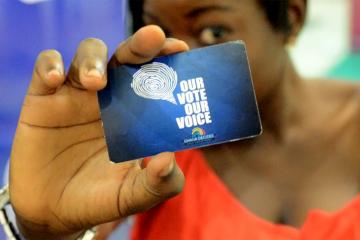
Policymakers across sub-Saharan Africa are increasingly investing in a particular digital technology with transformative potential—biometric identification (ID) systems. Biometric IDs are a form of identification that uses biometric information of individuals to record, identify, and verify their identity. They use traits such as fingerprints, eye retina and iris scanning, voice recognition, facial patterns, and body movement as biometric measures of verification. Traditional IDs usually use other documents or people to verify information about someone or are prepared at birth. This step of digitizing ID systems is partly to increase the provision of a legal ID, which is often essential for citizens to access basic government services and lead a dignified life. It will also enable broader use of digital payment systems and promote digitization of services more generally.
Countries like Malawi, Senegal, and Uganda have rolled out national biometric ID systems, while others including Ghana, Kenya, Nigeria, and Tanzania are in the process of implementing mass registration campaigns for their new biometric IDs. More countries still, including Ethiopia, have announced plans to start enrollment for such IDs in the coming months and years. As this digital ID revolution sweeps the continent, what do we really know about its benefits and drawbacks? How does this rapid digitization and proliferation of biometric IDs affect the lives of citizens? And how can they best be structured to result in the most benefit? In this blog, we explore the benefits and drawbacks of digital IDs, as well as the various questions that remain unanswered.
The Good
Overcoming the problems associated with a lack of identification through digital IDs might have powerful implications. A digital repository may make it easier to implement and target government programs, while also enabling citizens to participate in the digital economy. Since these IDs can function as a universally valid proof of identity, they can easily be linked to existing functional systems—like bank accounts and payroll, asset registries, insurance, and school records—to avoid corruption and siphoning of resources, as well as double counting and targeting errors in beneficiaries. By easing processes to obtain voter IDs, drivers’ licenses, telecom services, and banking facilities, IDs can mobilize citizens’ political and economic participation. Additionally, IDs can catalyze the growth of a country’s fiscal capacity by not only minimizing tax evasion but also by being instrumental in promoting financial inclusion and growth of the formal economy. Evidence points to many potential benefits of digital ID systems such as:
- Improved data: It is difficult to allocate funding or identify problem areas without access to quality, granular data. Digital ID systems may alleviate this issue by facilitating improved record-keeping and generating administrative data (routine information collected, used, and stored by governments and other organizations primarily for operational, rather than research purposes) on individuals in the country.
- Improved public service delivery: Many countries plan to link ID systems to digital payment and welfare systems, which should help make public services more efficient and accessible. These policy changes aim to eliminate leakages and enhance the accuracy of transactions as well as the ability of the government to monitor them. When linked with monitoring systems, digital IDs have reduced absenteeism among health workers, reduced data forgery, and improved patient adherence to treatment in India.
- Improved targeting: Following from the previous point, digital ID systems may make it easier to implement and target government welfare programs. Evidence from India shows that biometric IDs cost-effectively increased efficiency of welfare payments by reducing leakages and delays while not reducing program access, particularly to vulnerable households. Further, in India, beneficiaries overwhelmingly preferred the smartcard systems.
- Better credit market efficiency: Digital IDs can help address barriers to accessing formal financial products. Evidence from Malawi shows that fingerprinting for credit can improve loan repayment rates and lead to a better functioning credit market. By using biometric identification, lenders were better able to identify borrowers. Introducing fingerprinting identification for microloans caused high-risk borrowers to take out smaller loans and to improve their repayment behavior.
The Bad
While there are many potential benefits to using digital IDs, they often have their drawbacks. Digital ID systems have seen large pushback in many countries due to fear of exclusion and erosion of privacy. Further, the implementation of digital ID systems could cause more pain than gain in specific contexts such as remote areas with limited connectivity. Governments need to carefully evaluate where digital ID systems will maximize welfare without inconveniencing or excluding the already marginalized. Some of the recorded challenges with digital ID systems are:
- Exclusion errors: Stringent ID requirements can generate non-trivial costs in terms of exclusion and inconvenience to genuine beneficiaries. Evidence from India shows that making biometrics compulsory in the public food distribution system created exclusion problems and increased transaction costs, especially for vulnerable groups, without reducing corruption. These findings were corroborated by a second study, which found that biometric IDs led to limited improvements, such as more timely and reliable recording of PDS transactions, and resulted in the exclusion of households (usually the most vulnerable ones such as widows, the elderly, and manual workers) that were unable to pass the biometric authentication test. The authors argue that the imposition of the digital system here led to “pain without gain” as it did not address the type of leakages that were prevalent in the given context.
- Implementation concerns: Another study in India found that while a biometric attendance-monitoring intervention led to health improvements, its imperfect enforcement illustrated the limitation of technological monitoring solutions when they are not combined with changes in the broader rules governing health workers. While there were some health gains from this, the biometric devices led to lower work satisfaction among staff and increased difficulty hiring new nurses, lab technicians, and pharmacists. As a result of this and other factors, there was limited appetite at all levels of government to use the better quality attendance data to enforce the government’s human resource policies.
- Privacy and data misuse concerns: Biometric authentication raises important privacy and data misuse concerns. There has been major pushback in India and Kenya to biometric national ID systems due to concerns regarding safety and misuse of collected data. Large data sets have been shown to have great power in surveillance, as well as predicting and shaping people’s decisions. In light of this, it is crucial to ensure that strong data privacy and security legal frameworks and systems are in place.
The Unknown
While we are beginning to glean insights on some of the benefits and drawbacks of digital ID systems, many questions remain unanswered, particularly in the context of sub-Saharan Africa. With the broad impacts that digital IDs can have, there is little research on how they can improve the implementation of welfare programs, how these systems and linked programs affect citizens, and what unintended consequences may result from having access to IDs and their associated technology. As government reforms in both IDs and payments advance, rigorous research can help them answer these questions, including providing insights into design questions as reforms scale up.
The Digital Identification and Finance Initiative in Africa (DigiFI)—hosted by J-PAL Africa at the University of Cape Town—aims to fill this evidence gap by generating cutting-edge policy research projects focussed on the study of innovative government payment and ID systems. We lay out our research agenda in our framing paper. Some examples of questions we hope to answers in the digital ID space are:
- What are the best ways to design digital ID linked services for the greatest impact at the lowest cost?
- To what extent and when can digital ID systems improve targeting and efficiency in public programs?
- How can digital ID systems assist in building incentive systems to motivate public servants?
- How do digital IDs affect voter participation, the fairness of elections, and electoral outcomes?
- Can digital IDs promote further digitization in financial systems and thus enhance financial inclusion?
- Can digital ID systems encourage businesses to enter the formal sector? Do these reforms reduce entry costs to entrepreneurship and enable productive investment?
- Can digital ID systems help strengthen law-enforcing institutions and, in turn, affect private investment?
If you are a policymaker interested in jointly understanding how to design digital ID and payment systems in your country or a researcher wanting to add to this body of literature, please reach out to us at [email protected]. We are very interested in understanding digital systems across the continent and are keen to help co-generate analysis that can inform policy decisions on digital ID and payment systems.
Author’s Note: This is the first blog in the DigiFI series on the various aspects of their research and policy priorities. The next blog will focus on government to person digital payments.
The Digital Identification and Finance Initiative (DigiFI) is excited to announce a blog series that looks at the various facets of digital identification (ID) and payment systems.
As of 2019, 469 million people across sub-Saharan Africa used mobile money. In 2019 alone, 50 million sub-Saharan Africans created a new mobile-money account, a 12 percent increase from 2018. Across Africa, governments are exploring new ways of digitizing financial services and identification to reform policies. While there is a big push to go digital, our knowledge of its potential impacts are limited, particularly in the African context. These reforms may have transformative impacts for citizens through improved governance and public service delivery. But they also have the power to exclude marginalized groups or violate privacy rights.
The Digital Identification and Finance Initiative (DigiFI) in Africa aims to generate rigorous evidence on the impacts of these technologies for both governments and citizens in sub-Saharan Africa. For example: How should digital identification (ID) systems be designed to maximize benefits while minimizing costs in a specific context? When is it appropriate to link a social protection program to a digital ID system? To what extent can digital ID systems and digital payments reduce leakages and improve targeting of social protection programs? Can digital ID systems and digital payments assist in building incentive systems to motivate public servants? For more information on DigiFI Africa’s research agenda, please see our framing paper.
We are excited to launch a further exploration of these questions in DigiFI Africa’s new blog series. Over two months, this series will unpack key policy questions on digital ID and payments systems while also exploring a subset of the academic literature provided in our framing paper. This series includes posts on:
- The benefits, challenges, and unknown impacts of digital IDs,
- Digitization of government-to-person payments,
- Mobile money and person-to-person payments, and
- Possible barriers to effective public service delivery (e.g. targeting, leakages, incentives, and take-up) and opportunities for digitization to improve these processes, including high frequency process monitoring.
You can read about DigiFI’s ongoing studies. These include, but are not limited to, research on the impacts of linking the national biometric ID system in Kenya to social protection schemes, the relationship between digital IDs and poverty alleviation in Malawi, how digital tax systems can aid revenue collection in Uganda, and the role of digital cash transfers in responding to the COVID-19 pandemic in Ghana and Kenya.
If you’re a policymaker or researcher thinking about the design of a digital financial or ID system or evaluating new reforms in the DigiFI research agenda, we encourage you to get in touch! We can be found on [email protected] and would love to hear from you.
Does universal basic income (UBI) help vulnerable populations respond to large-shocks, such as COVID-19? J-PAL affiliated researchers recently followed up on a 2017 study to assess the program's impact.
COVID-19 and the resulting economic recession have disproportionately affected already vulnerable individuals. Governments across the world have responded with an unprecedented expansion in their social protection programming.
There is also a push towards digital transfers to be able to safely transfer cash while curbing the spread of the disease. While there is evidence on the efficacy of grants during non-pandemic times, we know little about the effect of transfers during large shocks.
For example, during COVID-19, cash grants might prove inadequate in stimulating the supply of goods and services as it is a demand-side intervention. So, are cash transfers helpful in responding to the pandemic? More specifically, to what extent could a pre-existing universal basic income build resilience to future shocks?
J-PAL Africa’s Digital Identification and Finance Initiative (DigiFI) was launched in 2019 to fund innovative research to help answer questions like this. In 2020, we funded follow-up surveys to a 2017 study on universal basic income in Kenya to identify whether the program helped recipients adjust to shocks resulting from the COVID-19 pandemic.
The study: The effects of a universal basic income (UBI) in Kenya
In 2017, Abhijit Banerjee, Michael Faye, Alan Krueger, Paul Niehaus, and Tavneet Suri, in collaboration with Innovation for Poverty Action (IPA) and GiveDirectly, launched a randomized controlled trial in Kenya to test the effectiveness of a UBI in eradicating extreme poverty.
A UBI is a specific form of social protection: an unconditional cash transfer large enough to meet basic needs and delivered to everyone within a community. One of the arguments put forth by advocates of UBI is that the transfers provide a form of insurance against uninsurable or unpredictable risks (read a more extensive discussion of the potential benefits of UBI here).
Responding to the need for rigorous large-scale experimental evidence to support the debate, researchers designed and launched a field experiment evaluating the impacts of UBI in 2017 in Bomet and Siaya counties of Kenya.
Participants in the study were randomly assigned into four groups, three of which received digital cash transfers with varying frequency and size:
- One group received a large lump-sum transfer at the beginning of 2018,
- One group was assigned a smaller long-term transfer scheduled to be received regularly for twelve years,
- One group was assigned a short-term transfer for two years that had largely been concluded prior to the COVID survey, and
- A final group was assigned not to receive any transfer and is the comparison group.
Assessing UBI in light of COVID-19
The COVID-19 pandemic unfortunately served as a unique opportunity to examine to what extent a UBI can mitigate the impact of a large shock.
Against this backdrop, the researchers conducted (and will continue to conduct) phone surveys in May 2020 to measure the effects of the pandemic and how they were mitigated by a UBI. To assess how outcomes in the COVID survey have changed since the onset of the pandemic, they compared this to data from the standard endline survey of households conducted between August and December of 2019.
It is unclear if the positive effects of social protection transfers found during “normal times” (Bastagli et al., 2019) will hold during the pandemic. Concerns around supply chain disruptions may limit the effectiveness of demand-side interventions such as a cash grant. In addition, when examining non-material outcomes such as depression, the negative psychological impacts may have been too great for the cash transfer to have had any meaningful effect.
Results from this project provide some of the first evidence of the impacts of social protection programs during the pandemic.
The UBI led to modest but statistically significant improvements in well-being
Reduced hunger and physical and mental illness
There were modest (though significant) impacts of the UBI on recipients’ personal well-being in all three groups that received cash transfers (lump-sum, long-term transfer, and short-term transfer).
Roughly two-thirds of households (68 percent) that did not receive the UBI experienced hunger. Recipients of the UBI were 4.9–10.8 percentage points less likely to report experiencing hunger during the last thirty days prior to the COVID survey.
Recipients of the UBI were also 8–13 percent less likely to have had a household member sick during the thirty days prior to the May 2020 survey. Given the very low prevalence of the coronavirus in the areas studied at the time of the surveys (twelve cases total), these illnesses were almost certainly not COVID-19 cases.
Finally, recipients were significantly less depressed in the short-term and long-term arm, though not the lump-sum arm.
No harmful impact of UBI on public health and some evidence that it was helpful
Recipients of the UBI were significantly less (10–16 percent) likely to seek medical attention in the last thirty days, as they were less sick. This would have resulted in a decreased burden on hospitals and could have been helpful in freeing up public health system capacity which is vital during the pandemic.
In addition, there is some evidence that the UBI reduced social interactions—such as visiting friends or relatives—which could reduce COVID-19 infections in the future.
Mixed effects on resilience to large aggregate shocks
Regular and long-term transfers are likely to affect investment decisions and hence resilience to large shocks. On one hand, a long-term transfer could allow the individual to buy assets to buffer against any income shocks. On the other hand, the long-term transfer may encourage recipients to increase their exposure to riskier choices, such as starting a business.
It is particularly interesting to compare the impacts of the UBI before and during COVID times to see how beneficiaries coped with the pandemic. An important caveat is that these results could be driven by seasonality and not the pandemic. As the researchers learn more, we will update the results.
-
No effect on incomes: Long-term, regular transfers led to an increase in risk-taking commercial activities. Pre-COVID, beneficiaries had diversified their income streams by creating new non-agricultural enterprises, which resulted in an increase in profits without substantial changes in labor or agricultural earnings.
However, when the pandemic hit these enterprises were not spared and the income gains they witnessed pre-COVID were wiped out but they did not close down.
-
Higher resilience to hunger in the agriculture lean season: The UBI provides households with a safety net and hence a reduced risk of hunger. This allows them to take on more income risk. As discussed above, beneficiaries of the UBI were more likely to not go hungry during the pandemic.
This was also seen prior to the pandemic during the lean season (the season between planting and harvesting), which saw a significant reduction in the number of households who experienced hunger in the UBI transfer group.
However, during the harvest season (August–December 2019), there were no significant differences in hunger between the groups that did and did not receive the transfers.
UBI: Unlikely tool of choice to respond to unanticipated shocks
While access to a UBI prior to and during a large shock improves well-being in the wake of said shock, it is an unlikely choice of tool to respond in such contexts. This is because the income gains from the UBI pre-pandemic are wiped out during the pandemic. This fits well with the theory that a UBI encourages risk-taking by providing a safety net. Hence, it is likely that recipients of a UBI have increased exposure to shocks.
Further, it would likely be more effective to use a targeted response tailored to protect those worst affected by a crisis. This is by no means a criticism of UBI but rather a remark on its appropriateness in different contexts.
Another key message from these results is the importance of supplemental income during large shocks such as the COVID-19 pandemic. These results highlight the need for infrastructure that allows cash grants to be provided universally or to a large proportion of the population in response to unanticipated crises.