

June 2026 Global Monthly Newsletter
RECOGNIZING WORLD ENVIRONMENT DAY 2026
Solutions to protect nature
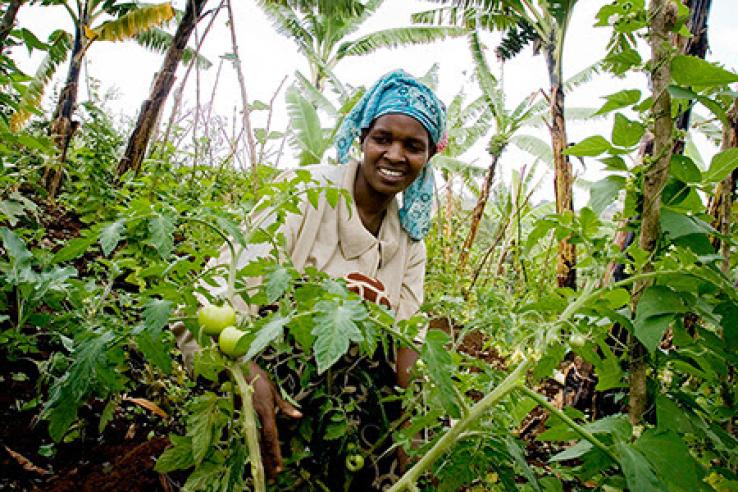
Climate change disproportionately affects people living in poverty and threatens to reverse decades of development progress. Leaders around the world need stronger evidence on which technological and policy innovations can address climate change and poverty. The King Climate Action Initiative, launched in partnership with King Philanthropies, and our Environment, Energy, and Climate team are tackling some of the world’s most pressing environmental challenges, from reducing deforestation to strengthening families' resilience to climate shocks.
Our Air and Water Labs, launched with support from Community Jameel, partner with governments in India, Egypt, and South Africa to generate evidence-informed solutions for countries on the front lines of the global air and water crisis. Later this month, we'll be at London Climate Action Week presenting on the labs' flagship programs, including free basic electricity, emissions markets, and approaches to strengthening farmers' resilience to climate disasters.
Check out our resources below for lessons from our government partnerships and reflections on the future of climate action.
Paying people to protect forests
Read The Evidence Effect »
Turning data into insights: How Cape Town is building a smarter, more equitable city
Read the blog »
Growing evidence-informed climate policy: Five scaling stories from the King Climate Action Initiative
Read the blog »
FEATURED PUBLICATION
Emergency Financial Assistance (EFA) programs in North America
Policy Issue: Eviction is one of the leading drivers of homelessness in the United States, and can reduce people’s earnings and increase hospitalization rates.
Intervention: J-PAL North America studied whether EFA, which provides people at risk of eviction with one-time or short-term payments to cover rent and other housing expenses, can lead to housing stability.
Results: EFA programs can keep people housed and reduce eviction risk. In one study, EFA recipients were 88 percent less likely to become homeless after three months compared to those who did not receive assistance.
EVIDENCE TO POLICY
Star power for public good: How celebrity messages can support public health efforts
📍India
Policy issue: During widespread health crises, people can feel bombarded by public health messages from multiple sources and may not know whom to trust or what to do. In 2020, West Bengal’s government wanted to inform 91.3 million citizens about Covid-19 and encourage critical prevention practices—social distancing, handwashing, and mask wearing—but initial campaigns were not translating into behavior changes.
Evaluation: Could celebrity endorsements overcome this communications barrier? In May 2020, J-PAL affiliated researchers partnered with West Bengal officials to test whether messages delivered by a well-known public figure could drive behavior change more effectively than standard government communications. They sent text messages featuring video messages from a trusted public figure to 25 million cell users across the state.
Results: People who received the video messages were more likely to report symptoms like fever or cough, were 20 percent less likely to travel, and more likely to wash their hands after travel.
Research in action: Encouraged by these findings, the government scaled up their efforts. Before the Durga Puja festival, West Bengal partnered with telecom company Airtel to conduct a similar campaign, this time reaching 7.3 million new cell phone users with the same evidence-informed approach.
Research by: Abhijit Banerjee (MIT), Marcella Alsan (Harvard University), Emily Breza (Harvard University), Arun G. Chandrasekhar (Stanford University), Abhijit Chowdhury (John C. Martin Centre for Liver Research and Innovations), Esther Duflo (MIT), Paul Goldsmith-Pinkham (Yale University), Benjamin A. Olken (MIT)
FEATURED BLOGS
Addressing menstrual stigmas and empowering girls in Madagascar
In Madagascar, a school-based program transformed girls’ confidence and academic outcomes by addressing menstrual stigmas. The intervention trained teachers, improved sanitation facilities, formed committees involving parents, and distributed reusable pads produced by trained local seamstresses. Equally important, it empowered girls to lead peer-to-peer conversations about menstruation, building both knowledge and community support. J-PAL Africa and the Madagascar Ministry of Education are now working to scale the program in other regions. Read more »
Reducing crime, violence, and conflict: Updates to GCCI’s Evidence Wrap-up
What does the latest evidence say about building safer communities? Our Governance, Crime, and Conflict (GCCI) team has synthesized over 50 additional studies into the latest edition of their wrap-up, covering topics like policing reforms, court efficiency, peacebuilding, and more. A new blog post gives a chapter-by-chapter breakdown. Read more »
FEATURED EVALUATION SUMMARY
Protecting agricultural households against floods through flexible microfinance
📍Bangladesh
Policy issue: Extreme weather events are common and growing threats that can destroy crops, assets, and homes. Families may try to save money by reducing their investments, eating less food, selling assets, or taking their children out of school. Traditional credit and loan programs may not provide a safety net because financial institutions may not want to lend to vulnerable households, and farmers may not want to pay up-front premiums.
Evaluation: Can an emergency loan help farmers invest more before floods and stabilize their lives after, improving their welfare? In partnership with BRAC, J-PAL affiliate Gregory Lane co-designed a financial product that guarantees access to credit when floods occur. Researchers randomly assigned 200 BRAC branches to either offer the new emergency loan or continue standard services.
Results: The new emergency loan increased eligible households’ agricultural investments prior to flooding and increased consumption after a flood occurred. The loans were also profitable for the lender.
Research by: Gregory Lane (University of Chicago)
WELCOMING OUR NEW AFFILIATED PROFESSORS
In summer 2025, we welcomed 29 talented researchers to the J-PAL network. We feature a few of them here each month.
Elizabeth Lyons
University of California, San Diego
Jacob Wallace
Yale
📺 FEATURED MULTIMEDIA
"The ultimate goal is to build long-term capacity in Armenia and also the culture of evidence-based policymaking to make sure that every [Armenian] dram we spend generates the highest possible value for society.”
GEVORG MINASYAN
Director of Dilijan Training and Research Center, Central Bank of Armenia
Strengthening evidence-informed policymaking in Armenia
J-PAL Europe recently partnered with the Central Bank of Armenia for a second time to train government decision-makers on the principles of evidence-informed policy design. The training brought together policymakers from the Armenian government, UNICEF, UNDP, and beyond, strengthening both technical skills and cross-sector collaboration.
J-PAL Europe Executive Director Cillian Nolan and Director of Dilijan Training and Research Center Gevorg Minasyan discuss J-PAL’s collaboration, reflecting on how this training equipped Armenia’s leaders to design more effective evidence-informed policies. Watch the video »
FEATURED EVENT
Celebrating the DEDP class of 2025
The 2025 class of Data, Economics, and Design of Policy (DEDP) master’s students returned to MIT on May 28 to celebrate a major milestone: graduation. Surrounded by family, friends, faculty, and fellow classmates, graduates received their diplomas and reflected on their journey through the program. The festivities culminated with remarks from Abhijit Banerjee, Esther Duflo, Sara Fisher Ellison, and Ben Olken, the faculty directors who taught and mentored students throughout their DEDP experience. Learn more about the master’s program, and how you can start your DEDP journey with online MicroMasters courses »
🗞️ MEDIA HIGHLIGHTS
More than a monthly cycle: Why menstrual health is a human right
CARE
World Bank: Morocco’s 'pioneer schools' program shows early gains in student performance
Hespress English
Some UAE schools to get new Arabic programme: What parents need to know
Gulf News
Hartek Foundation partners with Punjab Police and J-PAL for gender-sensitivity training
Media Brief
Where international finance meets development: The role of currency risk
VoxDev
📄 NEW RESEARCH PAPERS
Social Protection and Social Distancing During the Pandemic: Mobile Money Transfers in Ghana
Authors: Dean Karlan (Northwestern), Matt Lowe (University of British Columbia), Robert Osei (University of Ghana), Isaac Osei-Akoto (University of Ghana), Benjamin N. Roth (Harvard), Christopher Urdy (Northwestern)
Authors: Sonia Pant (VisionSpring), Sahil Bagwe (Harvard), Sangeetha Esther (Good Business Lab), Graeme MacKenzie (Riemann Limited), Lovemore Nyasha Sigwadhi (Hyderabad Eye Research Foundation), Winston D Prakash (L V Prasad Eye Institute), Ving Fai Chan (Queen’s University Belfast), Smit Gade (Good Research Lab), Simranjeet Dhir (DevLab@Penn), Saumya Joshi (Good Business Lab), Sofía Calderón (Good Business Lab), Mapa Prabhath Piyasena (Anglia Ruskin University), Mike Clarke (Queen’s University Belfast), Lynne Lohfeld (Queen’s University Belfast), Michael Cooke (VisionSpring), Ella R. Gudwin (VisionSpring), Achyuta Adhvaryu (University of California, San Diego)