
Image
King County, Washington is a leader in evidence-based policymaking. The County regularly conducts rigorous studies of their innovative programs, consistently uses evidence to inform decision-making, and embeds evaluation and evidence into operations. J-PAL North America has collaborated with King County to support these efforts for nearly ten years. This partnership has included projects investigating key research questions in transit mobility, energy efficiency, and housing and homelessness prevention.
J-PAL North America has been a longtime partner of King County and Notre Dame’s Wilson Sheehan Lab for Economic Opportunities (LEO), supporting their respective evidence practice. In 2024, J-PAL North America joined as a formal partner of the Evidence Matters webinar series, which focuses on how local governments and researchers collaborate to build and use evidence to improve economic mobility.
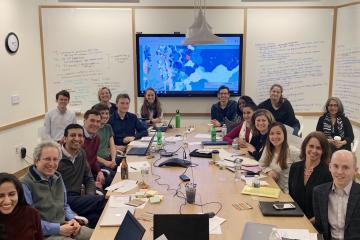
These partners went live to co-host an all-day, in-person Evidence Matters Convening in November 2025. The event was a celebration of the work King County, policy labs, researchers, and other state and local jurisdictions are doing across the country. Through an Evidence Fair, attendees learned about ongoing evaluations, strategies to incorporate evidence into the decision-making process, and opportunities to collaborate with other evidence leaders. The exchange of ideas, connections, and enthusiasm is a testament to the continued strength of the evidence-based policymaking movement.
The convening also featured concurrent sessions on priority policy issues facing communities, highlighting concrete opportunities and actions to advance evidence-based policymaking.
Research conducted across the country, including in King County, has found that fare reduction programs have improved mobility for low-income riders. However, subsidies alone may not immediately impact employment outcomes. This session featured J-PAL affiliated professor David Phillips (LEO and Notre Dame), Anne Gienapp (King County Metro Transit), and Rachel Wilch (King County Metro Transit). Key takeaways included:
Amid funding cuts at the federal level, how can evidence continue to play an important part in informing policy design of the social safety net? This session featured J-PAL affiliated professor Elizabeth Linos (The People Lab and Harvard University), Matt Goldman (King County) and Nadine Chan (King County Public Health Department). Session takeaways included:
Budgeting decisions are about opportunity costs. What will happen if money is spent on expanding or improving a program? This session featured Sam Quinney (The Tobin Lab and Yale University) and Ricardo Basurto-Davila (San Diego County). Emerging considerations on incorporating evidence into local budgeting processes included:
Evidence can play a crucial role when designing strategies to better support the childcare workforce. This session featured Justin Doromal (Urban Institute), Kathleen Gallagher (University of Oklahoma), Chrishana M. Lloyd (Child Trends), and Jessica Tollenar-Cafferty (King County Best Start for Kids). Key themes included:
We were thrilled for this opportunity to spotlight the evolving landscape of evidence-informed policymaking and showcase how leading local governments are leveraging research and data to inform decisions, improve services, and drive meaningful change. Many partners came with renewed energy to carry this work forward, despite the challenges of the current time. We look forward to continuing the Evidence Matters webinar series and advancing discussions on how to embed evidence-based policymaking and continuous learning at the local level. For more information, access the Evidence Matters webpage. And to never miss a webinar, sign-up for the Evidence Matters newsletter.