



BRIDGE: Building Rigorous Impact for Data-driven Governance through Evidence
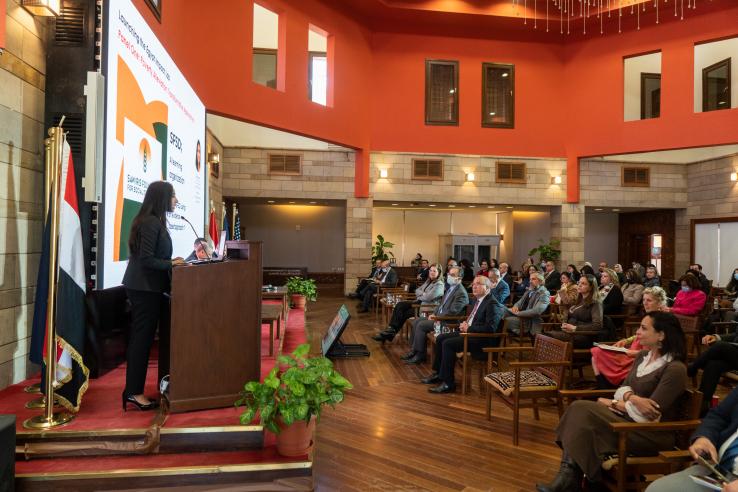
BRIDGE is the new flagship training program of the Egypt Impact Lab (EIL). It responds directly to growing government demand for stronger administrative data systems and data-driven decision-making capacity.
Across government institutions, large volumes of administrative data are collected digitally every day. Yet much of this data remains underutilized, overwritten, fragmented, or not analyzed beyond its immediate operational purpose. As a result, valuable opportunities to improve program design, monitor outcomes, and rigorously evaluate their effectiveness are often missed.
BRIDGE closes this gap by equipping government officials with practical tools and frameworks to transform administrative data into a strategic asset for cost-effective, evidence-based policymaking.
Through hands-on training and applied learning, participants build the capacity to:
- Make administrative data accessible, reliable, and policy-relevant
- Strengthen internal data systems to ensure data quality and usability
- Collect, clean, validate, and analyze administrative data
- Embed data-driven thinking in program design and monitoring processes
- Use administrative data to inform cost-effectiveness, scalability, and policy learning
Program Structure
BRIDGE is delivered over two intensive days of practical, interactive training featuring expert-led lectures, live discussions, and hands-on data exercises using partner-relevant datasets. Participants work directly with real-world data to build skills they can immediately apply within their institutions.
Day 1: Foundations of Evidence and Data Use
Theory of Change and Measurement
Exploring why evaluation matters and mapping how programs create impact through a clear theory of change.
Why Data? Motivation and Context
Learning how to approach administrative data intentionally, trace its lifecycle, and leverage it for actionable policy insights.
Survey Design for Quality Data: How to Start Right?
Understanding principles of validity, representativeness, and reliability. Participants learn strategies to improve data collection quality and assess data fitness for use.
Day 2: Practical Skills and Application
From Messy to Ready: Cleaning and Improving Data Quality
Hands-on session on identifying errors, applying data cleaning techniques, and preparing data for analysis.
Data Analysis and Visualization: From Numbers to Insights
Building policy-relevant indicators, analyzing data, and creating compelling visualizations using real examples.
AI for Data Management and Prompt Engineering
Exploring how AI tools can support data management workflows and improve efficiency.
Connecting the Dots: From Administrative Data to Scalable Programs
Demonstrating how administrative data informs scalable, cost-effective programs—drawing on global success stories, lessons learned, generalizability frameworks, and common challenges.
Who Should Attend
BRIDGE is designed for:
- Government monitoring, evaluation and learning officers
- Officials involved in program design and budget allocation within ministries and public agencies
- Mid-level to senior technical staff overseeing data management, program planning, and performance tracking
What Participants Gain
By the end of BRIDGE, participants are able to:
- Develop a clear theory of change linking activities to intended measurable outcomes
- Critically assess the quality and completeness of administrative data
- Transform messy data into policy-relevant indicators and compelling visualizations
- Draw lessons from global success stories and adapt them to local contexts
- Strengthen evidence use to improve cost-effectiveness, scalability, and Policy Learning
Administrative data shouldn’t just be collected; it should drive policy.
BRIDGE helps institutions move from information to insight, and from insight to change.