
Prepaid versus Postpaid Electricity: Provision, Access, and Efficiency
This post was originally published on African Arguments on May 19, 2022, and is part of an ongoing series. Read the other blogs in the series on preparing households for shocks through universal basic income; obstacles to accurately identifying those in need of social assistance; the benefits and challenges of digital IDs; and increasing girls’ enrollment in school.
This is also the first blog in our series on energy access. Read the second blog post on emerging evidence and policy lessons for balancing industrial growth, energy use, and climate change, and the third blog post on using evidence to address energy poverty in Europe.
While access to electricity is essential for economic development, it is still not a reality for many households in sub-Saharan Africa. As of 2019, only 47 percent of the sub-Saharan African population (and just 28 percent of the rural population) had access to electricity compared to 90 percent of the global population. The electricity supply also is often unreliable: around 78 percent of firms in Africa experienced electricity outages in 2020, compared to an average of 52 percent of firms globally.
Kerosene and biomass are commonly used for lighting and cooking across sub-Saharan Africa, especially in rural areas. When burned, these fuels emit black carbon, which can cause health problems when inhaled, and CO2 which contributes to climate change. Using electricity in place of these fuels for lighting reduces carbon emissions, especially in countries like Kenya, where the electric grid is mostly renewable and can support appliances like fans and refrigerators that may help households adapt to climate hazards.
Yet, in places where electricity is available, it is often unaffordable for consumers. It is estimated that unpaid electricity bills in sub-Saharan Africa amount to around 0.17 percent of gross domestic product (GDP) for all nations across the region. For example, a randomized evaluation conducted in Cape Town showed that 24 percent of consumers in low-income neighborhoods have been disconnected by energy companies due to nonpayment. Additionally, 26 percent of customers have outstanding electricity bills, more than 50 percent of electricity bills are not paid on time, and 2 percent of monthly bills are never paid. Unpaid electricity bills cause households to accumulate debts that can be difficult to overcome. These debts also hinder national utilities’ ability to expand or improve upon energy grids, making it harder for the households they serve to access electricity.
In order to address these electricity supply debts, many countries in Africa are transitioning from postpaid to prepaid electricity metering, however, the way this transition will affect households is not well understood. What are the differences between the two billing systems, and how can they affect energy access?
Understanding electricity payment systems
In prepaid electricity systems, consumers pay their electricity bills beforehand, while in postpaid systems, consumers pay their electricity bills after consumption. Prepaid consumers are able to directly monitor the amount of energy they use through a customer interface unit composed of a keypad and a screen installed in their house and can only use as much energy as they have purchased. The customer interface unit is typically either integrated into the meter and installed in the house or split from the meter, which is installed in a secured location, only giving consumers access to the customer interface unit. Postpaid customers are usually unable to directly monitor their energy use and expenses and may end up using more energy than they can afford. Those who are unable to pay their bills on time fall into debt to the utilities. After a sometimes arbitrary number of missed payments, households may be disconnected and face steep fees for reconnection, which can keep them from accessing electricity services.
Is prepaid electricity a viable solution to energy access?
Overtaxing electric grids often results in widespread energy shortages. Blackouts are common across sub-Saharan Africa, especially in the evenings, leaving households without access to electric lighting during peak hours. Since prepaid customers have the opportunity to monitor their energy use through the consumer interface unit described previously, they may be less likely to overuse energy. Households using prepaid meters as part of the randomized evaluation in Cape Town reduced their average energy consumption by 14 percent. Insights from the evaluation in Cape Town are further supported by pre-post analyses of prepaid systems in South Africa and Nigeria that also suggested reductions in energy consumption, up to 50 percent in some cases. Additionally, a descriptive case study in Rwanda suggested that the energy lost during provision decreased from 26 percent to 18 percent after consumers switched to prepaid meters. Energy conservation encouraged by prepaid systems may reduce the frequency and severity of blackouts. For higher-income households in countries where electricity is generated using fossil fuels, this energy conservation would also lessen CO2 emissions. However, in contexts where higher energy consumption is necessary for economic growth, energy conservation may limit economic growth. In these contexts, policymakers may need to balance between pursuing climate goals through energy conservation and economic goals. Encouraging the development of energy-efficient technologies could potentially forward both goals.
One of the potential benefits of prepaid systems for consumers is that they can reduce debts owed to utility companies, since energy is purchased ahead of consumption and households do not face additional fees when energy is used. The majority of respondents to a survey conducted in Tanzania preferred prepaid over postpaid meters, as lessening debts offered them more financial freedom.
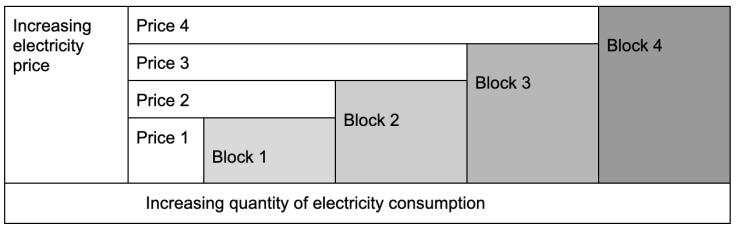
Despite reducing debts, households may still face disconnection under a prepaid system if they struggle to purchase on a regular basis due to fluctuations in income. The most common price scheme for prepaid electricity across sub-Saharan Africa is an ‘inclining block tariff’ (see Figure 1 below), where the price of each unit of electricity increases as more units are purchased. Under this price scheme, low-income consumers who do not have consistent wages may end up buying electricity at a higher price if the fear of not being able to make consistent payments leads them to purchase several monthly quantities of electricity consumption at once.
Additionally, while prepaid meters may encourage energy conservation among wealthy households, they may also encourage low-income households to underutilize the utilities, meaning that the benefits derived from appliance use would be limited. Consumers with intermittent income may ultimately return to using kerosene or biomass if they are unable to purchase electricity credits throughout the month. South Africa has tried to bolster energy consumption among low-income households with a free basic municipal services program, which provides low-income households 50 kWh of free electricity per month through prepaid meters, though some descriptive evidence suggests that improving how beneficiaries of free basic services programs are identified and enrolled may be needed to increase their reach.
Depending on the context, prepaid meters can be profitable to energy utilities. In Cape Town, the transition from postpaid to prepaid electricity led to better payment recovery, lower recovery costs, and earlier payments for the utility company, although consumers reduced their electricity consumption. If the total revenue gained through cost recovery by utilities that have transitioned to prepaid electricity surpasses the total revenue lost due to lower electricity consumption, they could use the net revenue gained to improve energy delivery and expand grids to rural communities that suffer from the lowest levels of energy access. However, the true effect on energy access would depend on how the utilities are regulated and what policies are in place to make sure households previously using postpaid meters can still afford energy.
Areas for future research
Switching from postpaid to prepaid electricity may prevent low-income consumers from becoming debtors to utility companies but may be less reliable for households with intermittent income. While studies suggest prepaid meters may help utilities expand and monitor the electric grid, there remains little rigorous evidence on how these systems affect households. More evidence on improving service regulation and protecting the needs of vulnerable consumers is needed to determine what role prepaid electricity can play in achieving universal energy access.
Female education remains a key challenge in sub-Saharan Africa, which is home to the largest population of out-of-school girls. Poverty remains a key barrier to school enrolment, especially following the economic disruptions triggered by the Covid-19 pandemic. Can governments really hope to tackle dropouts and increase girls’ school enrolment without first addressing the financial constraints families face?
This post was originally published on African Arguments on April 28, 2022, and is part of an ongoing series. Read the other blogs in the series on preparing households for shocks through universal basic income; obstacles to accurately identifying those in need of social assistance; the benefits and challenges of digital IDs; and how different electricity billing systems may impact energy access.
A famous African adage says, “if you educate a man, you educate an individual, but if you educate a woman, you educate a nation.” The value and benefits of educating a female child cannot be overemphasised in today’s world.
And yet, female education remains a key challenge in sub-Saharan Africa, which is home to the largest population of out-of-school girls. The Covid-19 pandemic has further aggravated dropouts for adolescent girls, and up to 5 million girls globally might never return to school.
In a bid to keep girls enrolled, governments, donors, and development partners are dedicating millions of dollars in funding. In 2021, G7 leaders pledged US$2.75 billion to support the education of 40 million girls over the next five years. The Global Partnership for Education (GPE) has declared 12 years of education for girls as one of its main priorities.
With this injection of funding and the growing recognition that more needs to be done to keep girls in school, governments and their partners are testing a wide range of innovative approaches to address gender-specific barriers to school participation and learning – from interventions to address in-school gender-based violence to integrating supplemental female teachers to support gender-sensitive pedagogy. These developments are exciting, and research needs to keep pace to evaluate the impact of such innovative strategies on girls’ enrolment.
However, we cannot forget that poverty remains a key barrier to school enrolment, especially following the economic disruptions triggered by the Covid-19 pandemic. Recent data shows that a higher proportion of girls report financial constraints as a primary challenge to pursuing their education and career aspirations due to the pandemic.
These constraints may be particularly felt in low-income countries, where 63 percent of states still charge secondary school tuition. Even when there are no fees, parents often still have to pay for uniforms, textbooks, and school supplies.
“I stopped going to school because my father doesn’t have the means to continue paying for exams and school materials,” said a girl from Katsina State in Nigeria, where we did a data collection in 2021 for the design of the AGILE life skills intervention. Another mentioned, “I was in boarding school and they could not afford it anymore so they decided to marry me out.”
Economic restrictions may also lead to other gender-specific barriers to school access. Evidence from the Ebola outbreak in Sierra Leone suggests that girls dropped out of school mainly due to pregnancies, the majority of which derived from transactional sex that girls engaged in to support themselves and their families.
Can we really hope to tackle dropouts and increase girls’ school enrolment without first addressing the financial constraints families face?
Reducing the cost of schooling can lead to better enrolment
Research finds that reducing costs of schooling has been consistently effective at keeping girls enrolled in school.
School participation is sensitive to costs and incentives, especially for girls, who are often the disadvantaged gender. Reducing the costs of education through cash or in-kind transfers is a proven way to increase enrolment and attendance rates. For example, over 18 impact evaluations on Conditional Cash Transfers (CCTs) have shown positive and consistent results on increasing enrolment.
Seminal research by Duflo, Dupas, and Kremer in Ghana tested the impact of providing a four-year, scholarship to low-income, academically qualified students in senior high school. The study found that girls who received the scholarship were 29 percentage points more likely to enrol and 26 percentage points more likely to complete senior high school relative to the comparison group. These girls were also 8 percentage points more likely to enrol and 4 percentage points more likely to complete tertiary education. Moreover, the study found that many of the girls who made it to tertiary education would not have attended secondary school without the scholarship.
The increased educational retention also translated into a fertility decline and increased labour participation – girls who received scholarships were 7 percentage points less likely to have ever been pregnant and 4 percentage points more likely to be public sector employees. The study also found substantial intergenerational effects of the scholarships – children of the girls who received the scholarships were less likely to die before age five and did better on cognitive development tests. These findings confirm and further strengthen the case for education subsidies as a transformational vehicle to educate and empower women.
While sceptics might argue that transfers can be expensive to deliver, the last decade has taught us much about making them leaner
Design details matter in determining the cost of subsidy programmes. Decisions around the target audience, choices on modes of delivering the transfer, and timing of delivery could all make cash transfer programmes less expensive.
- Reducing the size of the transfer: In Malawi, researchers tested the effects of a range of cash transfer amounts on school enrolment. The results showed that giving girls a conditional cash transfer of US$5 per month prompted a similar increase in school enrolment relative to a conditional cash transfer of US$15 per month. In this case, smaller transfers were more cost-effective than the larger transfers. While we can’t hope to prevent dropouts with pennies, we may be able to make a dent with just a few dollars.
- Targeting effectively: Targeting subsidies by identifying those who need the transfer most could also help reduce costs. Targeting methods are increasingly varied and sophisticated, triggered by technological advances and the onset of the Covid-19 pandemic, which has made social protection programmes more necessary than ever. Where financial constraints make free secondary education for all a challenge, a targeted approach may be more cost-effective. Calculations in the paper from Ghana suggest that a “free senior high school for all” policy would pay for 3.6 years of education for each additional 0.5 years of schooling attained. Instead, the scholarship paid for 3.08 years of education for each 1.25 additional years of education attained. Therefore, targeting interventions to students based on characteristics that may predict lower senior high school enrolment – such as female students from disadvantaged backgrounds who have passed national examinations – could be more cost-effective.
- Loosening conditionality through labelling or in-kind transfers: The myth that households that receive subsidies spend them on useless, “temptation” goods or become lazy and dependent on state finances has largely been debunked. Designing programmes with looser conditionality can be dignifying and serve to eliminate monitoring costs. A program in Morocco found that labelling a small cash transfer for parents of school-aged children in poor rural communities as an “education support program” improved enrolment and attendance without needing to enforce conditionality by checking children’s attendance. Timing transfers around enrolment calendars may also help ensure that they are used for school fees. Overall, even small, targeted and unconditional cost-reduction schemes may lead to significant improvements in enrolment for girls by removing out-of-pocket costs for parents, which are immediate and salient. In Kenya, sixth-grade girls who received free uniforms for two years (equivalent to a total value of US$12) were 3.1 percentage points (16 percent) less likely to drop out of school after three years than their peers who did not receive uniforms (19 percent of whom dropped out).
We cannot ignore poverty in our fight to get girls back to school
Providing subsidies for education is an important commitment to make in a post-pandemic context. Fortunately, social protection programmes, which are already implemented in over 186 countries globally, have been further strengthened in response to Covid-19 and are likely to last beyond the pandemic to help citizens respond to shocks.
We have a unique opportunity to shape social protection interventions in a way that drives positive education outcomes for girls. Tying educational objectives to these schemes should be a first order of priority to boost enrolment. When carefully designed – using global evidence to maximise effectiveness and encourage financial responsibility, as well as taking into account the local context, such as the needs of parents – cost-reduction schemes can be an important intervention to boost girls’ enrolment and wellbeing.
Can digital IDs and biometric data collection really revolutionise service delivery in Africa? Digital identification systems could assist the delivery of emergency relief programs by uniquely identifying individuals in the target countries, generating a cleaner and more precise database. However, there are also challenges and potential adverse effects of implementing such ID systems, such as the exclusion of vulnerable populations.
This post was originally published in African Arguments on March 17, 2022, and is part of an ongoing series. Read the other blogs in the series on preparing households for shocks through universal basic income; obstacles to accurately identifying those in need of social assistance; increasing girls’ enrollment in school; and how different electricity billing systems may impact energy access.
Covid-19 has heightened the need to prove one’s identity with an increased need for the government to target certain relief measures. Vaccination programs and new emergency relief measures, such as digital cash grants, have been rolled out in many countries across the world. Digital identification systems could assist the delivery of these programs by uniquely identifying individuals in the target countries, generating a cleaner and more precise database to administer these relief measures. However, there are also challenges and potential adverse effects of implementing such ID systems, such as the exclusion of vulnerable populations. The question remains: can digital IDs and biometric data collection really revolutionise service delivery in Africa?
In Africa, 15.4 percent of the total population has received at least one dose of their Covid- 19 vaccine, while only 10.2 percent of the total population has been fully vaccinated.1 Vaccination rollout relies on data systems that are able to distinguish specific individuals and track these individuals over time. These tracking efforts are particularly important in programs that require multiple interactions with beneficiaires (such as multi-dose vaccines) and are critical to ensure that government support—be it a vaccination program or other emergency relief measure—reaches the intended individuals. Digital identification—through digital biometric IDs—could assist with these systems by uniquely identifying individuals in the country and thus generating more precise databases to administer these relief measures. We have seen a number of governments across sub-Saharan Africa express interest in improving their data systems by rolling out new digital biometric identification systems. In 2017, the Government of Malawi registered approximately 9 million adults—cited by implementers as universal coverage—with their own biometric national ID. The Government of Kenya rolled out their digital identity program in 2018 called the Huduma Namba card. This central master population database is said to become the “single source of truth” on a person’s identity in Kenya.
Covid-19 has highlighted the increased importance of identification, however the question still remains: can digital IDs and biometric data collection really revolutionise service delivery in Africa? What are the benefits and challenges of implementing such a system?
The challenges of data access and service delivery
One clear benefit of uniquely identifiable beneficiary data is the ability to determine who is genuinely eligible and who may be a “ghost” or not actually eligible. It is difficult to know exactly why “ghost beneficiaries” may exist in a database. One plausible reason is that paper-based IDs (used to access the service) are difficult to update centrally and duplicates are easily created. If a beneficiary loses their paper-based ID, they could be issued with a new ID and a new number. The individual associated with the lost paper-based ID would be a “ghost” in the system—the service that individual could claim would not be directly associated with a genuine beneficiary, but would still be on the books. Other reasons include more purposeful deception, often with middlemen extracting a share of these benefits. If there are many “ghost beneficiaries” in the data, then removing these duplicate or false entries could decrease the misallocation of resources and increase the total amount spent on actual program outcomes.
A second key benefit of uniquely identifiable data is the ability to link datasets at an individual level over time, which can allow for improved monitoring and feedback systems to governments who are delivering these services. The improved record-keeping and generation of more automated administrative data increases the possibility of identifying areas of improvement of service delivery in a more timely manner. In addition, by linking beneficiary data to other datasets that have more detailed information on household characteristics, such as social registries, governments could improve their ability to identify which specific citizens are most in need of a particular service. Given limited resources, governments may consider how best to use these data to target the delivery of services to specific individuals.
Linking interactions of a beneficiary over time, and the flow of information it generates, may also shape the way individuals behave. For example, J-PAL affiliated researcher Vincent Pons, along with Thomas Bossuroy and Clara Delavallade from the World Bank, evaluated the impact of biometric tracking devices in tuberculosis (TB) care centers in India on patient adherence to treatment, provider performance, and data quality. The biometric tracking changed behaviours, they increased patient adherence to TB treatment and provider performance. Individual changes in behaviour could have an aggregate impact on sectors of the economy, as shown in the following example.
An applied example: using biometric identification to improve information problems in microcredit
In 2006, Muhammad Yunus and the Grameen Bank won the Nobel Peace Prize for pioneering microcredit, elevating its global profile. Since then, the microcredit industry has grown significantly. However, quantitative evidence from low and middle-income countries has shown that traditional microcredit has not led to transformative impacts on income or long-term consumption, on average, due to the modest demand for microcredit products when offered to the general population.
A key challenge in microcredit is the cost of lending, especially in rural or more remote areas. Lenders’ ability to keep costs low and continue extending credit in these environments depends in part on their ability to encourage repayment from borrowers who typically lack adequate collateral or verifiable credit histories. Lenders may use certain incentives, such as the threat of future credit denial, to elicit on-time repayment and lower costs. However, these incentives only work when borrowers can be consistently identified. If lenders are not able to identify individual borrowers and track their repayment histories, they may be unwilling to offer credit, as they do not know who will or will not repay their loans.
Prior to the 2017 national ID rollout in Malawi, it was difficult to link the identity of a farmer with his or her credit record: banks issuing loans to farmers often were unable to verify who the farmer was and whether the farmer had repaid their prior loans. It was therefore possible for a farmer to take out a loan, not repay it, and still manage to take out a new loan from the same lender in the following year by using a different name.
Biometric identification (using fingerprints) presented a possible solution for this challenge in the microcredit industry. J-PAL affiliated researchers Dean Yang and Jessica Goldberg, together with Xavier Giné from the World Bank, used a randomized evaluation to assess the impact of collecting farmers’ fingerprints on loan repayment. In this study, farmers were randomly assigned into one of two groups: either a group where their fingerprints were collected or a group where they were not.
The researchers found that fingerprinting improved loan repayment, particularly for borrowers expected to have the poorest repayment performance. Repayment performance was based on a “predicted repayment” measure the researchers constructed from individual characteristics in the baseline survey. Fingerprinting induced the riskiest borrowers to repay their loans at almost the same rate at the least risky borrowers. Conservative estimates of benefits and costs demonstrated how using biometric technology to identify borrowers had a high rate of return for the lender.
This study demonstrates how biometrics, such as fingerprints, can shift client repayment behaviour and therefore improve credit market efficiency at a small scale. If challenges in identifying borrowers deter lenders from offering credit, fingerprinting techniques could potentially reduce one of the barriers of providing credit in rural areas. Working with large digital systems brings an additional host of challenges. What are the associated risks with digital IDs and uniquely identifiable data at scale? How can systems be designed to mitigate these risks?
Challenges of implementing digital IDs and uniquely identifiable data in sub-Saharan Africa
Implementation challenges can be a problem when digital IDs, and the associated uniquely identifiable data, are scaled across a country. A larger roll out of the program in Malawi was attempted to understand whether the positive fingerprinting findings of the original study would be sustained when the program was scaled. Unfortunately, infrastructure difficulties such as poor data coverage, power outages, challenges in the use of the interface, and low participation in the credit bureaus posed barriers to successful implementation at scale. Despite providing technical solutions or work-arounds to these issues, the researchers saw relatively low adoption of fingerprint identification by local micro-finance institutions. These challenges highlight how difficult it can be to scale a complicated technology in a resource-constrained setting, and also indicates the importance of building identification into the data and operational systems of these programs, rather than treating it as an add-on or distinct and separate function.
Another challenge with digital IDs and uniquely identifiable data is that while the process of removing “ghost” beneficiaries (as described above) could help with reducing leakages within service delivery, it could also exacerbate a different problem. Eliminating duplicate data in a database may be at the cost of excluding legitimate beneficiaries: individuals who are eligible but who were unable to pass the biometric authentication test. This often includes vulnerable groups, such as the elderly and manual workers, or those who were not able to link their ID number and biometrics to their service delivery account.
For example, in India, J-PAL Affiliated researchers Karthik Muralidharan, Paul Niehaus and Sandip Sukhtankar, found that the Aadhaar-based biometric authentication and reconciliation of beneficiaries in their public food distribution programme led to a fall in corruption, but with substantial costs to legitimate beneficiaries. They estimated 1.5 to 2 million eligible beneficiaries lost access to benefits at some point during the reforms. Exclusion was concentrated among those who had not linked their ration cards, as there was no effective manual override option. Digital IDs, and the data they collect, can also generate pushback from the public. Biometric data collection, such as fingerprints and iris scans, raises important privacy and data misuse concerns. Kenya experienced major pushback to digital IDs from a number of groups including the Nubian Rights Forum, an NGO that supports members of the historically-marginalised Nubian community. The main concerns raised are associated with the embedded risks in the system, such as the exclusion of certain groups, discrimination, and data breaches.
Measuring impacts of digital IDs and uniquely identifiable data
Covid-19 has highlighted the increased importance for clear identification, with particular need in the multi-dose vaccination program or other emergency relief measures. However there are both benefits and challenges of implementing such a system. Digital identification could assist with these systems by uniquely identifying individuals, generating a cleaner and more precise database of eligible program beneficiaries. As highlighted in the Malawi fingerprinting example, the details collected through these databases could unlock important barriers to serving isolated beneficiaries, in this case by decreasing information gaps in the credit market. While these initial findings are promising in theory, understanding context- specific implementation, scale, and timing challenges is incredibly important to ensure the effective implementation of the technology behind the uniquely identifiable data.
Questions still remain if digital IDs and biometric data collection can really revolutionise service delivery in Africa. There is a lack of rigorous evidence on how to best design these systems, the implications of these large systems, and how they affect people on the ground. In the spirit of building out this evidence base, the benefits and risks should be accurately measured as new identity systems are rolled out. Collecting the evidence and evaluating the impacts will be critical to both keep governments accountable and ensure systems are building towards a better post-pandemic world for all.
End Note
1These data are cited based on estimates from Our World in Data on 23 January 2022.
Delivering social benefits to people living in poverty in low- and middle-income countries can be particularly challenging as governments are unable to observe or measure the income of individuals and small businesses. How can these countries possibly identify the poorest in society in the absence of this data?
This post was originally published on African Arguments on February 10, 2022, and is part of an ongoing series. Read the other blogs in the series on preparing households for shocks through universal basic income; the benefits and challenges of digital IDs; increasing girls’ enrollment in school; and how different electricity billing systems may impact energy access.
In 2020, when the pandemic began, many governments worldwide undertook the task of channeling emergency support to their most vulnerable citizens. This task, made more difficult by the unprecedented public health restrictions implemented in various settings, was fraught with difficulties. This included ensuring that help reached those who needed it the most, and that precious resources did not go to people who did not need support. Indeed, beyond this recent context, every government in the world faces two major challenges when implementing targeted anti-poverty programs. The first is defining poverty, appropriate thresholds, and measures. The second is identifying benefiting individuals and families themselves.
While the first task involves a range of complex questions on what poverty is and how much income is sufficient to survive or thrive, the second task amounts to a more practical problem: given a poverty level—usually measured as an individual or household living below a certain income level—how can we identify individuals who live under this level, and make sure they receive the benefits they are entitled to?
In advanced economies, thanks to sophisticated tax and data systems, governments can look at who earns what to determine eligibility for social programs. In practice, the problem often is not so simple since a person’s income may not reflect their true earning ability, which is the information one would really need to target social programs effectively. Nevertheless, observing individual incomes can be a big asset in the fight against poverty.
In low- and middle-income countries, however, there is often a large informal sector. Many people tend to rely on several income-generating activities or support from family and friends as opposed to a formal salary. Delivering social benefits to people living in poverty in these contexts can be particularly challenging as governments are unable to observe or measure the income of individuals and small businesses. How can these countries possibly identify the poorest in society in the absence of this data?
Well, there isn’t a single correct answer, but there are several options typically available to governments.
Common approaches to the targeting problem
One popular way of identifying the poor is referred to as proxy means testing (PMT). This method involves collecting data on the assets owned by potential beneficiaries (e.g. how much land they own, the quality of their house materials, whether they own a motorcycle, etc.). Using statistical techniques, this information can then be used to predict the consumption levels of individuals or entire households. Countries such as Bangladesh, Indonesia, Rwanda, Sri Lanka, and Tanzania, along with many others, have used this method to develop targeted social protection programs. However, this methodology often does not measure poverty with sufficient accuracy, and it is expensive to collect all the data required.
Another common targeting method is community-based targeting. This method, unlike PMT, allows local community members to take part in the selection of program beneficiaries. The premise behind this approach is that these community members know a lot more about temporary shocks and personal circumstances (such as illness and unemployment) than the central government and can therefore better assess which households in their communities may be most in need. The weakness of this approach is that it could result in “elite capture”: the local elites involved in this process may select beneficiaries among their close friends and relatives, or even keep the transfers for themselves. Also, community members may not agree on what “poverty” entails and they may have differing beliefs about who is poor in their community, creating imbalances across large areas. This method therefore involves a trade-off between better local information and the risk of elite capture.
In 2012, researchers conducted a randomized evaluation to compare these two targeting methods in the delivery of a cash transfer program in Indonesia. They found that the community had a different understanding of poverty, sometimes leading local community members to allocate benefits to different recipients than those predicted by the PMT. As a result, community-based targeting was associated with higher satisfaction of participants, but targeting “efficiency” (i.e. the extent to which the policy reached the poorest community members, as defined in baseline data) was higher with PMT. This suggests a trade-off. The PMT method might be a better choice for governments seeking to minimize the poverty rate as measured in administrative data. On the other hand, involving local communities in the targeting process may be optimal from the perspective of maximizing citizens’ satisfaction.
The third option used by governments does not require any external assessments of who is poor and who is not. This method is called the self-targeting method. Here, governments establish an incentive system designed so that only the people living in poverty will come forward to claim the benefit. Self-targeting can be an effective way to provide social assistance to people living in poverty. The individuals or families living in poverty may face a lower opportunity cost of time than, for example, those who have formal employment. As a result, these potential beneficiaries may be more likely to want to overcome the ordeals associated with the process of claiming a benefit, such as filing paperwork or walking to a distant administrative site. Self-targeting therefore relies on creating such procedures to incentivize only the relatively less well off beneficiaries to access the benefit. The issue is that barriers created make the transfer relatively less attractive for everyone. Self-targeting therefore does not fundamentally address the risk of exclusion errors— people living in poverty who do not actually access the transfers designed for them.
Rural employment guarantee schemes, which have been implemented in India and in Ethiopia, among other countries, are examples of such an approach. In India, the Mahatma Gandhi National Rural Employment Guarantee Scheme (MGNREGS) guarantees every rural household 100 days of unskilled manual labor per year at the minimum wage: if you show up to work, you are paid. There is mixed evidence on the program’s overall impact on poverty reduction.
A fourth option: When there is little or no data available on the population (i.e. no social registry, no fiscal records) some governments have chosen to target the poorest households through lotteries. Potential participants are first identified, after which the actual beneficiaries are selected through a simple random draw. A good case study is the DRC’s Social Funds Public Work Program, where parts of the World Bank’s Cash for Work program were allocated through lotteries. The problem with this approach is, once again, the potential for exclusion errors: some of the most vulnerable beneficiaries may end up not receiving the benefits.
Targeting in times of Covid-19
When the Covid-19 pandemic began, governments across the world had to act quickly and decisively to provide assistance to the poorest, whose lives and livelihoods would be disproportionately affected. Governments faced the additional challenge of having to identify these groups and providing assistance whilst also avoiding physical interactions as much as possible. In this context, it is perhaps not surprising that many governments chose to move away from conventional targeting methods. Instead, remote targeting solutions leveraging satellite imagery and “big data” (including cell phone data and administrative data), combined with machine learning techniques, gained immense popularity with agencies implementing social programs. Machine learning can help analyze the length of calls, whether received or made, to identify those who may be in need of assistance. For example, wealthier people tend to make longer phone calls, have more contacts, and carry more balance in their mobile money accounts.
The government of Togo, in partnership with Josh Blumenstock et al. utilized satellite imagery to create poverty maps as part of their Covid-19 response program, Novissi*. These maps, which were generated by a machine-learning algorithm which estimated wealth using indicators such as metal roofs and the quality of local roads, were used to prioritize the poorest areas and allow for more granular targeting than could be achieved using the available national surveys. While this is not entirely novel, as Give Directly has long been using satellite pictures to “screen” potential beneficiaries of cash transfers (initially they selected villages with a large proportion of households with thatched roofs), combining machine-learning and phone records with satellite imagery is.
Likewise, the government of Nigeria combined geolocated household survey data with satellite imagery, and other geospatial data, to construct high-resolution poverty maps. These poverty maps were verified using several household surveys. The Bangladeshi government also used phone logs to identify and determine eligibility of those in need.
However, these novel targeting methods are not without their pitfalls, and there are various risks to using consumer data for targeting. Firstly, many of the machine learning models that these data-driven targeting methods rely on still require existing household survey data or government registries to serve as the underlying ‘ground truth’. For instance, as part of Novissi in Togo, researchers used 2018 household survey data to calibrate and validate the algorithms which helped create the poverty maps used to identify the poorest regions in the country. Therefore, many of these experimental approaches have not entirely removed the need for expensive and time-consuming household surveys.
Secondly, inaccuracies in the poverty estimations of these data-driven targeting methods could lead to the exclusion of eligible individuals from receiving much needed assistance. For instance, targeting based on mobile phone data is limited by the penetration of mobile phones. Given that not everyone owns a mobile phone or knows how to operate one in low and middle-income countries, this method could leave some of the most vulnerable excluded from receiving benefits. One could overcome this by including explicit processes for individuals to appeal their eligibility status within the program, but this may be cumbersome.
From an ethical standpoint, these novel targeting methods also raise some questions. The lack of appropriate data protection laws in developing countries is of particular concern. For instance, in 2013, a controversy arose following the disclosure that researchers had obtained the meta-data of nearly 15 million mobile phone subscribers, without their consent, to predict the spread of Malaria in Kenya. In order to ensure the appropriate use of data, it is important that the appropriate safeguards governing data sovereignty, consent, privacy, and transparency are instituted.
As we enter the next phase of life with Covid-19, it will be fascinating to watch how governments, with the help of researchers, continue to adapt their targeting methods to ensure programs reach the very poor. Two years into the pandemic, the need for targeted social assistance remains more acute than ever. While novel data solutions will continue to offer exciting new pathways into improving targeting methods, continuing disruptions to the global economy and vaccine inequity are increasingly putting the world’s most vulnerable at risk. In this context, rigorous research has a key role to play in order to ensure that social safety nets effectively reach their intended beneficiaries.
End notes
* A comprehensive study on the theme is underway and will be published in a few weeks time.
About the series
The Abdul Latif Jameel Poverty Action Lab (J-PAL) and Debating Ideas collaborative blog series—Unpacking the evidence of social programs in sub-Saharan Africa—seeks to contribute evidence-informed perspectives to debates around key questions in the fight against poverty. The material published as part of this blog series is based on J-PAL’s research network and is anchored by more than 260 affiliated researchers at universities around the world who are united in their use of randomized evaluations to identify the most effective approaches to reducing poverty and improving lives.