J-PAL J-PAL
The Abdul Latif Jameel Poverty Action Lab
  • About
    • Overview
    • People
      • Affiliated Professors
      • Invited Researchers
      • J-PAL Scholars
      • Board
      • Leadership
      • Staff
    • Strengthening Our Work
    • Code of Conduct
    • Initiatives
    • Events
    • Blog
    • News
    • Press Room
  • Offices
    • Overview
    • Global
    • Africa
    • Europe
    • Latin America and the Caribbean
    • Middle East and North Africa
    • North America
    • South Asia
    • Southeast Asia
  • Sectors
    • Overview
    • Agriculture
    • Crime, Violence, and Conflict
    • Education
    • Environment, Energy, and Climate Change
    • Finance
    • Firms
    • Gender
    • Health
    • Labor Markets
    • Political Economy and Governance
    • Social Protection
  • Evaluations
  • Research Resources
    • About Us
    • Our Work
    • Join ASPIRE
    • Newsroom
  • Policy Insights
  • Evidence to Policy
    • Pathways and Case Studies
    • The Evidence Effect
  • Blog
  • Careers
  • Courses
  • For Affiliates
  • Support J-PAL

Utility menu

  • Blog
  • Careers
  • Courses
  • For Affiliates
  • Support J-PAL

Quick links

  • Evaluations
  • Research Resources
  • Policy Insights
  • Evidence to Policy
    • Pathways and Case Studies
    • The Evidence Effect
  • About

    The Abdul Latif Jameel Poverty Action Lab (J-PAL) is a global research center working to reduce poverty by ensuring that policy is informed by scientific evidence. Anchored by a network of more than 1,100 researchers at universities around the world, J-PAL conducts randomized impact evaluations to answer critical questions in the fight against poverty.

    • Overview

      The Abdul Latif Jameel Poverty Action Lab (J-PAL) is a global research center working to reduce poverty by ensuring that policy is informed by scientific evidence. Anchored by a network of more than 1,100 researchers at universities around the world, J-PAL conducts randomized impact evaluations to answer critical questions in the fight against poverty.

      • Affiliated Professors

        Our affiliated professors are based at over 130 universities and conduct randomized evaluations around the world to design, evaluate, and improve programs and policies aimed at reducing poverty. They set their own research agendas, raise funds to support their evaluations, and work with J-PAL staff on research, policy outreach, and training.

      • Invited Researchers
      • J-PAL Scholars
      • Board
        Our Board of Directors, which is composed of J-PAL affiliated professors and senior management, provides overall strategic guidance to J-PAL, our sector programs, and regional offices.
      • Leadership
      • Staff
    • Strengthening Our Work

      Our research, policy, and training work is fundamentally better when it is informed by a broad range of perspectives.

    • Code of Conduct
    • Initiatives
      J-PAL initiatives concentrate funding and other resources around priority topics for which rigorous policy-relevant research is urgently needed.
    • Events
      We host events around the world and online to share results and policy lessons from randomized evaluations, to build new partnerships between researchers and practitioners, and to train organizations on how to design and conduct randomized evaluations, and use evidence from impact evaluations.
    • Blog
      News, ideas, and analysis from J-PAL staff and affiliated professors.
    • News
      Browse news articles about J-PAL and our affiliated professors, read our press releases and monthly global and research newsletters, and connect with us for media inquiries.
    • Press Room
      Based at leading universities around the world, our experts are economists who use randomized evaluations to answer critical questions in the fight against poverty. Connect with us for all media inquiries and we'll help you find the right person to shed insight on your story.
  • Offices
    J-PAL is based at MIT in Cambridge, MA and has seven regional offices at leading universities in Africa, Europe, Latin America and the Caribbean, Middle East and North Africa, North America, South Asia, and Southeast Asia.
    • Overview
      J-PAL is based at MIT in Cambridge, MA and has seven regional offices at leading universities in Africa, Europe, Latin America and the Caribbean, Middle East and North Africa, North America, South Asia, and Southeast Asia.
    • Global
      Our global office is based at the Department of Economics at the Massachusetts Institute of Technology. It serves as the head office for our network of seven independent regional offices.
    • Africa
    • Europe
    • Latin America and the Caribbean
    • Middle East and North Africa
    • North America
    • South Asia
    • Southeast Asia
  • Sectors
    Led by affiliated professors, J-PAL sectors guide our research and policy work by conducting literature reviews; by managing research initiatives that promote the rigorous evaluation of innovative interventions by affiliates; and by summarizing findings and lessons from randomized evaluations and producing cost-effectiveness analyses to help inform relevant policy debates.
    • Overview
      Led by affiliated professors, J-PAL sectors guide our research and policy work by conducting literature reviews; by managing research initiatives that promote the rigorous evaluation of innovative interventions by affiliates; and by summarizing findings and lessons from randomized evaluations and producing cost-effectiveness analyses to help inform relevant policy debates.
    • Agriculture
      How can we encourage small farmers to adopt proven agricultural practices and improve their yields and profitability?
    • Crime, Violence, and Conflict
      What are the causes and consequences of crime, violence, and conflict and how can policy responses improve outcomes for those affected?
    • Education
      How can students receive high-quality schooling that will help them, their families, and their communities truly realize the promise of education?
    • Environment, Energy, and Climate Change
      How can we increase access to energy, reduce pollution, and mitigate and build resilience to climate change?
    • Finance
      How can financial products and services be more affordable, appropriate, and accessible to underserved households and businesses?
    • Firms
      How do policies affecting private sector firms impact productivity gaps between higher-income and lower-income countries? How do firms’ own policies impact economic growth and worker welfare?
    • Gender
      How can we reduce gender inequality and ensure that social programs are sensitive to existing gender dynamics?
    • Health
      How can we increase access to and delivery of quality health care services and effectively promote healthy behaviors?
    • Labor Markets
      How can we help people find and keep work, particularly young people entering the workforce?
    • Political Economy and Governance
      What are the causes and consequences of poor governance and how can policy improve public service delivery?
    • Social Protection
      How can we identify effective policies and programs in low- and middle-income countries that provide financial assistance to low-income families, insuring against shocks and breaking poverty traps?
Displaying 3241 - 3255 of 8489
A group of people working together.
Blog

Ideas to Implementation: Engaging the community to evaluate an extended stay detoxification program in Pierce County, Washington

In this blog, Pierce County Human Services (Washington State) share insights into implementing a community engagement strategy within a randomized evaluation—drawing from their experience with the Fentanyl Detox Program.
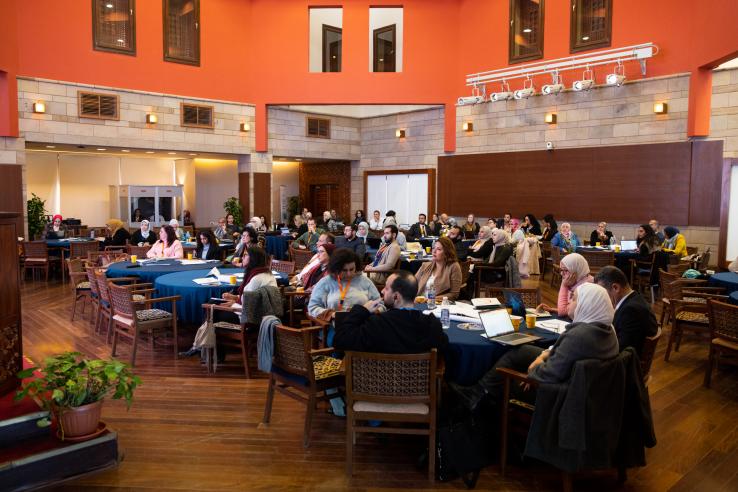
J-PAL MENA April Newsletter Header Group Photos Gallery
Update
J-PAL Updates

April 2025 MENA Bi-Annual Newsletter

Catch up on four months of updates from J-PAL MENA in the first quarter of 2025 — from launching HAPIE and building evidence ecosystems to marking five years of impact in the region.
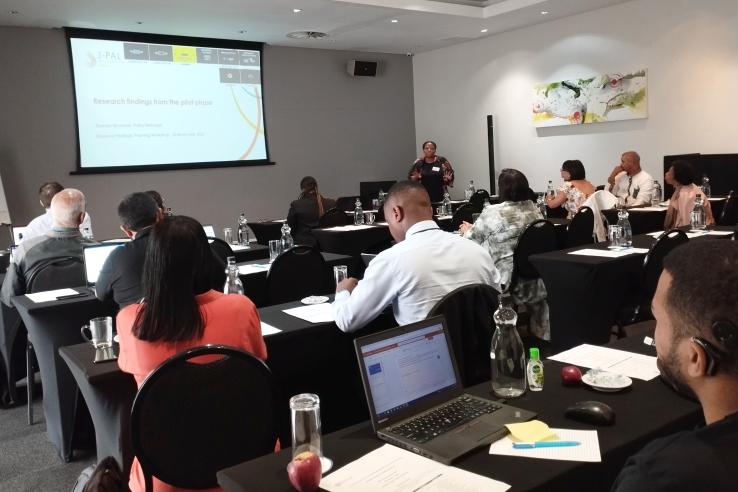
Group of students and professionals working together
Update
J-PAL Updates

April 2025 North America Newsletter

J-PAL North America's April newsletter features recent work along J-PAL North America’s research lifecycle including newly funded projects and the launch of Economics Pathways, a pipeline program to empower the next generation of economists researching critical policy questions through training...
Blue electric vehicle is charging at a parking lot
Event

Climate Action Learning Lab Summit

Join J-PAL North America as we connect state and local climate leaders, government associations, and academic researchers from across the country to advance evidence for climate action.
Group of participants during the Early Childhood Development Conference in Guatemala
Blog

J-PAL LAC government partnerships: Supporting government decision-making in Guatemala

Our work at J-PAL Latin America and the Caribbean (LAC) is made possible by close collaboration with and the dedication of many regional governments who recognize the importance of using data and evidence to improve social programs and public policy. Over the past fifteen years, we have worked with...
A classroom participating in the TARL programme
Event

The Evidence Effect: Evaluating Innovation in Development and Why it Matters

On June 27, 2025, J-PAL Europe convened European development actors, academics, philanthropy, and journalists to discuss The Evidence Effect in Paris. One of our goals was to affirm a much more positive version of the story about development impact than we were seeing around us. So much measurable...
Small rural community toilet block surrounded by greenery
Policy insight

Improving sanitation access with subsidies, loans, and community-led programs

Programs involving community behavior-change campaigns and subsidies to boost toilet construction can improve people’s access to and use of improved sanitation facilities. However, evidence on the downstream health impacts of common sanitation programs in low- and middle-income countries has been...
Two farmers uproot rice seedlings for transplantation during monsoon season in India.
Blog

The Evidence Effect: Ideas for the future of development

With fewer resources available, the bar is even higher for deciding which social sector and development programs to invest in. Evidence can help governments, funders, and implementing organizations navigate today’s challenges and make more effective and cost-effective decisions.
Update
J-PAL Updates

May 2025 Global Monthly Newsletter

In the May edition of the newsletter, we spotlight the launch of we spotlight the launch of The Evidence Effect, a new campaign showcasing how research drives impact across sectors. This edition also features ongoing work to improve worker well-being on the job and expand access to safe, dignified...
Two students sitting at separate desks with laptops in a classroom.
Event

DEDP Webinar: Pursue a Credential in the MITx MicroMasters® Program

Join the course team for a live webinar to explore the Data, Economics, and Design of Policy MicroMasters program, gain insights into the upcoming term, and have your questions answered in real time.
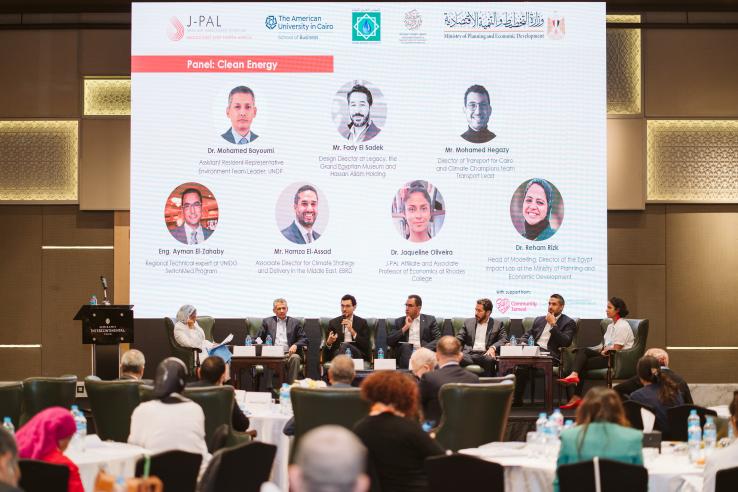
Four people on a panel with a screen behind them.
Blog

Integrating conservation into development policy in Brazil

While individual behavior and corporate commitments play an important role in transitioning to a sustainable economic development model, the structural changes needed to mitigate environmental impacts can also be effectively achieved through well-designed public policies.
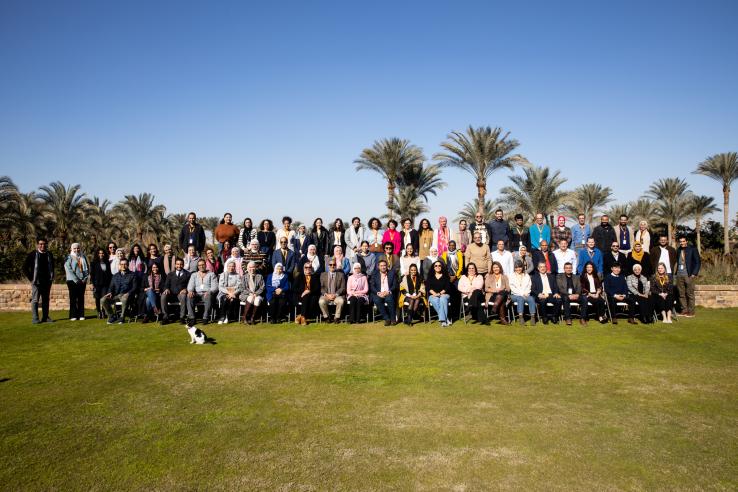
A gif showing different group images
Blog

Egypt Impact Lab: Making every Egyptian pound spent on development count

The EIL’s integration into the formal structure of the National Institute for Governance and Sustainable Development in 2024 marked a turning point in Egypt’s commitment to evidence-based governance.
Woman textile worker checking garment stock at factory
Policy insight

Workplace interventions to improve worker well-being

Firm-level interventions aimed at improving the well-being of workers have led to safer workplaces, greater worker health, higher job satisfaction, and lower turnover. In some cases, these programs also increased workers’ productivity, which benefited their employers.
J-PAL and San Diego County staff at Training Session
Blog

Ideas to Implementation: Scoping evaluation possibilities to strengthen Climate Action Plan implementation in San Diego County

The County of San Diego’s Office of Evaluation, Performance, and Analytics (OEPA), Planning and Development Services (PDS) teams, J-PAL staff, and UCSD researchers discuss their efforts to explore innovative evaluation possibilities aimed at strengthening the implementation of the Climate Action...
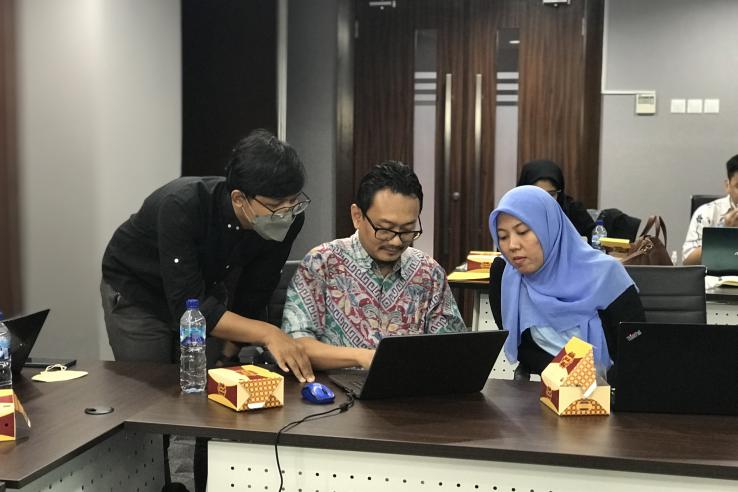
A group of people working together on a round table.
Blog

Supporting emerging researchers through Economics Pathways

J-PAL North America launches Economic Pathways, a targeted effort to empower the next generation of economists researching critical policy questions.

Pagination

  • First page « First
  • Previous page ‹
  • …
  • Page 215
  • Page 216
  • Current page 217
  • Page 218
  • Page 219
  • …
  • Next page ›
  • Last page Last »
J-PAL

J-PAL

400 Main Street

E19-201

Cambridge, MA 02142

USA

Contact

+1 617 324 6566

[email protected]


Press Room

Stay Informed

Receive our newsletters

Subscribe


Privacy Policy

Accessibility

MIT