J-PAL J-PAL
The Abdul Latif Jameel Poverty Action Lab
  • About
    • Overview
    • People
      • Affiliated Professors
      • Invited Researchers
      • J-PAL Scholars
      • Board
      • Leadership
      • Staff
    • Strengthening Our Work
    • Code of Conduct
    • Initiatives
    • Events
    • Blog
    • News
    • Press Room
  • Offices
    • Overview
    • Global
    • Africa
    • Europe
    • Latin America and the Caribbean
      • Growing Futures
    • Middle East and North Africa
    • North America
    • South Asia
    • Southeast Asia
  • Sectors
    • Overview
    • Agriculture
    • Crime, Violence, and Conflict
    • Education
    • Environment, Energy, and Climate Change
    • Finance
    • Firms
    • Gender
    • Health
    • Labor Markets
    • Political Economy and Governance
    • Social Protection
  • Evaluations
  • Research Resources
    • About Us
    • Our Work
    • Join ASPIRE
    • Newsroom
  • Policy Insights
  • Evidence to Policy
    • Pathways and Case Studies
    • The Evidence Effect
  • Blog
  • Careers
  • Courses
  • For Affiliates
  • Support J-PAL

Utility menu

  • Blog
  • Careers
  • Courses
  • For Affiliates
  • Support J-PAL

Quick links

  • Evaluations
  • Research Resources
  • Policy Insights
  • Evidence to Policy
    • Pathways and Case Studies
    • The Evidence Effect
  • About

    The Abdul Latif Jameel Poverty Action Lab (J-PAL) is a global research center working to reduce poverty by ensuring that policy is informed by scientific evidence. Anchored by a network of more than 1,100 researchers at universities around the world, J-PAL conducts randomized impact evaluations to answer critical questions in the fight against poverty.

    • Overview

      The Abdul Latif Jameel Poverty Action Lab (J-PAL) is a global research center working to reduce poverty by ensuring that policy is informed by scientific evidence. Anchored by a network of more than 1,100 researchers at universities around the world, J-PAL conducts randomized impact evaluations to answer critical questions in the fight against poverty.

      • Affiliated Professors

        Our affiliated professors are based at over 130 universities and conduct randomized evaluations around the world to design, evaluate, and improve programs and policies aimed at reducing poverty. They set their own research agendas, raise funds to support their evaluations, and work with J-PAL staff on research, policy outreach, and training.

      • Invited Researchers
      • J-PAL Scholars
      • Board
        Our Board of Directors, which is composed of J-PAL affiliated professors and senior management, provides overall strategic guidance to J-PAL, our sector programs, and regional offices.
      • Leadership
      • Staff
    • Strengthening Our Work

      Our research, policy, and training work is fundamentally better when it is informed by a broad range of perspectives.

    • Code of Conduct
    • Initiatives
      J-PAL initiatives concentrate funding and other resources around priority topics for which rigorous policy-relevant research is urgently needed.
    • Events
      We host events around the world and online to share results and policy lessons from randomized evaluations, to build new partnerships between researchers and practitioners, and to train organizations on how to design and conduct randomized evaluations, and use evidence from impact evaluations.
    • Blog
      News, ideas, and analysis from J-PAL staff and affiliated professors.
    • News
      Browse news articles about J-PAL and our affiliated professors, read our press releases and monthly global and research newsletters, and connect with us for media inquiries.
    • Press Room
      Based at leading universities around the world, our experts are economists who use randomized evaluations to answer critical questions in the fight against poverty. Connect with us for all media inquiries and we'll help you find the right person to shed insight on your story.
  • Offices
    J-PAL is based at MIT in Cambridge, MA and has seven regional offices at leading universities in Africa, Europe, Latin America and the Caribbean, Middle East and North Africa, North America, South Asia, and Southeast Asia.
    • Overview
      J-PAL is based at MIT in Cambridge, MA and has seven regional offices at leading universities in Africa, Europe, Latin America and the Caribbean, Middle East and North Africa, North America, South Asia, and Southeast Asia.
    • Global
      Our global office is based at the Department of Economics at the Massachusetts Institute of Technology. It serves as the head office for our network of seven independent regional offices.
    • Africa
    • Europe
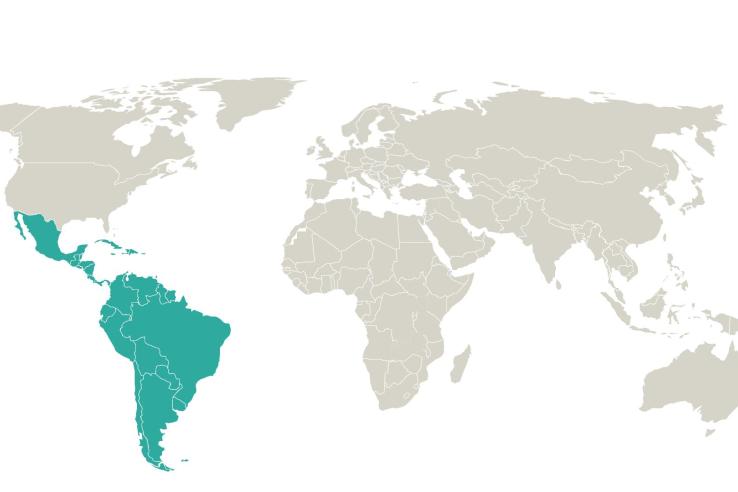
    • Latin America and the Caribbean
    • Middle East and North Africa
    • North America
    • South Asia
    • Southeast Asia
  • Sectors
    Led by affiliated professors, J-PAL sectors guide our research and policy work by conducting literature reviews; by managing research initiatives that promote the rigorous evaluation of innovative interventions by affiliates; and by summarizing findings and lessons from randomized evaluations and producing cost-effectiveness analyses to help inform relevant policy debates.
    • Overview
      Led by affiliated professors, J-PAL sectors guide our research and policy work by conducting literature reviews; by managing research initiatives that promote the rigorous evaluation of innovative interventions by affiliates; and by summarizing findings and lessons from randomized evaluations and producing cost-effectiveness analyses to help inform relevant policy debates.
    • Agriculture
      How can we encourage small farmers to adopt proven agricultural practices and improve their yields and profitability?
    • Crime, Violence, and Conflict
      What are the causes and consequences of crime, violence, and conflict and how can policy responses improve outcomes for those affected?
    • Education
      How can students receive high-quality schooling that will help them, their families, and their communities truly realize the promise of education?
    • Environment, Energy, and Climate Change
      How can we increase access to energy, reduce pollution, and mitigate and build resilience to climate change?
    • Finance
      How can financial products and services be more affordable, appropriate, and accessible to underserved households and businesses?
    • Firms
      How do policies affecting private sector firms impact productivity gaps between higher-income and lower-income countries? How do firms’ own policies impact economic growth and worker welfare?
    • Gender
      How can we reduce gender inequality and ensure that social programs are sensitive to existing gender dynamics?
    • Health
      How can we increase access to and delivery of quality health care services and effectively promote healthy behaviors?
    • Labor Markets
      How can we help people find and keep work, particularly young people entering the workforce?
    • Political Economy and Governance
      What are the causes and consequences of poor governance and how can policy improve public service delivery?
    • Social Protection
      How can we identify effective policies and programs in low- and middle-income countries that provide financial assistance to low-income families, insuring against shocks and breaking poverty traps?
Displaying 5596 - 5610 of 7150
J-PAL logo
Resource
Layout Page

Guide for Early Career Researchers

Speaker pointing to slide in front of large classroom
Resource
Layout Page

ADEPT Home

The Alliance for Data, Evaluation, and Policy Training (ADEPT) is a global network of campuses and partners committed to training the next generation of researchers and decision-makers in policy evaluation and data analysis.
Photo from the launch of the second civil servants cohort at ENSEA
Event

J-PAL Europe & ENSEA Colloquium: Celebrating the First Cohort of Civil Servants and Welcoming ENSEA into ADEPT

J-PAL and ENSEA are hosting a collloquium in Abidjan, Côte d’Ivoire to graduate the first set of civil servants from their civil servant's training prorgam and officially welcome ENSEA into the Alliance for Data, Evaluation, and Policy Training (ADEPT).
Man and woman shake hands
Resource
Layout Page

About ADEPT

The Alliance for Data, Evaluation, and Policy Training (ADEPT) is a global network of campuses and partners committed to training the next generation of researchers and decision-makers.
J-PAL logo
Resource
Layout Page

ADEPT Partnerships

ADEPT is powered by our diverse network of partners—from universities and training institutions to governments, foundations, and the private sector. Together, we create pathways and programs that support the development of skills in data, evaluation, and policy design.
J-PAL, Insper and LAC leadership signing a partnership agreement
Resource
Layout Page

Our latest updates

This page covers all events, media, and news publications that ADEPT was featured in.
Headshot of Zakayo
Blog

African Scholar Spotlight: Zakayo Zakaria

This post is part of our ongoing series showcasing the work and perspectives of economists from the African continent who are leading randomized evaluations. Through our African Scholars Program, we hope to help create more opportunities for African researchers to advance the research agenda on the...
Person

Maxfield Hubych

A man installs a solar panel on a rooftop on a sunny day.
Resource
Basic page

J-PAL North America Evidence for Climate Action Project

Through the Evidence for Climate Action Project, J-PAL North America aims to generate evidence to identify and advance equitable, high-impact policy solutions to climate change in the United States. J-PAL North America will convene an influential network of government leaders, academic researchers...
Dancing youth moving on the center of capital of Kazakhstan
Evaluation

Community Service Grants to Foster Social and Economic Integration for Youth in Kazakhstan

In Kazakhstan, researchers tested whether offering youth community service grants and training impacted their level of community engagement, pro-social behavior, life skills, and labor market outcomes. Engaging youth in civic service and/or training had little to no effect on these outcomes one-year post-program, with some evidence of negative training effects on labor market outcomes.
Lecturer and participants in roundtables
Event

Advanced Course on Evaluating Social Programs for Researchers in MENA and Africa

The Advanced Course on Evaluating Social Programs aims to strengthen the evidence generation ecosystem among local and regional researchers in MENA and African countries. It will gather 42 participants from across Egypt, Lebanon, Algeria, Kenya and Nigeria, to provide a platform for knowledge...
Photo of three DEDP master's students reviewing an informational pamphlet
Event

Dentro do Programa MITx MicroMasters® em Dados, Economia, e Design de Políticas (DEDP) e das Bolsas de Estudo da Fundação Lemann

O programa MicroMasters® em Dados, Economia e Design de Políticas (DEDP) oferece a estudantes habilidades práticas e conhecimento teórico para enfrentar alguns dos desafios mais urgentes em todo o mundo.
Person

Charul Dhingra

Charul Dhingra is a Policy Manager at J-PAL South Asia, focusing on the scale-up of evidence-based programs. In her current role, she collaborates closely with program stakeholders, including NGO partners, government agencies, donors, and academic researchers, to facilitate the scaling up of Math...
Person

Arinze Nwokolo

Person

Rose Camille Vincent

Pagination

  • First page « First
  • Previous page ‹
  • …
  • Page 372
  • Page 373
  • Current page 374
  • Page 375
  • Page 376
  • …
  • Next page ›
  • Last page Last »
J-PAL

J-PAL

400 Main Street

E19-201

Cambridge, MA 02142

USA

Contact

+1 617 324 6566

[email protected]


Press Room

Stay Informed

Receive our newsletters

Subscribe


Privacy Policy

Accessibility

MIT