Image
The program is open to resident and non-resident African scholars conducting research aligned with UJALA's research priorities. Specific requirements include:
Applicants must not be current J-PAL affiliates or invited researchers. Prior collaboration with J-PAL researchers in those roles is not disqualifying, as long as the applicant meets the eligibility criteria.
During the first phase of the program, some scholars might be recommended to complete one or two courses from the Data, Economics, and Design of Policy MicroMasters (DEDP), particularly if they are new to impact evaluation or need a refresher on key concepts. Course fees will be covered by UJALA.
All scholars will have the opportunity to request funding to cover course fees, either for taking additional courses or for completing the full MicroMasters if they wish. In such cases, they will be asked to briefly explain how they plan to manage the time commitment and how the additional coursework would support their pilot proposal and research development.
All scholars are required to participate in a practical workshop, designed to guide them through the full process of developing a pilot proposal. Scholars will work through a randomized evaluation case, draft a full proposal and budget sheet, and receive simulated review comments and a mock funding decision. The final output will be reviewed by UJALA staff and a J-PAL affiliated or invited researcher.
Mentorship begins after the scholar successfully completes the training components of the UJALA African Scholars Program, submits a Letter of Interest (LOI), and is invited to submit a full proposal following a positive review of their LOI.
Each funded scholar is paired with a J-PAL affiliated or invited researcher who provides tailored, hands-on guidance throughout the grant period.
Mentors provide regular check-ins and support on research design, fieldwork, and how study results could be used to inform or scale up similar programs in other settings.
Scholars will either:
In all pathways, scholars will receive continuous support and guidance from the UJALA team.
Scholars can apply for up to $75,000 (pre-tax) in pilot grant funding, under either the Embedded Evaluations or the Researcher-Led Evaluations tracks, to design and implement early-stage RCTs (see the RFP section on UJALA’s website for details). Funding covers field costs, research design, and researcher time (up to a certain percentage; see the funding section in the FAQ for details). However, to be eligible for this funding, Scholars must successfully complete the training components of the program. Then, they must also submit a promising Letter of Interest (LOI), which summarizes their proposed research. After the LOI is accepted, Scholars will be invited to submit a proposal as part of the request for proposals (RFP) stage, which involves a competitive, multi-step review process before a funding decision is made.
J-PAL Scholars who have successfully completed a pilot under another J-PAL initiative or regional office may apply directly for UJALA pilot funding through our RFP process, without going through the UJALA Scholars Program training and workshop. See our webpage or the FAQ document for more information.
Scholars will develop practical skills in designing and running randomized evaluations, including drafting proposals and corresponding budgets, responding to peer reviews, and communicating research findings.
UJALA African Scholars Program participants will work closely with their cohort peers and mentors while developing their research projects and building connections through shared learning and collaboration.
UJALA African Scholars who are awarded research funding will also gain access to a wider network of J-PAL Scholars, J-PAL affiliated and invited researchers, as well as UJALA’s partner institutions worldwide.
Scholars may have opportunities to share their work at UJALA and partner events. Their projects may also be featured in newsletters, social media posts, or other platforms to highlight key milestones and achievements.
Completing a successful pilot opens the door for future funding opportunities through UJALA or other J-PAL Scholars Programs. Check the FAQ document to learn more about these opportunities.
The UJALA African Scholars Program supports African scholars to lead rigorous, policy-relevant impact evaluations in agriculture across the globe. Despite growing interest in evidence-based policymaking, many scholars face barriers to accessing the resources and support needed to lead high-quality randomized evaluations. To address this gap, UJALA will offer a tailored package of training, mentorship, funding, and hands-on experience to researchers who hold a PhD in Economics, Agricultural Economics, or a related empirical field and are affiliated with an academic institution. The program is open to both resident and non-resident African scholars whose work aligns with UJALA’s research agenda on agricultural development.
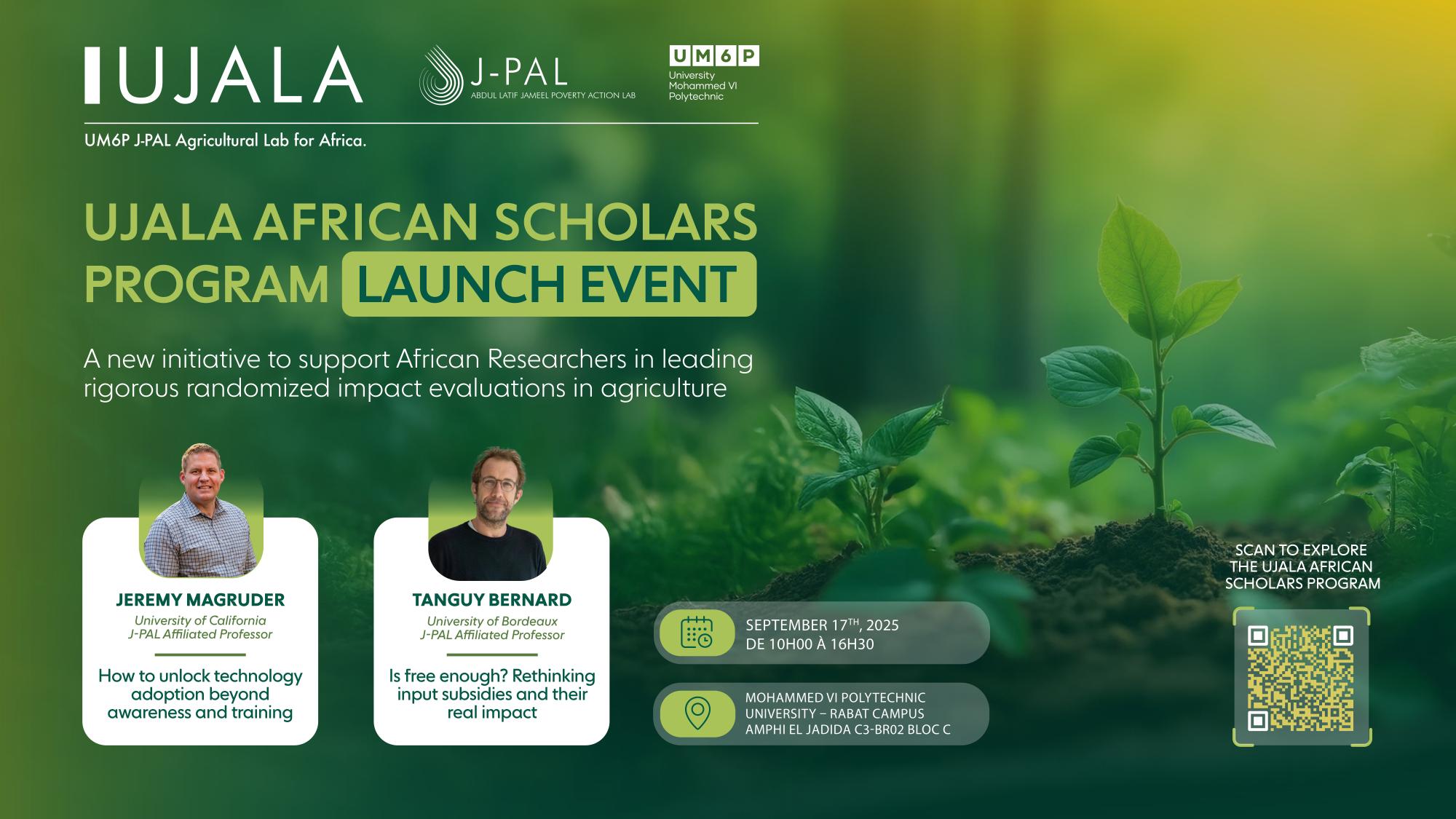
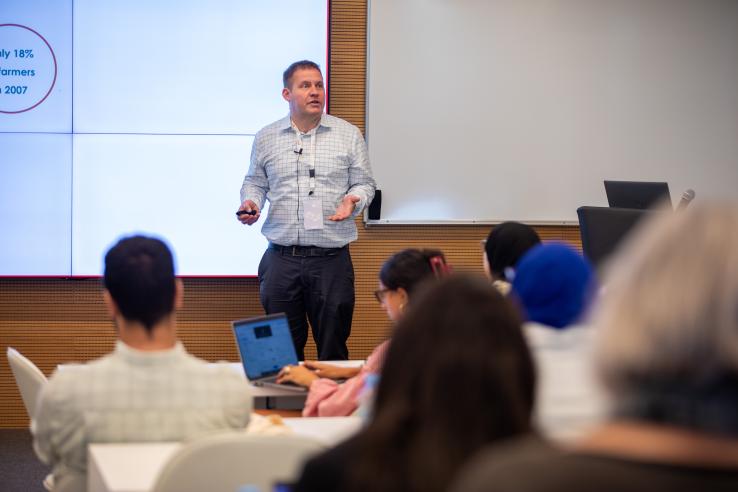
UJALA officially launched the UJALA African Scholars Program during an in-person event at the University Mohammed VI Polytechnic (UM6P) Rabat campus on 17 September 2025. The event presented the program’s goals, structure, and opportunities for African Scholars interested in conducting high-quality impact evaluations.
The agenda included:
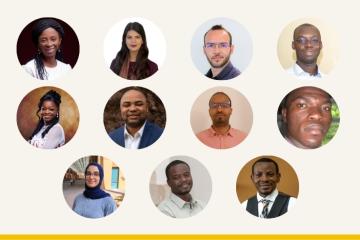
 Oluwaremilekun Ayobami Adebisi
Dr. Oluwaremilekun Ayobami ADEBISI is a Research Fellow at the Institute for Food Security and Commercial Agriculture, Federal University Oye-Ekiti, Nigeria. She holds both a Master’s and a PhD in Agricultural Economics from the University of Ilorin, Nigeria. An Agricultural and Development Economist with over ten years of professional experience, she is committed to advancing evidence-based policy and practice through applied research. Her work focuses on food security, gender and women’s empowerment, climate change, financial inclusion, and rural health. Dr Adebisi utilizes rigorous impact evaluation tools, including randomized controlled trials, to assess program outcomes.
 Banawe Anissa
Banawe Anissa is a Statistician and Applied Economist (with interests in Industrial Organization and Mechanism Design, and applications to agri-food systems development).
 Bouthayna El Amine
Dr Bouthayna El Amine is a postdoctoral researcher under the Africa Carbon Flagship Program at the College of Agriculture and Environmental Sciences (CAES), University Mohammed VI Polytechnic (UM6P), where she studies new technologies, adaptation strategies, land use, and the policy dimensions of climate action across Africa. She coordinates a Collaborative Learning School funded by the U.S. National Science Foundation (NSF) in the El Haouz and Rhamna regions of Morocco, as part of the project US-Africa Sustainable Food Systems through Water-Energy-Food Nexus Networking (SustainFood). As the Lead Researcher of the British Council Researcher Challenge 2025 winning project, Women of the Argan Biosphere, she investigates women’s empowerment and innovation in rural Morocco. Dr. El Amine also contributes to TAGDEV 2.0: Agri-Food Systems Community Action Research and Entrepreneurship (ASEC) at UM6P’s Startgate - Innovation and Entrepreneurship Lab, focusing on innovations across the olive value chain—from climate-resilient technologies and plantation trials to farmer outreach and capacity building.
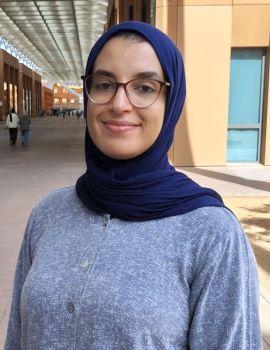 Salma El Idrissi Essebtey
Salma El Idrissi Essebtey is a Postdoctoral Researcher at UM6P’s Center for Remote Sensing Applications (CRSA). She works on monitoring and forecasting rainfed winter wheat in Morocco by combining crop-growth models, assimilation of satellite observations, in-situ yield records, and machine learning. Salma holds an Engineering degree in Water & Environmental Sciences and a PhD in Remote Sensing focused on monitoring tropical forest based on multi-frequency (P/L/C-bands) radar time series, conducted as part of the scientific preparation for ESA’s BIOMASS mission using the TropiScat-2 field experiment. She is now expanding her work through the UJALA African Scholars Program to generate decision-ready and policy-relevant evidence for agriculture under climate stress, by combining Earth observation and farmer data with econometrics and program evaluation.
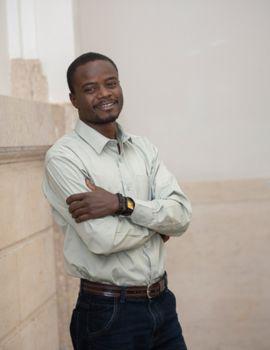 Soumaïla Gansonré
Soumaila Gansonré is an Assistant Professor of Economics at the Centre Universitaire de Ziniaré, Université Joseph Ki-Zerbo, Burkina Faso. He holds a Ph.D. in Applied Agricultural Economics and Policy from the University of Ghana. His research lies at the intersection of development and agricultural economics, focusing on smallholder farmers and small and medium-sized enterprises in developing countries. Most of Soumaila’s research explores how agriculture, climate, and markets shape economic and welfare outcomes for these key economic agents. He has a strong background in quantitative and microeconometric methods, which he applies to a broad range of policy-relevant issues. His research has been published in respected journals such as Agricultural Economics, Review of Income and Wealth, and the International Journal of the Economics of Business, among others.
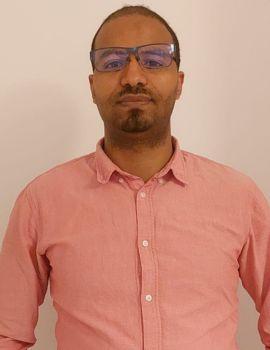 Fissha Asmare Marye
Fissha Asmare Marye is an environmental /agricultural economist focused on understanding how to improve resilience and productivity in the agricultural sector. Using experimental and quasi-experimental methods, Fissha examines how behavioural biases influence resource use efficiency—particularly energy and water—and the adoption of sustainable agricultural technologies.
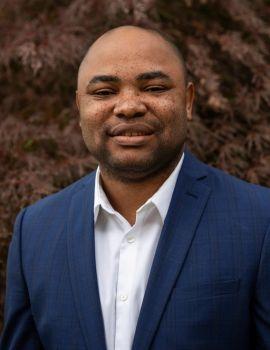 Karim Nchare
Karim Nchare is a Senior Lecturer in Economics at Vanderbilt University. He is an econometrician working on theoretical and applied econometrics with applications to agricultural economics, development economics, and decision sciences.
 Hephzibah Onyeje Obekpa
Hephzibah Onyeje Obekpa is a senior lecturer in agricultural economics at Joseph Sarwuan Tarka University, Makurdi, Nigeria. She holds a Ph.D. in Agricultural Economics (split-site with Michigan State University, USA) and specialises in applied microeconometrics, food security, and climate change economics. Her research focuses on how environmental and economic factors influence rural livelihoods and development outcomes in Sub-Saharan Africa. Dr. Obekpa has published in top international journals and actively contributes to policy-oriented training and gender-inclusive capacity-building initiatives under the World Bank’s Centre of Excellence in Social Standards.
 Emmanuel Trouche
Emmanuel Trouche is an Assistant Professor at the Faculty of Governance, Economics and Social Sciences (FGSES) at Mohammed VI Polytechnic University (UM6P). Within the Africa Institute for Research in Economics and Social Sciences (AIRESS), his research uses experimental methods to study learning, reasoning, and belief revision, with applications to education and decision-making. He is the Principal Investigator of PASEM, which designs and tests approaches to improve Arabic literacy and early mathematics in Moroccan public schools.
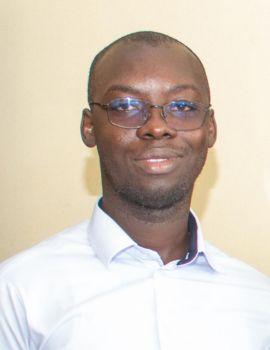 Henri Zoungrana
Henri Zoungrana is an economist from Burkina Faso specialising in climate change economics, agricultural productivity, adaptation finance, and economic policies for sustainable development. He holds a Ph.D. in Applied Economics from Félix Houphouët-Boigny University, Côte d’Ivoire, obtained through the Excellence Scholarship of the Interuniversity Graduate Program (CIEREA-PTCI).
Looking for more information or have any questions? Check our FAQ document for details on eligibility, application process, funding, and program structure.
Still didn’t find what you’re looking for? Reach out to the UJALA team at [email protected]. The team will be happy to assist you and get back to you as soon as possible. Please note that time differences may apply as UJALA working hours follow the Rabat time zone.