Image
Across low- and middle-income countries (LMICs), more children are entering pre-primary school than ever before. In Ghana, for example, making two years of preschool compulsory in 2008 helped expand provision to around 15,000 preschools, which now employ 32,000 teachers to serve 1.3 million children. Yet, despite this expansion, fewer than half of preschool-age children in Ghana are developmentally on track in literacy and numeracy. Many public preschools in LMICs struggle with crowded classrooms, shortages of trained staff, limited learning materials, and suboptimal teaching practices. Without significant efforts to improve preschool quality, expanding access alone risks doing little to improve child development and school readiness.
One approach shown to be effective is hiring and training more teachers or teaching assistants. Research in the US as well as in several LMICs suggests that increasing teaching staff and reducing class sizes are a promising way to improve learning. But limited public funding for pre-primary education can make this difficult, especially amid shrinking aid budgets and tightening fiscal space.
New research from rural northern Ghana shows that activating the power of parents may offer an alternative promising solution, without requiring an additional budget for salaries. It shows that parents, regardless of their educational and socio-economic background, have the potential to drive significant improvements in children’s school readiness in both preschools and at home.
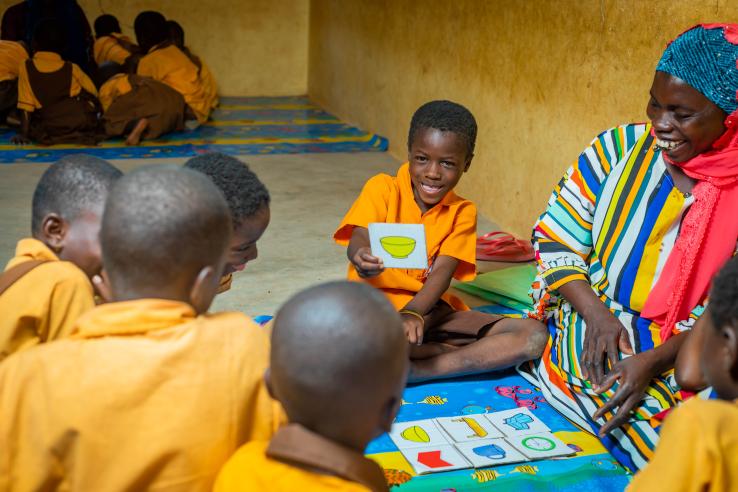
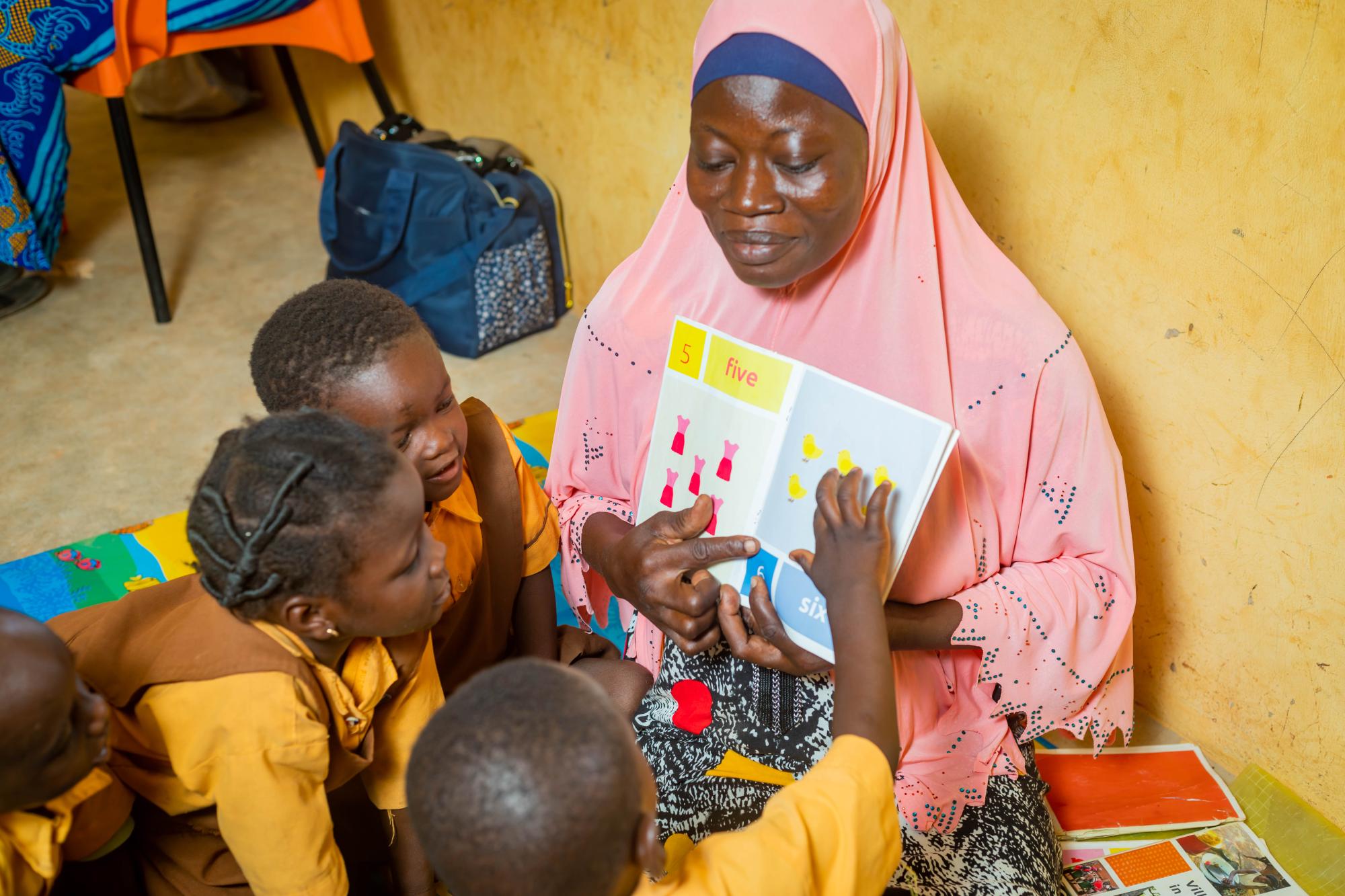
The GES Lively Minds program, developed by the NGO Lively Minds and delivered through the Ghana Education Service, trains community mothers to lead structured Play Schemes in public preschools. Small groups of children rotate through stations focused on counting, sorting, story-telling, building, problem-solving, physical play, and other foundational skills. Teachers supervise, while mothers provide the attention and interaction that are hard to deliver in a large class.
The model is deliberately designed for women with little or no formal education. Training is practical and demonstration-based. Mothers attend eight two-hour sessions over three weeks, then run the Play Scheme at the preschool in groups for two hours once a week. Mothers also receive monthly workshops that teach them practical ways to improve the learning and care they provide at home, and to strengthen their own well-being.
This model is compelling precisely because it connects two environments that are often treated separately. In preschool, mothers expand adult-child ratios and enable small group, play-based learning. At home, mothers can use what they have learned with their own children. The same investment can, therefore, improve both preschool quality and the home learning environment, and strengthen the relationship between teachers and parents.
Researchers evaluated the program in eighty public preschools, randomly assigning half to receive the Lively Minds program while the other half continued with standard provision. The study followed around two thousand children and their primary caregivers.
After one school year, children in program preschools showed an overall improvement in cognitive development, with gains concentrated in early numeracy and executive function, which are skills children use to focus, remember instructions, and control impulses. The magnitude of improvements in school readiness is comparable to those achieved through recruitment of additional teaching staff in other contexts. These classroom improvements benefited all children in the program preschools, whether or not their own mother participated in the program, suggesting that adding trained mothers enhanced the learning environment for everyone.
The program also helped reduce children’s emotional and behavioral difficulties. These improvements were higher among children whose mothers participated in delivering the program. Through program engagement and delivery, participating mothers learned more about child development, spent more time playing and learning with their children at home, and interacted with them in more supportive ways. This suggests that the program continued to benefit children after the school day ended.
The model cost $37 per child during the first year of the study, including start-up and additional expenses from adaptations related to the evaluation design, to implementation. The model continued to run year on year at lower cost and with new intake of children each academic year. Under the researchers’ most conservative assumptions, each dollar spent was projected to generate about eight dollars in future earnings, valued in today’s money.
From a public finance perspective, the program would pay for itself if the government ultimately recovered roughly one-eighth of those projected gains through taxes.
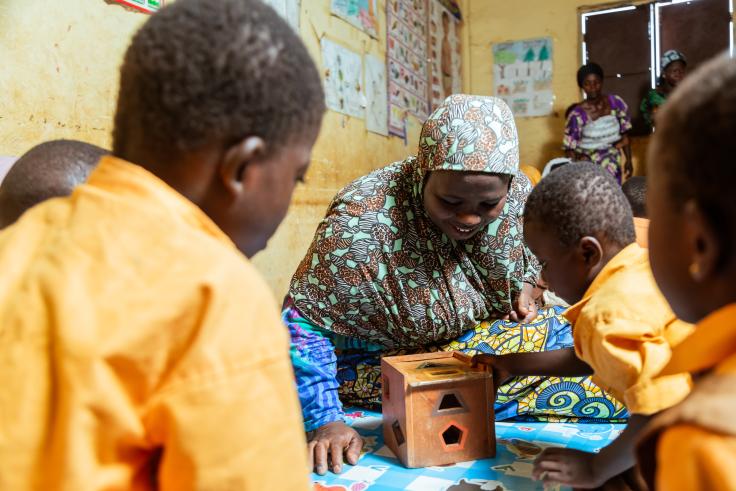
One concern with volunteer-based models is whether they place additional burdens on women who are already managing childcare, household work, and paid work. To test this, the researchers measured mothers' mental health and self-esteem and found no decline. Instead, participating mothers showed improvements in their parenting practices at home, suggesting that program engagement itself benefited mothers, rather than burdening them. Mothers taught Play Schemes for only two hours a week, on a predictable schedule, and the monthly workshops also addressed their well-being. While these findings are reassuring, governments adopting similar programs should continue to monitor the demands placed on caregivers, alongside the benefits for children.
Ghana has since expanded the Lively Minds program to 64 rural districts, reaching more than half a million children. During the rollout, the first year setup costs fell to about fourteen dollars per child in comparable 2017 dollars. After the first year, monitoring data indicates that large numbers of mothers continued to teach at Play Schemes and classroom sessions largely operated as intended. A fully government-funded version of the program is currently being scaled nationally by the government of Ghana.
The key takeaway is not that parent volunteers can replace professional teachers. Rather, when governments invest in both professional educators and engage parents strategically, the results compound. This program demonstrates that there is untapped potential to activate caregivers as active partners in children’s learning, even in contexts where they themselves have limited formal education. By doing so, governments can address key constraints faced by preschools: crowded classrooms and teaching staff stretched thin. Simultaneously, they improve the home learning environment.
Click here to learn more about the Ghana GES Lively Minds Program.