

Image

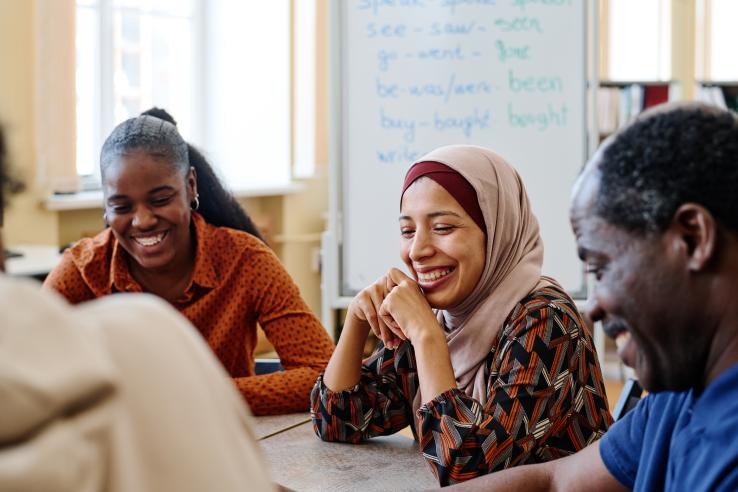
J-PAL’s Jobs and Opportunity Initiative (JOI), launched in March 2020, funds randomized evaluations to identify solutions to pressing employment challenges around the world. One of the open questions we seek to answer through JOI is about the effectiveness of training programs: How can we best equip job seekers with the skills they need to find good employment? How can entrepreneurs gain the skills to run a successful business? An emerging body of rigorous research demonstrates the importance of not only training in hard skills, but also soft skills, like communication and self-awareness. In this post, we summarize lessons from randomized evaluations for policymakers and practitioners seeking to design more effective training programs, and outline remaining open questions for researchers.
Many low- and middle-income countries face high rates of unemployment, especially for youth, and the COVID-19 pandemic has only exacerbated these challenges. Globally, youth unemployment rose by around 4 million in 2020, reversing the declines in unemployment seen in previous years. At the same time, small-to-medium enterprises, who account for over 50 percent of total employment in low-income countries, have persistent low productivity, earnings and profits, and struggle to create employment opportunities.
Skill gaps are often cited as both a reason why job seekers struggle to find work, and why people who are self-employed have lower profits than they otherwise could. In a 2022 survey of over 40,000 employers worldwide, 75 percent reported difficulty finding candidates with the right skills. For entrepreneurs, lacking soft and business skills, paired with low capital and poor labor market conditions, generally prevents them from running and growing a profitable business.
Soft skills or “socioemotional” skills, such as communication, interpersonal skills, impulse control, self-awareness, entrepreneurial mindset, and personal initiative, are predictive of success in the labor market. For people who run their own businesses, certain business skills, such as those related to heuristics and personal initiative, have shown to help improve traditional training programs and have led to a 15 percent increase in profits.
In addition, despite large annual investments of over US$1 billion, past research has shown that traditional, more technical entrepreneurship training has only modest impacts on improving business practices and outcomes for microenterprises.
Research suggests that teaching soft skills through vocational and entrepreneurship training, especially when complemented by hard-skills training, can help job seekers become better candidates and transition workers into long-term employment. Soft skills training programs also have the potential to address broader labor market challenges, and a recent J-PAL Policy Insight highlights how teaching soft skills can support microentrepreneurs and improve firm profits.
However, several open questions remain. For example, how can soft skills training programs target the people who would benefit from them? How can implementers most effectively incorporate soft skills training into other labor market programs?
J-PAL’s Jobs and Opportunity Initiative (JOI) is filling some of these research gaps and providing additional evidence to fully understand the impact of soft skills training on job seekers, employees, and entrepreneurs.
Recent J-PAL evidence synthesis suggests a strong complementarity between hard and soft skills training for workers. When comparing different curricula that were offered to vocational trainees, programs that taught a mix of hard and soft skills had the greatest impact on employment outcomes, especially in the long run, across multiple contexts. In Egypt, a training that mixed hard and soft skills led to better employment outcomes than trainings that focused on either hard skills or soft skills 18 months later, suggesting that the impacts of mixed training programs can persist over time and that these skills can help workers stay employed. However, researchers stressed that more research is needed to examine other ways in which hard and soft-skills trainings are complementary.
Evidence from Colombia showed that participants assigned soft skills-focused training, as opposed to a technical skills-focused training, helped applicants, especially women, both sustain employment and monthly wages over the long term and catch up to those who were given hard skills-focused training. Technical training improved immediate labor market outcomes for both men and women, but soft skills helped participants keep their jobs over time.
Training programs that addressed gender-specific barriers or had an “empowerment” component, such as individual coaching or soft-skills training, improved labor market outcomes for women. Importantly, a recent J-PAL blog summarizes evidence on women’s labor market outcomes and soft skills training showing positive yet different results for women and men.
A six-month vocational training program with a two-week soft skills training component increased earnings for women in Kenya. In combination with the six-month vocational training, female interns placed in the tourism sector had better employment and earnings outcomes than those placed in other sectors, highlighting the differential impacts of training within a group. Women with less education also benefitted more than women with more education, highlighting that training programs could work better for certain groups, although these results were not isolated to those who only participated in the soft-skills component of the program.
Evidence from India suggests female garment worker productivity improved the most when working alongside co-workers and was primarily driven by gains in soft skills like teamwork and collaboration. The program also improved the firm’s output, and consistent communications from researchers encouraged the brand and supplier involved to scale the intervention to other factories and rural settings.
Firms in lower- and middle-income countries experience growth constraints that policymakers and development banks have attempted to address with business training programs. Several studies have found that entrepreneurship training programs that teach soft skills, such as social skills, personal initiative, entrepreneurial mindset, negotiation, persistence, and creativity generally led to higher profits and other positive business outcomes among firms relative to comparison groups. Successful entrepreneurs also have the potential to create jobs for others and help improve local labor markets.
In Togo, women business owners who participated in personal initiative training saw monthly profits rise by around 40 percent compared to those who did not receive training. In the same study, there were no significant impacts of traditional business training methods on profits, but results were not always consistent across training programs.
In Ethiopia, women entrepreneurs participated in either one of two mindset-oriented business training, but only one of the trainings led to higher profits in their enterprises. Trainers who had previously owned a business themselves were able to better inspire mindset change among trainees, suggesting that the quality and experience of trainers is an important determinant of the effectiveness of soft skills training.
Although these findings are promising, many studies saw effects fade in the medium- and long-term. Other studies combined soft skills training with other modules like mentoring or traditional business skills training, which made it difficult to identify the unique and causal impact of the soft skills training specifically.
These insights illustrate that soft skills training, especially in combination with hard skills training, can be a powerful tool to improve labor market outcomes and help entrepreneurs increase their profits – both of which are particularly important policy goals as countries recover from the negative shocks of the COVID-19 pandemic. Additional research around the following aspects of soft skills in training programs would be particularly valuable:
Context:
Measurement:
Multi-component programs:
Job Creation:
Scalability and sustainability:
J-PAL’s Jobs and Opportunity Initiative (JOI) was designed to answer questions like these through funding rigorous randomized evaluations in low- to middle-income countries. JOI has a particular focus on job training and matching strategies, job creation, and the future of jobs. JOI also prioritizes projects related to identifying and supporting high-growth-potential entrepreneurs, and supporting small and microentrepreneurs through alternative training models, especially those with an emphasis on soft skills and an eye towards scale.
JOI-funded studies are addressing some of these key open questions in the soft skills debate. In Colombia, for example, researchers are testing the role of imagery in soft skills development and psychological attitudes in the hopes of fostering entrepreneurial mindsets in response to the negative economic shocks of COVID-19. This study will explore which combination of soft skills can improve entrepreneurial outcomes for low-income populations.
JOI also funded an eight-year follow-up of a program in Uganda that evaluated two mini-MBA programs, one of which focused on soft skills entrepreneurship training for secondary school students. Participants in the soft-skills training were more likely to start enterprises and created higher quality formal businesses 3.5 years after the intervention. The students of the program started 500 new businesses, creating 985 additional jobs. This follow-up allows the research team to examine if the improvements in soft skills and business profits persisted eight years later, as well as the underlying mechanisms driving the original impacts in the multi-component program.
Working in Ghana, JOI-funded researchers plan to evaluate how short-term soft skills and information and communications technology-based training can influence labor market participation, earnings, and the emotional wellbeing of youth in urban settings seeking work in accounting and book keeping, finance, and management. This study could help answer which soft skills are most needed for getting hired in a particular sector.
Also in Ghana, researchers are testing whether the involvement of spouses in personal initiative training has an impact on the growth potential of female-owned businesses. This evidence emphasizes the importance of societal norms and related cultural constraints on women's business performance beyond market conditions and standard training programs. If successful, researchers are hoping to scale the personal and family initiative training beyond the Ashanti region, providing additional evidence on how to successfully scale up soft skills training programs.
Improving soft skills for both job seekers and entrepreneurs has the potential to reduce unemployment and increase profits, respectively. Open questions remain regarding how policymakers and practitioners can tailor and scale their soft skills programs to maximize impacts for participants. To learn more about soft skills evidence or to partner with the Jobs and Opportunity Initiative team to help close these research gaps, please contact [email protected].