Image
This post is co-authored by staff of J-PAL and of the Ministry of Economy and Public Management of Córdoba, Argentina.
Integrating evidence into public sector decision-making is a practical challenge. It requires technical capacity, usable data, and management routines that make it possible to prioritize, learn, and adjust policies in a sustained way. This challenge is especially relevant for subnational governments, which implement programs at scale and face concrete coordination and continuous improvement challenges.
In this context, the Ministry of Economy and Public Management of the Province of Córdoba (Argentina), led by Minister Guillermo C. Acosta, and J-PAL LAC have been working together for more than a year.
Today, this partnership is moving into a more operational phase, focused on strengthening capabilities, improving the use of data, organizing programs, and consolidating a culture of evidence use.
How did we get to this point?
Córdoba has a solid foundation for moving toward more systematic evidence-informed decisions. There is political commitment to advance this agenda, along with the technical capacity to sustain it. A key enabling factor has been the Ministry of Economy and Public Management’s role as a coordinating hub, aligning priorities across ministries and structuring conversations on data and evaluation with a medium-term perspective.
This context is further reinforced by support from provincial leadership and strategic ministries and agencies such as the Ministry of Education and the Secretariat of Science and Technology, which have sustained dialogue spaces and work visits aimed at learning from other experiences and identifying opportunities for improvement.
In addition, ties with universities and actors in the productive ecosystem broaden the space for training and applied learning, aligned with the province’s priorities.
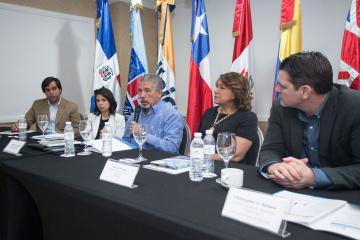
Starting in 2024, the collaboration was consolidated through ongoing engagement and reciprocal visits. An early milestone was a visit to Chile by the Minister of Education, Horacio Ferreyra, and the Secretary of Economic Policy, Andrés Michel. That agenda provided an opportunity to learn from the Chilean Ministries of Education, Finance, and Social Development and Family on how they institutionalize evidence use, leverage data for management, build ties with academia, and strengthen monitoring and evaluation systems.
This was followed by further coordination to define priorities and maintain momentum, including a visit by provincial authorities led by Governor Martín Llaryora and Minister of Economy and Public Management Guillermo Acosta.
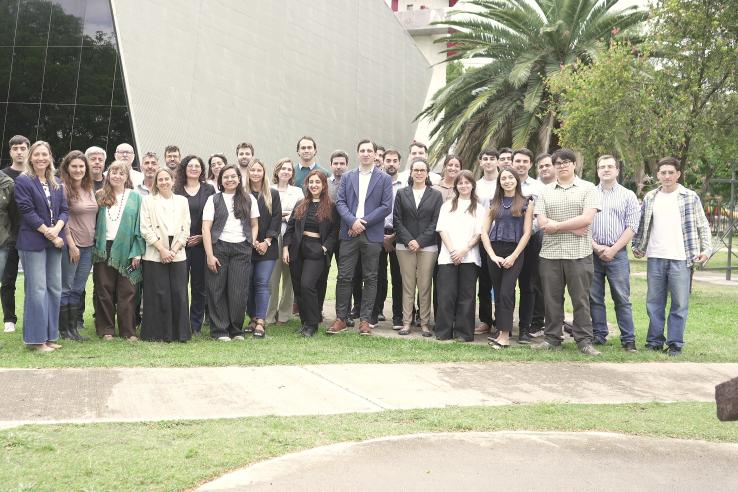
Building on that foundation, in late 2025 a J-PAL LAC team conducted a work visit to Córdoba. The visit combined virtual sessions with three days of in-person work to agree on priorities, organize the technical agenda, and launch an intensive training for provincial government technical teams on impact evaluation and evidence use, described in the next section.
In parallel, we worked with the Ministry of Economy and Public Management to organize priority areas for the months ahead, including how programs and data will be structured for the technical work to follow.
This initial phase has combined two complementary workstreams. First, the partnership sought to build practical capabilities so public teams can incorporate evidence into day-to-day decisions.
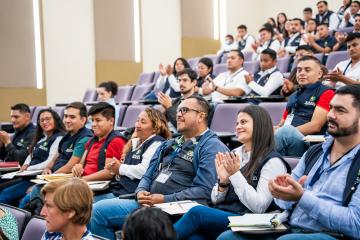
This took shape through a recent intensive course of ten theory-and-practice sessions, bringing together 33 public officials from seven provincial ministries. Over the cycle, participants worked with applied tools, including evaluation types, theory of change, formulating strong policy questions, criteria for choosing approaches (including randomization when appropriate), and translating evidence into action.
These sessions were complemented by workshops designed to connect the content to real management challenges. In practice, the course helped build a shared language and connect teams who are pushing this agenda across sectors.
Second, the partnership advanced an initial effort to organize programs and data in order to prioritize what to improve and what to evaluate. The Ministry of Economy and Public Management developed an evaluability matrix and data diagnostics to guide priorities, which will serve as a foundation for deeper work on a selected set of prioritized programs.
Based on this work, three preliminary lessons stand out.
First, it is critical to have a cohesive team with a clear mandate to coordinate the agenda across ministries. In Córdoba, this articulation has been organized through the Ministry of Economy and Public Management, which has served as a coordinating point to align priorities, sustain technical follow-up, and ensure continuity over time.
Second, it is important to organize and prioritize before expanding the program portfolio. Mapping programs and identifying information gaps makes it possible to prioritize realistically and concentrate effort where there is the greatest room for improvement.
Third, it can be valuable to build low-cost, high-value partnerships that connect government, academia, and international partners when useful. In practice, this translates into exchange and applied learning spaces with a tight scope, clear roles, and light-touch follow-up, which allow progress without overburdening coordination.
This kind of collaboration can strengthen capabilities, open pathways to improve programs, and, when appropriate, prepare the ground for pilots or more demanding evaluations, while maintaining responsible communication about what evidence can and cannot claim.
The next stage aims to consolidate a shared roadmap to institutionalize evidence use and evaluation within the provincial policy cycle. This involves sustaining regular coordination between the Ministry of Economy and Public Management and J-PAL LAC, agreeing on work milestones, and following up on priorities that combine learning with concrete results.
In the near term, we will share evidence with teams across different provincial ministries so they can access relevant inputs and translate them into practical management decisions. In parallel, the possibility of a learning visit to Chile by a provincial technical delegation is being explored, focused on learning from public institutions that use data and evidence to strengthen monitoring, management, and results.
In the medium term, these lines of work may converge into a more structured effort combining training, tools, and applied work, with gradual engagement with universities and research centers when it adds value for provincial priorities. The guiding conviction is simple: when capabilities, usable data, and learning routines are in place, evidence stops being an “extra” input and becomes part of how policies and programs are managed. That is the horizon this partnership aims to keep building, step by step.