J-PAL at the India AI Impact Summit 2026
India hosted its flagship international gathering on AI, the India AI Impact Summit 2026, from February 16-20 in New Delhi. The summit was special for two reasons. It was the first of its kind to be held in the Global South, and it was the first to place impact at the heart of conversations on AI innovations.
The J-PAL team had a whirlwind week at the summit, organizing our official Summit event, AI for Social Good: Impact That Works as well as speaking at events organized by Data.org, Open AI and the World Bank.
In partnership with
| 
| 
| 
|
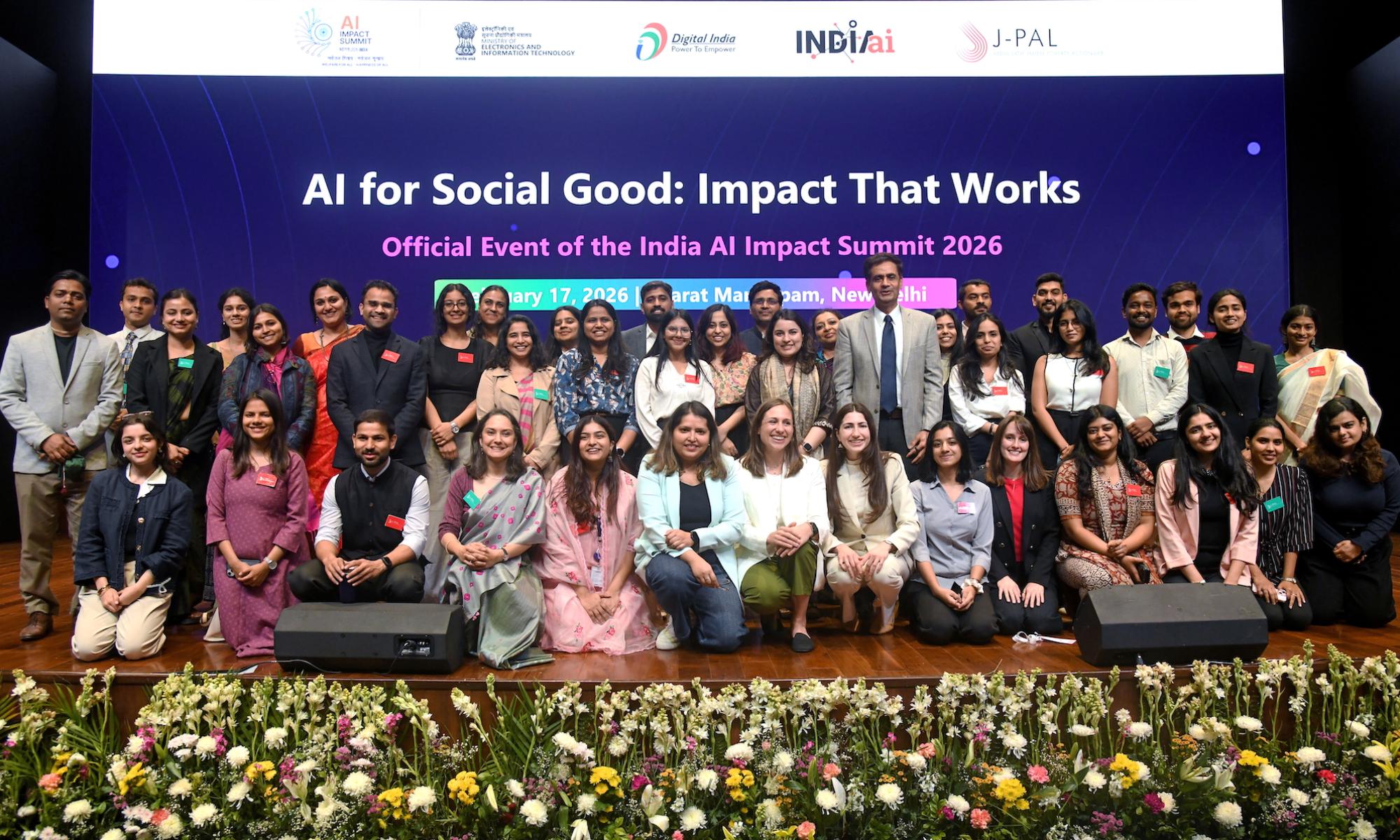
AI for Social Good: Impact That Works
As a fast-improving, general-purpose technology accessible to anyone with a smartphone, AI is already having profound effects on our lives. The excitement around AI, as justified as it is, has also brought questions on effectiveness, transparency, and fairness into sharp focus, especially when AI tools are designed for underserved communities.
J-PAL organized AI for Social Good: Impact That Works, a day-long research and policy seminar on February 17, to examine these questions and chart a path toward an AI ecosystem that maximizes social good by placing rigorous evaluations at the core.
The seminar featured senior government officials leading India's national AI strategy, researchers evaluating cutting-edge AI applications, and leaders from global tech companies, nonprofits, and key funders. Together, they dived into:
- India's vision for catalyzing AI to advance social welfare and making it work for all
- The latest evidence from evaluations by J-PAL affiliated researchers of AI innovations across education, health, labor, climate, and more
- What must change for AI applications to deliver sustained impact at scale in the real world
- The most promising pathways through which AI can boost social good
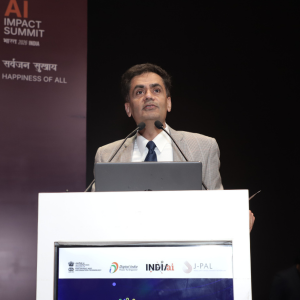

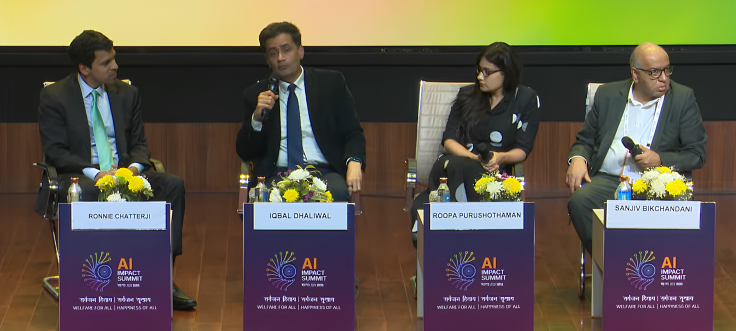
Impact evaluations, if they're done well, are not just telling us whether a particular AI application worked or not. It is telling us why something worked. How did technology intersect with our lives? How did they intersect with human behavior? How did it change trust in technology? How did it change the ecosystem?
— Iqbal Dhaliwal, Global Executive Director, J-PAL
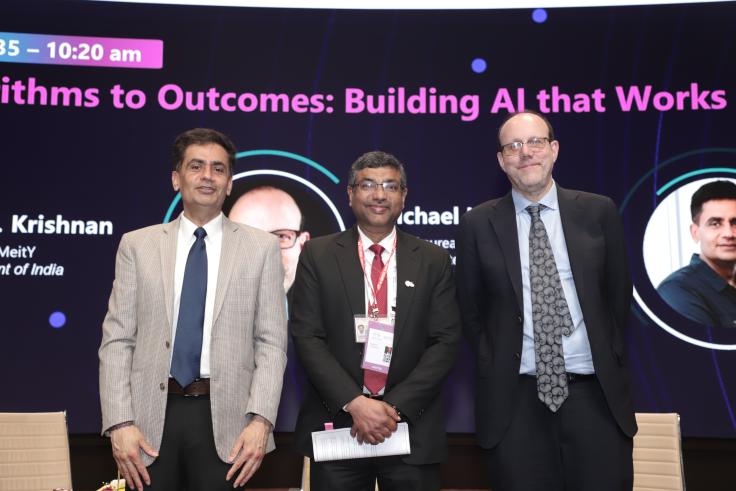
From Algorithms to Outcomes: Building AI that Works for People
This session set the tone for the day’s discussion, diving deep on aligning research agendas with government priorities so AI adoption and scale-up decisions can be driven by rigorous evidence.
Speakers: Iqbal Dhaliwal, Michael Kremer, Shri S. Krishnan
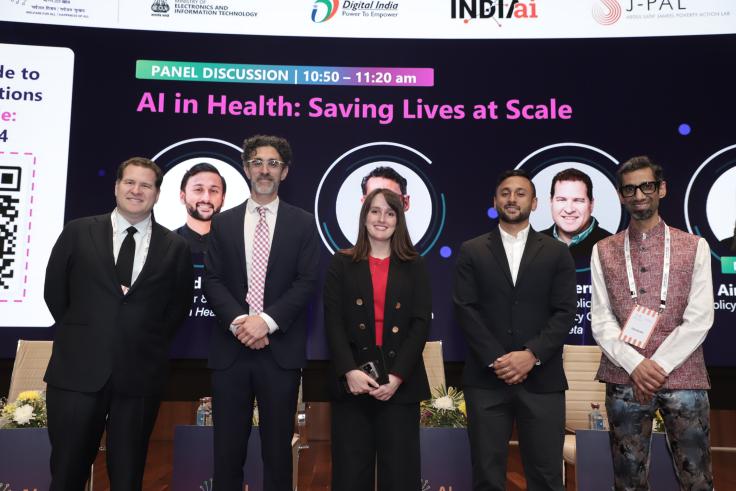
AI in Health: Saving Lives at Scale
Participants learned about the findings from a randomized evaluation in Tamil Nadu testing the impact of a low-cost, AI-based tool to identify people at high risk of heart disease. The subsequent panel discussion unpacked what it takes to make AI innovations in health work in practice and deliver measurable gains.
Research presentation: Ziad Obermeyer
Panelists: Shahed Alam, Zameer Brey, and Rob Sherman
Moderator: Aimee Barnes
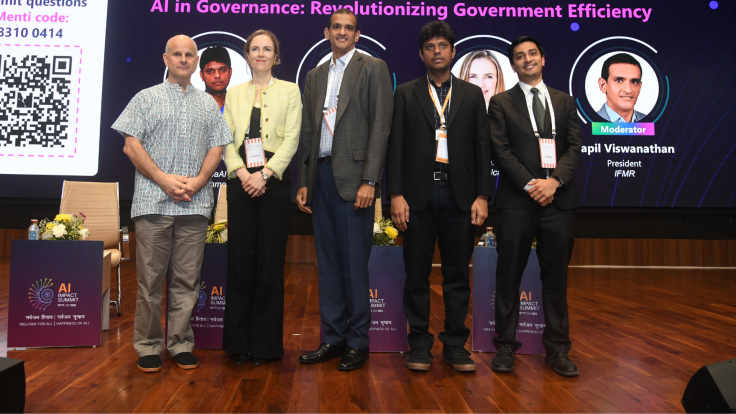
AI in Governance: Revolutionizing Government Efficiency
This session explored pathways to leverage evidence for effective and equitable delivery of government programs. Participants learned about the impact of using machine learning to improve targeted public service delivery in Togo. This was followed by a discussion on the role of evidence in designing AI tools that strengthen state capacity and broaden citizen participation.
Research presentation: Dean Karlan
Panelists: Shri Mohammed Y. Safirulla, Utkarsh Saxena, and Robyn Scott
Moderator: Kapil Viswanathan
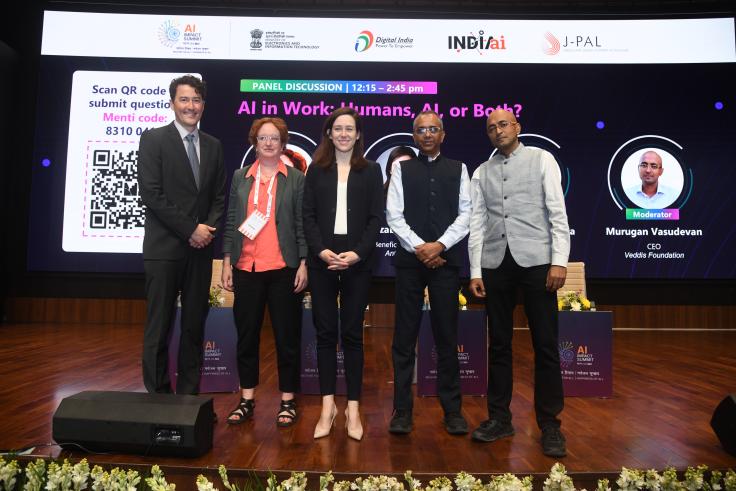
AI in Work: Humans, AI, or Both?
This session spotlighted insights from an evaluation of generative AI for teacher hiring in Ghana. It was followed by a panel discussion that examined AI’s profound effects on the job market and the role of scientific evidence in building AI tools that enhance skills, productivity, and worker wellbeing.
Research presentation: David Yanagizawa-Drott
Panelists: Becky Faith, Elizabeth Kelly, and Shankar Maruwada
Moderator: Murugan Vasudevan
AI Vishwaguru: Catalyzing Learning and Impact
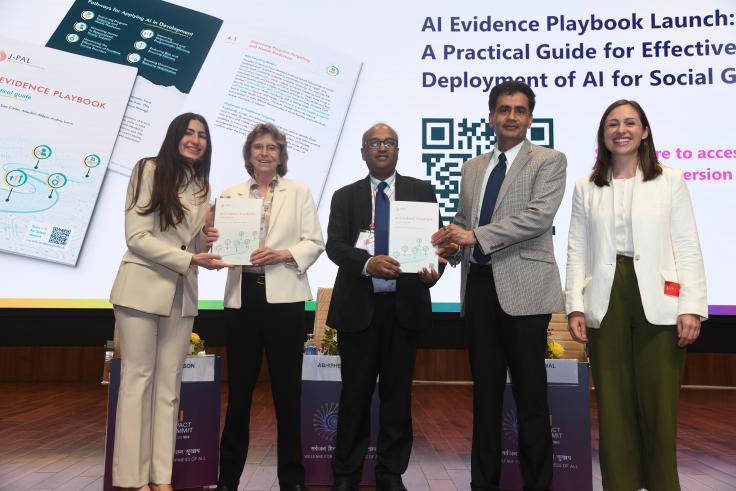
J-PAL launched the AI Evidence Playbook at this session, a practical reference for policymakers, practitioners, and donors investing in or developing AI-enabled programs. The launch was followed by a fireside chat on unlocking AI’s full potential for social development through rigorous evaluations and on the lessons India holds for the world on responsible AI deployment.
Speakers: Iqbal Dhaliwal, Maggie Johnson, Shri Abhishek Singh
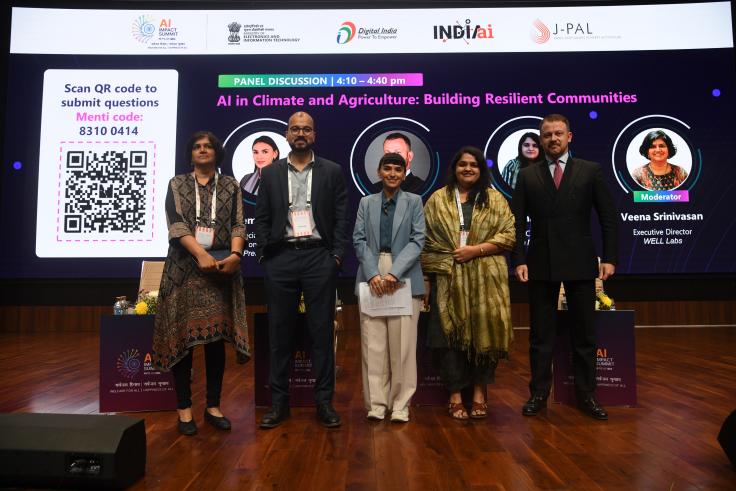
AI in Climate and Agriculture: Building Resilient Communities
Participants got an early look at ongoing research studying the impact of an AI tool on reducing flood risk for vulnerable households in Bihar. The panelists then explored the significance and potential of evidence-informed AI applications to drive effective climate action.
Research presentation: Maulik Jagnani
Panelists: Fatema AlMulla, George Richards, and Niriksha Shetty
Moderator: Veena Srinivasan
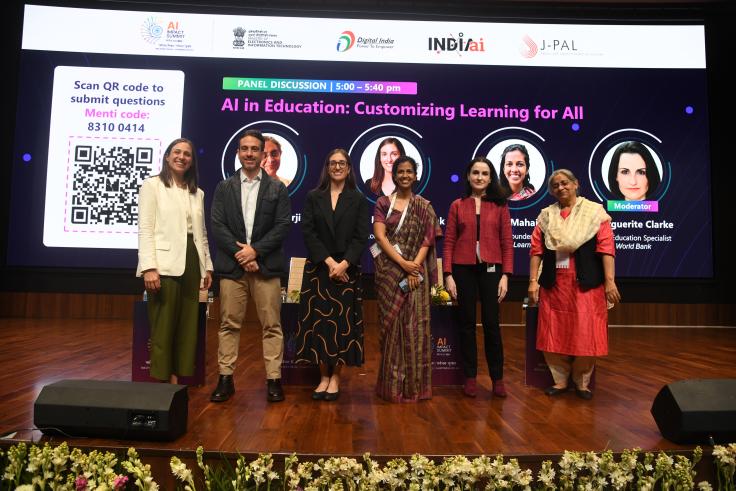
AI in Education: Customizing Learning for All
This session featured insights from a randomized evaluation of an AI-powered essay grader on students’ writing, developed by UNESCO prize winner and education startup Letrus. The panel discussion underscored the importance of scientific evidence in designing and delivering AI tools to help children learn better.
Research presentation: Sam Carter, Thiago Rached
Panelists: Rukmini Banerji, Brigitte Hoyer Gosselink, and Namya Mahajan
Moderator: Margeurite Clarke
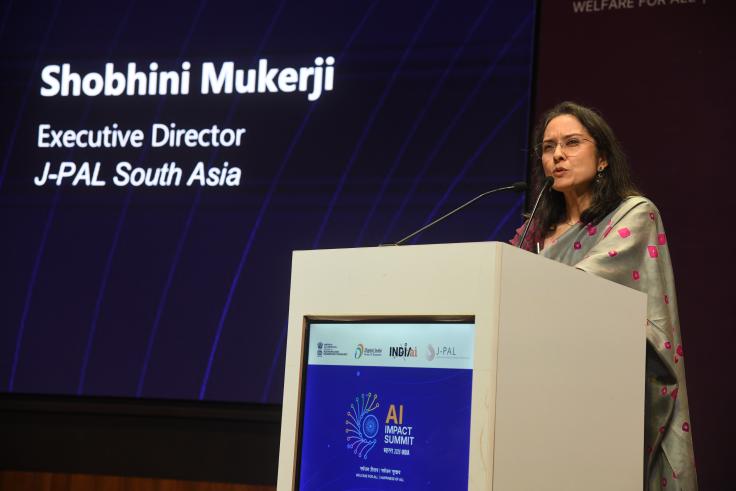
Evaluating AI for Impact: From Idea to Execution
The final session brought together key insights from the previous segments, making a compelling case for why impact and evidence should be the foundation for AI for social good innovations.
Speaker: Shobhini Mukerji
In the news





The Summit Goals House: Keeping the conversation going

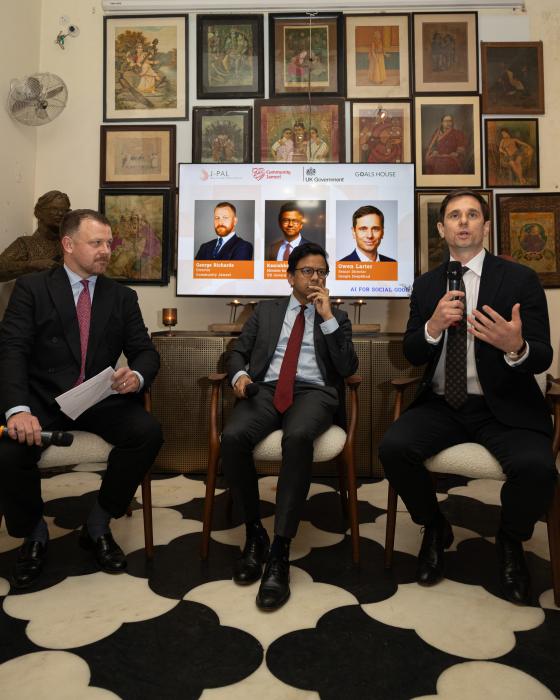
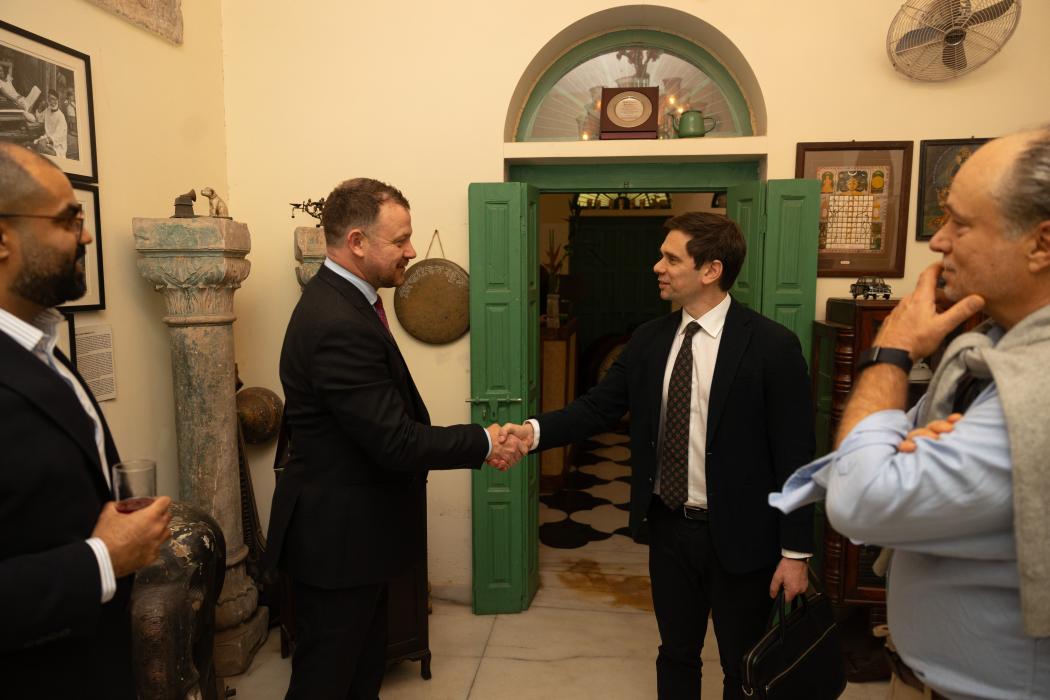
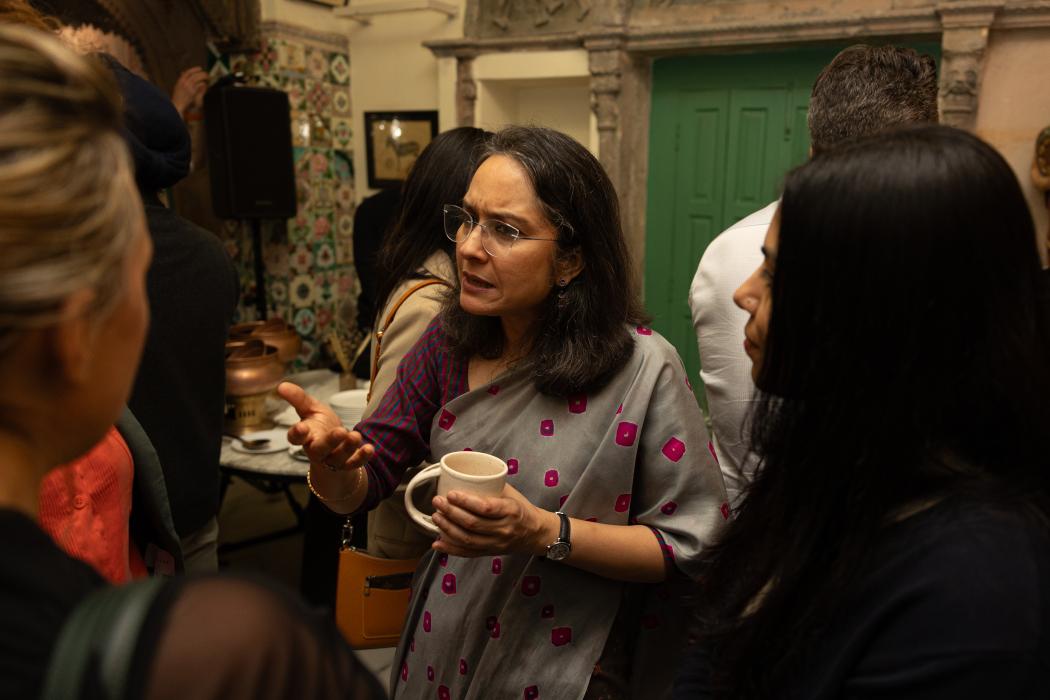
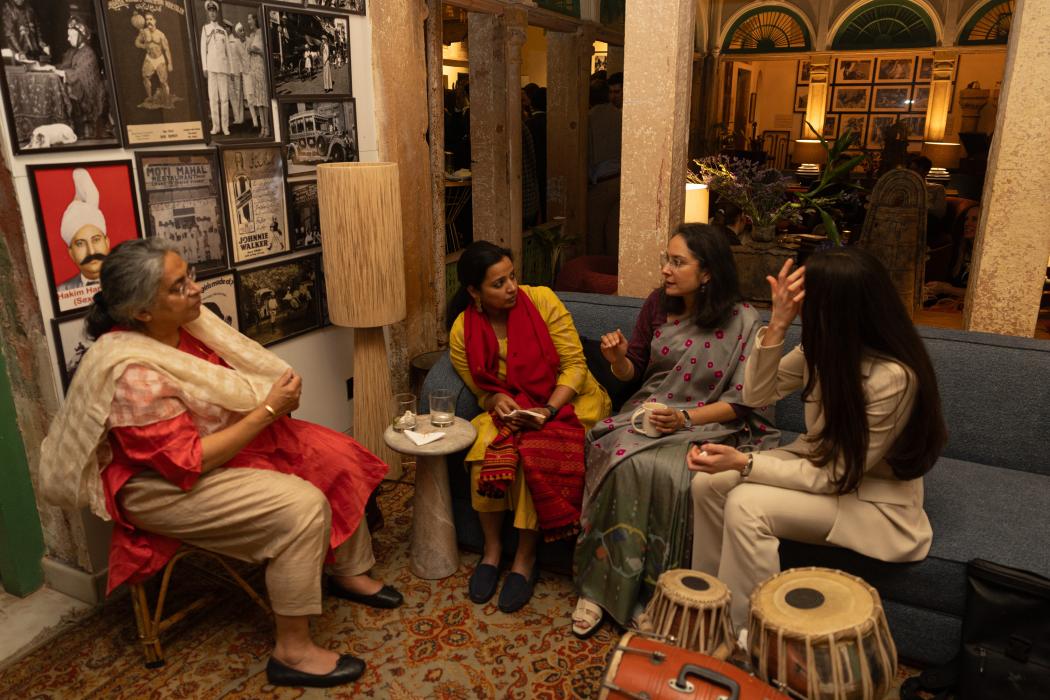
J-PAL co-hosted a dinner with Community Jameel and the UK’s Foreign, Commonwealth & Development Office (FCDO) at the India AI Summit Goals House, a venue that featured high-level events running parallel to the India AI Impact Summit 2026.
The convening was an opportunity to showcase India and UK’s leadership in redefining the dialogue on global challenges and on AI for social impact, emphasizing the need for rigorous evaluations of AI innovations and long-term multistakeholder collaborations to realize the full potential of the technology.
Speakers at the gathering included:
- Iqbal Dhaliwal, Global Executive Director, J-PAL at MIT
- Dame Wendy Hall, United Nations high-level advisory body on artificial intelligence and Regius Professor of Computer Science, University of Southampton
- Owen Larter, Senior Director & Head of Frontier Policy & Public Affairs, Google DeepMind
- Kanishka Narayan, Minister for AI and Online Safety, United Kingdom
- George Richards, Director, Community Jameel
A second Goals House dinner, hosted with Google.org, brought together senior leaders from policy, social impact, technology, and philanthropy to reflect on responsible AI deployment, unlocking new forms of impact, and tackling some of today’s most urgent challenges.