

The Impact of Group-based Therapy and Cash Transfers on Adolescent Girls' Mental Health and Economic Outcomes in Uganda
- Women and girls
- Youth
- Employment
- Empowerment
- Gender attitudes and norms
- Mental health
- Soft skills
- Cash transfers
- Soft skills
- Unconditional cash transfers
- Psychosocial support




Mental health disorders negatively affect adolescent girls around the world, yet affordable and scalable treatment options remain limited in low- and middle-income countries. Researchers conducted a randomized evaluation to test the impact of interpersonal group therapy, with and without a lump-sum cash transfer, on mental health and human capital outcomes among adolescent girls at risk of depression in Uganda. Girls who were offered therapy were less likely to be depressed in the short term, but these effects did not persist. Adding a cash transfer after therapy worsened girls’ mental health relative to both those who received therapy alone and those who received no intervention.
Policy issue
Depression is the top cause of lost years to disability among girls aged 15–19 globally. Mental health disorders that develop during adolescence can have long-term consequences, including lower educational achievement, more risky behavior, and future physical and mental health challenges. Girls in low- and middle-income countries face a heightened risk of mental health issues, where specialist mental health providers are scarce, particularly in rural areas.
Group-based talk therapy delivered by trained non-specialist community members has emerged as a promising approach to addressing depression in these settings, but evidence on its longer-term effects and its impact on human capital outcomes, such as education and cognition, among adolescents remains limited. Can interpersonal group therapy delivered by peer community mentors improve girls’ mental health and human capital development in Uganda, and can pairing it with a cash transfer amplify its benefits?
Context of the evaluation
This study took place in and around Kampala, Uganda, the country’s largest city and capital.1 Adolescents living in Kampala face challenges such as limited employment opportunities and environmental stressors, which heightens their risk of mental health struggles.2 Researchers recruited adolescent girls aged 13–19 at risk of moderate to severe depression for the study. About 42 percent were enrolled in school. Approximately 13 percent had been married before, and about 17.5 percent did not use a condom the last time they had sex.
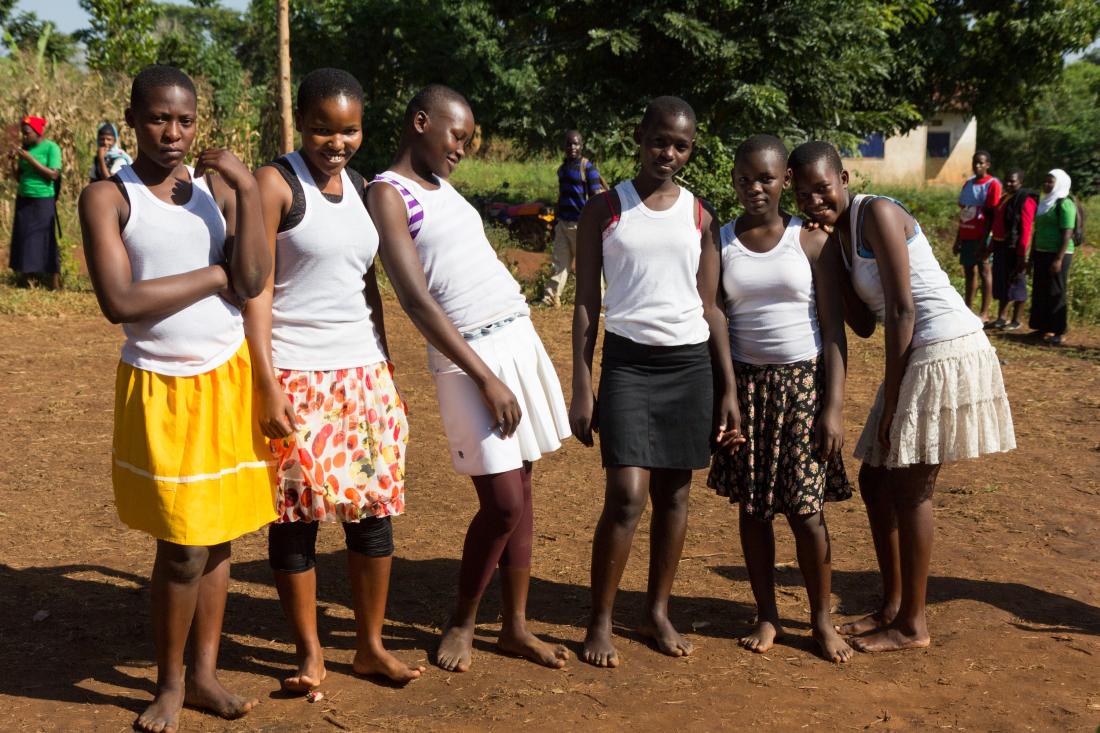
The study was implemented through BRAC Uganda's Empowerment and Livelihood for Adolescents (ELA) program, which operates community clubs for girls to socialize and participate in vocational and life skills training. The clubs are led by young women mentors from the community, who receive training and a stipend. Prior evaluations of ELA clubs in Uganda found them effective in reducing teenage pregnancies, child marriages, and non-consensual sexual activity. StrongMinds, a social enterprise focused on addressing depression in Uganda, partnered with BRAC Uganda to train ELA mentors to deliver its 14-week interpersonal group therapy program for adolescent girls.
Details of the intervention
Researchers partnered with StrongMinds Uganda and BRAC Uganda to conduct a randomized evaluation to test the impact of interpersonal group therapy, with and without a lump-sum cash transfer, on mental health and human capital outcomes among adolescent girls at risk of depression. Interpersonal therapy is an evidence-based talk therapy intervention used to treat depression. Researchers selected 1,919 adolescent girls in communities surrounding 106 ELA clubs3 to participate in the evaluation. They then randomly assigned the ELA clubs to one of three groups:
- Group therapy-only group (35 clubs): Girls were offered the 14-week interpersonal group therapy sessions delivered by ELA club mentors between September–December 2019.
- Group therapy + cash transfer group (35 clubs): Girls were offered a one-time cash transfer of UGX 250,000 (US$69 in 2019) in addition to the therapy sessions. The cash transfer was announced and disbursed after therapy sessions ended in March 2020 via mobile money or in person.
- Comparison group (36 clubs): Girls were not offered group therapy or a cash transfer.
Researchers collected data on participants’ mental health4 and human capital outcomes at four points before and during the Covid-19 pandemic: preceding therapy (June to August 2019), immediately after therapy (November 2019–February 2020), about twelve months later (November 2020), and thirty months later (April–May 2022). At all four points, they asked about girls’ depression and psychological distress, desired number of children, work expectations, and skills competencies (numeracy, reading and listening comprehension, and ability to follow instructions). Twelve and thirty months later, they also asked girls’ whether they were still enrolled in school, whether they used protection during sex, and if they were pregnant or married.
Results and policy lessons
Girls who were offered therapy were less likely to be depressed in the short term, but improvements did not persist over time. Girls who were offered therapy and cash experienced worse mental health than girls offered therapy alone and those in the comparison group, which lasted through the thirty-month follow-up and was likely driven by the Covid-19 pandemic.
Mental health: Immediately following therapy, the share of girls in the therapy-only group with no psychological distress increased by 6.1 percentage points (23.8 percent) over the comparison group, where 25.6 percent of girls experienced no psychological distress on average. Twelve months after receiving therapy, girls in the therapy-only group were 5.4 percentage points (29.3 percent) more likely to show no or minimal depression, from a base of 18.4 percent in the comparison group. They were also 5.4 percentage points (19.4 percent) more likely to show no psychological distress. By the thirty-month follow-up, these effects had fully dissipated, with no differences in psychological distress or depression between the group therapy group and comparison groups on any mental health measure.
In contrast, girls in the therapy and cash transfer group experienced worse mental health than those who only received therapy and those in the comparison group. Girls who were offered therapy and cash were 10.1 percentage points (43.7 percent) less likely to have no depression symptoms and 9.5 percentage points (30.4 percent) less likely to experience no psychological distress compared to those who received therapy alone. These negative effects remained thirty months later, with girls in the therapy and cash transfer group approximately 6.8 and 7.1 percentage points (27.9 percent and 23.4 percent) less likely to show no depression and no psychological distress compared to the therapy-only group.
Human capital: Immediately following group therapy, girls in the therapy-only group were 2.4 percentage points (3 percent) more likely to expect to be working at age 25 than girls in the comparison group. There was no difference in skills competencies, pregnancy or marriage expectations, or desired number of children between girls in both groups.
Twelve months later, girls in the therapy-only group were 7.5 percentage points (22.9 percent) more likely to be enrolled in school, 2.5 percentage points (29.8 percent) less likely to be married, and wanted 0.28 less kids (7.3 percent) on average compared to the comparison group. There were no in engaging in sex without protection between groups. None of these effects remained after thirty months.
Girls in the group therapy and cash group did not experience improvements in human capital outcomes relative to either the group therapy group or the comparison group. They were 5.8 percentage points (14.4 percent) less likely to be enrolled in school and wanted 0.33 more children (9.5 percent) on average compared to girls in the therapy-only group.
Cost-effectiveness: The therapy cost approximately US$48 per person invited to participate, and about US$88 for each attendee. The interventions cost about US$916 per case of depression averted, which is more than what is typically considered cost-effective.
Researchers suggest that the negative effects of the cash transfer may stem from its timing just before the Covid‑19 pandemic. After twelve months, 81 percent of girls in the therapy and cash transfer group reported sharing the cash with their families, and 50 percent said the pandemic altered their spending. These girls were also more likely to perceive heightened household stress and react more quickly with anger.
Baird, Sarah, Berk Özler, Chiara Dell’Aira, Luca Parisotto, and Danish Us-Salam. 2025. “Therapy, Mental Health, and Human Capital Accumulation among Adolescent Girls in Uganda.” Journal of Development Economics 176: 103473. https://doi.org/10.1016/j.jdeveco.2025.103473
Encyclopedia Britannica. 2026. “Kampala.” Last modified January 24, 2026. https://www.britannica.com/place/Kampala
Mbithi, Gideon, Ahmed Sarki, Adam Mabrouk, Rachel Odhiambo, Mary Namuguzi, Joseph Atukwatse, Margaret Kabue, Stephen Mulupi, and Amina Abubakar. 2025. “Exploring Adolescents’ Mental Health in Kampala, Uganda in the Context of COVID-19: A Mixed Methods Study.” Frontiers in Child and Adolescent Psychiatry. https://pmc.ncbi.nlm.nih.gov/articles/PMC11891163/
The clubs varied in size, but had about 18 girls on average.
Mental health outcomes were measured using the General Health Questionnaire (GHQ-12) for psychological distress and Patient Health Questionnaire (PHQ-8) for depression.