

Displaying 5341 - 5355 of 7215

Event
Who Delivers Justice? Evidence for Strengthening Dispute Resolution Systems
How can states strengthen formal systems of justice provision and build citizen trust in the state? And how can informal dispute resolution systems complement or undermine these efforts? The third webinar in the Governance, Crime, and Conflict Initiative’s (GCCI) series will discuss randomized...
Person
Supreet Kaur
Supreet Kaur is an Associate Professor in the Department of Economics at the University of California, Berkeley. Her research is in development economics and behavioral economics, with a focus on labor markets.

Evaluation
Connecting Smallholder Farmers to Agricultural Value Chains in Rwanda
Researchers are evaluating the effects of providing farmers with access to maize processing services that could improve maize quality on their input decisions.

Evaluation
The Effectiveness of Financial Disclosure in the United Kingdom
Researchers partnered with financial providers in the United Kingdom to evaluate the effectiveness of various disclosure designs aimed at supporting consumers’ financial decisions across savings products. Although most disclosures increased the number of consumers that switched to higher-yielding savings account, the effects were relatively modest, even among those who received the most effectively designed disclosure and those with substantial financial incentives to switch. These findings suggest that low attention limits the potential of financial disclosures and that disclosures need to be more explicitly designed to better capture consumers' attention.
Project
Covid-19-related Immunization Disruptions in Rajasthan: A Retrospective Observational Study
Researchers studied the effects of India's nationwide lockdown on child immunization in the north Indian state of Rajasthan. Comparing the status and timeliness of key first-year immunization milestones among children who turned 12 months old before, during, and after the lockdown, researchers found...
Person
Srinivasa Rao Mittapally
M Srinivasa Rao Mittapally is a Finance and Administration Manager at J-PAL South Asia. He holds a Master's in Commerce from Osmania University and possesses a total of 12 years of experience in the development sector.
Person
Jon Robinson
Jonathan Robinson is a Professor of Economics at the University of California, Santa Cruz. His research is primarily focused in sub-Saharan Africa, and includes studies of how individuals cope with risk, a project to understand why farmers do not adopt potentially profitable agricultural...

Evaluation
Managerial Practices for Improved Productivity of Skilled Workers in the UK
Researchers worked with an airline to test the impact of different types of information and incentives on pilots’ productivity, as measured by pilots’ implementation of fuel-saving practices. Provision of personalized targets for achieving these fuel-saving practices led pilots to implement them more frequently without increasing flight delays.
Person
Koichiro Ito
Koichiro Ito is a Professor at the Harris School of Public Policy at the University of Chicago and a Faculty Research Fellow at the National Bureau of Economic Research.
Update
J-PAL Updates
April 2021 Newsletter
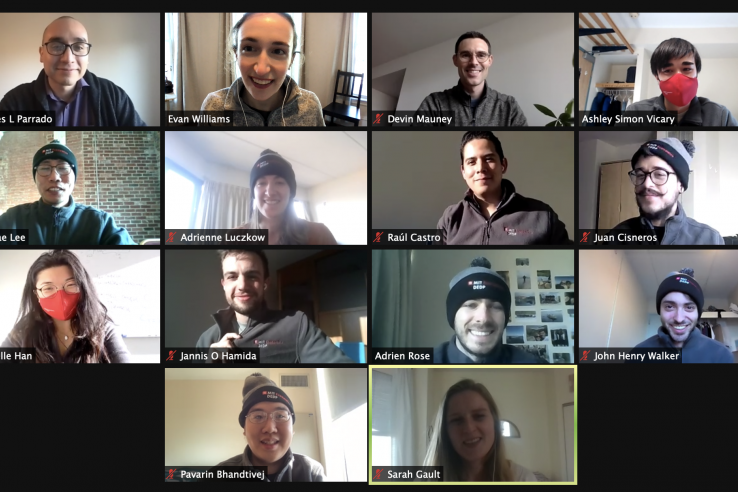
J-PAL and MIT Economics look into potential barriers to higher education in the MicroMasters program in Data, Economics, and Development Policy as they welcome the second cohort of DEDP master's students to campus. Read about this, ways to address Covid-19 learning gaps, using evidence to promote...
Research resource
Conducting cost-effectiveness analysis (CEA)
This resource is intended for researchers who are interested in collecting cost data and conducting comparative cost-effectiveness analysis (CEA) for their evaluation. It provides an overview of CEA, outlines the basic calculations and key assumptions, and provides two comparative CEA examples from...
Person
Beenu Rawat
Beenu Rawat is a Finance Manager at J-PAL South Asia, where she handles the financial and grant management of the office
Blog
Alumni Voices from Government: Ryan Cooper ‘14, Experimental Policy Initiative, Budget Office of Chile
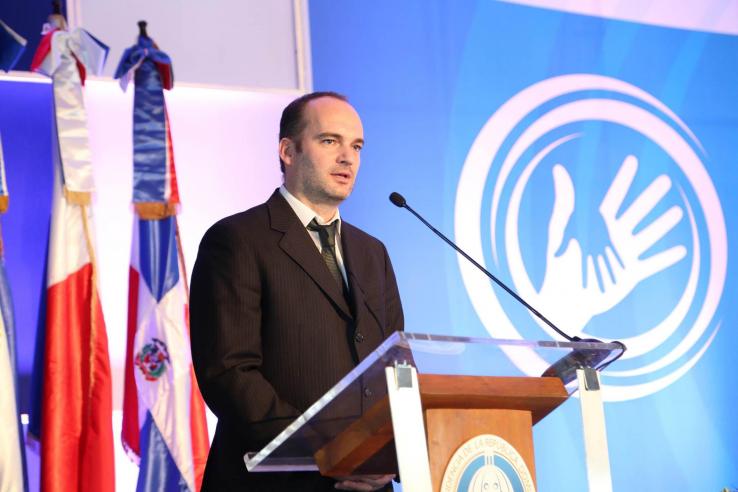
Formerly the executive director of J-PAL LAC, Ryan Cooper '14 now leads the Experimental Policy Initiative within Chile's Budget Office. He describes his journey from J-PAL to government in this Q&A.

Event
Foundations of Randomized Evaluations: For the Micro, Small and Medium Enterprises Development Agency
In partnership with Micro, Small and Medium Enterprises Development Agency (MSMEDA), J-PAL Middle East and North Africa (MENA), based at the American University in Cairo, is pleased to offer a training on randomized evaluations and how they are designed in real-world settings for MSMEDA project...

Blog
Alumni Voices from Government: Kelly Bidwell '15, Office of Evaluation Sciences, US General Services Administration
Formerly a senior policy manager at J-PAL North America, Kelly Bidwell '15 now leads the Office of Evaluation Sciences within the United States General Services Administration. She describes her work to drive evidence generation and use across US government agencies in this post in the Alumni Voices...