

J-PAL J-PAL
The Abdul Latif Jameel Poverty Action Lab
  • About
    • Overview
    • People
      • Affiliated Professors
      • Invited Researchers
      • J-PAL Scholars
      • Board
      • Leadership
      • Staff
    • Strengthening Our Work
    • Code of Conduct
    • Initiatives
    • Events
    • Blog
    • News
    • Press Room
  • Offices
    • Overview
    • Global
    • Africa
    • Europe
    • Latin America and the Caribbean
    • Middle East and North Africa
    • North America
    • South Asia
    • Southeast Asia
  • Sectors
    • Overview
    • Agriculture
    • Crime, Violence, and Conflict
    • Education
    • Environment, Energy, and Climate Change
    • Finance
    • Firms
    • Gender
    • Health
    • Labor Markets
    • Political Economy and Governance
    • Social Protection
  • Evaluations
  • Research Resources
    • About Us
    • Our Work
    • Join ASPIRE
    • Newsroom
  • Policy Insights
  • Evidence to Policy
    • Pathways and Case Studies
    • The Evidence Effect
  • Blog
  • Careers
  • Courses
  • For Affiliates
  • Support J-PAL

Utility menu

  • Blog
  • Careers
  • Courses
  • For Affiliates
  • Support J-PAL

Quick links

  • Evaluations
  • Research Resources
  • Policy Insights
  • Evidence to Policy
    • Pathways and Case Studies
    • The Evidence Effect
  • About

    The Abdul Latif Jameel Poverty Action Lab (J-PAL) is a global research center working to reduce poverty by ensuring that policy is informed by scientific evidence. Anchored by a network of more than 1,100 researchers at universities around the world, J-PAL conducts randomized impact evaluations to answer critical questions in the fight against poverty.

    • Overview

      The Abdul Latif Jameel Poverty Action Lab (J-PAL) is a global research center working to reduce poverty by ensuring that policy is informed by scientific evidence. Anchored by a network of more than 1,100 researchers at universities around the world, J-PAL conducts randomized impact evaluations to answer critical questions in the fight against poverty.

      • Affiliated Professors

        Our affiliated professors are based at over 130 universities and conduct randomized evaluations around the world to design, evaluate, and improve programs and policies aimed at reducing poverty. They set their own research agendas, raise funds to support their evaluations, and work with J-PAL staff on research, policy outreach, and training.

      • Invited Researchers
      • J-PAL Scholars
      • Board
        Our Board of Directors, which is composed of J-PAL affiliated professors and senior management, provides overall strategic guidance to J-PAL, our sector programs, and regional offices.
      • Leadership
      • Staff
    • Strengthening Our Work

      Our research, policy, and training work is fundamentally better when it is informed by a broad range of perspectives.

    • Code of Conduct
    • Initiatives
      J-PAL initiatives concentrate funding and other resources around priority topics for which rigorous policy-relevant research is urgently needed.
    • Events
      We host events around the world and online to share results and policy lessons from randomized evaluations, to build new partnerships between researchers and practitioners, and to train organizations on how to design and conduct randomized evaluations, and use evidence from impact evaluations.
    • Blog
      News, ideas, and analysis from J-PAL staff and affiliated professors.
    • News
      Browse news articles about J-PAL and our affiliated professors, read our press releases and monthly global and research newsletters, and connect with us for media inquiries.
    • Press Room
      Based at leading universities around the world, our experts are economists who use randomized evaluations to answer critical questions in the fight against poverty. Connect with us for all media inquiries and we'll help you find the right person to shed insight on your story.
  • Offices
    J-PAL is based at MIT in Cambridge, MA and has seven regional offices at leading universities in Africa, Europe, Latin America and the Caribbean, Middle East and North Africa, North America, South Asia, and Southeast Asia.
    • Overview
      J-PAL is based at MIT in Cambridge, MA and has seven regional offices at leading universities in Africa, Europe, Latin America and the Caribbean, Middle East and North Africa, North America, South Asia, and Southeast Asia.
    • Global
      Our global office is based at the Department of Economics at the Massachusetts Institute of Technology. It serves as the head office for our network of seven independent regional offices.
    • Africa
    • Europe
    • Latin America and the Caribbean
    • Middle East and North Africa
    • North America
    • South Asia
    • Southeast Asia
  • Sectors
    Led by affiliated professors, J-PAL sectors guide our research and policy work by conducting literature reviews; by managing research initiatives that promote the rigorous evaluation of innovative interventions by affiliates; and by summarizing findings and lessons from randomized evaluations and producing cost-effectiveness analyses to help inform relevant policy debates.
    • Overview
      Led by affiliated professors, J-PAL sectors guide our research and policy work by conducting literature reviews; by managing research initiatives that promote the rigorous evaluation of innovative interventions by affiliates; and by summarizing findings and lessons from randomized evaluations and producing cost-effectiveness analyses to help inform relevant policy debates.
    • Agriculture
      How can we encourage small farmers to adopt proven agricultural practices and improve their yields and profitability?
    • Crime, Violence, and Conflict
      What are the causes and consequences of crime, violence, and conflict and how can policy responses improve outcomes for those affected?
    • Education
      How can students receive high-quality schooling that will help them, their families, and their communities truly realize the promise of education?
    • Environment, Energy, and Climate Change
      How can we increase access to energy, reduce pollution, and mitigate and build resilience to climate change?
    • Finance
      How can financial products and services be more affordable, appropriate, and accessible to underserved households and businesses?
    • Firms
      How do policies affecting private sector firms impact productivity gaps between higher-income and lower-income countries? How do firms’ own policies impact economic growth and worker welfare?
    • Gender
      How can we reduce gender inequality and ensure that social programs are sensitive to existing gender dynamics?
    • Health
      How can we increase access to and delivery of quality health care services and effectively promote healthy behaviors?
    • Labor Markets
      How can we help people find and keep work, particularly young people entering the workforce?
    • Political Economy and Governance
      What are the causes and consequences of poor governance and how can policy improve public service delivery?
    • Social Protection
      How can we identify effective policies and programs in low- and middle-income countries that provide financial assistance to low-income families, insuring against shocks and breaking poverty traps?
Displaying 8266 - 8280 of 8538
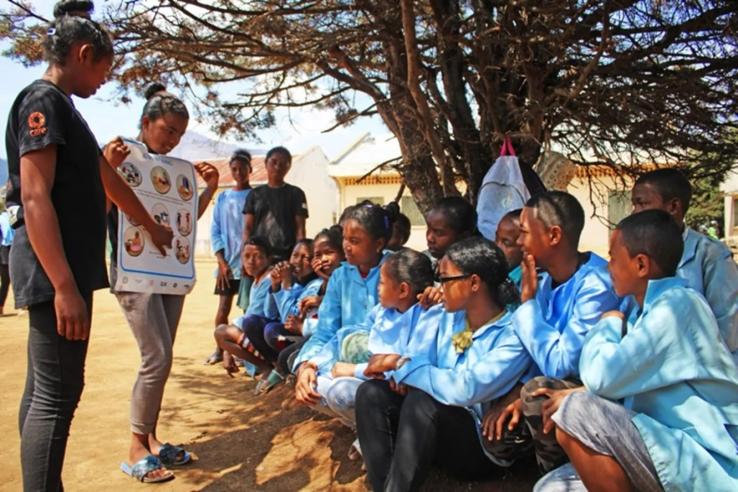
Adolescent girls holding a poster and talking to their classmates about menstruation in Madagascar
Evaluation

Addressing Menstrual Stigma and Hygiene to Improve Education and Psychosocial Well-Being among Adolescent Girls in Madagascar

Researchers evaluated the impact of a program addressing constraints related to hygiene infrastructure and access to sanitary products while addressing social stigma around menstruation, on girls’ learning and psychosocial well-being in Madagascar. The program led to improvements in academic learning outcomes and anxiety. Reduction in stigma and improvements in observed hygiene behaviors were larger in schools with peer leaders who were identified, trained, and coached to address these harmful social norms.
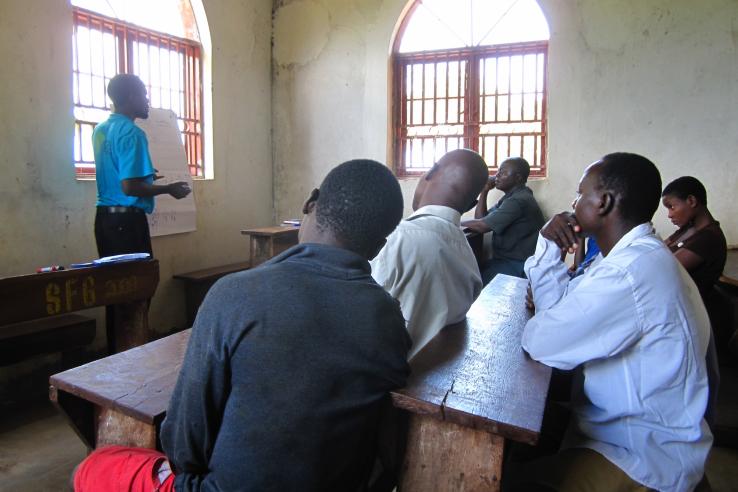
Person teaches a class in Uganda
Evaluation

Unconditional Cash Grants for People with HIV/AIDS in Uganda

Research has shown that HIV/AIDS impacts not only the health of infected individuals, but also their financial security, and the financial security of their households, often aggravating existing poverty. Researchers will introduce unconditional cash grants, coupled with financial planning sessions, to people living with HIV/AIDS to evaluate the impact on the health and financial security outcomes of participants.

 Young people participating in apprenticeship program in Côte d'Ivoire.
Evaluation

The Direct and Indirect Effects of a Dual Apprenticeship Program in Côte d'Ivoire

In Sub-Saharan Africa, wage job opportunities are limited, and a vast majority of young people are engaged in low-productive work. Many governments support formal apprenticeship programs to help youth find suitable employment, but there is limited evidence on the direct and indirect effects of these public interventions. Researchers partnered with the World Bank and the government of Cote d’Ivoire to evaluate the impact of a subsidized dual apprenticeship program targeting both youth and firms. The apprenticeship program increased participation among youth in formal apprenticeships, and participating firms hired more formal apprentices after the program was implemented.
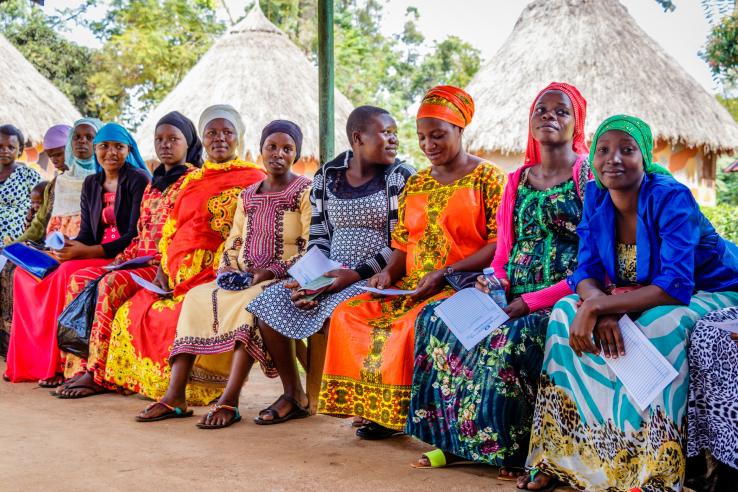
A group of women seated waiting for a doctor
Evaluation

The Impact of Remote Health Outreaches on Contraceptive Use and Employment in Uganda

In partnership with Health Access Connect, researchers conducted a randomized evaluation to measure the impact of a community-led primary healthcare outreach program on women’s contraceptive choices, healthcare use, and work decisions in rural Uganda.
Person

Varsha Hari Prasad

Person

Kjetil Bjorvatn

Kjetil Bjorvatn is a Professor at the Norwegian School of Economics.
Person

Vincent Somville

Vincent Somville is a Professor at the Norwegian School of Economics (NHH). His research focuses on the intersection of developmental and behavioral economics. Vincent has led projects in India working on savings, credit, and insurance groups in Benin, poverty in Nepal, and is currently working on...
Person

Gautam Rao

Gautam Rao is an Associate Professor (with tenure) at the Haas School of Business and the Department of Economics at UC Berkeley. He is also a faculty research fellow at the National Bureau of Economic Research (NBER). His research seeks to bring insights from psychology to bear on topics in...
Person

Livia Alfonsi

Person

Tarek Ghani

Tarek Ghani is an Assistant Professor of Strategy at Washington University’s Olin Business School.
Person

Ignacio Torres

Person

Kirsten Mumma
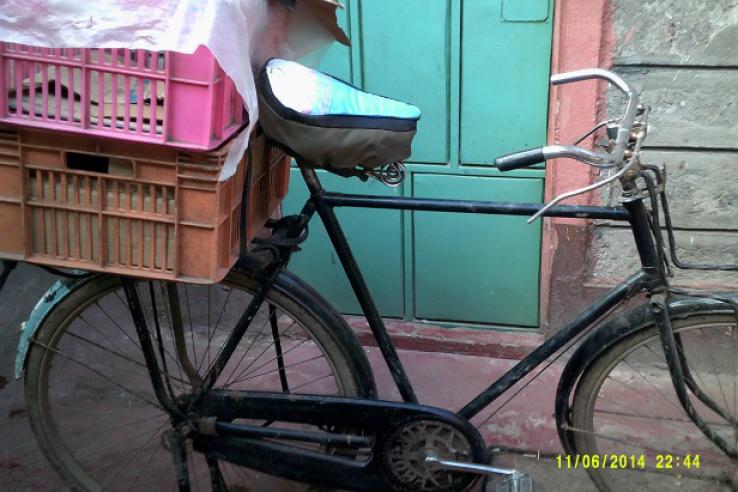
A bicycle for microentrepreneur
Evaluation

Investigating the Impact of Credit with Performance-Contingent Repayment in Kenya

Researchers conducted a randomized evaluation to test whether a performance-based repayment contract could outperform conventional microcredit contracts, or fixed-payment loans, in improving business outcomes and welfare for micro-distributors in Kenya. Micro-distributors who received flexible financing, especially a hybrid loan that adjusted payments based on earnings, had higher profits than those with fixed-payment loans. They also restocked more often, expanded their sales areas, managed their businesses better, and repaid more.
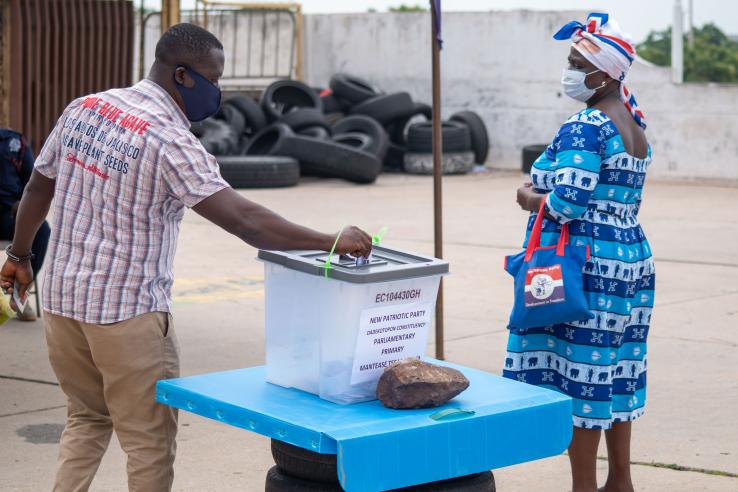
Social distancing in Ghana
Evaluation

Cash and Compliance with Social Distancing in Ghana

The researchers aim to understand the role that digital cash transfers can play as a policy tool both to increase household resilience during the pandemic and to stem the spread of the disease by increasing adherence to social distancing in Ghana.
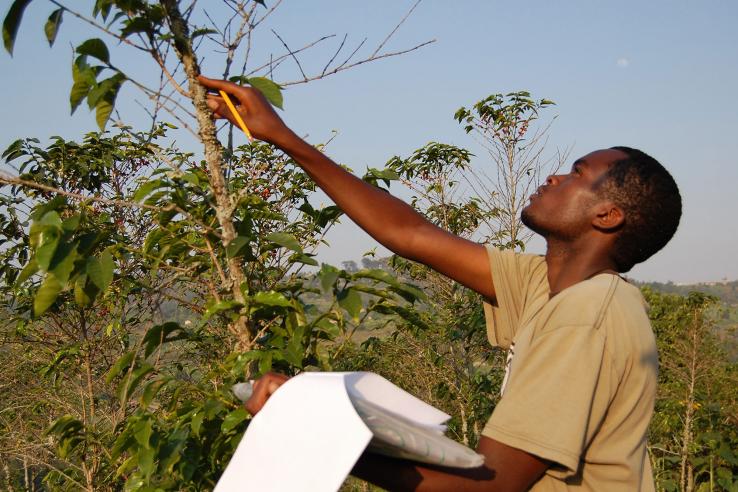
Surveyor inspecting a coffee plant in rural Rwanda
Evaluation

Promoting Agricultural Technology Adoption in Rwanda

In Rwanda, researchers worked with TechnoServe to evaluate the impact of an agronomy training program on farmers’ knowledge and use of best practices in coffee-growing. Preliminary results suggest that the trainings helped some farmers improve their coffee-growing practices, but that the practices more likely to be adopted were those that required less effort on the part of the farmers. Future analysis will examine whether and how these practices spread through farmers’ social networks.

Pagination

  • First page « First
  • Previous page ‹
  • …
  • Page 550
  • Page 551
  • Current page 552
  • Page 553
  • Page 554
  • …
  • Next page ›
  • Last page Last »
J-PAL

J-PAL

400 Main Street

E19-201

Cambridge, MA 02142

USA

Contact

+1 617 324 6566

[email protected]


Press Room

Stay Informed

Receive our newsletters

Subscribe


Privacy Policy

Accessibility

MIT