




J-PAL J-PAL
The Abdul Latif Jameel Poverty Action Lab
  • About
    • Overview
    • People
      • Affiliated Professors
      • Invited Researchers
      • J-PAL Scholars
      • Board
      • Leadership
      • Staff
    • Strengthening Our Work
    • Code of Conduct
    • Initiatives
    • Events
    • Blog
    • News
    • Press Room
  • Offices
    • Overview
    • Global
    • Africa
    • Europe
    • Latin America and the Caribbean
    • Middle East and North Africa
    • North America
    • South Asia
    • Southeast Asia
  • Sectors
    • Overview
    • Agriculture
    • Crime, Violence, and Conflict
    • Education
    • Environment, Energy, and Climate Change
    • Finance
    • Firms
    • Gender
    • Health
    • Labor Markets
    • Political Economy and Governance
    • Social Protection
  • Evaluations
  • Research Resources
    • About Us
    • Our Work
    • Join ASPIRE
    • Newsroom
  • Policy Insights
  • Evidence to Policy
    • Pathways and Case Studies
    • The Evidence Effect
  • Blog
  • Careers
  • Courses
  • For Affiliates
  • Support J-PAL

Utility menu

  • Blog
  • Careers
  • Courses
  • For Affiliates
  • Support J-PAL

Quick links

  • Evaluations
  • Research Resources
  • Policy Insights
  • Evidence to Policy
    • Pathways and Case Studies
    • The Evidence Effect
  • About

    The Abdul Latif Jameel Poverty Action Lab (J-PAL) is a global research center working to reduce poverty by ensuring that policy is informed by scientific evidence. Anchored by a network of more than 1,100 researchers at universities around the world, J-PAL conducts randomized impact evaluations to answer critical questions in the fight against poverty.

    • Overview

      The Abdul Latif Jameel Poverty Action Lab (J-PAL) is a global research center working to reduce poverty by ensuring that policy is informed by scientific evidence. Anchored by a network of more than 1,100 researchers at universities around the world, J-PAL conducts randomized impact evaluations to answer critical questions in the fight against poverty.

      • Affiliated Professors

        Our affiliated professors are based at over 130 universities and conduct randomized evaluations around the world to design, evaluate, and improve programs and policies aimed at reducing poverty. They set their own research agendas, raise funds to support their evaluations, and work with J-PAL staff on research, policy outreach, and training.

      • Invited Researchers
      • J-PAL Scholars
      • Board
        Our Board of Directors, which is composed of J-PAL affiliated professors and senior management, provides overall strategic guidance to J-PAL, our sector programs, and regional offices.
      • Leadership
      • Staff
    • Strengthening Our Work

      Our research, policy, and training work is fundamentally better when it is informed by a broad range of perspectives.

    • Code of Conduct
    • Initiatives
      J-PAL initiatives concentrate funding and other resources around priority topics for which rigorous policy-relevant research is urgently needed.
    • Events
      We host events around the world and online to share results and policy lessons from randomized evaluations, to build new partnerships between researchers and practitioners, and to train organizations on how to design and conduct randomized evaluations, and use evidence from impact evaluations.
    • Blog
      News, ideas, and analysis from J-PAL staff and affiliated professors.
    • News
      Browse news articles about J-PAL and our affiliated professors, read our press releases and monthly global and research newsletters, and connect with us for media inquiries.
    • Press Room
      Based at leading universities around the world, our experts are economists who use randomized evaluations to answer critical questions in the fight against poverty. Connect with us for all media inquiries and we'll help you find the right person to shed insight on your story.
  • Offices
    J-PAL is based at MIT in Cambridge, MA and has seven regional offices at leading universities in Africa, Europe, Latin America and the Caribbean, Middle East and North Africa, North America, South Asia, and Southeast Asia.
    • Overview
      J-PAL is based at MIT in Cambridge, MA and has seven regional offices at leading universities in Africa, Europe, Latin America and the Caribbean, Middle East and North Africa, North America, South Asia, and Southeast Asia.
    • Global
      Our global office is based at the Department of Economics at the Massachusetts Institute of Technology. It serves as the head office for our network of seven independent regional offices.
    • Africa
    • Europe
    • Latin America and the Caribbean
    • Middle East and North Africa
    • North America
    • South Asia
    • Southeast Asia
  • Sectors
    Led by affiliated professors, J-PAL sectors guide our research and policy work by conducting literature reviews; by managing research initiatives that promote the rigorous evaluation of innovative interventions by affiliates; and by summarizing findings and lessons from randomized evaluations and producing cost-effectiveness analyses to help inform relevant policy debates.
    • Overview
      Led by affiliated professors, J-PAL sectors guide our research and policy work by conducting literature reviews; by managing research initiatives that promote the rigorous evaluation of innovative interventions by affiliates; and by summarizing findings and lessons from randomized evaluations and producing cost-effectiveness analyses to help inform relevant policy debates.
    • Agriculture
      How can we encourage small farmers to adopt proven agricultural practices and improve their yields and profitability?
    • Crime, Violence, and Conflict
      What are the causes and consequences of crime, violence, and conflict and how can policy responses improve outcomes for those affected?
    • Education
      How can students receive high-quality schooling that will help them, their families, and their communities truly realize the promise of education?
    • Environment, Energy, and Climate Change
      How can we increase access to energy, reduce pollution, and mitigate and build resilience to climate change?
    • Finance
      How can financial products and services be more affordable, appropriate, and accessible to underserved households and businesses?
    • Firms
      How do policies affecting private sector firms impact productivity gaps between higher-income and lower-income countries? How do firms’ own policies impact economic growth and worker welfare?
    • Gender
      How can we reduce gender inequality and ensure that social programs are sensitive to existing gender dynamics?
    • Health
      How can we increase access to and delivery of quality health care services and effectively promote healthy behaviors?
    • Labor Markets
      How can we help people find and keep work, particularly young people entering the workforce?
    • Political Economy and Governance
      What are the causes and consequences of poor governance and how can policy improve public service delivery?
    • Social Protection
      How can we identify effective policies and programs in low- and middle-income countries that provide financial assistance to low-income families, insuring against shocks and breaking poverty traps?
Displaying 8311 - 8325 of 8538
Research Paper
File: Research paper

Psychedelics and Well-Being: An Experiment in Brazil

Evaluation

Ghana Children and Caregivers Panel Study (GCCPS)

Around the world, studies show that children’s health and cognitive development tend to be higher when parents have more education. However, it is unclear whether education itself causes improved child health, or if other factors account for this relationship. In Ghana, researchers are building on an ongoing study to evaluate the causal impact of parental education on child health and cognitive development, and to identify the specific channels through which increased parental education might improve child health.
Person

Balasubramanian K

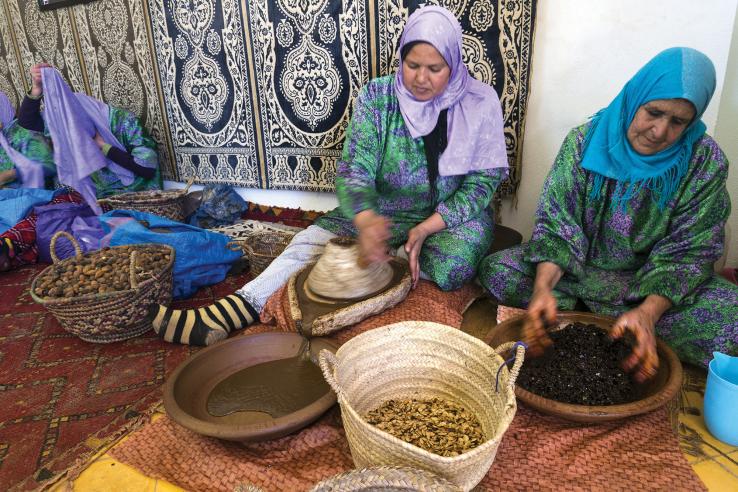
Women in headscarves seated on moroccan rugs process seeds
Evaluation

Microcredit in Rural Morocco

Researchers estimated the impact of a microcredit program, which was randomly rolled out in rural areas of Morocco. Thirteen percent of the households in treatment villages took a loan, and none in comparison villages did. Among households identified as more likely to borrow, microcredit access led to a significant rise in investment in assets used for self-employment activities, and an increase in profit, but also to a reduction in income from casual labor. Overall, there was no gain in income or consumption.
Students take a college entry test in Santiago, Chile.
Evaluation

Removing Higher Education Barriers of Entry: Test Training and Classroom Peer Effects in Chile

In an ongoing study, researchers are evaluating whether providing subsidized test preparation to high-achieving, low-income students can diminish the barriers to entry to institutions of higher education in Chile.
Evaluation

Informal Math Games to Improve Children's Readiness for Learning School Mathematics in India

By the time they reach primary school, disadvantaged children often lag behind their more advantaged peers in the skills and concepts of formal math. To address this issue, researchers examined the impact of math games, played in preschools and exercising early emerging, universal and intuitive numerical and spatial abilities, on children’s learning of school math in Delhi, India. They found that the games led to long-term increases in children’s intuitive math abilities. The games also bolstered children’s mastery of the spatial and numerical language used in the preschools, but they did not enhance children’s subsequent learning of primary school mathematics.
Person

David Atkin

David Atkin is the Barton L. Weller (1940) Professor of Economics at MIT and a Co-Chair of J-PAL's Firms sector.
Person

Ying Gao

Research Paper
File: Research paper

Group versus Individual Coaching for Rural Social Protection Programs: Evidence from Uganda, Philippines, and Bangladesh

Research Paper
File: Research paper

Power to the Personnel? The Impacts of Managerial Discretion vs. Worker Democracy in Employee Recognition

Research Paper
File: Research paper

Sources of Market Power in Web Search: Evidence from a Field Experiment

Research Paper
File: Research paper

Seeing Green: The Effects of Financial Exposures on Support for Climate Action

Research Paper
File: Research paper

Management Style Under the Spotlight: Evidence from Studio Recordings

The J-PAL Africa team poses for a photo in Cape Town, South Africa.
Resource
Layout Page

J-PAL Africa - Working at J-PAL Africa

J-PAL Africa is a growing office with a fun, diverse and inclusive team. We have offices in Cape Town, Johannesburg, Nairobi and Accra. Learn more about our current team members. If you would like to receive notifications about open positions, please sign up for our jobs newsletter.
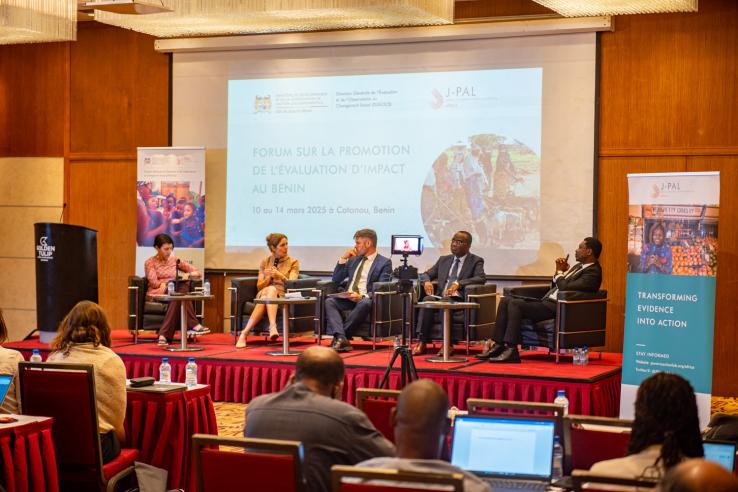
Panelists at the Benin Evidence Forum
Resource
Layout Page

J-PAL Africa - Policy Outreach

The J-PAL Africa policy team works with governments, researchers, and NGOs to increase evidence use by bridging the gap between rigorous research and action in sub-Saharan Africa to improve lives at scale. Based all over the continent, our policy staff work on a wide variety of topics. We have...

Pagination

  • First page « First
  • Previous page ‹
  • …
  • Page 553
  • Page 554
  • Current page 555
  • Page 556
  • Page 557
  • …
  • Next page ›
  • Last page Last »
J-PAL

J-PAL

400 Main Street

E19-201

Cambridge, MA 02142

USA

Contact

+1 617 324 6566

[email protected]


Press Room

Stay Informed

Receive our newsletters

Subscribe


Privacy Policy

Accessibility

MIT