





The Abdul Latif Jameel Poverty Action Lab (J-PAL) is a global research center working to reduce poverty by ensuring that policy is informed by scientific evidence. Anchored by a network of more than 1,100 researchers at universities around the world, J-PAL conducts randomized impact evaluations to answer critical questions in the fight against poverty.
Our affiliated professors are based at over 130 universities and conduct randomized evaluations around the world to design, evaluate, and improve programs and policies aimed at reducing poverty. They set their own research agendas, raise funds to support their evaluations, and work with J-PAL staff on research, policy outreach, and training.
Our Board of Directors, which is composed of J-PAL affiliated professors and senior management, provides overall strategic guidance to J-PAL, our sector programs, and regional offices.
We host events around the world and online to share results and policy lessons from randomized evaluations, to build new partnerships between researchers and practitioners, and to train organizations on how to design and conduct randomized evaluations, and use evidence from impact evaluations.
Browse news articles about J-PAL and our affiliated professors, read our press releases and monthly global and research newsletters, and connect with us for media inquiries.
Based at leading universities around the world, our experts are economists who use randomized evaluations to answer critical questions in the fight against poverty. Connect with us for all media inquiries and we'll help you find the right person to shed insight on your story.
J-PAL is based at MIT in Cambridge, MA and has seven regional offices at leading universities in Africa, Europe, Latin America and the Caribbean, Middle East and North Africa, North America, South Asia, and Southeast Asia.
Our global office is based at the Department of Economics at the Massachusetts Institute of Technology. It serves as the head office for our network of seven independent regional offices.
Led by affiliated professors, J-PAL sectors guide our research and policy work by conducting literature reviews; by managing research initiatives that promote the rigorous evaluation of innovative interventions by affiliates; and by summarizing findings and lessons from randomized evaluations and producing cost-effectiveness analyses to help inform relevant policy debates.
How do policies affecting private sector firms impact productivity gaps between higher-income and lower-income countries? How do firms’ own policies impact economic growth and worker welfare?
How can we identify effective policies and programs in low- and middle-income countries that provide financial assistance to low-income families, insuring against shocks and breaking poverty traps?
Timothy Layton is the an Associate Professor of Public Policy and Economics in the Batten School of Public Policy and Leadership at the University of Virginia. His research is focused on health insurance markets, with an emphasis on markets and social health insurance programs for low-income...
In September 2023, researchers conducting randomized evaluations of cash transfer programs in the United States gathered at Duke University to discuss their ongoing and completed research projects. In this post, we highlight key takeaways from these conversations.
J-PAL North America is partnering with the Conrad N. Hilton Foundation to offer LA-based homeless service providers a supportive “community of practice” around rigorous research. Through this effort, we aim to bolster organizations’ ability to generate and use evidence to inform decision-making as...
J-PAL North America’s work combating homelessness seeks to expand the base of rigorous evidence on strategies to reduce and prevent homelessness and foster housing stability.
The Bay Area Evaluation community of practice is committed to supporting rigorously designed evaluations; implementing constituent-centered programs; sharing knowledge and stories; and informing housing policy in the San Francisco Bay Area and beyond.
Affiliated researchers Jessica Cohen and Maggie McConnell and our Health Care Delivery Initiative staff highlight the importance of randomized evaluations in maternal and newborn health and discuss future research generation in collaboration with social scientists, clinicians, and policy-makers.
The February edition of J-PAL North America's monthly newsletter highlights the fifth round of State and Local Innovation Competition proposals, evidence for boosts in Earned Income Tax Credit, and research on the relationship between physical activity and mental health.
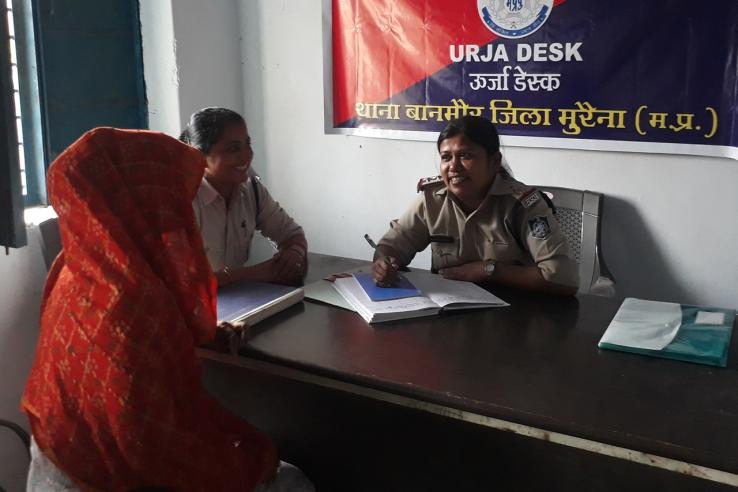
Evidence shows that police reform—providing gender sensitization training to officers and introducing dedicated help desks for women at police stations—can shift police attitudes, making them more responsive to women’s security needs.

J-PAL North America staff and researchers recently attended a graduation ceremony for school principals who participated in EDUGESPRO, a professional development program born out of a research partnership with the Puerto Rico Department of Education.
Cash transfers are an increasingly popular form of support, but there is a need for further evaluation in the context of homelessness reduction and prevention in the United States. J-PAL is committed to expanding this research base through our ongoing partnerships.
Does your workplace provide incentives to attend the gym? Offer support to quit smoking? Mandate completing a health assessment? It seems that everywhere you turn, businesses are investing resources into trying to improve the health of their workers.
When I launched the US Health Care Delivery Initiative (HCDI) in 2013, my goal was to bring more rigorous evidence to bear on how to make the US health care system more efficient, effective, and equitable.
J-PAL North America's January newsletter highlights the randomized evaluation results of the groundbreaking Camden Core Model, the launch of the housing stability evaluation incubator, and our new mobility from poverty learning agenda.