J-PAL J-PAL
The Abdul Latif Jameel Poverty Action Lab
  • About
    • Overview
    • People
    • Strengthening Our Work
    • Code of Conduct
    • Initiatives
    • Events
    • Blog
    • News
    • Press Room
  • Offices
    • Overview
    • Global
    • Africa
    • Europe
    • Latin America and the Caribbean
    • Middle East and North Africa
    • North America
    • South Asia
    • Southeast Asia
  • Sectors
    • Overview
    • Agriculture
    • Crime, Violence, and Conflict
    • Education
    • Environment, Energy, and Climate Change
    • Finance
    • Firms
    • Gender
    • Health
    • Labor Markets
    • Political Economy and Governance
    • Social Protection
  • Evaluations
  • Research Resources
    • About Us
    • Our Work
    • Join ASPIRE
    • Newsroom
  • Policy Insights
  • Evidence to Policy
    • Pathways and Case Studies
    • The Evidence Effect
  • Blog
  • Careers
  • Courses
  • For Affiliates
  • Support J-PAL

Utility menu

  • Blog
  • Careers
  • Courses
  • For Affiliates
  • Support J-PAL

Quick links

  • Evaluations
  • Research Resources
  • Policy Insights
  • Evidence to Policy
    • Pathways and Case Studies
    • The Evidence Effect
  • About

    The Abdul Latif Jameel Poverty Action Lab (J-PAL) is a global research center working to reduce poverty by ensuring that policy is informed by scientific evidence. Anchored by a network of more than 1,100 researchers at universities around the world, J-PAL conducts randomized impact evaluations to answer critical questions in the fight against poverty.

    • Overview

      The Abdul Latif Jameel Poverty Action Lab (J-PAL) is a global research center working to reduce poverty by ensuring that policy is informed by scientific evidence. Anchored by a network of more than 1,100 researchers at universities around the world, J-PAL conducts randomized impact evaluations to answer critical questions in the fight against poverty.

      • Affiliated Professors

        Our affiliated professors are based at over 130 universities and conduct randomized evaluations around the world to design, evaluate, and improve programs and policies aimed at reducing poverty. They set their own research agendas, raise funds to support their evaluations, and work with J-PAL staff on research, policy outreach, and training.

      • Invited Researchers
      • J-PAL Scholars
      • Board
        Our Board of Directors, which is composed of J-PAL affiliated professors and senior management, provides overall strategic guidance to J-PAL, our sector programs, and regional offices.
      • Staff
    • Strengthening Our Work

      Our research, policy, and training work is fundamentally better when it is informed by a broad range of perspectives.

    • Code of Conduct
    • Initiatives
      J-PAL initiatives concentrate funding and other resources around priority topics for which rigorous policy-relevant research is urgently needed.
    • Events
      We host events around the world and online to share results and policy lessons from randomized evaluations, to build new partnerships between researchers and practitioners, and to train organizations on how to design and conduct randomized evaluations, and use evidence from impact evaluations.
    • Blog
      News, ideas, and analysis from J-PAL staff and affiliated professors.
    • News
      Browse news articles about J-PAL and our affiliated professors, read our press releases and monthly global and research newsletters, and connect with us for media inquiries.
    • Press Room
      Based at leading universities around the world, our experts are economists who use randomized evaluations to answer critical questions in the fight against poverty. Connect with us for all media inquiries and we'll help you find the right person to shed insight on your story.
  • Offices
    J-PAL is based at MIT in Cambridge, MA and has seven regional offices at leading universities in Africa, Europe, Latin America and the Caribbean, Middle East and North Africa, North America, South Asia, and Southeast Asia.
    • Overview
      J-PAL is based at MIT in Cambridge, MA and has seven regional offices at leading universities in Africa, Europe, Latin America and the Caribbean, Middle East and North Africa, North America, South Asia, and Southeast Asia.
    • Global
      Our global office is based at the Department of Economics at the Massachusetts Institute of Technology. It serves as the head office for our network of seven independent regional offices.
    • Africa
    • Europe
    • Latin America and the Caribbean
    • Middle East and North Africa
      J-PAL MENA is based at the American University in Cairo, Egypt.
    • North America
    • South Asia
    • Southeast Asia
  • Sectors
    Led by affiliated professors, J-PAL sectors guide our research and policy work by conducting literature reviews; by managing research initiatives that promote the rigorous evaluation of innovative interventions by affiliates; and by summarizing findings and lessons from randomized evaluations and producing cost-effectiveness analyses to help inform relevant policy debates.
    • Overview
      Led by affiliated professors, J-PAL sectors guide our research and policy work by conducting literature reviews; by managing research initiatives that promote the rigorous evaluation of innovative interventions by affiliates; and by summarizing findings and lessons from randomized evaluations and producing cost-effectiveness analyses to help inform relevant policy debates.
    • Agriculture
      How can we encourage small farmers to adopt proven agricultural practices and improve their yields and profitability?
    • Crime, Violence, and Conflict
      What are the causes and consequences of crime, violence, and conflict and how can policy responses improve outcomes for those affected?
    • Education
      How can students receive high-quality schooling that will help them, their families, and their communities truly realize the promise of education?
    • Environment, Energy, and Climate Change
      How can we increase access to energy, reduce pollution, and mitigate and build resilience to climate change?
    • Finance
      How can financial products and services be more affordable, appropriate, and accessible to underserved households and businesses?
    • Firms
      How do policies affecting private sector firms impact productivity gaps between higher-income and lower-income countries? How do firms’ own policies impact economic growth and worker welfare?
    • Gender
      How can we reduce gender inequality and ensure that social programs are sensitive to existing gender dynamics?
    • Health
      How can we increase access to and delivery of quality health care services and effectively promote healthy behaviors?
    • Labor Markets
      How can we help people find and keep work, particularly young people entering the workforce?
    • Political Economy and Governance
      What are the causes and consequences of poor governance and how can policy improve public service delivery?
    • Social Protection
      How can we identify effective policies and programs in low- and middle-income countries that provide financial assistance to low-income families, insuring against shocks and breaking poverty traps?
Displaying 3076 - 3090 of 8336
PPF's Spring Meeting titled “Fair Transitions” on June 10, 2024, at UM6P in Benguerir, Morocco, convening heads of state to he need for stakeholder cohesion and attracting financial investment.
Blog

Mobilizing agricultural development in Africa: J-PAL joins the Paris Peace Forum Coalition

The Paris Peace Forum (PPF), a French nonprofit organization, launched a policy initiative in 2023 called "Mobilizing for Strong and Sustainable Food and Nutrition Systems in Africa" to promote sustainable agricultural transformation on the African continent through South-North dialogue on policy...
Dulce Colín, general director for gender equality at the Government of Mexico City.
Blog

Video interview: Partnering with the Government of Mexico City to prevent gender violence

Generating evidence to inform policies for gender equality in Latin America and the Caribbean (LAC) is a crucial priority for J-PAL LAC, and government partnerships are critical to achieving this goal. Since 2020, J-PAL LAC has been partnering with the Mexico City Women's Secretariat (SEMUJERES)...
A woodchipper with 'Fire District 3' written on it working on by a road.
Update
J-PAL Updates

June 2024 North America Monthly Newsletter

J-PAL North America's June newsletter features an ongoing research partnership to address wildfire risk and new research results on the impact of emergency rental assistance.
Two female students collect clean water from a tube well in a jug in Bangladesh.
Policy insight

Pairing insights from engineering, public health, and behavioral science to improve access to and use of clean water

Low-cost, simple interventions like dilute chlorine solution or water filtration can reduce households’ use of unsafe or contaminated water—a key source of morbidity and mortality, especially among children. Full subsidies can expand access to and usage of water treatment options among households...
Top: An Egyptian man collects grass in his boat. Bottom left: A man walking through air pollution in India. Bottom right: Two people cleaning a polluted river in Cape Town, South Africa
Event

Launch Event: Hub of Advanced Policy Innovation for the Environment (HAPIE)

The Egypt Impact Lab, J-PAL MENA at AUC, and Community Jameel are officially launching the Hub for Advanced Policy Innovation for the Environment (HAPIE), which is J-PAL MENA's regional Air and Water Lab.
Three Nobel laureates are pictured as sketched illustrations.
Update
J-PAL Updates

November 2024 Global Monthly Newsletter

In the November 2024 newsletter celebrate the Nobel Prize in Economics, learn about training civil servants on impact evaluations in Côte d'Ivoire, and read how credible skills signals can improve employment and earnings for job seekers.
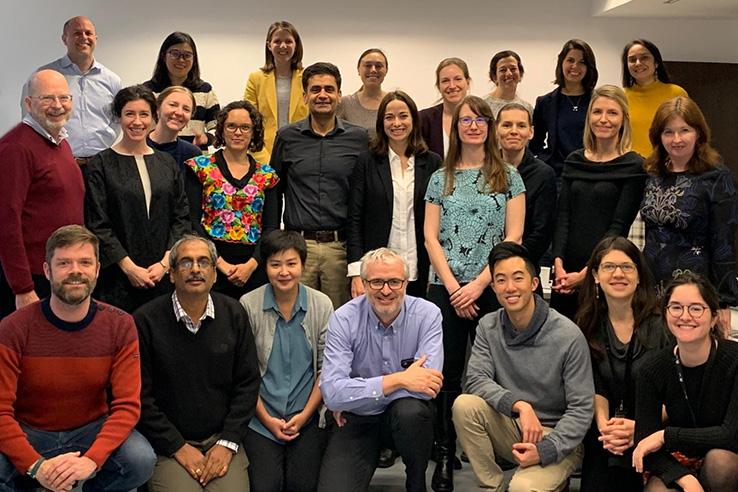
Group of persons
Blog

How to integrate qualitative methods into RCTs

Economists have long used qualitative methods to inform the design and help interpret the results of RCTs. To support the further integration of qualitative methods into randomized evaluations and provide more structured guidance, J-PAL has developed new research resources and training materials for...
A headshot of a man
Blog

Postdoc Spotlight: Jules Gazeaud, J-PAL '24, on his research journey at J-PAL MENA

In our new postdoc alumni spotlight series, we spoke with Jules Gazeaud, J-PAL '24, about his experience as a postdoctoral researcher at J-PAL MENA.
Close up of female hand entering PIN pass code on ATM bank machine keypad
Blog

How can microcredit be more effective for Latin American entrepreneurs?

The need for more financing is one of the biggest barriers to small- and medium-sized enterprises’ growth. Microcredit programs can help entrepreneurs overcome financial constraints, providing access to resources to boost the growth of small businesses and alleviate poverty by increasing income...
Workers transfer goods from trucks
Policy insight

Market access: Connecting firms and entrepreneurs to markets to spur business and job growth

Improved access to markets has often helped small firms in low- and middle-income countries grow by boosting firm revenues and profits. These interventions have been effective because they have led to new sales, helped firms connect with new types of buyers, and increased information sharing and...
Young girl using a computer in a classroom
Update
J-PAL Updates

September 2024 North America Monthly Newsletter

J-PAL North America's September newsletter features our work with the Learning Engineering Virtual Institute, new research results on computer-assisted learning, and a new review paper on interventions to improve early childhood learning outcomes.
Photo of three DEDP master's students reviewing an informational pamphlet
Event

Webinar: MIT DEDP Master's Program Admissions Info Session

Learn more about MIT's master's program in Data, Economics, and Design of Policy (DEDP) in preparation for the upcoming admissions cycle.
A large group of people stand on a stage
Blog

Driving evidence-based humanitarian action and displacement response in MENA

This blog post provides an overview of the evolving policy narratives in humanitarian work, emphasizing J-PAL’s initiatives to address evidence gaps. It also highlights the establishment of a dedicated portfolio at J-PAL MENA, aimed at supporting localized actions and ensuring that humanitarian...
Person

Desmond Test

Photo of three DEDP master's students reviewing an informational pamphlet
Event

Dentro do Programa MITx MicroMasters® em Dados, Economia, e Design de Políticas (DEDP)

O próximo período do Programa MITx MicroMasters® em Dados, Economia e Elaboração de Políticas está se aproximando rapidamente! Junte-se à equipe do curso DEDP em um webinário para saber mais sobre o programa e ter suas perguntas respondidas ao vivo. Uma gravação do evento será enviada a todos os...

Pagination

  • First page « First
  • Previous page ‹
  • …
  • Page 204
  • Page 205
  • Current page 206
  • Page 207
  • Page 208
  • …
  • Next page ›
  • Last page Last »
J-PAL

J-PAL

400 Main Street

E19-201

Cambridge, MA 02142

USA

Contact

+1 617 324 6566

[email protected]


Press Room

Stay Informed

Receive our newsletters

Subscribe


Privacy Policy

Accessibility

MIT