

J-PAL J-PAL
The Abdul Latif Jameel Poverty Action Lab
  • About
    • Overview
    • People
      • Affiliated Professors
      • Invited Researchers
      • J-PAL Scholars
      • Board
      • Leadership
      • Staff
    • Strengthening Our Work
    • Code of Conduct
    • Initiatives
    • Events
    • Blog
    • News
    • Press Room
  • Offices
    • Overview
    • Global
    • Africa
    • Europe
    • Latin America and the Caribbean
      • Growing Futures
    • Middle East and North Africa
    • North America
    • South Asia
    • Southeast Asia
  • Sectors
    • Overview
    • Agriculture
    • Crime, Violence, and Conflict
    • Education
    • Environment, Energy, and Climate Change
    • Finance
    • Firms
    • Gender
    • Health
    • Labor Markets
    • Political Economy and Governance
    • Social Protection
  • Evaluations
  • Research Resources
    • About Us
    • Our Work
    • Join ASPIRE
    • Newsroom
  • Policy Insights
  • Evidence to Policy
    • Pathways and Case Studies
    • The Evidence Effect
  • Blog
  • Careers
  • Courses
  • For Affiliates
  • Support J-PAL

Utility menu

  • Blog
  • Careers
  • Courses
  • For Affiliates
  • Support J-PAL

Quick links

  • Evaluations
  • Research Resources
  • Policy Insights
  • Evidence to Policy
    • Pathways and Case Studies
    • The Evidence Effect
  • About

    The Abdul Latif Jameel Poverty Action Lab (J-PAL) is a global research center working to reduce poverty by ensuring that policy is informed by scientific evidence. Anchored by a network of more than 1,100 researchers at universities around the world, J-PAL conducts randomized impact evaluations to answer critical questions in the fight against poverty.

    • Overview

      The Abdul Latif Jameel Poverty Action Lab (J-PAL) is a global research center working to reduce poverty by ensuring that policy is informed by scientific evidence. Anchored by a network of more than 1,100 researchers at universities around the world, J-PAL conducts randomized impact evaluations to answer critical questions in the fight against poverty.

      • Affiliated Professors

        Our affiliated professors are based at over 130 universities and conduct randomized evaluations around the world to design, evaluate, and improve programs and policies aimed at reducing poverty. They set their own research agendas, raise funds to support their evaluations, and work with J-PAL staff on research, policy outreach, and training.

      • Invited Researchers
      • J-PAL Scholars
      • Board
        Our Board of Directors, which is composed of J-PAL affiliated professors and senior management, provides overall strategic guidance to J-PAL, our sector programs, and regional offices.
      • Leadership
      • Staff
    • Strengthening Our Work

      Our research, policy, and training work is fundamentally better when it is informed by a broad range of perspectives.

    • Code of Conduct
    • Initiatives
      J-PAL initiatives concentrate funding and other resources around priority topics for which rigorous policy-relevant research is urgently needed.
    • Events
      We host events around the world and online to share results and policy lessons from randomized evaluations, to build new partnerships between researchers and practitioners, and to train organizations on how to design and conduct randomized evaluations, and use evidence from impact evaluations.
    • Blog
      News, ideas, and analysis from J-PAL staff and affiliated professors.
    • News
      Browse news articles about J-PAL and our affiliated professors, read our press releases and monthly global and research newsletters, and connect with us for media inquiries.
    • Press Room
      Based at leading universities around the world, our experts are economists who use randomized evaluations to answer critical questions in the fight against poverty. Connect with us for all media inquiries and we'll help you find the right person to shed insight on your story.
  • Offices
    J-PAL is based at MIT in Cambridge, MA and has seven regional offices at leading universities in Africa, Europe, Latin America and the Caribbean, Middle East and North Africa, North America, South Asia, and Southeast Asia.
    • Overview
      J-PAL is based at MIT in Cambridge, MA and has seven regional offices at leading universities in Africa, Europe, Latin America and the Caribbean, Middle East and North Africa, North America, South Asia, and Southeast Asia.
    • Global
      Our global office is based at the Department of Economics at the Massachusetts Institute of Technology. It serves as the head office for our network of seven independent regional offices.
    • Africa
    • Europe
    • Latin America and the Caribbean
    • Middle East and North Africa
    • North America
    • South Asia
    • Southeast Asia
  • Sectors
    Led by affiliated professors, J-PAL sectors guide our research and policy work by conducting literature reviews; by managing research initiatives that promote the rigorous evaluation of innovative interventions by affiliates; and by summarizing findings and lessons from randomized evaluations and producing cost-effectiveness analyses to help inform relevant policy debates.
    • Overview
      Led by affiliated professors, J-PAL sectors guide our research and policy work by conducting literature reviews; by managing research initiatives that promote the rigorous evaluation of innovative interventions by affiliates; and by summarizing findings and lessons from randomized evaluations and producing cost-effectiveness analyses to help inform relevant policy debates.
    • Agriculture
      How can we encourage small farmers to adopt proven agricultural practices and improve their yields and profitability?
    • Crime, Violence, and Conflict
      What are the causes and consequences of crime, violence, and conflict and how can policy responses improve outcomes for those affected?
    • Education
      How can students receive high-quality schooling that will help them, their families, and their communities truly realize the promise of education?
    • Environment, Energy, and Climate Change
      How can we increase access to energy, reduce pollution, and mitigate and build resilience to climate change?
    • Finance
      How can financial products and services be more affordable, appropriate, and accessible to underserved households and businesses?
    • Firms
      How do policies affecting private sector firms impact productivity gaps between higher-income and lower-income countries? How do firms’ own policies impact economic growth and worker welfare?
    • Gender
      How can we reduce gender inequality and ensure that social programs are sensitive to existing gender dynamics?
    • Health
      How can we increase access to and delivery of quality health care services and effectively promote healthy behaviors?
    • Labor Markets
      How can we help people find and keep work, particularly young people entering the workforce?
    • Political Economy and Governance
      What are the causes and consequences of poor governance and how can policy improve public service delivery?
    • Social Protection
      How can we identify effective policies and programs in low- and middle-income countries that provide financial assistance to low-income families, insuring against shocks and breaking poverty traps?
Displaying 7351 - 7365 of 8567

Headshot of Matthew Notowidigo in front of a bookcase
Blog

Introducing Matthew Notowidigdo, new co-scientific director of J-PAL North America

In this interview, the new Co-Scientific Director of J-PAL North America, Matthew Notowidigdo discusses his background and previous work with J-PAL North America, and he and Amy Finkelstein outline their priorities and goals for their work together as co-scientific directors.
Headshot of Matthew Notowidigo in front of a bookcase
Update
J-PAL Updates

January 2023 North America Newsletter

J-PAL North America's January newsletter features the scientific director transition and a new partner blog with Bridget Mercier, J-PAL North America Policy and Training Manager.
Person

Jenny Aker
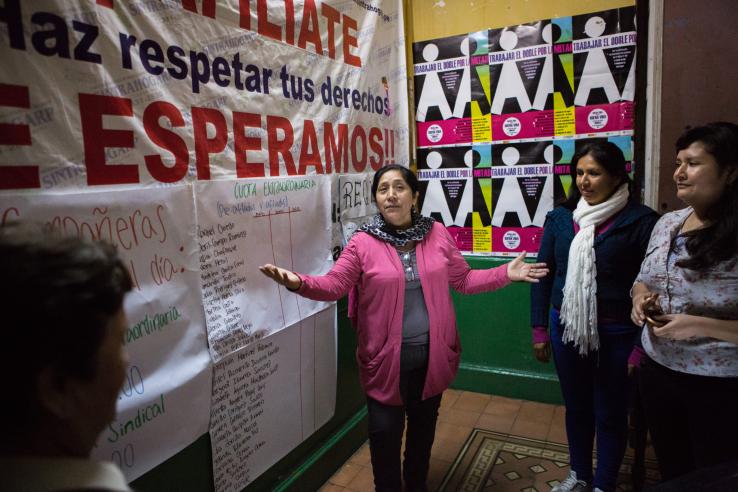
Mujeres en reunión sindical
Event

Importancia de la evidencia para el diseño y mejora de programas que favorecen la agencia de las mujeres

Teacher with children in a classroom.
Blog

The next generation of rigorous education research: J-PAL launches the Learning for All Initiative

In response to the current crisis in education and the increasing demand for actionable evidence, and with the generous support of the Bill & Melinda Gates Foundation, Douglas B. Marshall Jr. Family Foundation, and Echidna Giving, J-PAL is launching the Learning For All Initiative to identify...
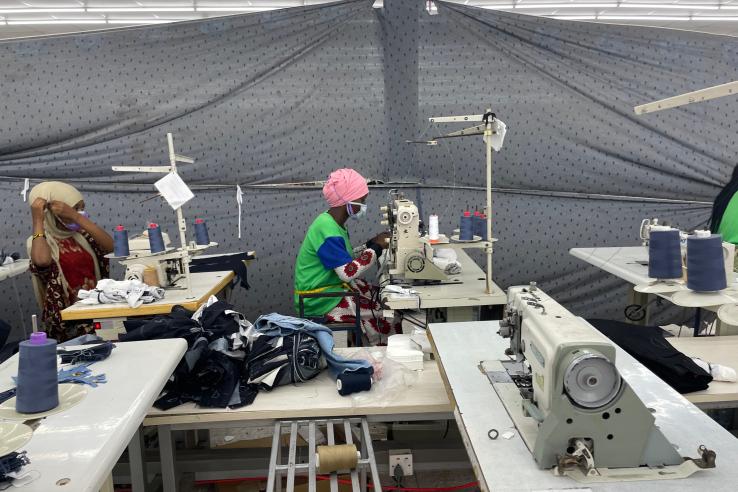
Women working with sewing machines
Evaluation

Gender Differences in the Workplace: Evidence from a Tanzanian Factory

In Tanzania, researchers are conducting a randomized evaluation to test the impact of factory employment and different compensation schemes on gender differences in labor market outcomes, taste for competition, and views on social and gender norms.
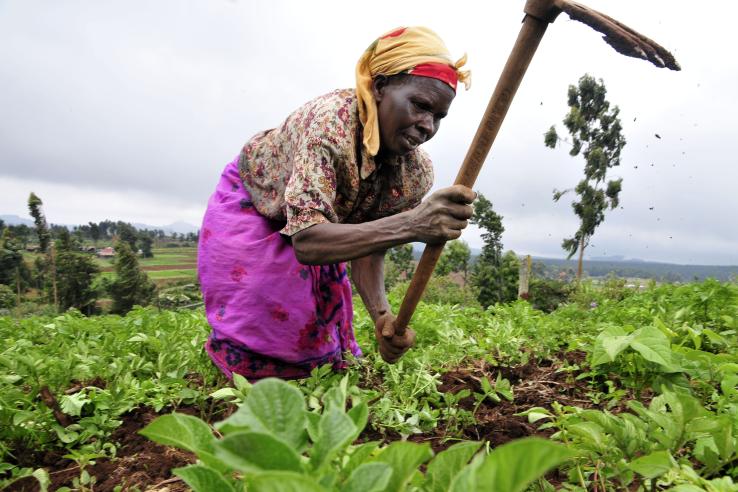
Farmer in Kenya at work in field
Blog

Agricultural productivity and labor: Evidence and open questions for researchers

This blog offers insights and proposes questions on how farmers in Kenya can best utilize household and hired labor, in addition to agricultural technologies.
Person

Garima Sharma
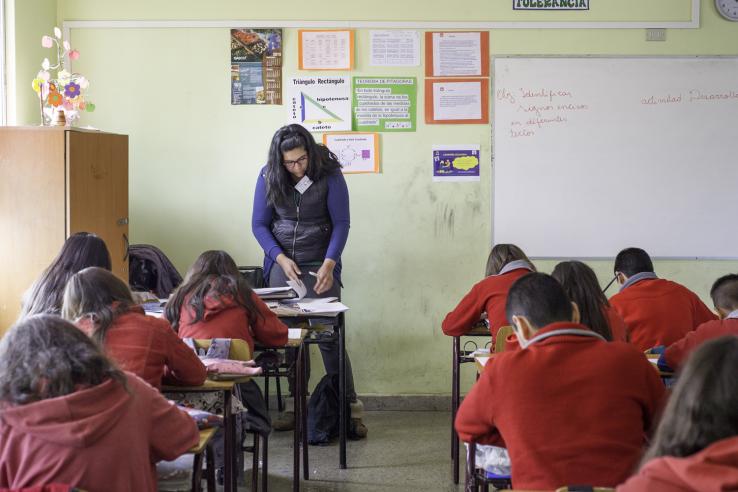
Sala de clases
Event

Respondiendo a los desafíos educativos usando evidencia

La pandemia del Covid-19 ha tenido efectos inmensos en los resultados educacionales de los estudiantes en el mundo. Como parte de la celebración de su aniversario n°20, J-PAL reúne en este encuentro a autoridades gubernamentales y personas expertas en educación para discutir cómo puede ayudar la...
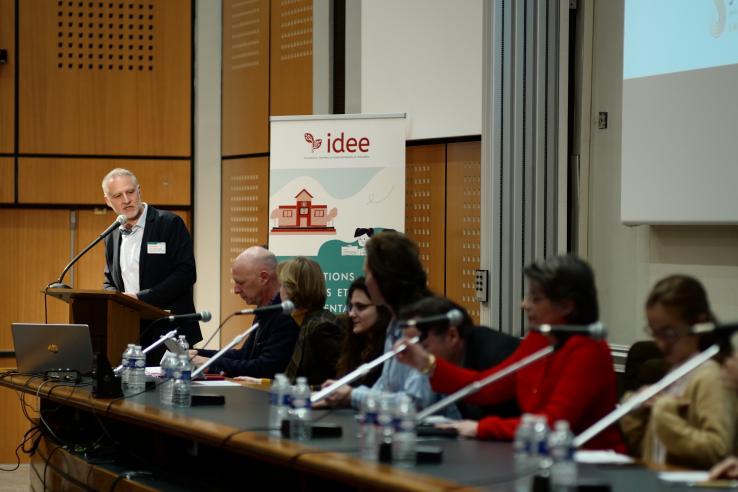
J-PAL affiliate Marc Gurgand speaks at a lectern and looks at a row of panelists.
Blog

J-PAL Europe launches IDEE to advance evidence generation and use in the French education system

This blog discusses the conference hosted by J-PAL Europe and IDEE in November 2022, which aimed to bring together stakeholders—primarily policymakers, practitioners, and researchers—and increase understanding about how impact evaluations can be used in education settings.
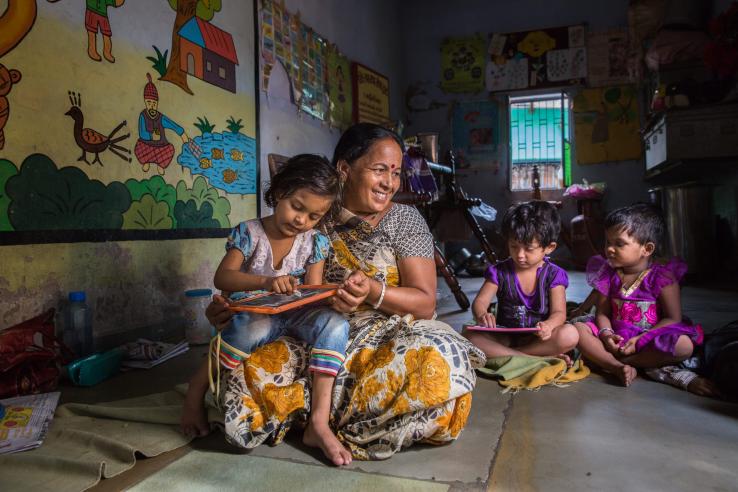
Woman with three children in childcare center in Ahmedabad, Gujarat, India
Policy insight

Access to childcare to improve women’s economic empowerment

Access to childcare can increase women’s employment outcomes by enabling their labor force participation, shift to more desirable work, or increase the productivity in their businesses. However, in cases where there are additional barriers to working outside the home, childcare may not be sufficient...

Women uses phone in market
Evaluation

The Value of Communication for Mental Health in Ghana

Re searchers used a randomized evaluation to measure the impact of providing mobile calling credits to low-income adults on well-being outcomes in Ghana. Overall, the mobile credit intervention increased the ability for individuals to meet unexpected communication needs, particularly when delivered in installments, leading to meaningful improvements in mental health and modest decreases to domestic violence.
Person

Islam Waheed

Person

Sari El Garraya

Person

Mansi Tejpal

Pagination

  • First page « First
  • Previous page ‹
  • …
  • Page 489
  • Page 490
  • Current page 491
  • Page 492
  • Page 493
  • …
  • Next page ›
  • Last page Last »
J-PAL

J-PAL

400 Main Street

E19-201

Cambridge, MA 02142

USA

Contact

+1 617 324 6566

[email protected]


Press Room

Stay Informed

Receive our newsletters

Subscribe


Privacy Policy

Accessibility

MIT