

March 2026 North America Newsletter
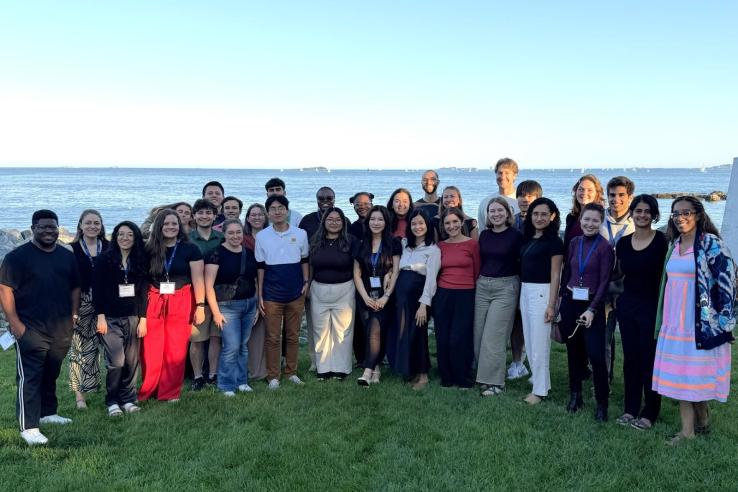
Rigorous economics research has the potential to address some of our region’s greatest challenges, from expanding economic opportunity to improving educational outcomes and reducing violence. Many aspiring scholars are eager to contribute to this evidence-based work, yet significant barriers stand between their commitment and their ability to make meaningful impact. Access to training, mentorship, and networking opportunities should not determine who can play a part in this research—but too often, it does.
J-PAL North America's Economics Pathways program is designed to support aspiring researchers in translating their interests into rigorous, policy-relevant research. In an era of deep uncertainty for similar initiatives, this mission has never felt more urgent. At J-PAL North America, it's what motivates our work on Economics Pathways every day.
Economics Pathways supports researchers at every stage of the pipeline—from workshops that spark initial interest among high school and college students, to technical training for predoctoral scholars, and direct mentorship and funding for early-career faculty. By broadening the diversity of perspectives, backgrounds, and experiences among economics researchers, Economics Pathways aims to cultivate research questions that represent and consider the lived experiences of many.
This month, we're excited to highlight ARTEMIS (Advanced Research Training in Evaluation, Methods, and Impact Studies), a new program for early-career academic researchers, postdoctoral scholars, and late-stage PhD students. ARTEMIS combines a five-day in-person summer institute, held this June in Dedham, MA, with six months of mentorship and proposal development support to prepare participants to design and lead a rigorous RCT. If you work with or know early-career researchers who could benefit from these opportunities, we encourage you to share this offering.
Sincerely,
Sarah D. Sahni, Senior Manager Economics Pathways, J-PAL North America
New Advanced Research Training in Evaluation, Methods, and Impact Studies (ARTEMIS) offering for early-career researchers
J-PAL North America is currently accepting applications to the inaugural cohort of the ARTEMIS Program, a new, fully funded offering that will equip early-career academic researchers with technical training and practical skills to design a randomized evaluation on pressing social and economic issues in the United States. ARTEMIS will guide scholars in integrating quantitative, qualitative, and participatory methods into their research design, enabling them to center community partnerships and an equity focus in their research. Learn more about the offering and who should apply and explore other opportunities in our Economics Pathways program.
Featured Webinar
Ten lessons for building government and research partnerships that matter
On March 31, join an Evidence Matters Webinar for a candid conversation with Carrie S. Cihak (Public Sector Evidence Leader), Louise Geraghty (J-PAL North America), Patrick Turner (Notre Dame), and Vincent Quan (J-PAL North America) on the practical lessons, unexpected challenges, and long-term rewards of investing in sustained evidence-building partnerships. Hosted by the Wilson Sheehan Lab for Economic Opportunities (LEO), J-PAL North America, and Carrie S. Cihak, Evidence Matters is a collaborative learning series bringing together government, researcher, and community perspectives to advance equitable evidence-based economic mobility. Register now.
Featured Evaluation Summary
The effects of STEM summer programs on college major, persistence, and graduation for underrepresented high school students in the United States
Black and Hispanic workers are underrepresented in the well-paying fields of STEM, and this disparity contributes to income and wealth inequality. Racial disparities in degree attainment underlie some of these employment gaps. J-PAL-affiliated researchers Sarah Cohodes (University of Michigan), Helen Ho (Harvard), and Silvia Robles (Brown) evaluated three STEM-focused summer pipeline programs for high school students. Students offered seats in the summer programs were more likely to enroll in a highly-ranked university and persist to graduate from college. The programs also increased the likelihood that students graduated with a degree in a STEM field. Read the summary »
Featured Research Resource
Administrative steps for launching a randomized evaluation in the United States
There are a number of logistical and administrative steps that researchers must take to launch a randomized evaluation that adheres to legal regulations, follows the transparency guidelines of academic journals, and complies with security procedures required by regulatory or ethical standards. This J-PAL resource provides guidance on these steps, many of which require advanced planning at the beginning of the research process. The sequence of these steps often vary by project, and many steps are interdependent.