

October 2026 LAC Quarterly Newsletter
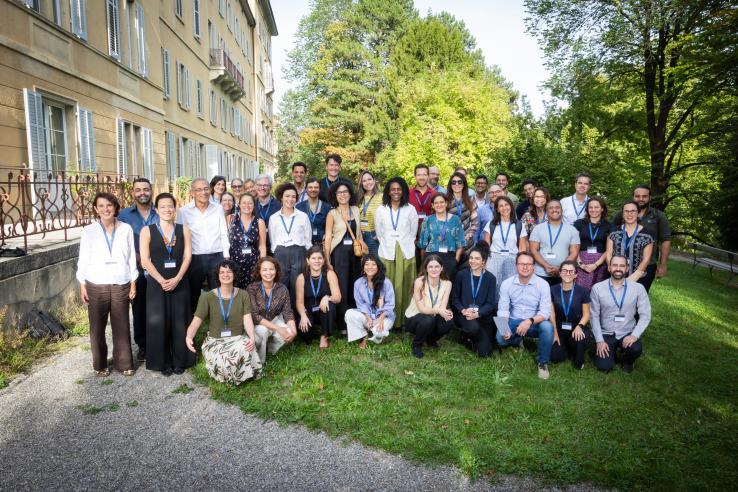
Connecting policy challenges to research questions
To promote structured collaboration between research and practice, the 2026 Matching Workshop, created by the Lemann Collaborative and organized by J-PAL LAC, brought together global researchers — including Lemann Professors and J-PAL co-founders Abhijit Banerjee and Esther Duflo — and representatives from Brazilian public and social organizations.
Held at the University of Zurich, the workshop focused on three main themes: education; environment, climate adaptation, and resilience; and labor markets and the care economy. Through guided discussions, participants examined the problems facing their organizations, the assumptions underlying their approaches, and the questions that still need to be answered.
By combining the researchers’ knowledge of the evidence and research methods with the practitioners’ understanding of implementation realities, the event helped identify where new evidence would be most useful and lay the groundwork for future evaluations and research partnerships.
Building a regional community of practice on early childhood development
Universidad del Valle de Guatemala, UNICEF LAC, RedEAmérica, Somos Crianza, and J-PAL LAC launched a regional Community of Practice on Early Childhood Development to connect people and institutions that design, implement, and support policies and programs for children and their families. It is a space to exchange evidence, experiences, and lessons; discuss shared challenges; and strengthen collaboration. Its inaugural session, “Early childhood in LAC: A comprehensive perspective and shared challenges,” brought together around 200 participants to build a shared understanding of holistic early childhood development and examine challenges across the region. Watch the inaugural session »
Advancing early childhood education in Brazil
Pathways to Preschool, a project in partnership with Fundação Bracell and Itaú Social, is working with towns in the states of Bahia and São Paulo to pilot and evaluate two early childhood education programs. In August, the project welcomed Stephanie Jones, Gerald S. Lesser Professor in Early Childhood Development and Director of the Center on the Developing Child at Harvard University, for a series of events. Her visit, which included a masterclass, helped strengthen collaboration around the project and foster discussions on the theme in Brazil. Learn more about the project »
Celebrating JOI Brazil’s 5th Anniversary
The Jobs and Opportunities Initiative (JOI) Brazil convened researchers, policymakers, and practitioners to celebrate its fifth anniversary, exploring topics such as how AI may change jobs and skills; why entrepreneurs facing different barriers need different forms of support; and how care responsibilities and working conditions in the care sector affect access to opportunity. The event also launched the initiative’s new guide to labor market policies in Brazil, with evidence to inform policy decisions across these areas. The guide is available in Portuguese here »
EVIDENCE IN LAC
Can legal support improve the lives of children in foster care?
Children in foster care often spend years in the system, and bureaucratic delays may unnecessarily prolong their stays and harm child well-being. Researchers partnered with the Chilean government to conduct a randomized evaluation of Mi Abogado, a comprehensive legal aid program for children living in residential care, to test its impact on family reunification and child well-being. Children assigned to Mi Abogado spent more time living with family, had less involvement with the criminal justice system, and attended school more often, without a decline in child safety. Read more about it on the evaluation summary »
Does discrimination shape academic networks?
J-PAL affiliate Nicolás Ajzenman (McGill University), Bruno Ferman (FGV EESP), and Pedro C. Sant’Anna (MIT) studied whether discrimination shapes professional networks in the formation of professional networks among academic economists on #EconTwitter. The researchers created bot accounts representing PhD students who varied by gender, race, and university affiliation and randomly followed nearly 7,000 users in the economics community. They found that follow-back rates were higher for White than Black students and for students from top-ranked universities, with the racial gap persisting even among students at top-ranked institutions. Female students also received more follow-backs than male students. Read the study »
MEDIA HIGHLIGHTS
Nexo
Políticas públicas que funcionam na prática começam com boas perguntas
The Clinic
Con Interés
O Globo
Alcolumbre sinaliza votação da PEC da escala 6x1 na próxima semana; entidades produtivas reagem
Diario Financiero
Las distancias que el sistema de salud puede acortar
Portal da Secretaria de Educação de Guarulhos
Escolas da rede municipal compartilham práticas em evento internacional no CEU Continental