Supporting Indonesia's faith-based charitable funds, zakat, in tackling poverty through the Graduation approach
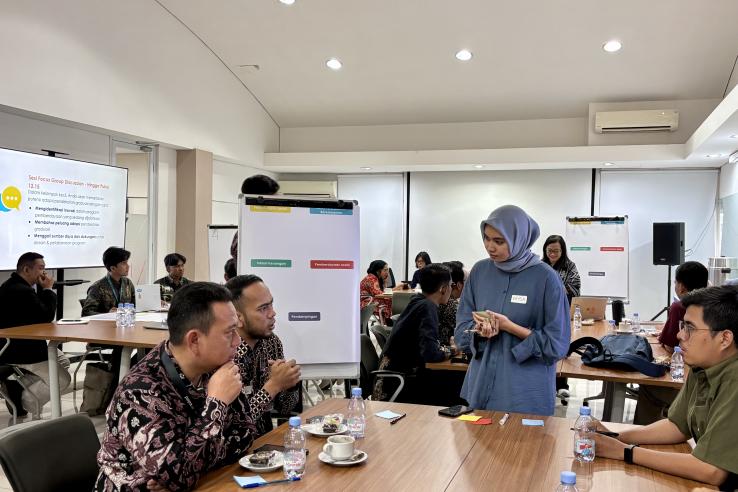
On October 8, 2025, J-PAL Southeast Asia hosted a workshop gathering several of Indonesia’s zakat management organizations (Organisasi Pengelola Zakat or OPZ) to explore how zakat (faith-based charitable funds) can further support poverty alleviation through the Graduation approach. In this blog, we highlight key discussions from the event, including collaboration models, recipient targeting improvements, and opportunities for evidence-based implementation in the zakat ecosystem.
Zakat, one of Islam’s five pillars, is a form of charity in which some Muslims give a portion of their wealth to support eligible people known as the asnaf, including low-income people and orphans. This giving is believed to be a wealth distribution effort to build a just society where the wealthy should distribute their wealth to others less fortunate who can benefit from it.
In Indonesia, home to the world’s largest Muslim population, around 170 OPZs operate across major cities and regencies to manage zakat funds on behalf of their communities and reach low-income households and those experiencing extreme poverty. According to Indonesia’s National Board of Zakat (BAZNAS), zakat collection in 2023 reached 32 trillion IDR (1.9 billion USD), with an upward growth trend since 2021.
Zakat institutions hold significant potential to complement the Indonesian government’s poverty alleviation efforts. Although poverty rates have declined, 40 percent of the population remains vulnerable, and OPZs can help target and support these groups.
The Indonesian government has integrated zakat into its national poverty reduction agenda. Through coordination between BAZNAS and the Ministry of Religious Affairs, zakat is now positioned as a complementary instrument to public social protection programs and seen as a powerful tool for poverty alleviation, not only a religious practice.
The Graduation approach
Many OPZs already run programs that help recipients escape poverty through capital support, entrepreneurship training, and productive assets in many regions in Indonesia. These initiatives align closely with the Graduation approach, first developed by the nonprofit organization, Building Resources Across Communities (BRAC) in 2002. The multi-component program aims to “graduate” beneficiaries from extreme poverty to self-reliance by providing beneficiaries a set of interventions, such as asset transfers, training, regular coaching, temporary consumption, and health support (See Figure 1). These complementary ingredients are received by beneficiaries for a period of two years, after which they are expected to “graduate.”
Rigorous evaluations show that the Graduation approach generates positive and long-term impacts on economic well-being and health, even up to ten years after receiving the productive asset. Building on its success in Bangladesh, the model has since been adapted by over 100 partners worldwide, reaching 14 million people in 3.1 million households.

Given its relevance to zakat-based social assistance programs, there is growing interest among practitioners and policymakers in exploring how zakat can support a Graduation-style process that moves beneficiaries from temporary relief toward sustainable self-reliance. The initiative provides an impactful lesson about how zakat can be more strategic, both from Islamic jurisprudence and the economic empowerment perspectives.
The workshop
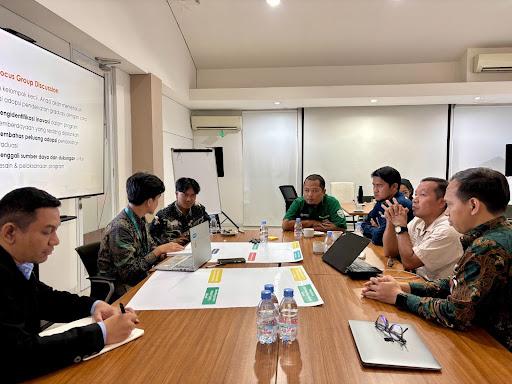
To explore this potential, J-PAL Southeast Asia hosted an evidence-sharing workshop on October 8, 2025, bringing together representatives from OPZs across Indonesia to discuss best practices for applying the Graduation approach in zakat-based poverty alleviation.
The workshop reflected a shared interest in uplifting zakat from traditional charity toward a more synergized, evidence-based support element for poverty alleviation.

Two key insights emerged from the discussions:
1. OPZs can collaborate with multiple institutions to deliver the Graduation approach
Many OPZs already implement programs that touch on the core pillars of Graduation. Some provide capital assistance, entrepreneurship training, and asset transfers, while others offer education and health programs. However, unlike the Graduation approach, which provides a set of components to help households move toward self-reliance, most OPZ programs are delivered separately to different target groups.
Rather than “reinventing the wheel,” OPZs can build partnerships with other institutions or with one another to cover missing pillars of the model. For example, an OPZ that focuses on entrepreneurship training could collaborate with another that provides asset transfers, or ongoing mentorship, while also connecting beneficiaries to existing government programs such as Program Keluarga Harapan for cash assistance and BPJamsostek for social protection. By working together, OPZs can deliver more comprehensive support, pushing households from poverty to becoming self-reliant.
Several OPZs have already established partnerships, although many of these efforts are still fragmented and not yet fully oriented toward delivering all pillars of the Graduation approach. For instance, some OPZs have partnered with the government body BPJS Kesehatan to provide beneficiaries with health insurance: an important component, but only one piece of the broader model. Recognizing this, workshop participants emphasized the need to establish a lead coordinating body, well-defined Terms of Reference, and robust monitoring mechanisms to ensure accountability and shared commitment among all partners.
2. OPZs have the resources, knowledge, and network to improve program targeting
Accurate targeting is crucial to ensure that assistance reaches those most in need and prevents overlapping program delivery. OPZs are well-positioned to strengthen targeting accuracy due to their extensive community networks, detailed records of zakat-eligible recipients, and understanding of local socio-economic conditions. Additionally, OPZs can leverage existing government beneficiary databases (such as DTSEN/DTKS) to avoid providing similar programs to the same beneficiaries.
Although these databases exist, many OPZs rely on their own data collection systems, which are verified by their field teams due to limited access to government registries or concerns over outdated or inaccurate data. The OPZs data collection systems can also separate the groups that have motivation to build their future and the groups that have no intention to make a better life. Limited resources make the OPZs choose the groups with a vision for a better life. Nevertheless, participants expressed that they are open to alternative targeting methods that better reflect local realities and improve precision.
Looking ahead
The workshop reflected OPZs’ strong interest in enhancing the impact of their programs and exploring how collaborative schemes can fit their capacities. Through this engagement, J-PAL Southeast Asia hopes to open doors for future collaboration in conducting rigorous impact evaluations in the zakat sector.
Key questions remain that can help OPZs leverage global best practices and contribute more effectively to poverty alleviation:
- To what extent do zakat-based interventions, when integrated with existing government social protection programs, improve beneficiaries’ income, food security, and well-being compared to either intervention alone?
- Which operational models for implementing an integrated Graduation approach within Indonesia’s OPZ ecosystem lead to the greatest improvements in beneficiaries’ economic self-reliance and poverty reduction outcomes?
- What combination of zakat-funded support components, such as training, mentoring, or access to capital, yields the greatest long-term gains in household welfare?
In the workshop, Haryo Mojopahit, Managing Director of IDEAS–Dompet Dhuafa Republika Foundation, emphasized that beyond strong program design and collaboration, measuring impact is essential to ensure zakat institutions truly alleviate poverty. As a part of Forum Zakat, an association for OPZs, Dompet Dhuafa is interested in making collaboration efforts to implement the graduation approach in impoverished villages in 8 provinces. Through sustained partnerships and shared evidence-based learning, it is hoped that Indonesia’s zakat ecosystem can adopt global best practices and play a more effective role in the fight against poverty.