
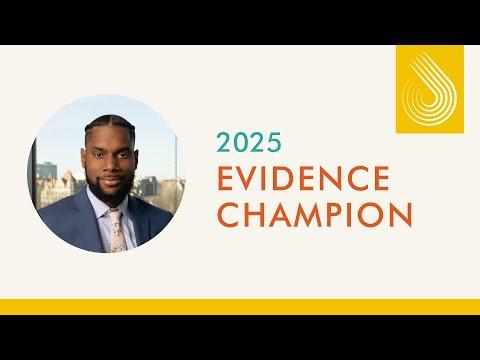
Researcher Spotlight: Damon Jones on better understanding racial equity through rigorous research
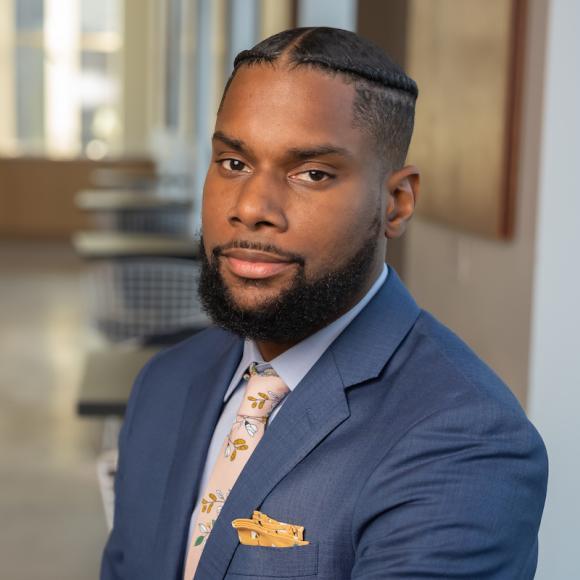
In this Evidence Champion series, J-PAL North America is recognizing individuals in our network who have made extraordinary contributions to the field of evidence-informed policymaking. This year’s researcher recipient is Damon Jones, an associate professor at the Harris School of Public Policy at the University of Chicago, the associate director of the Stone Center for Research on Wealth, Inequality, and Mobility at the University of Chicago, and a scientific advisor on J-PAL North America’s racial equity work. In this post, we highlight Damon’s contributions to both making the research around racial equity more rigorous and making the space for doing this type of research more welcoming and inclusive.
Leveraging economics—and randomization—as tools to understand social and economic inequality
Damon Jones’ interest in racial equity grew out of his work in inequality that began before he started his graduate studies. “I've always been interested in inequality, and I think I saw social sciences as a way to learn more about inequality or ways to address inequality in society,” Damon shared. Through an early volunteer position with a nonprofit organization in Washington DC, Damon worked on an income tax assistant program for low-income individuals. Damon noted that through this experience, “I learned about the income tax refunds that people were getting, and it just kind of sparked a lot of interest for me—it raised a lot of questions.” This was a launching point for his decision to pursue a career in economics to study social and economic inequality, including racial disparities. He has since made this a focal point of his research throughout his career.
Damon recognizes that the field of labor economics has been historically influenced by randomized evaluations, especially through audit and correspondence studies. “Randomized controlled trials have played a significant role in the field of labor economics, looking at labor market discrimination, and trying to detect certain types of discrimination,” said Damon. “The classic example is the correspondence study, where people take resumes and alter things randomly on the resumes and see how many callbacks each resume gets and try to learn about what attributes are favored or not. In particular, if you could make people look very similar in all other dimensions, but signal that they are of different racial groups, what happens, and what implications does that have?”
Randomized evaluations, Damon believes, have the potential to help us understand the systemic forces behind racial inequality, and he is actively working to improve the quality of research in this field. Gerald Daniels, an associate professor of Economics at Howard University, noted, “Damon has been a thoughtful and consistent voice pushing our field to think more critically about how researchers can use evidence to address racial inequities.”
Economics can also be a powerful tool in grounding personal experience and theory with evidence, which is central to Damon’s research approach. Dania Francis, an associate professor at the University of Massachusetts Boston, explained, “As researchers, it’s important to acknowledge and recognize our own positionalities and be aware of when they might be influencing the questions we ask and the decisions we make as investigators. Damon is one of the best at recognizing this. In my work with him, it has not been uncommon for him to press pause and ask, what does the evidence say?”
Raising the standards and putting results in a broader context
Until recently, racial equity has been most often discussed as part of the subgroup analyses in larger randomized evaluations, meaning race is considered only after the intervention has concluded, rather than explicitly designing the study to understand the impact of the intervention on specific racial groups. Damon has emphasized that this is not enough to rigorously answer the pressing questions surrounding racial equity. He encourages researchers to learn from other disciplines and be familiar with the predominant theories to understand how these theories can be tested to find causal results by considering racial equity from the design phase to the publication of results.
To this end, Damon Jones has worked to expand who is involved in research. Dr. Daniels mentioned, “He is a great mentor to emerging and young researchers, always generous with his time and expertise. Through mentorship, collaboration, and openness in sharing methods and insights, he has helped expand who participates in and shapes the work of evidence-informed policymaking.”
This interdisciplinary approach to research allows it to be put into a broader context and implemented in practice. Dr. Francis observed, “Some people are big picture people, others are detail people, Damon is both. This quality is especially important in evidence-informed policymaking because it is easy to get caught up in details, especially as economists who are seeking very specific causal evidence. But being hyperfocused on details can be to the detriment of larger policy implications.” Dr. Daniels added, “Damon is especially effective at connecting the technical aspects of research to the broader institutional and historical context, ensuring that our work speaks to real policy challenges that families face.”
Leading with consistency and intentionality
Damon has served as the Chair on J-PAL’s Racial Equity Advisory Committee (REAC) for the past three years. In this role, he and the REAC have supported and amplified the work of researchers dedicated to advancing racial equity through funding, resources, and collaboration. Damon shared, “The REAC is kind of a brain trust of different scholars who have experience studying race who have helped us think about what types of research we want to look for, what advice to give, what type of strategies are there to create opportunities for researchers in this area that may not have necessarily broken into certain spaces within the field of economics.”
Damon and the REAC have focused on intentionally bringing in researchers who may have felt excluded from the economics field in the past. He has also overseen the creation and dissemination of high-quality resources on conducting randomized evaluations focused on racial equity to researchers with experience in this type of evaluation, but are newer to the racial equity space.
In reflecting on Damon’s role in the REAC, Dr. Daniels explained, “Damon played a key role in grounding our conversations in both data and lived experience. He often reminded the group that research on racial equity must be intentional when studying underrepresented communities and that evidence should inform, not dictate, policy design. His approach exemplifies what it means to be an Evidence Champion. He is committed to using research not only to evaluate programs but also to rethink how evidence can advance fairness and opportunity. His leadership has had a lasting influence on both the research process and the policy community around it.”
Damon’s influence has been felt here at J-PAL, in the broader economics community, and beyond.
Acknowledgements
Damon would like to thank the broad team of researchers, policymakers, and practitioners who are partnering with him to make this work possible: past and present members of the REAC, Randal Akee, Courtney Bonam, Gerald Daniels, Dania Francis, Robert Gillezeau, Corinne Low, Sylvia Robles, and Angelino Viceisza; J-PAL collaborators, Michaela Chua, Laura Feeney, Noreen Giga, Sarah Margolis, Matt Notowidigdo, Laura Ruiz-Gaona, Fatima Vakil, and the entire J-PAL North America team.
In this Evidence Champion series, J-PAL North America is recognizing individuals in our network who have made extraordinary contributions to the field of evidence-based policymaking. This year’s partner recipient is Dr. Owen Garrick, a leader in clinical research committed to ensuring health care solutions are bold, actionable, and grounded by evidence.
In our Evidence Champion series, J-PAL North America recognizes individuals in our network who have made extraordinary contributions to the field of evidence-based policymaking. This year’s partner recipient is Dr. Owen Garrick, a leader in clinical research, who seeks to find solutions to people’s unmet health needs. In this post, we highlight Dr. Garrick’s vision for addressing racial health disparities with bold solutions, how to embed community perspectives into research design to drive change, and the importance of maintaining reciprocal communication at every stage, including research dissemination.
Advancing research that leads to bold, actionable solutions
Over a two-decade career as a clinical researcher, Dr. Owen Garrick has sought to improve health care delivery and health outcomes, particularly for those with the greatest unmet medical needs. Dr. Garrick is motivated by the belief that when we identify solutions for the people facing the greatest challenges, these solutions are often applicable to other groups and can strengthen health systems more broadly.
“I am a believer in the role of research—testing solutions to optimize existing strategies to impact health," notes Dr. Garrick. “Research, very broadly, affords us the chance to put forward, in a more structured way, the best solutions for subpopulations, all populations, or cross sections of patients. So for me, the basic tenets of research apply to health equity research as well.”
Dr. Garrick is a champion of bold solutions that go beyond small incremental changes. He shares, “we artificially limit how we frame health disparities.” He believes that the interventions we test in research should aim not only to meet what is currently considered “optimal” outcomes, but also to push the boundaries and explore how much further those outcomes can improve.
However, Dr. Garrick acknowledges that solutions that can fit into existing workflows are more likely to be implemented. Interventions that take multiple steps, or require more complicated coordination of teams, will have little take-up from decision-makers who have limited resources and competing priorities. Identifying practical approaches that can demonstrate impact is key to driving adoption among implementers and ultimately improving community outcomes.
While a tricky balance to strike, Dr. Garrick has managed to accomplish this throughout his career. Dr. Adam Milam, Professor of Anesthesiology at Mayo Clinic Alix School of Medicine and colleague of Dr. Garrick, shares “the research that Dr. Garrick conducts leads to changes that improve patient care and patient outcomes and systemic changes that are equitable, scalable, and sustainable.”
Researching the role of representation in patient care
Dr. Garrick’s approach of identifying bold yet practical solutions is evident in his 2019 physician racial concordance study—conducted with J-PAL affiliated researcher Marcella Alsan (Stanford University) and Grant Graziani—that tested whether increasing representation among physicians of color would improve health outcomes for patients of color in Oakland, CA. The study was driven by calls from leading medical organizations to increase diversity among physicians, based on the idea that doctors who share similar backgrounds with their patients may build trust and communicate more effectively—ultimately leading to better health outcomes. The researchers were interested in designing a randomized evaluation that could generate causal evidence about the effects of Black physicians treating Black patients.
In the study, Black male patients were first shown a picture of the doctor they would be seeing that day and were asked what procedures they would like to receive. The picture was either of a Black or non-Black (white or Asian) male doctor, and the procedures they could choose to receive included proven preventative care measures such as diabetes screenings, cholesterol screenings, and flu vaccines. The patient then met in person with the doctor from the photo, and had the opportunity to adjust their preferences for what procedures they wanted to receive. When Black men were treated by a racially concordant physician, they were more likely to take up preventive care, especially more invasive procedures like a finger prick or injection.
This result indicated that better communication drove the increased take-up of preventative services. Dr. Garrick reflected, “the Black physicians were able to elicit important information like birth dates, job issues, and other social determinants from their patients.” He also noted that the patients were willing to discuss with their doctor how to adhere to medical recommendations while facing challenges such as having more than one job and other social determinants.
“Dr. Garrick helped lead a randomized evaluation for a question that could affect people in his community and did so with integrity and impartiality,” shares study co-author Marcella Alsan. “From small details to major decisions, Dr. Garrick was invaluable in carrying out the project.”
Designing studies with—and for—communities
Dr. Garrick was instrumental in incorporating the community into the study. Most study team members were hired from the Oakland community, which provided the research team with a deeper understanding of the setting, informed logistical steps, and helped to refine the study design. Dr. Garrick and his team also engaged community members through focus group discussions that informed how to receive consent, integrate the study into existing workflows, and conduct participant recruitment—which was ultimately organized through barbershops and flea markets.
For Dr. Garrick, conducting research within the local context and structures—as identified by community members—allows for research results to be more applicable in the real world. He emphasizes that, “as academics and outsiders to a community, sometimes we have to take a backseat and understand the expertise and knowledge community members hold and include them as decision-makers in study design and logistics.”
Communicating results to inspire action and build trust
The results from the racial concordance study were well received by the local community, academia, and mainstream media alike. This was, in part, attributable to the thoughtful communication strategy developed by Dr. Garrick that presented the results in an accessible way. The intentional focus to make the study as realistic as possible from the outset made the results easy for community members to understand.
But the results were not just relatable, they were impactful. The study has now been widely cited by others interested in understanding the health of diverse communities, including research identifying the impact of Covid-19 on hospital admissions, expanding the evidence base on physician race concordance, and unpacking racial bias in health algorithms. The research findings also gave people advocating for a more diverse health care workforce tangible evidence of its positive impacts, demonstrating that increasing diversity could be a cost-effective solution to improve patient care and the efficiency of health care delivery.
Dr. Garrick and his team partnered with the Alameda County Public Health Department, which had provided free vaccines for the study, to share the research results back to the community. The research team also prioritized thanking the participants for their engagement and participation. Thoughtfully sharing study results, Dr. Garrick explained, can increase the potential for change.
As an Evidence Champion promoting health equity, Dr. Garrick continues to push others to advance community-centered solutions that are bold and actionable. “In our daily lives, we can't track everything, so let's figure out what is the most efficient and impactful,” he notes. “You still need to maintain some percentage of your time for the unknown, the new discoveries. And a lot more studies focused on real-world challenges would be fantastic.”
Acknowledgments
Dr. Garrick would like to thank the patients that participated, the broad team of researchers, policymakers, practitioners, and community members who are partnering with him to make this work meaningful, including: Dr. Michael Lenoir, Wrist Action Barber Shop, National Public Radio, Stanford University, the National Medical Association, and Sinkler-Miller Medical Association.
In this Evidence Champion series, J-PAL North America is recognizing individuals in our network who have made extraordinary contributions to the field of evidence-based policymaking. This year’s partner recipient is AJ Gutierrez, Co-Founder and Chief of Policy and Public Affairs at Saga Education.
In this Evidence Champion series, J-PAL North America is recognizing individuals in our network who have made extraordinary contributions to the field of evidence-based policymaking. This year’s partner recipient is AJ Gutierrez, Co-Founder and Chief of Policy and Public Affairs at Saga Education. AJ has dedicated his career to increasing educational equity through high-impact tutoring. In this post, we feature AJ’s motivations and milestones in advancing evidence use in education.
A mission to increase educational equity for students like him
AJ’s lived experience, as a student who struggled in school, directly informs his mission to identify and scale effective teaching and learning strategies. AJ grew up in Boston with two sisters and a single mother who worked multiple jobs to keep their family afloat. Even though education was central to his family’s beliefs, AJ felt disconnected from school and struggled to keep up with his peers academically. Things changed in high school, when AJ met Alan Safran, Co-Founder of Saga Education, who at the time was the Executive Director of Match Education. AJ began participating as a student in individual high-dosage tutoring, which had a life-altering impact on his relationship with school and his academic trajectory for the better.
In 2014, AJ and Alan founded Saga Education to bring personalized, high-impact tutoring to schools across the United States. Saga’s model integrates individualized, daily math tutoring sessions into the school day in addition to core classroom instruction. AJ cites how his experience receiving high-impact tutoring in high school helped him understand how working with someone who develops a student’s academic capacities while also cultivating a personal connection can empower students to see their potential. “It all comes back to the power of working with someone who not only builds your skills, but also knows your name, knows your birthday, and makes you feel that sense of belonging in school,” AJ explained. Yet AJ and Alan knew that to expand this work and generate buy-in from schools, they would need to rigorously assess the program’s impact on student learning.
Building and leveraging evidence to generate bipartisan support for high-impact tutoring
Since 2013, AJ and the Saga team, in partnership with researchers in the J-PAL network and their co-authors, have conducted seven randomized evaluations of their tutoring model, demonstrating a deep commitment to using evidence to inform and continuously improve their program. Through rigorous evaluation, they found that Saga’s high-impact tutoring model increases math test scores, grades, and graduation rates across a student's academic trajectory.
Leveraging these evidence-based insights on how to implement the Saga model at scale, AJ began to advocate for increased resources to implement high-impact tutoring at both the local and federal level. In 2021, AJ provided expert testimony on Saga’s impact to the Colorado Education Committee, citing evidence from randomized evaluations on the positive effects of high-impact tutoring on students. Colorado House Bill 21-1234 was then signed into law in 2021, providing grant funding for the creation of high-impact tutoring programs across the state.
At the federal level, AJ was instrumental in advancing the introduction of three bipartisan federal bills in the House and Senate, including the Access to High-Impact Tutoring Act (and spoke at the press conference where Rep. Sherrill formally introduced the bill). He has also collaborated closely with the Department of Education, the Biden-Harris Administration, and national nonprofits to help shape federal Covid-19 recovery education guidelines and establish the National Partnership for Student Success. This initiative exceeded its goal, mobilizing 320,000 tutors, student success coaches, and mental health professionals to support students nationwide.
Most recently, AJ led the coalition that secured Appropriations Report Language in the FY 2024 bill, which was signed into law in April 2024. This explanatory language provided guidance for states and the US Department of Education on prioritizing and allocating funds for evidence-based, high-impact tutoring.
In the face of myriad, often conflicting perspectives on US education strategies, AJ has championed the use of rigorous evidence to generate bipartisan support and scale evidence-based solutions to improve student learning.
Building a coalition and lifting the field
Over the past ten years, Saga’s growth and success has been bolstered through collaborations with researchers, community organizations, and research centers like J-PAL North America and the University of Chicago’s Education Lab. Monica Bhatt from the University of Chicago shared insight into how AJ has been able to grow Saga’s work: “Because he is such a gifted consensus builder, he knows how to not just get people to see and understand his vision, but work in service of making it a reality. His passion and purpose are truly palpable in every room he’s in, and they make him a joy to partner with.”
AJ’s vision is not only to create high-impact tutoring programs and models but to share knowledge with others trying to do the same. He explained, “When I connect with nonprofit leaders, I try to have them think about how you can use evaluations to help usher in not only insights on what works but insights that help lift the field, because at the end of the day what we're trying to do is create real systems change.”
And while AJ works to advance evidence generation and usage in partnership with many organizations in North America, he also does so internationally. In 2014, AJ and the Saga team supported the University of Amsterdam and The Bridge Learning Interventions in an evaluation of their high-impact tutoring program. AJ’s role in this collaboration was critical, sharing the tools and resources needed to understand and implement evidence-based, high-impact tutoring with another local nonprofit.
Under AJ’s leadership, Saga continues to grow this work in other regions and countries, guided by their goal of lifting other organizations up so that they too can utilize evidence to inform their educational programs and help students reach their full potential. Saga Education co-founder Alan Safran summarizes the expansion of Saga’s impact and AJ’s pivotal role in this effort best: “We have taken our idea of high-impact tutoring globally, and in all of the spaces he operates, [AJ] is an authentic spokesman—in fact, the most authentic spokesman for the value of high impact tutoring.”
Acknowledgments
AJ would like to thank the broad team of staff members, researchers, policymakers, practitioners, and community members who are partnering with him to make this work possible:
- Abell Foundation
- Accelerate
- AmeriCorps
- Angell Family Foundation
- Ann and Paul Sagan
- Arnold Ventures
- Bellwether
- Bill and Melinda Gates Foundation
- Blue Meridian Partners
- Bridgitt and Bruce Evans
- Chicago Public Schools
- Citadel Foundation
- ComcastNBC Universal
- Crown Foundation
- Finnegan Family Foundation
- Fulcrum Public Affairs
- IMC Foundation
- InnovateEdu
- Jim Shelton
- Lizz Pawlson
- MacKenzie Scott
- Margo Prizker
- Matt Vettel
- Michael and Susan Dell Foundation
- National Student Support Accelerator
- New Profit
- Overdeck Family Foundation
- Paul Angell Foundation
- Proven Tutoring
- Saga Board
- Tamara Sumner and Sidney DiMello, the University of Colorado Boulder
- The inspirational students we support across the globe
- The National Partnership for Student Success (NPSS)
- University of Chicago Education Lab
- Walton Family Foundation
- Weinberg Foundation
In this Evidence Champion series, J-PAL North America is recognizing individuals in our network who have made extraordinary contributions to the field of evidence-based policymaking. This year's researcher recipient is Alicia Sasser Modestino, Executive Director of the Community to Community Impact Engine and Associate Professor in the School of Public Policy and Urban Affairs and the Department of Economics.
In this Evidence Champion series, J-PAL North America is recognizing individuals in our network who have made extraordinary contributions to the field of evidence-based policymaking. This piece features the work of Alicia Sasser Modestino, our 2024 researcher recipient whose policy interests include youth development, health care, housing, and migration. Alicia is an Associate Professor in the School of Public Policy and Urban Affairs and the Department of Economics at Northeastern University and the Executive Director of the Community to Community Impact Engine. This post highlights Alicia’s commitment to building trust, her long-standing collaboration with the City of Boston, and her focus on fostering equity in the field of economics.
Building trust to cultivate strong research partnerships
Alicia’s research spans multiple sectors, from health care to workforce development, giving her a breadth of experience engaging with a variety of partners. One through line in all of these diverse partnerships? The importance of building trust to enable a collaborative research environment. Her approach to research centers on the engage-think-do model, emphasizing the importance of close and constant collaboration from start to finish. This engagement model enables researchers to go beyond estimating a program’s impact—it equips the partner to act on the results and continuously improve their program.
Alicia implements this approach in her research partnerships, encouraging transparency and fostering a space for collaboration, sharing insights, and co-creating solutions. This strategy is exemplified by her work with the City of Boston evaluating their summer youth employment programs. Alicia and her city contacts at the Office of Workforce Development practice regular communication through recurrent meetings to ensure ongoing project alignment and trust. Alicia reflects “we are moving at the speed of trust. If you are trying to develop an intervention with an organization, [you need to] understand that you are working with their constituents, their participants, their young people, their communities, which takes a lot of trust.”
Recognizing the value of the engage-think-do model, Northeastern University made a 4.5 million dollar investment in Alicia’s work for the Community to Community Impact Engine initiative in 2022. This investment focuses on using data and analysis to evaluate innovative public policies, while allowing researchers to dedicate the time and resources needed to develop relationships with their policy partners before beginning evaluations. Jenny Irons, Senior Program Officer from the William T. Grant Foundation, shares “in collaboration with her partners, Alicia has built a model of mutually beneficial, rigorous partnership research, a model she is sharing with others through Community to Community: Policy Equity for All.”
Evidence to policy for summer youth employment programs
Alicia has dedicated over a decade to supporting Boston’s Summer Youth Employment Program (SYEP) by conducting randomized evaluations to better understand their impacts on young people. Specifically, randomized evaluations have been effective at disentangling the changes in youth outcomes attributable to the program from those that simply stem from natural youth development.
Her research showed that youth who participated in Boston’s SYEP had reduced involvement with the criminal legal system, increased school attendance and graduation rates, and led to higher levels of community involvement, college aspirations, and job readiness skills compared to their peers who did not participate. In 2020, while other programs were halting operations due to the Covid-19 pandemic, Alicia’s findings informed Mayor Walsh’s decision to further invest 4.1 million dollars into SYEP to sustain and grow youth employment opportunities in Boston. Her research on SYEP also led to the City of Boston investing 18.7 million dollars in summer jobs in 2023, successfully employing over 9,000 young people, and has now expanded into Mayor Wu’s decision to establish a Mayor's Youth Job Guarantee in 2024 that ensures all Boston Public School students job opportunities. In response to these milestones, Alicia reflects, “I’ve always said that my greatest achievement would be putting myself out of business, meaning we could no longer randomly assign jobs, and I’ve just done it.” Alicia’s work with the City of Boston to guarantee summer jobs for its students demonstrates how providing evidence-based insights can not only inform, but transform public programs.
Fostering equity in research and economics by focusing on real-world impacts
Alicia’s passion for research extends beyond academic accolades—it is driven by a desire to catalyze real-world change. For Alicia, research should be a tool for guiding policy and improving people’s lives. When she first began working on SYEP research, youth employment wasn’t a priority for many policymakers. Yet, through a decade of continuous research, Alicia has helped elevate SYEP to be one of Boston’s top public policy priorities. Jared Auclair from Northeastern University shares “Alicia has consistently bridged the gap between academic research and practical policy making. Her work on youth employment, particularly, has underscored the importance of economic opportunity for young people and the cascading effects it has on community well-being. Through her research, she’s provided policymakers with critical insights that underscore the importance of investing in programs that support young people at a pivotal time in their lives.”
Alicia is driven by a broader vision of shifting economics and policy research toward inclusivity. Focusing on economics issues that affect people's well being not only increases the evidence base, but also elevates the contributions of the researchers who do this work—which is most often women and people of color—creating a more inclusive field. Beyond calling on researchers to study the issues most relevant to people’s well-being, Alicia also emphasizes the importance of bringing humility into research partnerships and recognizing the value of lived experience.
Committing to real-world impact has not only allowed Alicia to see her research influence public policy—she’s also seen the direct impact SYEP has made on individuals through chance encounters and interactions. Alicia shares: “One of the great joys of working on SYEP is that almost every time that I go to present my research somewhere, there's an SYEP kid somewhere in the room. At Northeastern, when we used paper surveys, I had a lot of undergraduates who would support data entry and analysis. One year it came full circle—one of my students had been a summer jobs participant in Boston and was now working on evaluating the program. And I find that everywhere—it’s incredibly gratifying.”
Acknowledgments
Alicia would like to thank the broad team of researchers, policymakers, practitioners, and community members who are partnering with her to make this work possible:
- City of Boston: Trinh Nguyen, Rashad Cope, Katy Gall, Sarah Saroui, Allison Vernerey, Adeola Ebekozien, Samantha Bhatnagar
- Boston Summer Jobs Ecosystem: Action for Boston Community Development (Jessica Rosario), Boston Private Industry Council (Joseph McLaughlin), John Hancock MLK Scholars Program (Annie Duong Turner), State Street (Midori Morikawa), Youth Options Unlimited (Mallory Jones)
- Boston Public Schools: Catherine Chiu, Marsha Innis Mitchell, Michelle Sylvaria
- Community to Community Impact Accelerator, Northeastern University: Lynn Sanders, Alli Chagi-Star, Kat Stecher, Ellie White, Hanna Hoover, Aria Golestani, Josh Lown, Hitanshu Pandit, Peiran Cheng, Joseph Koroma, Eric Bell, Sophia Sawyers, Samara Shankar
- Department of Economics, Northeastern University: Mindy Marks, Urbashee Paul, Richard Paulsen, Rachel Sederberg
- J-PAL North America: Kim Dadisman, Kalila Jackson-Spieker, Yiping Li, Sara van Nes
- Funders: William T. Grant Foundation; Spencer Foundation; American Institutes for Research; Doris Duke Foundation; Bezos Foundation; Arnold Ventures; Federal Reserve Bank of Boston; Third Sector Partners
- Other Research Collaborators: Anthony Braga (University of Pennsylvania), Pieta Blakely (Blakely Consulting), Agapi Koulouris (Massachusetts Department of Criminal Justice Information Services), Laura Lempicki (Massachusetts Probation Service), Elana McDermott (Massachusetts Department of Elementary and Secondary Education), Martha Ross (Brookings Institution), Ben Struhl (University of Pennsylvania), Brandon Turchan (Michigan State University)