

Digitizing social services to reach the right people and reduce poverty
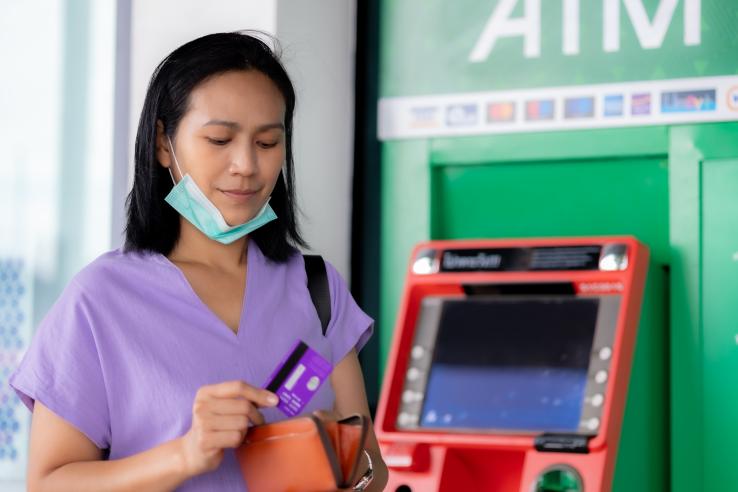
Researchers partnered with the Government of Indonesia to measure the impact of changing the delivery of their food assistance program from subsidized rice to electronic vouchers on household welfare. The reform improved beneficiary targeting, increased the amount of assistance that eligible households received, and reduced poverty among the poorest households at a lower cost. Based on these results, the government expanded the e-voucher program and increased the benefit amount to allow families the option to purchase a wider range of foods. As of 2024, 18.8 million households were participating in the program.
The Problem
Safety net programs are vital for low-income families, but it can be challenging to get in-kind assistance to the right people.
Under Indonesia’s in-kind food assistance program, Rastra (formerly Raskin), Indonesian families in the bottom 30 percent of household income could purchase 15 kilograms of rice per month—about half of a typical household’s monthly rice consumption—from their local government at a subsidized price of one-fifth the market value.
To improve delivery and reduce inefficiencies associated with Rastra, the government introduced an ID card system in 2012 to inform households about the benefits they were entitled to. An evaluation by J-PAL affiliated researchers found that the ID cards improved people’s awareness of their benefits. Eligible families bought more rice at lower prices, and less rice went unaccounted for. The ID card system was scaled up and reached 65.67 million people.
Despite these improvements, Rastra continued to face challenges. Distribution inefficiencies persisted, with rice inventories going unaccounted for, often due to theft. Targeting was imperfect: many wealthier households received subsidized rice while eligible households received only one-third of their entitlement on average. Additionally, beneficiaries received low-quality rice (smelly, moldy, broken, or full of small stones) and experienced irregular deliveries.
In response to these persistent issues—along with a broader push to digitize Indonesia’s social protection system and usher poor households into the digital financial system—the government replaced the Rastra program with an electronic voucher (e-voucher) program: Bantuan Pangan Non-Tunai (BPNT) or Non-Cash Food Assistance, later known as Program Sembako.
The Research
Indonesia’s shift to digital vouchers improved targeting and reduced poverty at a lower cost.
Recognizing that annual budget constraints would require the government to phase in the e-voucher reform over time, the Indonesian government leveraged its long-term partnership with J-PAL affiliated researchers to evaluate the effect of this transition.
Out of 105 districts across the country scheduled to transition from Rastra to BPNT, encompassing 3.4 million households or about one-fifth of Indonesia’s population, researchers randomly assigned 42 districts to receive the new program in 2018. The remaining 63 districts served as a comparison group that continued to receive in-kind food assistance in 2018 and was later switched to the voucher program in 2019.
Under BPNT, households received a monthly digital voucher of IDR 110,000 (US$8) per month, deposited on to a debit card by their district’s state-designated bank and issued to the female adult in the household. This amount was similar in value to the Rastra rice subsidy. They could then redeem the e-voucher for rice and eggs across a network of e-Warong—registered private- and public-sector shops that the local bank equipped to accept and redeem e-vouchers.
The shift to e-vouchers made it possible for the government to better reach the targeted beneficiaries of its social protection programs. Results from the evaluation showed BPNT reduced poverty by about 20 percent among the poorest households (a 4.3 percentage point decline) after one year due to more effective targeting.
Relative to in-kind distribution, e-vouchers helped concentrate aid to eligible households by reducing access for wealthier, ineligible households, and intended beneficiaries were more likely to receive the full amount they were entitled to. They also benefited from having the power of choice; with flexibility to choose where to shop and what to spend their subsidies on, families accessed better quality rice and ate more eggs. Moving to e-vouchers also improved program efficiency by reducing the cost of providing food assistance to less than half that of the in-kind program.
For more information, please see the evaluation summary.
Adjusting what is in the basket of eligible foods can really encourage people to have a more diverse diet, and the government is doing more to further broaden what will be eligible in the future.
Ben Olken, Scientific Director, J-PAL Southeast Asia
From Research to Action
The results of the evaluation motivated the Government of Indonesia to expand BPNT (now Program Sembako), providing households with a larger subsidy and more flexibility in what they can spend on.
In 2020, the Government of Indonesia continued to expand coverage of the BPNT program, now known as Program Sembako. It increased the voucher amount to IDR 200,000 (US$12) per month and allowed families the option to purchase a wider range of foods beyond rice and eggs, including corn, beans, animal protein, plant protein, vegetables, and fruits. Moreover, the study’s findings convinced the government to move forward with digitizing Indonesia’s wider social protection system, and to involve financial service providers in social protection program delivery. As of 2024, Program Sembako was reaching 18.8 million households annually.
Expanding access to e-vouchers required that the government also expand the network of financial service providers that could distribute the subsidies. This scale-up spurred the proliferation of bank agents, particularly in areas where agents are scarce, who could process a wide range of financial transactions including e-voucher redemption. As a result, about 15 million of Indonesia’s poorest, previously unbanked households opened bank accounts.
The Indonesian government has continued to evolve its food assistance program and monitor the impacts of these changes with support from J-PAL. For example, the government involved the national postal service in 2022 to distribute Program Sembako subsidies as cash, giving beneficiaries another option for claiming their benefit, especially in areas where there were technical difficulties with processing e-vouchers. There are also plans to allow beneficiaries to spend their e-vouchers on electricity and gas.
Encouraged by the results of the BPNT evaluation, the government has responded to challenges in delivering food assistance by moving farther in the direction of flexibility, rather than returning to the previous in-kind system under Rastra. Their ultimate goal is to digitize and integrate Program Sembako with other social assistance programs and eradicate chronic poverty.
References
Banerjee, Abhijit, Rema Hanna, Benjamin A. Olken, Elan Satriawan, and Sudarno Sumarto. “Electronic Food Vouchers: Evidence from an At-Scale Experiment in Indonesia.” American Economic Review 113, no. 2 (2023): 514–47. https://doi.org/10.1257/aer.20210461.
Banerjee, Abhijit, Rema Hanna, Benjamin Olken, Elan Satriawan, and Sudarno Sumarto. Food vs. Food Stamps: Evidence from an At-Scale Experiment in Indonesia. No. W28641. National Bureau of Economic Research, 2021. https://doi.org/10.3386/w28641.
Diandra, Rizka, and Indriani Pratiwi. “Reforming Indonesia’s Largest Food Assistance Program: From Rastra to BPNT.” J-PAL Blog, May 19, 2021. https://www.povertyactionlab.org/blog/5-19-21/reforming-indonesias-largest-food-assistance-program-rastra-bpnt.
Raskin Welfare Reform: Transition to Electronic Distributions. Final Report. USAID Milestone Report. J-PAL Southeast Asia, 2023.
Abdul Latif Jameel Poverty Action Lab (J-PAL). 2026. "Digitizing social services to reach the right people and reduce poverty." J-PAL Evidence to Policy Case Study. Last modified January 2026.