

J-PAL J-PAL
The Abdul Latif Jameel Poverty Action Lab
  • About
    • Overview
    • People
      • Affiliated Professors
      • Invited Researchers
      • J-PAL Scholars
      • Board
      • Leadership
      • Staff
    • Strengthening Our Work
    • Code of Conduct
    • Initiatives
    • Events
    • Blog
    • News
    • Press Room
  • Offices
    • Overview
    • Global
    • Africa
    • Europe
    • Latin America and the Caribbean
    • Middle East and North Africa
    • North America
    • South Asia
    • Southeast Asia
  • Sectors
    • Overview
    • Agriculture
    • Crime, Violence, and Conflict
    • Education
    • Environment, Energy, and Climate Change
    • Finance
    • Firms
    • Gender
    • Health
    • Labor Markets
    • Political Economy and Governance
    • Social Protection
  • Evaluations
  • Research Resources
    • About Us
    • Our Work
    • Join ASPIRE
    • Newsroom
  • Policy Insights
  • Evidence to Policy
    • Pathways and Case Studies
    • The Evidence Effect
  • Blog
  • Careers
  • Courses
  • For Affiliates
  • Support J-PAL

Utility menu

  • Blog
  • Careers
  • Courses
  • For Affiliates
  • Support J-PAL

Quick links

  • Evaluations
  • Research Resources
  • Policy Insights
  • Evidence to Policy
    • Pathways and Case Studies
    • The Evidence Effect
  • About

    The Abdul Latif Jameel Poverty Action Lab (J-PAL) is a global research center working to reduce poverty by ensuring that policy is informed by scientific evidence. Anchored by a network of more than 1,100 researchers at universities around the world, J-PAL conducts randomized impact evaluations to answer critical questions in the fight against poverty.

    • Overview

      The Abdul Latif Jameel Poverty Action Lab (J-PAL) is a global research center working to reduce poverty by ensuring that policy is informed by scientific evidence. Anchored by a network of more than 1,100 researchers at universities around the world, J-PAL conducts randomized impact evaluations to answer critical questions in the fight against poverty.

      • Affiliated Professors

        Our affiliated professors are based at over 130 universities and conduct randomized evaluations around the world to design, evaluate, and improve programs and policies aimed at reducing poverty. They set their own research agendas, raise funds to support their evaluations, and work with J-PAL staff on research, policy outreach, and training.

      • Invited Researchers
      • J-PAL Scholars
      • Board
        Our Board of Directors, which is composed of J-PAL affiliated professors and senior management, provides overall strategic guidance to J-PAL, our sector programs, and regional offices.
      • Leadership
      • Staff
    • Strengthening Our Work

      Our research, policy, and training work is fundamentally better when it is informed by a broad range of perspectives.

    • Code of Conduct
    • Initiatives
      J-PAL initiatives concentrate funding and other resources around priority topics for which rigorous policy-relevant research is urgently needed.
    • Events
      We host events around the world and online to share results and policy lessons from randomized evaluations, to build new partnerships between researchers and practitioners, and to train organizations on how to design and conduct randomized evaluations, and use evidence from impact evaluations.
    • Blog
      News, ideas, and analysis from J-PAL staff and affiliated professors.
    • News
      Browse news articles about J-PAL and our affiliated professors, read our press releases and monthly global and research newsletters, and connect with us for media inquiries.
    • Press Room
      Based at leading universities around the world, our experts are economists who use randomized evaluations to answer critical questions in the fight against poverty. Connect with us for all media inquiries and we'll help you find the right person to shed insight on your story.
  • Offices
    J-PAL is based at MIT in Cambridge, MA and has seven regional offices at leading universities in Africa, Europe, Latin America and the Caribbean, Middle East and North Africa, North America, South Asia, and Southeast Asia.
    • Overview
      J-PAL is based at MIT in Cambridge, MA and has seven regional offices at leading universities in Africa, Europe, Latin America and the Caribbean, Middle East and North Africa, North America, South Asia, and Southeast Asia.
    • Global
      Our global office is based at the Department of Economics at the Massachusetts Institute of Technology. It serves as the head office for our network of seven independent regional offices.
    • Africa
    • Europe
    • Latin America and the Caribbean
    • Middle East and North Africa
    • North America
    • South Asia
    • Southeast Asia
  • Sectors
    Led by affiliated professors, J-PAL sectors guide our research and policy work by conducting literature reviews; by managing research initiatives that promote the rigorous evaluation of innovative interventions by affiliates; and by summarizing findings and lessons from randomized evaluations and producing cost-effectiveness analyses to help inform relevant policy debates.
    • Overview
      Led by affiliated professors, J-PAL sectors guide our research and policy work by conducting literature reviews; by managing research initiatives that promote the rigorous evaluation of innovative interventions by affiliates; and by summarizing findings and lessons from randomized evaluations and producing cost-effectiveness analyses to help inform relevant policy debates.
    • Agriculture
      How can we encourage small farmers to adopt proven agricultural practices and improve their yields and profitability?
    • Crime, Violence, and Conflict
      What are the causes and consequences of crime, violence, and conflict and how can policy responses improve outcomes for those affected?
    • Education
      How can students receive high-quality schooling that will help them, their families, and their communities truly realize the promise of education?
    • Environment, Energy, and Climate Change
      How can we increase access to energy, reduce pollution, and mitigate and build resilience to climate change?
    • Finance
      How can financial products and services be more affordable, appropriate, and accessible to underserved households and businesses?
    • Firms
      How do policies affecting private sector firms impact productivity gaps between higher-income and lower-income countries? How do firms’ own policies impact economic growth and worker welfare?
    • Gender
      How can we reduce gender inequality and ensure that social programs are sensitive to existing gender dynamics?
    • Health
      How can we increase access to and delivery of quality health care services and effectively promote healthy behaviors?
    • Labor Markets
      How can we help people find and keep work, particularly young people entering the workforce?
    • Political Economy and Governance
      What are the causes and consequences of poor governance and how can policy improve public service delivery?
    • Social Protection
      How can we identify effective policies and programs in low- and middle-income countries that provide financial assistance to low-income families, insuring against shocks and breaking poverty traps?
Displaying 8071 - 8085 of 8538
Person

Joshua Deutschmann

Person

Ericka Rascon

Row of houses
Update
J-PAL Updates

October 2025 North America Newsletter

J-PAL North America's October newsletter features a new policy brief on Housing First programs in North America, a new evaluation summary on wraparound services, and an upcoming webinar on crime and racial equity research.
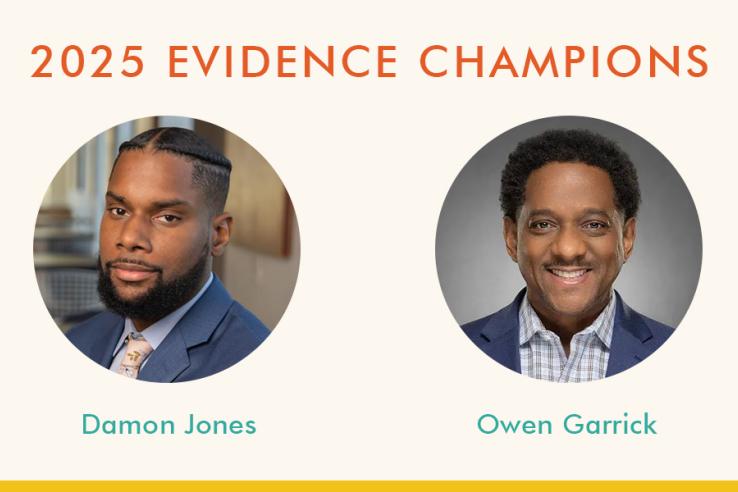
2025 Evidence Champions
Update
J-PAL Updates

December 2025 North America Newsletter

J-PAL North America's December newsletter features the 2025 Evidence Champions recognition, an end of year blog post, and an opinion piece on using evidence to combat poverty.
Person

Sandhya Seetharaman

Bottles of pharmaceutical drugs
Evaluation

Reducing Inappropriate Prescribing of Controlled Substances in the United States

Researchers tested whether an informative letter campaign could reduce inappropriate prescribing of controlled substances in Medicare Part D. Letters had no detectable effect on prescribing. In ongoing work, researchers are testing alternative versions of letters.

Teacher working with middle school students
Evaluation

Providing a Collaborative Civic Education Program to Students in France, Greece, and Spain

Researchers evaluated the impact of a civic education program involving learning-by-doing and student-centered teaching approaches in middle schools across three European countries. The program increased students’ academic performance, respect for school rules, and friendship networks with people with different social and cultural backgrounds.
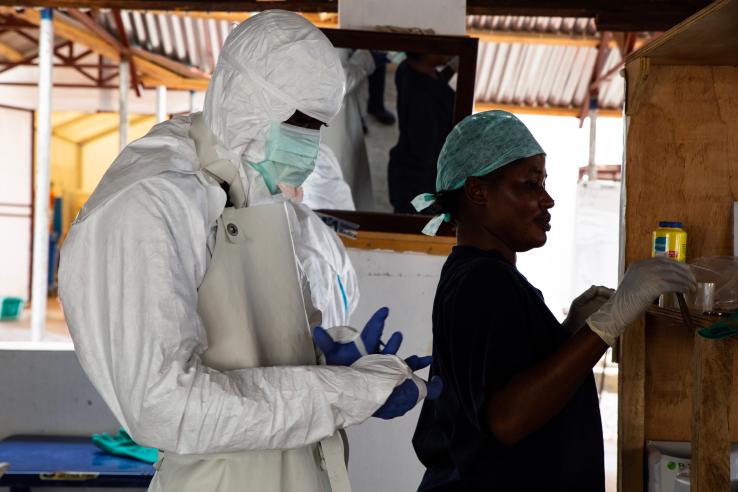
Health care workers in Sierra Leone put on personal protective equipment during the 2014-16 Ebola outbreak.
Evaluation

Building Resilient Health Systems: Community Monitoring and Nonfinancial Awards During the Sierra Leone 2014 Ebola Outbreak

Researchers partnered with the Government of Sierra Leone to evaluate the impact of community monitoring and nonfinancial awards programs on health care utilization and health outcomes. Both programs improved clinic utilization, patient satisfaction, and symptom reporting during the 2014 Ebola crisis. Further, community monitoring improved child health and reduced mortality among Ebola patients.
Evaluation

Evidence-Based Medicine for Family Planning in Jordan

Researchers partnered with USAID to study the impact of Evidence-Based Medicine programs on changing family planning providers’ biases against injectable contraceptives. Overall, researchers found no change in provider practices and self-reported prescriptions.

A woman merchant is selling vegetables
Evaluation

Cash Transfers’ Effects on Food Consumption in Mexico

Researchers conducted a randomized evaluation to test the impact of the anti-poverty cash transfer program, PROSPERA, on food consumption for families living in poverty in Mexico. Households consumed enough food both before and after receiving the cash transfer.

Women in Saudi Arabia.
Evaluation

The Effects of Misperceptions of Social Norms on Female Labor Force Participation in Saudi Arabia

Researchers evaluated whether offering men in Saudi Arabia simple information on other men’s perceptions of female labor force participation impacts their willingness to let their wives join the labor force. Wives of men who received this information were significantly more likely to have applied and interviewed for a job outside of the home.
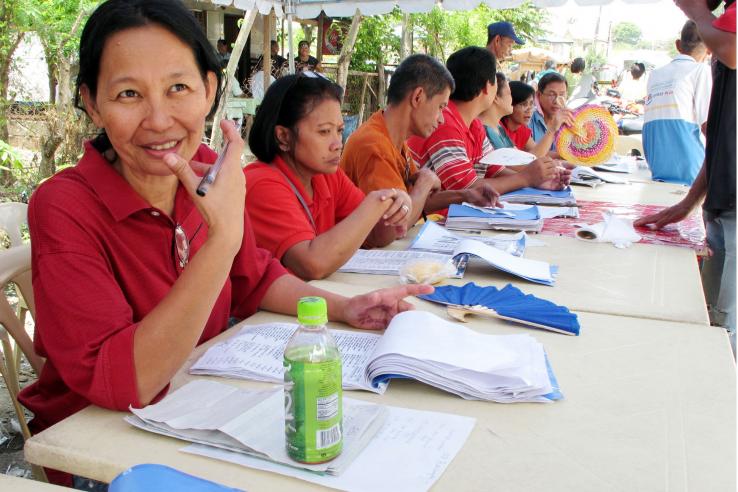
Men and women sit at a table with voter rolls in the Philippines.
Evaluation

The Impact of Deliberative Political Campaigns on Voter Behavior in the Philippines

Researchers partnered with two political parties in the Philippines to evaluate the effect of deliberative campaigns on voter turnout and vote shares. While deliberative town halls did not increase voter turnout, results suggest that they were effective in increasing vote shares by changing voters’ attitudes and making the party’s platform more persuasive among specific societal groups.

Jobseeker fills out an application for a job.
Evaluation

Targeting Labor Market Programs to Jobseekers Who Need Them Most in Switzerland

In many countries, there has recently been an increased interest in targeting labor market programs to unemployed persons who would benefit the most from them. Researchers evaluated the impact of providing a statistical targeting system to case workers in government employment agencies on their choice of labor market programs for jobseekers. Results showed that caseworkers largely ignored the statistical information provided by the targeting system, and that offering this information did not have any impact on their choice of program.
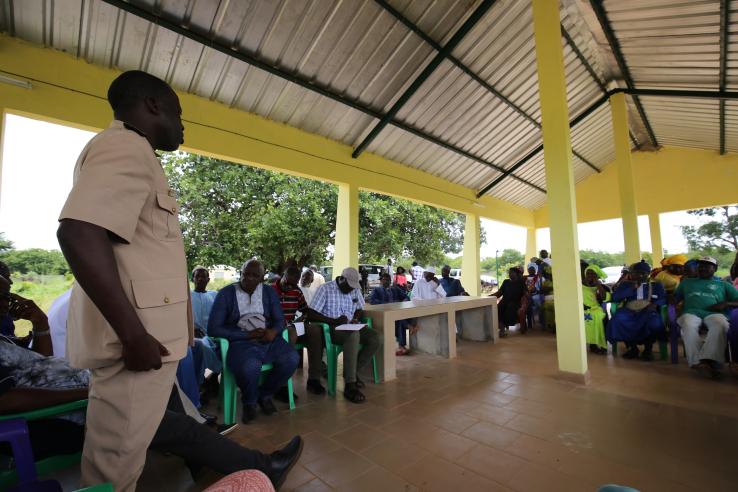
Angled view of community members deliberating on electoral strategies in Benin
Evaluation

Using Deliberative Electoral Strategies to Overcome Clientelism in Benin

Town hall meetings in Benin reduced the ability of the most popular presidential candidate in that village to garner political support using clientelist tactics, and still appear to be effective for motivating people to attend the polls.

Male tutoring high school boy wearing black t-shirt in Mexico
Evaluation

The Impact of School-based Cognitive Behavioral Therapy on High School Dropout Rates in Mexico

In Mexico, researchers evaluated a math tutoring intervention and a cognitive behavioral therapy-based (CBT) program that aimed to encourage students to slow their decision-making processes and to improve academic readiness for secondary school students at risk of dropping out. The study found mixed effects on socio-emotional skills among students, and no effect on math test scores, though take-up was limited.

Pagination

  • First page « First
  • Previous page ‹
  • …
  • Page 537
  • Page 538
  • Current page 539
  • Page 540
  • Page 541
  • …
  • Next page ›
  • Last page Last »
J-PAL

J-PAL

400 Main Street

E19-201

Cambridge, MA 02142

USA

Contact

+1 617 324 6566

[email protected]


Press Room

Stay Informed

Receive our newsletters

Subscribe


Privacy Policy

Accessibility

MIT