J-PAL J-PAL
The Abdul Latif Jameel Poverty Action Lab
  • About
    • Overview
    • People
      • Affiliated Professors
      • Invited Researchers
      • J-PAL Scholars
      • Board
      • Leadership
      • Staff
    • Strengthening Our Work
    • Code of Conduct
    • Initiatives
    • Events
    • Blog
    • News
    • Press Room
  • Offices
    • Overview
    • Global
    • Africa
    • Europe
    • Latin America and the Caribbean
      • Growing Futures
    • Middle East and North Africa
    • North America
    • South Asia
    • Southeast Asia
  • Sectors
    • Overview
    • Agriculture
    • Crime, Violence, and Conflict
    • Education
    • Environment, Energy, and Climate Change
    • Finance
    • Firms
    • Gender
    • Health
    • Labor Markets
    • Political Economy and Governance
    • Social Protection
  • Evaluations
  • Research Resources
    • About Us
    • Our Work
    • Join ASPIRE
    • Newsroom
  • Policy Insights
  • Evidence to Policy
    • Pathways and Case Studies
    • The Evidence Effect
  • Blog
  • Careers
  • Courses
  • For Affiliates
  • Support J-PAL

Utility menu

  • Blog
  • Careers
  • Courses
  • For Affiliates
  • Support J-PAL

Quick links

  • Evaluations
  • Research Resources
  • Policy Insights
  • Evidence to Policy
    • Pathways and Case Studies
    • The Evidence Effect
  • About

    The Abdul Latif Jameel Poverty Action Lab (J-PAL) is a global research center working to reduce poverty by ensuring that policy is informed by scientific evidence. Anchored by a network of more than 1,100 researchers at universities around the world, J-PAL conducts randomized impact evaluations to answer critical questions in the fight against poverty.

    • Overview

      The Abdul Latif Jameel Poverty Action Lab (J-PAL) is a global research center working to reduce poverty by ensuring that policy is informed by scientific evidence. Anchored by a network of more than 1,100 researchers at universities around the world, J-PAL conducts randomized impact evaluations to answer critical questions in the fight against poverty.

      • Affiliated Professors

        Our affiliated professors are based at over 130 universities and conduct randomized evaluations around the world to design, evaluate, and improve programs and policies aimed at reducing poverty. They set their own research agendas, raise funds to support their evaluations, and work with J-PAL staff on research, policy outreach, and training.

      • Invited Researchers
      • J-PAL Scholars
      • Board
        Our Board of Directors, which is composed of J-PAL affiliated professors and senior management, provides overall strategic guidance to J-PAL, our sector programs, and regional offices.
      • Leadership
      • Staff
    • Strengthening Our Work

      Our research, policy, and training work is fundamentally better when it is informed by a broad range of perspectives.

    • Code of Conduct
    • Initiatives
      J-PAL initiatives concentrate funding and other resources around priority topics for which rigorous policy-relevant research is urgently needed.
    • Events
      We host events around the world and online to share results and policy lessons from randomized evaluations, to build new partnerships between researchers and practitioners, and to train organizations on how to design and conduct randomized evaluations, and use evidence from impact evaluations.
    • Blog
      News, ideas, and analysis from J-PAL staff and affiliated professors.
    • News
      Browse news articles about J-PAL and our affiliated professors, read our press releases and monthly global and research newsletters, and connect with us for media inquiries.
    • Press Room
      Based at leading universities around the world, our experts are economists who use randomized evaluations to answer critical questions in the fight against poverty. Connect with us for all media inquiries and we'll help you find the right person to shed insight on your story.
  • Offices
    J-PAL is based at MIT in Cambridge, MA and has seven regional offices at leading universities in Africa, Europe, Latin America and the Caribbean, Middle East and North Africa, North America, South Asia, and Southeast Asia.
    • Overview
      J-PAL is based at MIT in Cambridge, MA and has seven regional offices at leading universities in Africa, Europe, Latin America and the Caribbean, Middle East and North Africa, North America, South Asia, and Southeast Asia.
    • Global
      Our global office is based at the Department of Economics at the Massachusetts Institute of Technology. It serves as the head office for our network of seven independent regional offices.
    • Africa
    • Europe
    • Latin America and the Caribbean
    • Middle East and North Africa
    • North America
    • South Asia
    • Southeast Asia
  • Sectors
    Led by affiliated professors, J-PAL sectors guide our research and policy work by conducting literature reviews; by managing research initiatives that promote the rigorous evaluation of innovative interventions by affiliates; and by summarizing findings and lessons from randomized evaluations and producing cost-effectiveness analyses to help inform relevant policy debates.
    • Overview
      Led by affiliated professors, J-PAL sectors guide our research and policy work by conducting literature reviews; by managing research initiatives that promote the rigorous evaluation of innovative interventions by affiliates; and by summarizing findings and lessons from randomized evaluations and producing cost-effectiveness analyses to help inform relevant policy debates.
    • Agriculture
      How can we encourage small farmers to adopt proven agricultural practices and improve their yields and profitability?
    • Crime, Violence, and Conflict
      What are the causes and consequences of crime, violence, and conflict and how can policy responses improve outcomes for those affected?
    • Education
      How can students receive high-quality schooling that will help them, their families, and their communities truly realize the promise of education?
    • Environment, Energy, and Climate Change
      How can we increase access to energy, reduce pollution, and mitigate and build resilience to climate change?
    • Finance
      How can financial products and services be more affordable, appropriate, and accessible to underserved households and businesses?
    • Firms
      How do policies affecting private sector firms impact productivity gaps between higher-income and lower-income countries? How do firms’ own policies impact economic growth and worker welfare?
    • Gender
      How can we reduce gender inequality and ensure that social programs are sensitive to existing gender dynamics?
    • Health
      How can we increase access to and delivery of quality health care services and effectively promote healthy behaviors?
    • Labor Markets
      How can we help people find and keep work, particularly young people entering the workforce?
    • Political Economy and Governance
      What are the causes and consequences of poor governance and how can policy improve public service delivery?
    • Social Protection
      How can we identify effective policies and programs in low- and middle-income countries that provide financial assistance to low-income families, insuring against shocks and breaking poverty traps?
Displaying 2266 - 2280 of 7150
Women do laundry
Evaluation

Household Water Connections in Tangier, Morocco

Researchers conducted a randomized evaluation to look at the effect of private connections in a setting where most households already had access to high-quality water through public taps. They found that households had a high willingness to pay for piped water, and while home water connection had no impact on waterborne illness, households' self-reported happiness improved substantially.
Person in water fishing with net
Evaluation

The Impact of Information Provision on Farmer Decision Making in Indonesia

In Indonesia, researchers conducted a randomized evaluation with seaweed farmers to observe both the impact of participating in a program that determined optimal seaweed production methods and receiving summarized results of the program on the adoption of optimal farming inputs. They find that simply participating and observing outcomes in the program did not change key input choices in the production of seaweed. Instead, farmers changed their practices only after they were presented with summaries on results from the program.
Evaluation

Providing Health Insurance through Microfinance Networks in Rural Karnataka, India

Researchers partnered with SKS Microfinance to measure the impact of bundling a health insurance product with microloan renewals on health insurance take-up, and health care use and spending. They found that the requirement to purchase health insurance substantially reduced microcredit clients’ loan renewal rates, meaning that people were willing to give up credit to avoid buying insurance.
Evaluation

Using Encouragement to Overcome Psychological Barriers to Saving in Peru

Researchers examined the impact of an initiative to promote savings, through financial incentives, reminders, and messaging, on the savings behavior of the urban poor in Peru. Preliminary results found that the initiative increased the probability that clients reached their savings goals; negatively framed messages appear to be more effective than positive messages in getting people to save.
Woman fills out paper work in Philippines
Evaluation

Credit with Health Insurance: Evidence from the Philippines

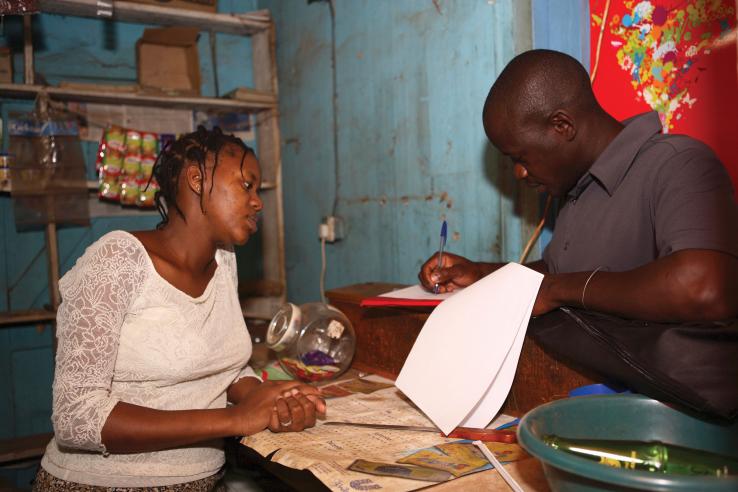
Researchers are examining the impact of offering health insurance through a microfinance institution on clients’ health behaviors and health outcomes, as well as on the institution’s profit, client retention, and default rates.
Skilled workers in South Africa using microfinance loan to operate carpentry business
Evaluation

Interest Rates, Loan Maturity and Demand for Microfinance Loans in South Africa

Researchers tested the assumption of price inelastic demand using a randomized evaluation in South Africa. The results suggest that the demand curves were downward sloping, and steeper for price increases relative to the lender’s standard rates. Researchers also found that loan size was far more responsive to changes in loan maturity than to changes in interest rates.
Evaluation

Deposit Collectors in the Philippines

Researchers evaluated the impact of a door-to-door deposit-collecting service, which regularly collected funds from clients’ homes to be deposited at a local bank, on clients’ savings. Results demonstrated that clients who lived farther from a bank were more likely to take up the service, and clients who took up the service significantly increased their savings.
A man reading the newspaper
Evaluation

Effect of Media on Voting Behavior and Political Opinions in the United States

This study measured the effect of receiving free subscriptions to either a liberal or conservative-leaning newspaper on voters’ political knowledge and opinions in the United States. Results demonstrated that neither subscription had an impact on voters' political knowledge, but that both subscriptions caused voters to increase their support for the Democratic presidential candidate. This suggests that the informational effect of news exposure was stronger than the effect of the slant.
Father with young children
Evaluation

Small Individual Loans and Mental Health in South Africa

This evaluation examined the direct impact of providing small consumer loans to marginally creditworthy individuals in South Africa on their credit access, investment, and well-being, as well as the profitability of these loans for lenders. Results found approving loans for marginally creditworthy applicants did improve economic outcomes for poor households and generated profits for lenders.
Evaluation

Measuring the Impact of Microcredit on Borrowing and Business Outcomes in the Philippines

Researchers measured the impact of individual-liability microcredit on marginally creditworthy applicants in the Philippines. They found that increased access to microcredit expanded borrowing and improved risk management and sharing, but it also led clients to shrink their businesses.
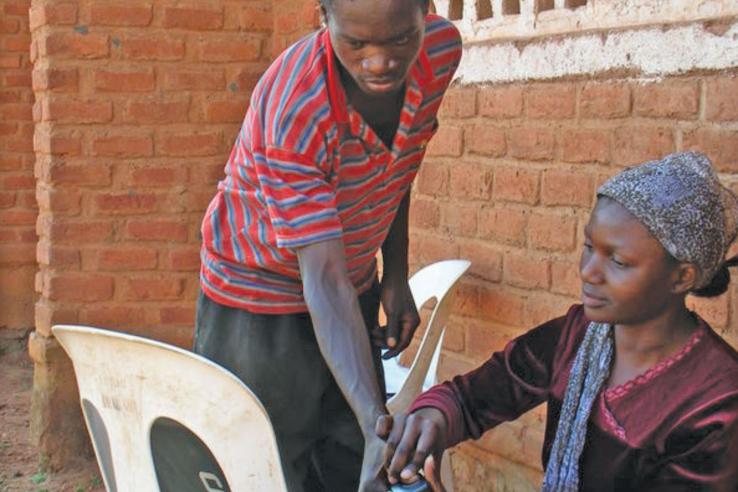
Man and woman assembling a bed net in rural Kenya.
Evaluation

The Role of Exposure, Social Networks and Marketing Messages in Households' Willingness to Pay for Malaria Prevention in Kenya

This study evaluated the impact of subsidies and two different marketing messages on the take-up of insecticide-treated bed nets by rural households. Take-up did not vary with the framing of marketing messages but was highly sensitive to changes in price. Gaining access to a highly subsidized bed net in the first year also increased households’ willingness to pay for an additional net a year later.
Person

Frederico Finan

Frederico Finan is a Professor of Economics at the University of California, Berkeley. His research focuses on a broad range of economic topics in the areas of economic development and political economy, with a regional focus on Latin America.
Young, pregnant women in the waiting area of a health clinic.
Evaluation

Free Distribution or Cost Sharing? Evidence from a Malaria Prevention Experiment in Kenya

Researchers investigated the impact of the price of insecticide-treated bed nets (ITNs) on usage and demand in Kenya. Researchers found that cost-sharing considerably dampened demand, and those who were left out under a cost-sharing scheme had very high usage rates when they could access the product for free. Because there are social health benefits from achieving a certain ITN coverage rate, the results suggest that free distribution of ITNs is both more effective and cost-effective than cost-sharing.
Boy watching water pour out of a concrete-encased spring.
Evaluation

Cleaning Springs in Kenya

Women in saris in India
Evaluation

Influencing the Provision of Social Services through Mandated Female Representation in Policymaking in India

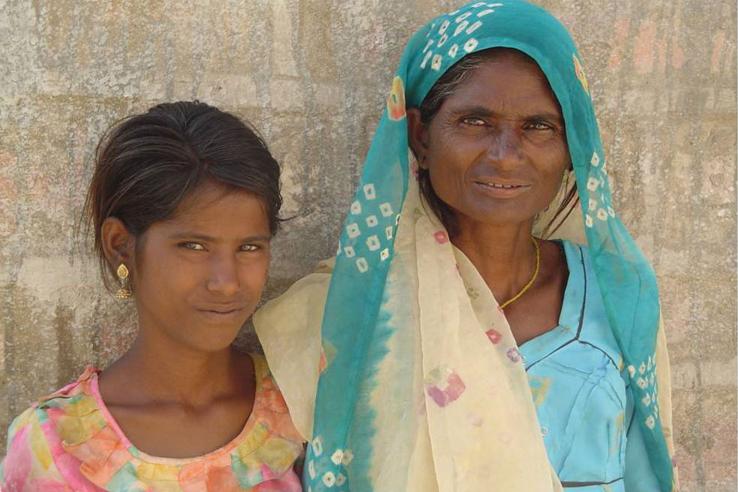
Researchers studied the policy consequences of mandated representation of female policymakers by determining whether there was any difference in the provision of social services between male- and female-led village councils. Results suggest that reservations for female leaders affected policy decisions in ways that seemed to better reflect women’s preferences.

Pagination

  • First page « First
  • Previous page ‹
  • …
  • Page 150
  • Page 151
  • Current page 152
  • Page 153
  • Page 154
  • …
  • Next page ›
  • Last page Last »
J-PAL

J-PAL

400 Main Street

E19-201

Cambridge, MA 02142

USA

Contact

+1 617 324 6566

[email protected]


Press Room

Stay Informed

Receive our newsletters

Subscribe


Privacy Policy

Accessibility

MIT