J-PAL J-PAL
The Abdul Latif Jameel Poverty Action Lab
  • About
    • Overview
    • People
      • Affiliated Professors
      • Invited Researchers
      • J-PAL Scholars
      • Board
      • Leadership
      • Staff
    • Strengthening Our Work
    • Code of Conduct
    • Initiatives
    • Events
    • Blog
    • News
    • Press Room
  • Offices
    • Overview
    • Global
    • Africa
    • Europe
    • Latin America and the Caribbean
    • Middle East and North Africa
    • North America
    • South Asia
    • Southeast Asia
  • Sectors
    • Overview
    • Agriculture
    • Crime, Violence, and Conflict
    • Education
    • Environment, Energy, and Climate Change
    • Finance
    • Firms
    • Gender
    • Health
    • Labor Markets
    • Political Economy and Governance
    • Social Protection
  • Evaluations
  • Research Resources
    • About Us
    • Our Work
    • Join ASPIRE
    • Newsroom
  • Policy Insights
  • Evidence to Policy
    • Pathways and Case Studies
    • The Evidence Effect
  • Blog
  • Careers
  • Courses
  • For Affiliates
  • Support J-PAL

Utility menu

  • Blog
  • Careers
  • Courses
  • For Affiliates
  • Support J-PAL

Quick links

  • Evaluations
  • Research Resources
  • Policy Insights
  • Evidence to Policy
    • Pathways and Case Studies
    • The Evidence Effect
  • About

    The Abdul Latif Jameel Poverty Action Lab (J-PAL) is a global research center working to reduce poverty by ensuring that policy is informed by scientific evidence. Anchored by a network of more than 1,100 researchers at universities around the world, J-PAL conducts randomized impact evaluations to answer critical questions in the fight against poverty.

    • Overview

      The Abdul Latif Jameel Poverty Action Lab (J-PAL) is a global research center working to reduce poverty by ensuring that policy is informed by scientific evidence. Anchored by a network of more than 1,100 researchers at universities around the world, J-PAL conducts randomized impact evaluations to answer critical questions in the fight against poverty.

      • Affiliated Professors

        Our affiliated professors are based at over 130 universities and conduct randomized evaluations around the world to design, evaluate, and improve programs and policies aimed at reducing poverty. They set their own research agendas, raise funds to support their evaluations, and work with J-PAL staff on research, policy outreach, and training.

      • Invited Researchers
      • J-PAL Scholars
      • Board
        Our Board of Directors, which is composed of J-PAL affiliated professors and senior management, provides overall strategic guidance to J-PAL, our sector programs, and regional offices.
      • Leadership
      • Staff
    • Strengthening Our Work

      Our research, policy, and training work is fundamentally better when it is informed by a broad range of perspectives.

    • Code of Conduct
    • Initiatives
      J-PAL initiatives concentrate funding and other resources around priority topics for which rigorous policy-relevant research is urgently needed.
    • Events
      We host events around the world and online to share results and policy lessons from randomized evaluations, to build new partnerships between researchers and practitioners, and to train organizations on how to design and conduct randomized evaluations, and use evidence from impact evaluations.
    • Blog
      News, ideas, and analysis from J-PAL staff and affiliated professors.
    • News
      Browse news articles about J-PAL and our affiliated professors, read our press releases and monthly global and research newsletters, and connect with us for media inquiries.
    • Press Room
      Based at leading universities around the world, our experts are economists who use randomized evaluations to answer critical questions in the fight against poverty. Connect with us for all media inquiries and we'll help you find the right person to shed insight on your story.
  • Offices
    J-PAL is based at MIT in Cambridge, MA and has seven regional offices at leading universities in Africa, Europe, Latin America and the Caribbean, Middle East and North Africa, North America, South Asia, and Southeast Asia.
    • Overview
      J-PAL is based at MIT in Cambridge, MA and has seven regional offices at leading universities in Africa, Europe, Latin America and the Caribbean, Middle East and North Africa, North America, South Asia, and Southeast Asia.
    • Global
      Our global office is based at the Department of Economics at the Massachusetts Institute of Technology. It serves as the head office for our network of seven independent regional offices.
    • Africa
    • Europe
    • Latin America and the Caribbean
    • Middle East and North Africa
    • North America
    • South Asia
    • Southeast Asia
  • Sectors
    Led by affiliated professors, J-PAL sectors guide our research and policy work by conducting literature reviews; by managing research initiatives that promote the rigorous evaluation of innovative interventions by affiliates; and by summarizing findings and lessons from randomized evaluations and producing cost-effectiveness analyses to help inform relevant policy debates.
    • Overview
      Led by affiliated professors, J-PAL sectors guide our research and policy work by conducting literature reviews; by managing research initiatives that promote the rigorous evaluation of innovative interventions by affiliates; and by summarizing findings and lessons from randomized evaluations and producing cost-effectiveness analyses to help inform relevant policy debates.
    • Agriculture
      How can we encourage small farmers to adopt proven agricultural practices and improve their yields and profitability?
    • Crime, Violence, and Conflict
      What are the causes and consequences of crime, violence, and conflict and how can policy responses improve outcomes for those affected?
    • Education
      How can students receive high-quality schooling that will help them, their families, and their communities truly realize the promise of education?
    • Environment, Energy, and Climate Change
      How can we increase access to energy, reduce pollution, and mitigate and build resilience to climate change?
    • Finance
      How can financial products and services be more affordable, appropriate, and accessible to underserved households and businesses?
    • Firms
      How do policies affecting private sector firms impact productivity gaps between higher-income and lower-income countries? How do firms’ own policies impact economic growth and worker welfare?
    • Gender
      How can we reduce gender inequality and ensure that social programs are sensitive to existing gender dynamics?
    • Health
      How can we increase access to and delivery of quality health care services and effectively promote healthy behaviors?
    • Labor Markets
      How can we help people find and keep work, particularly young people entering the workforce?
    • Political Economy and Governance
      What are the causes and consequences of poor governance and how can policy improve public service delivery?
    • Social Protection
      How can we identify effective policies and programs in low- and middle-income countries that provide financial assistance to low-income families, insuring against shocks and breaking poverty traps?
Displaying 3391 - 3405 of 8489
An illustration of a journal page
Blog

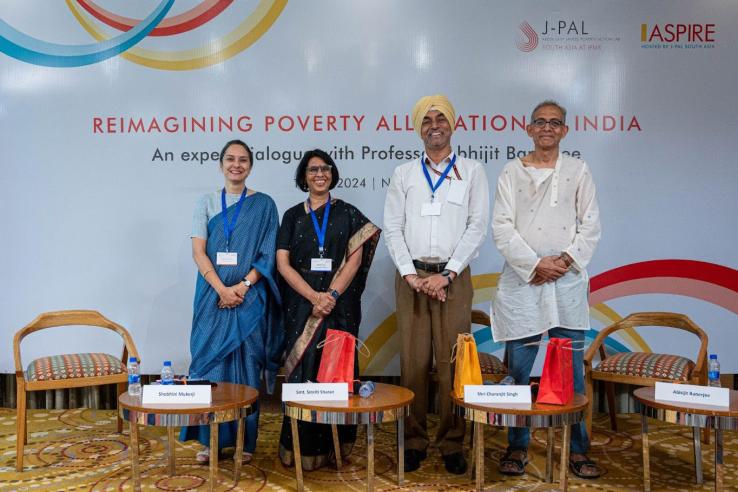
Lesson #3 | What not-to-do: Wisdom from years of trials (and errors)

This blog is the final installation of a three-part series by J-PAL South Asia’s executive director Shobhini Mukerji reflecting on two decades of advancing evidence-based policymaking.
Encuestadora hace preguntas a mujer
Event

Herramientas prácticas para incorporar una perspectiva de género en la evaluación

En el marco de la Semana de la Evaluación gLOCAL 2024—una semana anual dedicada a eventos de intercambio de conocimientos y experiencias de Monitoreo y Evaluación—J-PAL para Latinoamérica y el Caribe (LAC) y la Oficina Regional de ONU Mujeres para las Américas y el Caribe compartirán dos...
Grupo de pessoas debatendo durante evento
Event

Aplicando o que foi aprendido em avaliações aleatorizadas em novos contextos

Durante a Semana de Avaliação gLOCAL 2024 - uma semana anual dedicada a eventos relacionados ao intercâmbio de conhecimento e experiências de Monitoramento e Avaliação - o J-PAL para Latinoamérica y el Caribe (LAC) vai apresentar como aplicar evidências geradas nas avaliações de outros programas e...
Research resource

Institutional Review Board (IRB) proposals

Institutional Review Boards (IRBs) review research involving human subjects to ensure that participants are protected from potentially harmful research. This resource provides an overview of the roles of IRBs and ethics guidelines. It also includes practical tips for researchers preparing IRB...
A woman sitting at a sewing desk smiles at the camera while cutting cloth with scissors
Resource
Basic page

Corporate Impact and Sustainability Partnerships

J-PAL supports companies to achieve their responsible and sustainable business goals through evidence-sharing and research partnerships.
Woman sitting next to a building working at her laptop
The Evidence Effect

Finding and financing businesses that are ready to grow

Tailoring financing for small and mid-sized businesses that are most likely to grow can unlock their potential to increase sales and profits, create jobs, and strengthen the local economy.
Woman working at a sewing machine with an instructor standing next to her helping
The Evidence Effect

Soft skills training leads to success

Soft skills training can help people get and keep jobs, improve performance at work, and increase business profits—but design matters.
Children playing basketball Danish Refugee Council
Initiative Resource
Initiative projects and documents

Humanitarian Protection Initiative (HPI) Scholars Program

Participants at J-PAL's Evaluating Social Programs course in Cambridge, USA.
Event

J-PAL/MIT Evaluating Social Programs Course, 2024

This five-day, in-person training provides an in-depth look at why and when randomized evaluations can be used to rigorously measure the impact of social programs.
Two women wearing headscarves use a drill to upcycle a piece of wood furniture.
Blog

New Humanitarian Protection Initiative will help reduce harm to people affected by conflict

Today, the Abdul Latif Jameel Poverty Action Lab (J-PAL) and Innovations for Poverty Action (IPA) launch the Humanitarian Protection Initiative (HPI). The core of this initiative is a research fund dedicated to generating rigorous evidence to inform policies and programs that protect conflict...
Children playing basketball Danish Refugee Council
Event

Humanitarian Protection Initiative Scholars Information Session

This webinar was facilitated by the Humanitarian Protection Initiative (HPI), a new initiative focused on research questions on how to effectively improve humanitarian protection outcomes by keeping those who are affected by armed conflict safe from violence, coercion and deliberate deprivation...
people talking around acircle
Event

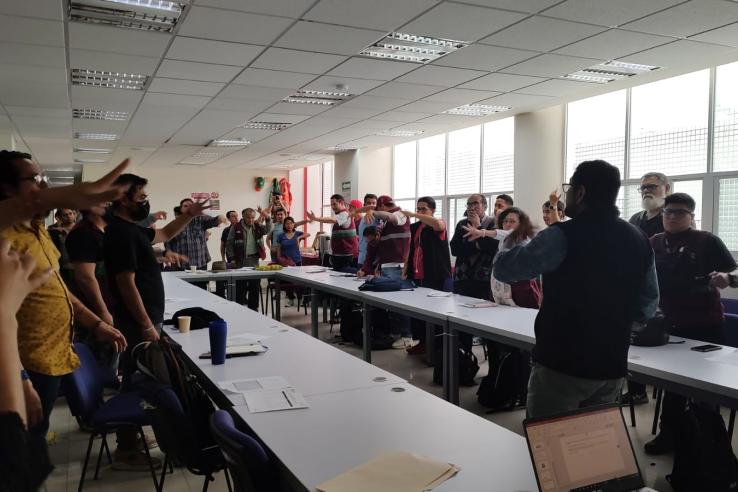
Fortaleciendo las Redes de Investigación en Guatemala

El evento busca congregar investigadores e investigadoras de diversas universidades de Guatemala con interés en primera infancia, nutrición, psicología, neurociencia y educación para fortalecer las redes de investigación en Guatemala
Five people sit on a panel.
Blog

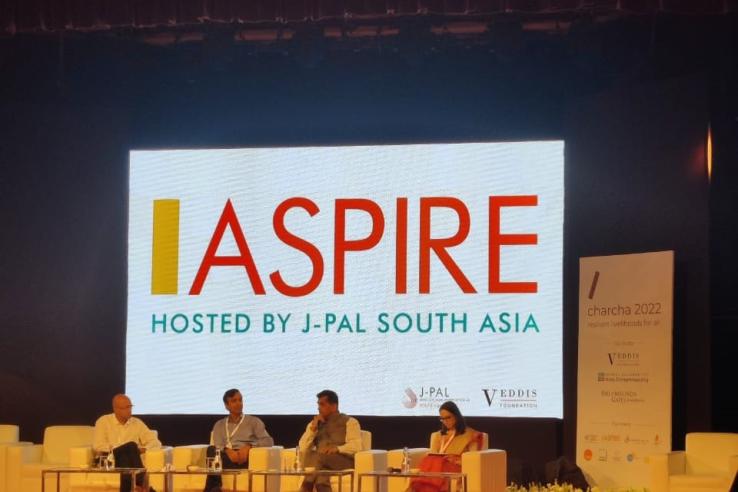
The next decade of RCT research: What can we learn from recent innovations in methods?

From Teaching at the Right Level to the multifaceted Graduation approach, J-PAL’s affiliated researcher network has helped to evaluate a diverse range of innovative interventions aimed at reducing poverty over the past twenty years.
Woman studying during the 2023 Summer School
Event

Ecole d’été 2024: Méthodologies du Développement

Dans le cadre de la Chaire «Méthodologies du Développement» d’Abhijit Banerjee et Esther Duflo, une école d’été pour chercheurs et porteurs de projets africains sera organisée du 1 au 4 juillet 2024 à Rabat, sur le campus de l’Université Mohammed VI Polytechnique (UM6P).
Photo of San Diego Town Hall
Blog

LEVER Partner Spotlight: Ricardo Basurto-Dávila on the County of San Diego’s Shallow Rent Subsidy program evaluation

Ricardo Basurto-Dávila, the Chief Evaluation Officer in the County of San Diego’s Office of Evaluation, Performance and Analytics, shares his experience participating in the LEVER Evaluation Incubator.

Pagination

  • First page « First
  • Previous page ‹
  • …
  • Page 225
  • Page 226
  • Current page 227
  • Page 228
  • Page 229
  • …
  • Next page ›
  • Last page Last »
J-PAL

J-PAL

400 Main Street

E19-201

Cambridge, MA 02142

USA

Contact

+1 617 324 6566

[email protected]


Press Room

Stay Informed

Receive our newsletters

Subscribe


Privacy Policy

Accessibility

MIT