The Abdul Latif Jameel Poverty Action Lab (J-PAL) is a global research center working to reduce poverty by ensuring that policy is informed by scientific evidence. Anchored by a network of more than 1,100 researchers at universities around the world, J-PAL conducts randomized impact evaluations to answer critical questions in the fight against poverty.
Our affiliated professors are based at over 130 universities and conduct randomized evaluations around the world to design, evaluate, and improve programs and policies aimed at reducing poverty. They set their own research agendas, raise funds to support their evaluations, and work with J-PAL staff on research, policy outreach, and training.
Our Board of Directors, which is composed of J-PAL affiliated professors and senior management, provides overall strategic guidance to J-PAL, our sector programs, and regional offices.
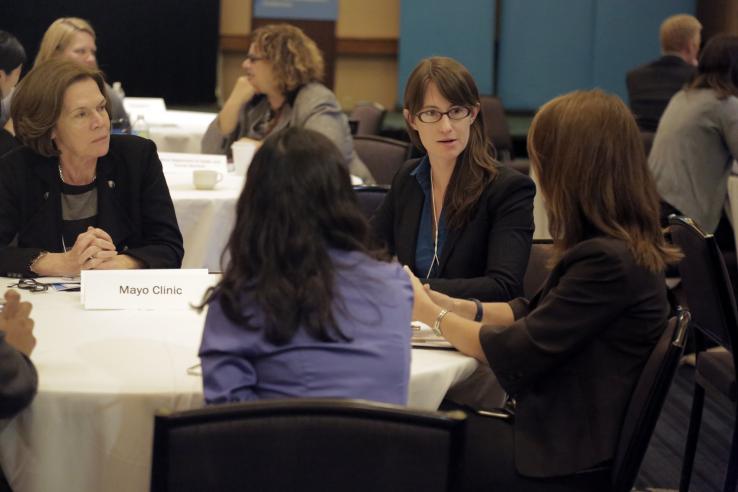
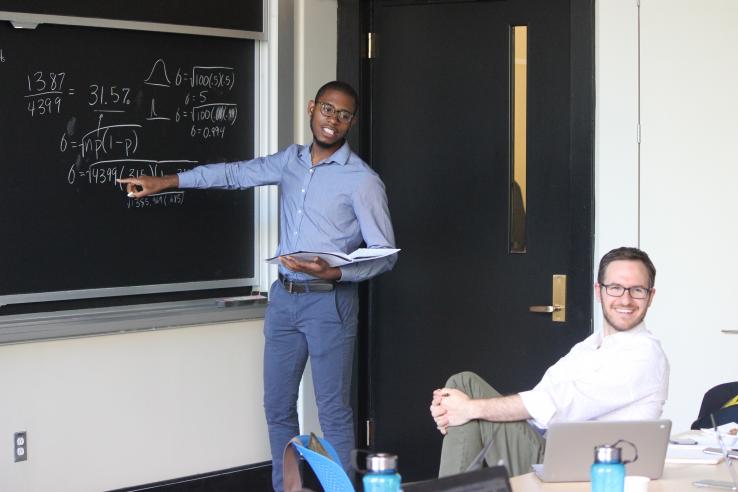
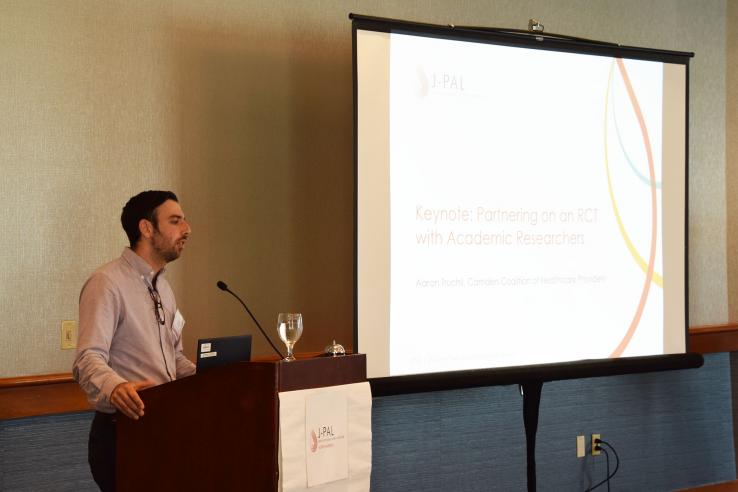
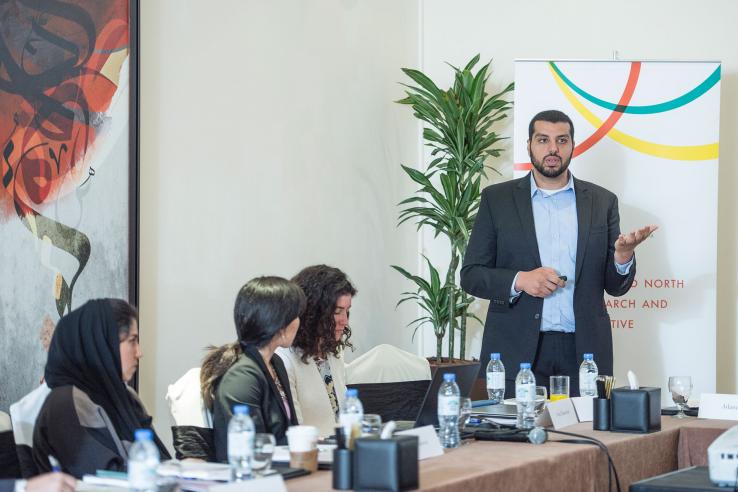
We host events around the world and online to share results and policy lessons from randomized evaluations, to build new partnerships between researchers and practitioners, and to train organizations on how to design and conduct randomized evaluations, and use evidence from impact evaluations.
Browse news articles about J-PAL and our affiliated professors, read our press releases and monthly global and research newsletters, and connect with us for media inquiries.
Based at leading universities around the world, our experts are economists who use randomized evaluations to answer critical questions in the fight against poverty. Connect with us for all media inquiries and we'll help you find the right person to shed insight on your story.
J-PAL is based at MIT in Cambridge, MA and has seven regional offices at leading universities in Africa, Europe, Latin America and the Caribbean, Middle East and North Africa, North America, South Asia, and Southeast Asia.
Our global office is based at the Department of Economics at the Massachusetts Institute of Technology. It serves as the head office for our network of seven independent regional offices.
Led by affiliated professors, J-PAL sectors guide our research and policy work by conducting literature reviews; by managing research initiatives that promote the rigorous evaluation of innovative interventions by affiliates; and by summarizing findings and lessons from randomized evaluations and producing cost-effectiveness analyses to help inform relevant policy debates.
How do policies affecting private sector firms impact productivity gaps between higher-income and lower-income countries? How do firms’ own policies impact economic growth and worker welfare?
How can we identify effective policies and programs in low- and middle-income countries that provide financial assistance to low-income families, insuring against shocks and breaking poverty traps?
Kyle Emerick is an Associate Professor of Economics at Tufts University. He focuses on Development Economics, with a particular emphasis on the Agricultural sector.
Michael Callen is an Associate Professor at the London School of Economics. His recent work uses experiments to identify ways to address accountability and service delivery failures in the public sector, working primarily in Afghanistan and Pakistan
Harounan Kazianga is a Professor of Economics at the Spears School of Business at Oklahoma State University. His research interests are in development microeconomics: agriculture, education, and health.
Douglas Staiger is the John Sloan Dickey Third Century Professor in the Department of Economics at Dartmouth and a Research Associate at the National Bureau of Economic Research (NBER) in Cambridge, Massachusetts. He received his BA from Williams College in 1984 and his PhD in Economics from MIT in...
Cynthia Kinnan is an Assistant Professor in the Economics Department at Tufts University. Her research focuses on the interaction of networks and access to financial systems in the developing world.
Marcos A. Rangel is an Associate Professor of Public Policy and Economics at the Sanford School of Public Policy at Duke University. Previously, Rangel was an Associate Professor of Economics and Public Policy at the University of Sao Paulo and a Visiting Associate Professor of Public and...
Mathias Sinning is a Professor of Economics at the Crawford School of Public Policy of the Australian National University (ANU). His research in applied econometrics focuses on issues related to treatment effect estimation and policy evaluation. He is particularly interested in the development and...
Gautam Rao is an Associate Professor (with tenure) at the Haas School of Business and the Department of Economics at UC Berkeley. He is also a faculty research fellow at the National Bureau of Economic Research (NBER). His research seeks to bring insights from psychology to bear on topics in...
Eliana La Ferrara is a Professor of Public Policy at Harvard Kennedy School. Her research focuses on the economics of conflict, ethnicity, social norms, institutions, and the media.