The Abdul Latif Jameel Poverty Action Lab (J-PAL) is a global research center working to reduce poverty by ensuring that policy is informed by scientific evidence. Anchored by a network of more than 1,100 researchers at universities around the world, J-PAL conducts randomized impact evaluations to answer critical questions in the fight against poverty.
The Abdul Latif Jameel Poverty Action Lab (J-PAL) is a global research center working to reduce poverty by ensuring that policy is informed by scientific evidence. Anchored by a network of more than 1,100 researchers at universities around the world, J-PAL conducts randomized impact evaluations to answer critical questions in the fight against poverty.
Our affiliated professors are based at over 130 universities and conduct randomized evaluations around the world to design, evaluate, and improve programs and policies aimed at reducing poverty. They set their own research agendas, raise funds to support their evaluations, and work with J-PAL staff on research, policy outreach, and training.
Our Board of Directors, which is composed of J-PAL affiliated professors and senior management, provides overall strategic guidance to J-PAL, our sector programs, and regional offices.
We host events around the world and online to share results and policy lessons from randomized evaluations, to build new partnerships between researchers and practitioners, and to train organizations on how to design and conduct randomized evaluations, and use evidence from impact evaluations.
Browse news articles about J-PAL and our affiliated professors, read our press releases and monthly global and research newsletters, and connect with us for media inquiries.
Based at leading universities around the world, our experts are economists who use randomized evaluations to answer critical questions in the fight against poverty. Connect with us for all media inquiries and we'll help you find the right person to shed insight on your story.
J-PAL is based at MIT in Cambridge, MA and has seven regional offices at leading universities in Africa, Europe, Latin America and the Caribbean, Middle East and North Africa, North America, South Asia, and Southeast Asia.
J-PAL is based at MIT in Cambridge, MA and has seven regional offices at leading universities in Africa, Europe, Latin America and the Caribbean, Middle East and North Africa, North America, South Asia, and Southeast Asia.
Our global office is based at the Department of Economics at the Massachusetts Institute of Technology. It serves as the head office for our network of seven independent regional offices.
Led by affiliated professors, J-PAL sectors guide our research and policy work by conducting literature reviews; by managing research initiatives that promote the rigorous evaluation of innovative interventions by affiliates; and by summarizing findings and lessons from randomized evaluations and producing cost-effectiveness analyses to help inform relevant policy debates.
Led by affiliated professors, J-PAL sectors guide our research and policy work by conducting literature reviews; by managing research initiatives that promote the rigorous evaluation of innovative interventions by affiliates; and by summarizing findings and lessons from randomized evaluations and producing cost-effectiveness analyses to help inform relevant policy debates.
How do policies affecting private sector firms impact productivity gaps between higher-income and lower-income countries? How do firms’ own policies impact economic growth and worker welfare?
How can we identify effective policies and programs in low- and middle-income countries that provide financial assistance to low-income families, insuring against shocks and breaking poverty traps?
The Alumni Spotlight series highlights J-PAL alumni who are making an impact across industries and around the world. Formerly a research assistant at J-PAL Latin America and the Caribbean, Julia Guerra Fernandes ‘17 now leads Leme, an organization that collaborates with governmental and non...
On November 4, 2024, the UK Foreign, Commonwealth & Development Office (FCDO) launched a major new initiative aimed at embedding rigorous evidence into development and foreign policy decisions, in collaboration with Innovations for Poverty Action and J-PAL.
Research and evidence can play an important role in addressing structural gaps and inequalities that disproportionately affect minority populations in existing systems and policies. By identifying and analyzing these issues, we can help inform policy actions with greater precision and impact. To...
Join the course team for a live webinar to explore the Data, Economics, and Design of Policy MicroMasters program, gain insights into the upcoming term, and have your questions answered in real time.
In the September newsletter, read about building farmer resilience to climate change, watch a new video on scaling up a gender equity curriculum in Indian schools, and learn about digital humanitarian aid.
In the October newsletter, read about growing businesses through market access, promoting data-driven climate and education action at UNGA, and utilizing community to scale programs in India.
The City of Chelsea implemented a cash transfer program called Chelsea Eats, which provided eligible households with up to US$400 per month for nine months. Researchers conducted a randomized evaluation on the impact of the unconditional cash transfer on health care utilization and a variety of health outcomes. Those who received the cash transfer had fewer emergency department visits, including those related to behavioral health or substance use, fewer admissions to the hospital from the emergency department, and more outpatient visits to subspecialists than those who did not receive the cash transfer.
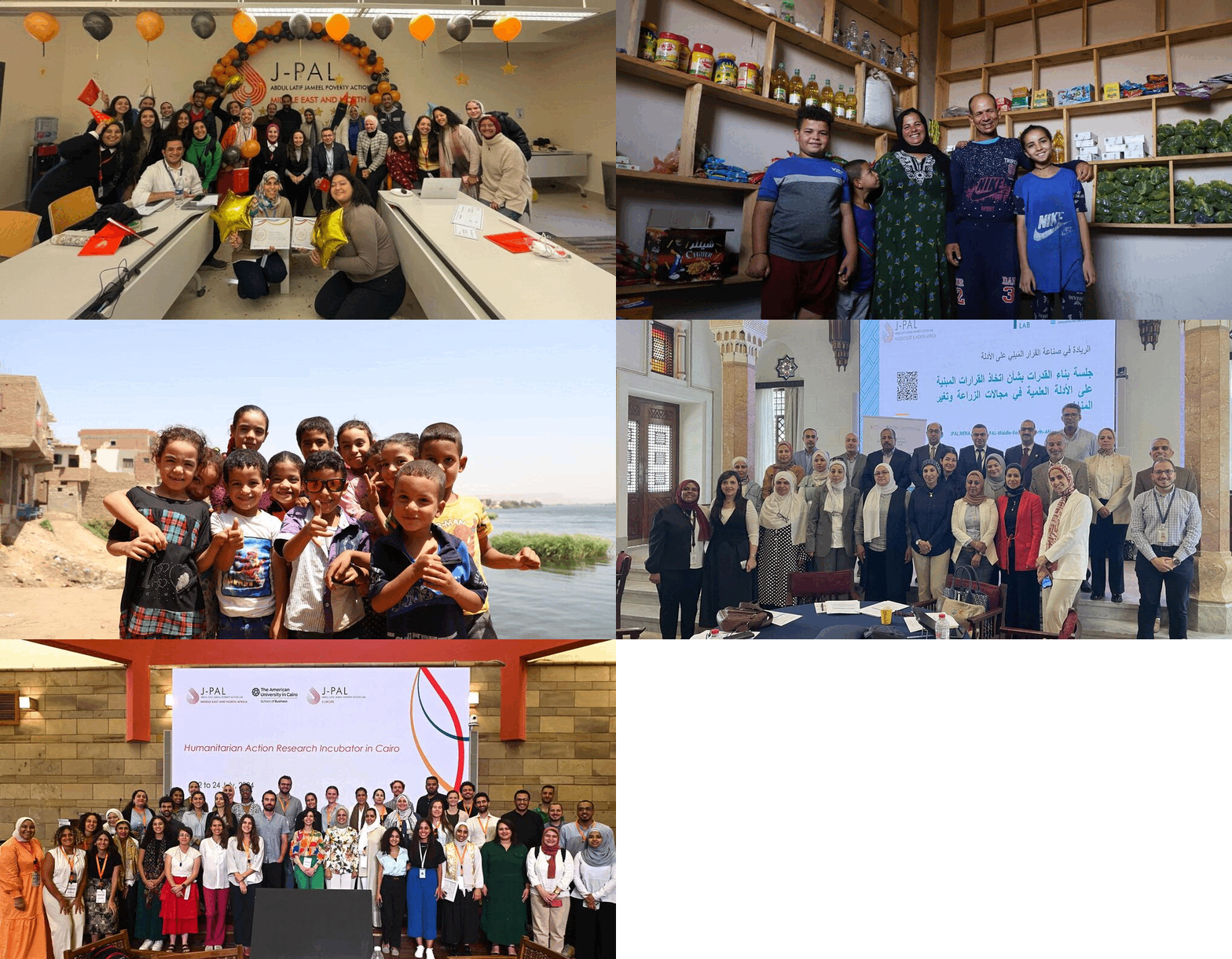
As J-PAL MENA continues to expand its efforts in advancing evidence-based policymaking, we are excited to share highlights from our diverse initiatives over the past two quarters in this edition of our newsletter.
Mohamed Mofreh is the Research Operations Manager at J-PAL Middle East and North Africa, where he oversees research operations for ongoing projects and field studies.
Sarah Elbakry is a Senior Research Manager at J-PAL Middle East and North Africa where she works on evaluating the impact of an EdTech intervention (Darsel).
In this piece, originally published in American Society on Aging’s Generations, Aaron Truchil, Dawn Wiest, and Kathleen Noonan of the Camden Coalition discuss their experience finding and learning from null results.
Kimberly Dodds, homeless prevention program manager in King County, Washington, discusses her experience discovering that their program had null results and how they were used to improve the Youth Family Homelessness Prevention Initiative.