J-PAL J-PAL
The Abdul Latif Jameel Poverty Action Lab
  • About
    • Overview
    • People
      • Affiliated Professors
      • Invited Researchers
      • J-PAL Scholars
      • Board
      • Leadership
      • Staff
    • Strengthening Our Work
    • Code of Conduct
    • Initiatives
    • Events
    • Blog
    • News
    • Press Room
  • Offices
    • Overview
    • Global
    • Africa
    • Europe
    • Latin America and the Caribbean
      • Growing Futures
    • Middle East and North Africa
    • North America
    • South Asia
    • Southeast Asia
  • Sectors
    • Overview
    • Agriculture
    • Crime, Violence, and Conflict
    • Education
    • Environment, Energy, and Climate Change
    • Finance
    • Firms
    • Gender
    • Health
    • Labor Markets
    • Political Economy and Governance
    • Social Protection
  • Evaluations
  • Research Resources
    • About Us
    • Our Work
    • Join ASPIRE
    • Newsroom
  • Policy Insights
  • Evidence to Policy
    • Pathways and Case Studies
    • The Evidence Effect
  • Blog
  • Careers
  • Courses
  • For Affiliates
  • Support J-PAL

Utility menu

  • Blog
  • Careers
  • Courses
  • For Affiliates
  • Support J-PAL

Quick links

  • Evaluations
  • Research Resources
  • Policy Insights
  • Evidence to Policy
    • Pathways and Case Studies
    • The Evidence Effect
  • About

    The Abdul Latif Jameel Poverty Action Lab (J-PAL) is a global research center working to reduce poverty by ensuring that policy is informed by scientific evidence. Anchored by a network of more than 1,100 researchers at universities around the world, J-PAL conducts randomized impact evaluations to answer critical questions in the fight against poverty.

    • Overview

      The Abdul Latif Jameel Poverty Action Lab (J-PAL) is a global research center working to reduce poverty by ensuring that policy is informed by scientific evidence. Anchored by a network of more than 1,100 researchers at universities around the world, J-PAL conducts randomized impact evaluations to answer critical questions in the fight against poverty.

      • Affiliated Professors

        Our affiliated professors are based at over 130 universities and conduct randomized evaluations around the world to design, evaluate, and improve programs and policies aimed at reducing poverty. They set their own research agendas, raise funds to support their evaluations, and work with J-PAL staff on research, policy outreach, and training.

      • Invited Researchers
      • J-PAL Scholars
      • Board
        Our Board of Directors, which is composed of J-PAL affiliated professors and senior management, provides overall strategic guidance to J-PAL, our sector programs, and regional offices.
      • Leadership
      • Staff
    • Strengthening Our Work

      Our research, policy, and training work is fundamentally better when it is informed by a broad range of perspectives.

    • Code of Conduct
    • Initiatives
      J-PAL initiatives concentrate funding and other resources around priority topics for which rigorous policy-relevant research is urgently needed.
    • Events
      We host events around the world and online to share results and policy lessons from randomized evaluations, to build new partnerships between researchers and practitioners, and to train organizations on how to design and conduct randomized evaluations, and use evidence from impact evaluations.
    • Blog
      News, ideas, and analysis from J-PAL staff and affiliated professors.
    • News
      Browse news articles about J-PAL and our affiliated professors, read our press releases and monthly global and research newsletters, and connect with us for media inquiries.
    • Press Room
      Based at leading universities around the world, our experts are economists who use randomized evaluations to answer critical questions in the fight against poverty. Connect with us for all media inquiries and we'll help you find the right person to shed insight on your story.
  • Offices
    J-PAL is based at MIT in Cambridge, MA and has seven regional offices at leading universities in Africa, Europe, Latin America and the Caribbean, Middle East and North Africa, North America, South Asia, and Southeast Asia.
    • Overview
      J-PAL is based at MIT in Cambridge, MA and has seven regional offices at leading universities in Africa, Europe, Latin America and the Caribbean, Middle East and North Africa, North America, South Asia, and Southeast Asia.
    • Global
      Our global office is based at the Department of Economics at the Massachusetts Institute of Technology. It serves as the head office for our network of seven independent regional offices.
    • Africa
    • Europe
    • Latin America and the Caribbean
    • Middle East and North Africa
    • North America
    • South Asia
    • Southeast Asia
  • Sectors
    Led by affiliated professors, J-PAL sectors guide our research and policy work by conducting literature reviews; by managing research initiatives that promote the rigorous evaluation of innovative interventions by affiliates; and by summarizing findings and lessons from randomized evaluations and producing cost-effectiveness analyses to help inform relevant policy debates.
    • Overview
      Led by affiliated professors, J-PAL sectors guide our research and policy work by conducting literature reviews; by managing research initiatives that promote the rigorous evaluation of innovative interventions by affiliates; and by summarizing findings and lessons from randomized evaluations and producing cost-effectiveness analyses to help inform relevant policy debates.
    • Agriculture
      How can we encourage small farmers to adopt proven agricultural practices and improve their yields and profitability?
    • Crime, Violence, and Conflict
      What are the causes and consequences of crime, violence, and conflict and how can policy responses improve outcomes for those affected?
    • Education
      How can students receive high-quality schooling that will help them, their families, and their communities truly realize the promise of education?
    • Environment, Energy, and Climate Change
      How can we increase access to energy, reduce pollution, and mitigate and build resilience to climate change?
    • Finance
      How can financial products and services be more affordable, appropriate, and accessible to underserved households and businesses?
    • Firms
      How do policies affecting private sector firms impact productivity gaps between higher-income and lower-income countries? How do firms’ own policies impact economic growth and worker welfare?
    • Gender
      How can we reduce gender inequality and ensure that social programs are sensitive to existing gender dynamics?
    • Health
      How can we increase access to and delivery of quality health care services and effectively promote healthy behaviors?
    • Labor Markets
      How can we help people find and keep work, particularly young people entering the workforce?
    • Political Economy and Governance
      What are the causes and consequences of poor governance and how can policy improve public service delivery?
    • Social Protection
      How can we identify effective policies and programs in low- and middle-income countries that provide financial assistance to low-income families, insuring against shocks and breaking poverty traps?
Displaying 5371 - 5385 of 7150
 A group of women gather around a roadside tap, filling their containers with water.
Evaluation

Delivering Clean Water to Households in India

More than two billion people around the world lack access to clean drinking water, and current approaches to increasing access have fallen short. Researchers conducted a randomized evaluation to test the impact of delivering clean water directly to households on the valuation of clean water, and other water-related benefits in India.
Person

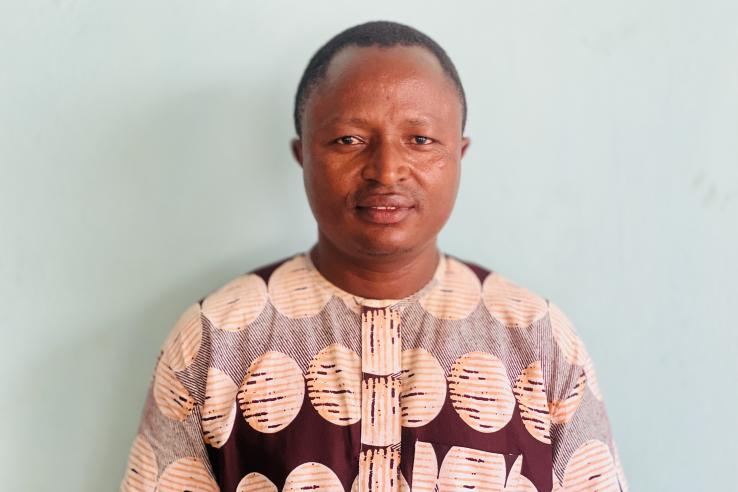
Josue Awonon

Man in overalls installs insulation between wood beams,
Evaluation

The Effect of Incentive-Based Pay in the Weatherization Assistance Program on Energy Efficiency in Illinois

Researchers conducted a randomized evaluation of the Illinois Home Weatherization Assistance Program (IHWAP), which aims to improve energy efficiency in low-income households. The study tested the impact of performance-based pay for contractors implementing air sealing retrofits as part of IHWAP. Contractors were randomly assigned to receive either no bonus, a low bonus (US$0.40), or a high bonus (US$1.00) per unit of air sealing beyond the target. The introduction of performance bonuses led to increased air-tightness in homes, reduced the likelihood of contractors being called back due to deficiencies, and resulted in overall reductions in household energy use.
Digital Green staff filming women in how to videos on agricultural practices.
Evidence to Policy Case Study
Case study

Video-based support for small-scale farmers around the world

Digital Green leveraged findings from randomized evaluations to refine and scale its video-based agricultural extension model, reaching more than 7.2 million small-scale farmers in India and around the world.
Photo credit: J-PAL North America
Update
J-PAL Updates

June 2025 North America Newsletter

J-PAL North America's June newsletter features reflections on our work in Puerto Rico, new research results on the impact of tutor-student gender match, and a recent symposium that the Health Care Delivery Initiative participated in.
Child writing in his notebook at school
Blog

Setting an early foundation for children’s learning: using insights from cost-effectiveness analysis to inform decisions

Ensuring children have strong basic skills in reading, writing, and mathematics – together known as foundational literacy and numeracy – is considered critical for their future academic success and later life outcomes. While research has generated insights on what works for improving literacy and...
 SEMUJERES officials participating in a training program, 2022
Evidence to Policy Case Study
Case study

Strengthening initiatives to support women facing violence through a government collaboration

To better support women experiencing gender-based violence, the Mexico City Women's Committee (SEMUJERES) partnered with J-PAL affiliated researchers and J-PAL LAC to pilot new interventions, improve a cash transfer program, and embed evidence-informed practices into policy design and delivery.
Student in a classroom
Blog

Researcher Spotlight: Shobhini Mukerji on her journey into development economics

In this episode of The Evidence Effect, host Sambhav Choudhury speaks with Shobhini Mukerji, Executive Director of J-PAL South Asia. From her transformative summer internship with education nonprofit Pratham to becoming a principal investigator on groundbreaking research, Shobhini shares her journey...
An auditorium filled with people facing a female presenter.
Event

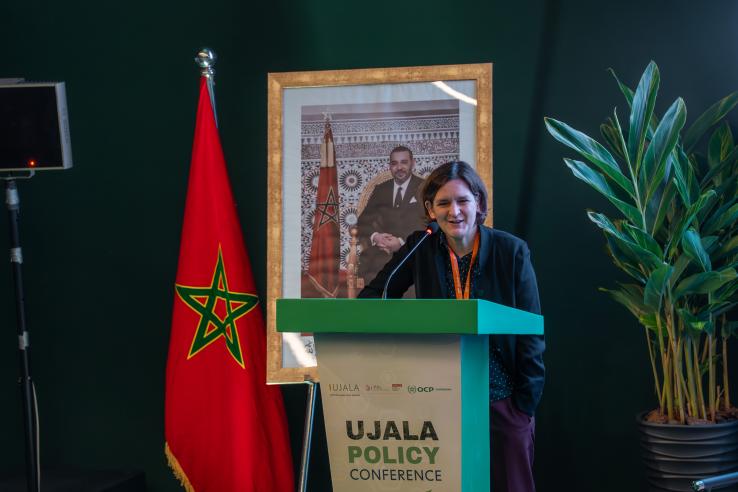
Linking Research to Action: Morocco Innovation and Evaluation Lab’s Evidence-to-Policy Conference

The Morocco Innovation and Evaluation Lab (MEL), in collaboration with the University Mohammed VI Polytechnic (UM6P), the Abdul Latif Jameel Poverty Action Lab (J-PAL), the Harvard Center for International Development (CID) and Community Jameel, hosted an evidence-to-policy conference in Rabat on...
Three people look at computers
Blog

MIT alumni Rotarians endow fellowship fund to support MIT’s DEDP master’s students

Expanding access to high-quality education—especially for learners with limited access, resources, or means—is a core goal of the Data, Economics, and Design of Policy (DEDP) program. These efforts are especially meaningful when they are led by members of the MIT community.
Update
J-PAL Updates

J-PAL MENA Celebrates Five Years of Transforming Policymaking in the Region

The Abdul Latif Jameel Poverty Action Lab Middle East and North Africa (J-PAL MENA) at The American University in Cairo (AUC) celebrated its fifth anniversary today. This marks five years of harnessing the power of evidence to design cost-effective and large-scale policies that address poverty and...
Public officials from OEFA. Credit: María Paz Monge | J-PAL LAC.
Blog

J-PAL LAC government partnerships: Pathways to evidence

In Latin America and the Caribbean (LAC), government-led social programs hold the highest potential to drive meaningful change. The J-PAL LAC office partners with governments across the region, working to expand the use of rigorous evidence in shaping public policy. Along the way, we’ve gathered...
Person

Laura da Silva

Laura is a Research Associate at J-PAL Africa, where she works on interventions aimed at increasing access to health care. She is currently working on the Coach Mpilo project, a peer-led support model for men living with HIV.
Three DEDP MicroMasters students sit around a table and discuss coursework with their laptops open.
Event

J-PAL's Evaluating AI Solutions Training Workshop

J-PAL’s Evaluating AI Solutions Training Workshop is an immersive, three-day training that equips participants with the tools to evaluate the impact of AI-powered interventions and solutions and make evidence-informed decisions. This course builds a practical foundation for measuring the impact of...
Workers in a ptivate garment factory
Blog

The Evidence Effect: What we’ve learned working with the private sector for inclusive growth

The private sector is a fundamental force for driving global prosperity. For corporations and investors, there’s enormous opportunity in low- and middle-income countries’ growing markets and talent. What’s less clear is how to partner most effectively for maximum impact: How can multinationals...

Pagination

  • First page « First
  • Previous page ‹
  • …
  • Page 357
  • Page 358
  • Current page 359
  • Page 360
  • Page 361
  • …
  • Next page ›
  • Last page Last »
J-PAL

J-PAL

400 Main Street

E19-201

Cambridge, MA 02142

USA

Contact

+1 617 324 6566

[email protected]


Press Room

Stay Informed

Receive our newsletters

Subscribe


Privacy Policy

Accessibility

MIT