

J-PAL J-PAL
The Abdul Latif Jameel Poverty Action Lab
  • About
    • Overview
    • People
      • Affiliated Professors
      • Invited Researchers
      • J-PAL Scholars
      • Board
      • Leadership
      • Staff
    • Strengthening Our Work
    • Code of Conduct
    • Initiatives
    • Events
    • Blog
    • News
    • Press Room
  • Offices
    • Overview
    • Global
    • Africa
    • Europe
    • Latin America and the Caribbean
    • Middle East and North Africa
    • North America
    • South Asia
    • Southeast Asia
  • Sectors
    • Overview
    • Agriculture
    • Crime, Violence, and Conflict
    • Education
    • Environment, Energy, and Climate Change
    • Finance
    • Firms
    • Gender
    • Health
    • Labor Markets
    • Political Economy and Governance
    • Social Protection
  • Evaluations
  • Research Resources
    • About Us
    • Our Work
    • Join ASPIRE
    • Newsroom
  • Policy Insights
  • Evidence to Policy
    • Pathways and Case Studies
    • The Evidence Effect
  • Blog
  • Careers
  • Courses
  • For Affiliates
  • Support J-PAL

Utility menu

  • Blog
  • Careers
  • Courses
  • For Affiliates
  • Support J-PAL

Quick links

  • Evaluations
  • Research Resources
  • Policy Insights
  • Evidence to Policy
    • Pathways and Case Studies
    • The Evidence Effect
  • About

    The Abdul Latif Jameel Poverty Action Lab (J-PAL) is a global research center working to reduce poverty by ensuring that policy is informed by scientific evidence. Anchored by a network of more than 1,100 researchers at universities around the world, J-PAL conducts randomized impact evaluations to answer critical questions in the fight against poverty.

    • Overview

      The Abdul Latif Jameel Poverty Action Lab (J-PAL) is a global research center working to reduce poverty by ensuring that policy is informed by scientific evidence. Anchored by a network of more than 1,100 researchers at universities around the world, J-PAL conducts randomized impact evaluations to answer critical questions in the fight against poverty.

      • Affiliated Professors

        Our affiliated professors are based at over 130 universities and conduct randomized evaluations around the world to design, evaluate, and improve programs and policies aimed at reducing poverty. They set their own research agendas, raise funds to support their evaluations, and work with J-PAL staff on research, policy outreach, and training.

      • Invited Researchers
      • J-PAL Scholars
      • Board
        Our Board of Directors, which is composed of J-PAL affiliated professors and senior management, provides overall strategic guidance to J-PAL, our sector programs, and regional offices.
      • Leadership
      • Staff
    • Strengthening Our Work

      Our research, policy, and training work is fundamentally better when it is informed by a broad range of perspectives.

    • Code of Conduct
    • Initiatives
      J-PAL initiatives concentrate funding and other resources around priority topics for which rigorous policy-relevant research is urgently needed.
    • Events
      We host events around the world and online to share results and policy lessons from randomized evaluations, to build new partnerships between researchers and practitioners, and to train organizations on how to design and conduct randomized evaluations, and use evidence from impact evaluations.
    • Blog
      News, ideas, and analysis from J-PAL staff and affiliated professors.
    • News
      Browse news articles about J-PAL and our affiliated professors, read our press releases and monthly global and research newsletters, and connect with us for media inquiries.
    • Press Room
      Based at leading universities around the world, our experts are economists who use randomized evaluations to answer critical questions in the fight against poverty. Connect with us for all media inquiries and we'll help you find the right person to shed insight on your story.
  • Offices
    J-PAL is based at MIT in Cambridge, MA and has seven regional offices at leading universities in Africa, Europe, Latin America and the Caribbean, Middle East and North Africa, North America, South Asia, and Southeast Asia.
    • Overview
      J-PAL is based at MIT in Cambridge, MA and has seven regional offices at leading universities in Africa, Europe, Latin America and the Caribbean, Middle East and North Africa, North America, South Asia, and Southeast Asia.
    • Global
      Our global office is based at the Department of Economics at the Massachusetts Institute of Technology. It serves as the head office for our network of seven independent regional offices.
    • Africa
    • Europe
    • Latin America and the Caribbean
    • Middle East and North Africa
    • North America
    • South Asia
    • Southeast Asia
  • Sectors
    Led by affiliated professors, J-PAL sectors guide our research and policy work by conducting literature reviews; by managing research initiatives that promote the rigorous evaluation of innovative interventions by affiliates; and by summarizing findings and lessons from randomized evaluations and producing cost-effectiveness analyses to help inform relevant policy debates.
    • Overview
      Led by affiliated professors, J-PAL sectors guide our research and policy work by conducting literature reviews; by managing research initiatives that promote the rigorous evaluation of innovative interventions by affiliates; and by summarizing findings and lessons from randomized evaluations and producing cost-effectiveness analyses to help inform relevant policy debates.
    • Agriculture
      How can we encourage small farmers to adopt proven agricultural practices and improve their yields and profitability?
    • Crime, Violence, and Conflict
      What are the causes and consequences of crime, violence, and conflict and how can policy responses improve outcomes for those affected?
    • Education
      How can students receive high-quality schooling that will help them, their families, and their communities truly realize the promise of education?
    • Environment, Energy, and Climate Change
      How can we increase access to energy, reduce pollution, and mitigate and build resilience to climate change?
    • Finance
      How can financial products and services be more affordable, appropriate, and accessible to underserved households and businesses?
    • Firms
      How do policies affecting private sector firms impact productivity gaps between higher-income and lower-income countries? How do firms’ own policies impact economic growth and worker welfare?
    • Gender
      How can we reduce gender inequality and ensure that social programs are sensitive to existing gender dynamics?
    • Health
      How can we increase access to and delivery of quality health care services and effectively promote healthy behaviors?
    • Labor Markets
      How can we help people find and keep work, particularly young people entering the workforce?
    • Political Economy and Governance
      What are the causes and consequences of poor governance and how can policy improve public service delivery?
    • Social Protection
      How can we identify effective policies and programs in low- and middle-income countries that provide financial assistance to low-income families, insuring against shocks and breaking poverty traps?
Displaying 7246 - 7260 of 8566
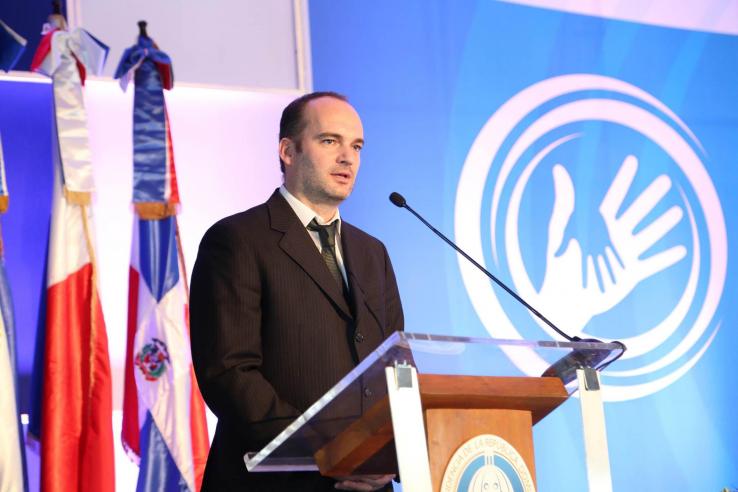
Ryan Cooper lectures at a podium.
Blog

Alumni Voices from Government: Ryan Cooper ‘14, Experimental Policy Initiative, Budget Office of Chile

Formerly the executive director of J-PAL LAC, Ryan Cooper '14 now leads the Experimental Policy Initiative within Chile's Budget Office. He describes his journey from J-PAL to government in this Q&A.
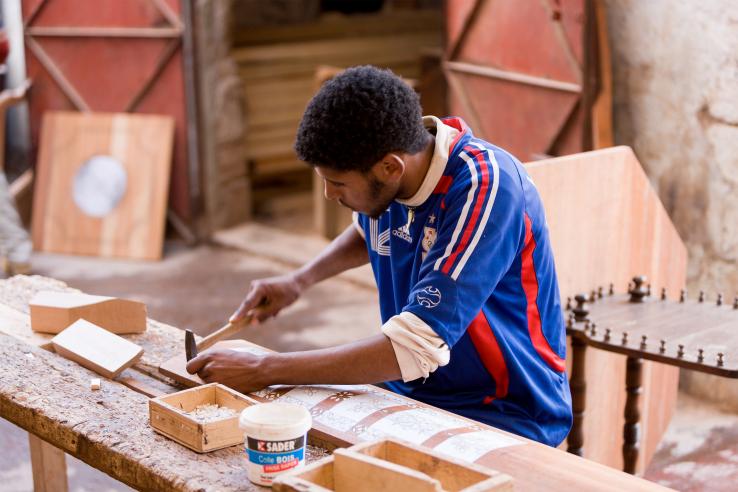
A man does woodworking in a workshop
Event

Foundations of Randomized Evaluations: For the Micro, Small and Medium Enterprises Development Agency

In partnership with Micro, Small and Medium Enterprises Development Agency (MSMEDA), J-PAL Middle East and North Africa (MENA), based at the American University in Cairo, is pleased to offer a training on randomized evaluations and how they are designed in real-world settings for MSMEDA project...
Person

Fernando Larrain

Fernando Larrain joined J-PAL LAC as a Research Associate in September 2015. He is currently working on the evaluation of a credit program for low-income individuals in Paraguay.

A man shows a tablet to a small child who is doing homework.
Blog

Using evidence to effectively support education during COVID-19

In light of school closures caused by COVID-19, millions of students are home for the remainder of the academic year. Philanthropy will play a vital role in the response to this crisis. But how can education funders and donors ensure that they are allocating their resources effectively?

A woman sits at a desk with a notepad and laptop computer.
Blog

Breaking down the gender gap in the DEDP MicroMasters Program

Despite the MicroMasters' broad access and reduced barriers to entry, women enroll in the program at half the rate of men. Conditional on enrolling, women are also less likely to complete the MicroMasters program than men. The difference in enrollment prompted us to take a deeper look into where...
Person

Sendhil Mullainathan

Sendhil Mullainathan is the Peter de Florez Professor at MIT with Dual Appointment in Economics and Electrical Engineering and Computer Science (EECS), and Co-Chair of J-PAL's Partnership for AI Evidence. His current research uses machine learning to understand complex problems in human behavior...
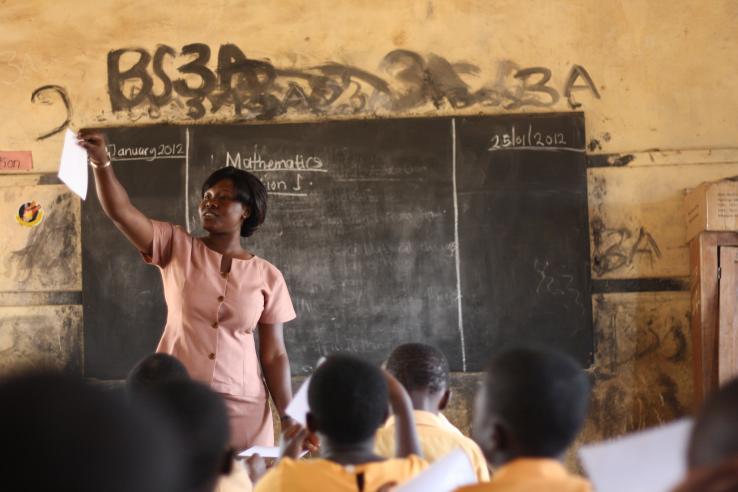
A woman stands in front of a classroom teaching and pointing to a student.
Evaluation

The Impact of Government-run Remedial Education Programs on Student Learning in Ghana

Building on previous research, researchers in this study evaluated the impact of several targeted instruction programs on the learning outcomes of primary school students in Ghana’s public schools. Researchers found significant improvements in numeracy and literacy on average; of the four interventions, in-school and after-school remedial lessons delivered by Teacher Community Assistants had the largest impact on pupil achievement.
Person

Sarah Nation

Soldiers marching in Spanish National Day Army Parade
Evaluation

Encouraging Interregional Contact to Foster National Identity in Spain

Researchers evaluated the long-run effects of temporary contact between individuals from different regions during military service on interregional attitudes and national identity sentiments among former Spanish male conscripts. Overall, conscription outside of one’s region of origin led to positive and long-lasting effects on interregional sentiments, and increased the sense of national identity among conscripts from regions with strong secessionists movements.
Initiative Resource
Initiative projects and documents

HCDI Advisory Committee
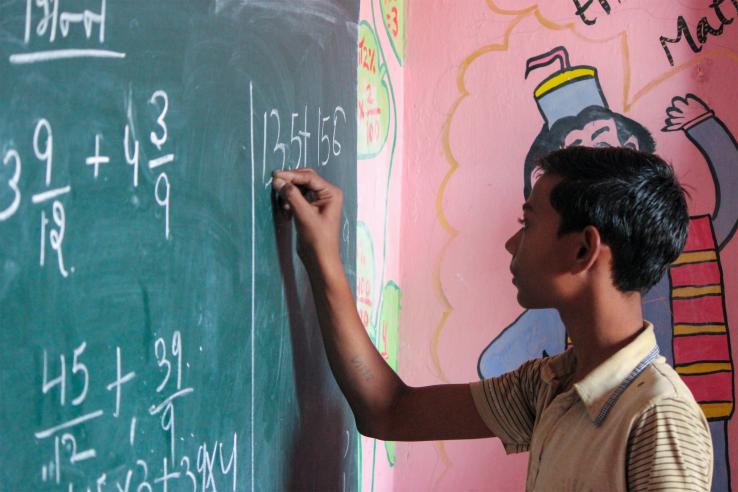
A student in a classroom in India.
Evaluation

The Impact of Diagnostic Feedback for Teachers on Student Learning in India

Researchers evaluated whether providing low-stakes diagnostic tests and feedback to teachers led to improved student learning outcomes in India. They found that teachers in intervention schools exerted more effort when observed in the classroom but students in these schools performed no better on independently-administered tests than students in schools that did not receive the program.

Two women, a dentist and her patient, look at a dental X-ray on a screen.
Evaluation

The Impact of Free Dental Health Services on Employment in Chile

Researchers evaluated the impact of access to a package of free dental services on employment levels for urban residents of Santiago, Chile. Results found that participants with access to these services had better dental health, and that self-esteem and short-term employment increased among women, particularly those who had previously been missing front teeth or with lower levels of self-esteem.

Primary school teacher and students in a classroom in Uganda.
Evaluation

Leveraging Teacher Incentives to Improve Student Performance and Reduce Dropout in Uganda

Researchers evaluated whether an alternative teacher incentive scheme, providing rewards based on the performance of all students, could help reduce dropout and improve student math learning. Introducing the pay-for-percentile incentive scheme reduced overall student dropout rates. However, these reductions were driven almost entirely by students at intervention schools with math textbooks. Among schools with math books, the incentive scheme also improved the math achievement for higher performing students.
Person

Alessia Mortara

Alessia Mortara is Policy Manager at J-PAL Africa. She manages J-PAL Africa’s policy team in building partnerships with governments, donors, and civil society organizations to promote the use of evidence in decision-making as well as supporting the scale-up of successful interventions.
Person

Katherine Baicker

Katherine Baicker is Dean and Emmett Dedmon Professor at the University of Chicago Harris School of Public Policy.

Pagination

  • First page « First
  • Previous page ‹
  • …
  • Page 482
  • Page 483
  • Current page 484
  • Page 485
  • Page 486
  • …
  • Next page ›
  • Last page Last »
J-PAL

J-PAL

400 Main Street

E19-201

Cambridge, MA 02142

USA

Contact

+1 617 324 6566

[email protected]


Press Room

Stay Informed

Receive our newsletters

Subscribe


Privacy Policy

Accessibility

MIT