

Education and Gender Portfolio
J-PAL Africa’s Education and Gender Portfolio works to strengthen education systems across sub-Saharan Africa by ensuring that policy and practice are grounded in rigorous evidence. We focus on advancing learning for students, with a strong emphasis on gender equity in education and girls empowerment. We collaborate with governments, NGOs, researchers, and multilateral institutions to design, evaluate, and scale effective programs that improve access, quality, and equity in education.

Our approach
J-PAL Africa supports governments, NGOs, and multilateral partners to integrate evidence into education policy and programming through three core pillars:
- Supporting evidence use: We help partners adopt evidence-based policies and programs by sharing actionable insights and providing hands-on technical assistance. Our support includes identifying proven approaches, adapting them to different contexts, and conducting additional research to ensure effective implementation and fidelity to evidence.
- Fostering evidence generation: We match partners with leading researchers within the J-PAL network to conduct randomized evaluations and generate scientific evidence on what works, for whom, and why—for programs and policies to be able to scale effectively.
- Strengthening capacity: We strengthen the capacity of education leaders to use data and evidence in decision-making. This includes tailored training, our annual Evaluating Social Programs (ESP) course, and long-term partnerships such as embedded evidence labs.
Where we work
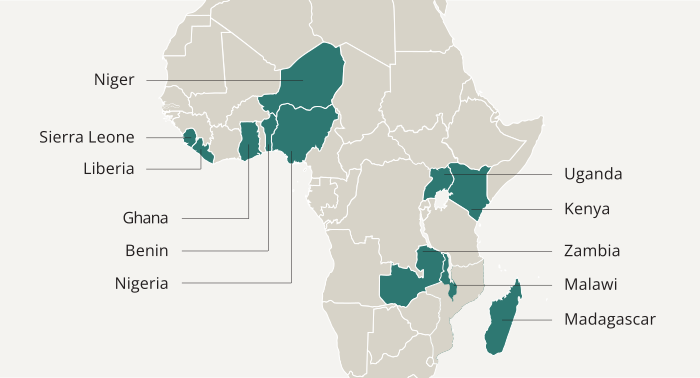
We have ongoing projects and are exploring new opportunities in the following countries:
Spotlight : Teaching at the Right Level (TaRL)
Teaching at the Right Level (TaRL) has been a cornerstone of J-PAL Africa’s education and gender portfolio. Originally developed by the India-based NGO Pratham and rigorously evaluated in India, TaRL helps improve foundational skills by tailoring instruction to students’ actual learning levels rather than their age or grade. Recognized by the Global Education Evidence Advisory Panel as a “great buy,” and featured in our own menu of cost-effective interventions, the model has since been adapted and scaled in more than seventeen African countries, reaching over seven million children. J-PAL Africa, in collaboration with our affiliated researchers and Pratham, led several successful pilots and supported implementation in Zambia and beyond. These early efforts helped catalyze the launch of TaRL Africa, now an independent organization supporting governments across the continent.
Spotlight: Improving Menstrual Health and Stigma
Following the dissemination of results from a rigorous randomized evaluation in Madagascar, we are supporting the national scale-up of a promising menstrual health and hygiene (MHH) intervention, while also exploring opportunities to adapt and evaluate it in other countries. The study found significant impacts across multiple domains, including a significant increase in test scores and improvement in grade progression, reduced stress and increased peer support , as well as improvements in hygiene practices, menstrual knowledge, and reduced stigma.
We are working closely with our affiliated researcher who led the study, the Ministry of Education, and the World Bank to develop, pilot, and test an effective scaling model for this intervention in Madagascar. Through this work, we aim to improve menstrual hygiene, reduce stigma, and enhance school participation and performance among adolescent girls.
Building on this foundation, we are also supporting broader efforts to generate and use evidence across Madagascar’s education sector. This includes capacity-building for the Ministry of Education—such as a workshop we co-facilitated with UNESCO in 2024—and the establishment of a technical committee on impact evaluations, which will play a central role in coordinating relevant studies nationwide.
Featured media

Designing and Implementing Evidence Based Life Skills Training Programmes and Girls Clubs
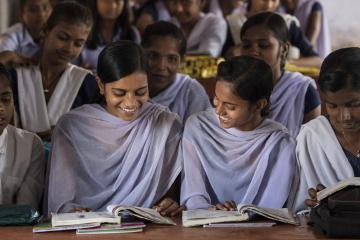
Improving student learning: Impacts by gender
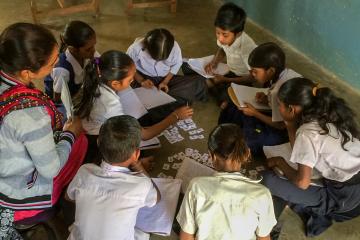
Teaching at the Right Level to improve learning
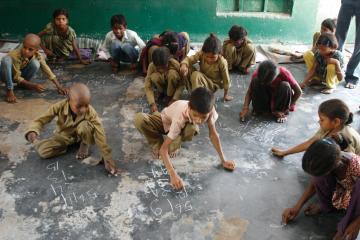
Roll Call: Getting Children into School
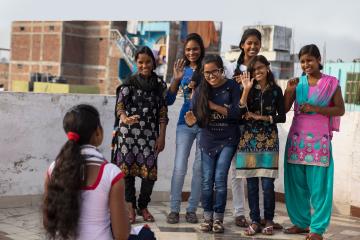
Reducing Pregnancy Among Adolescents
Our team
The Education and Gender portfolio is led by a multidisciplinary team based in Ghana and Kenya:

Primrose Adjepong, Senior Policy Manager

Sakshi Hallan, Policy Manager

Julie Ramambason, Senior Policy Associate

Claire Stein, Senior Policy Associate
This team is supported by Selim Gulesci and Alex Eble, who serve as the portfolio’s Co-Scientific Advisors and provide strategic and technical guidance across our work.

Selim Gulesci
J-PAL Affiliated Professor, Associate Professor of Economics at Trinity College Dublin
Research focus areas: Education, gender, and labor markets in low-income settings.

Alex Eble
J-PAL Affiliated Professor, Associate Professor at Columbia University
Research focus areas: Economics of education, beliefs, and information.