

Scaling Access to Safe Water in Africa (SASWA)
Supporting governments to integrate and scale water treatment subsidies within existing maternal and child health systems.
A J-PAL Africa portfolio advancing evidence-based solutions to expand access to safe drinking water.
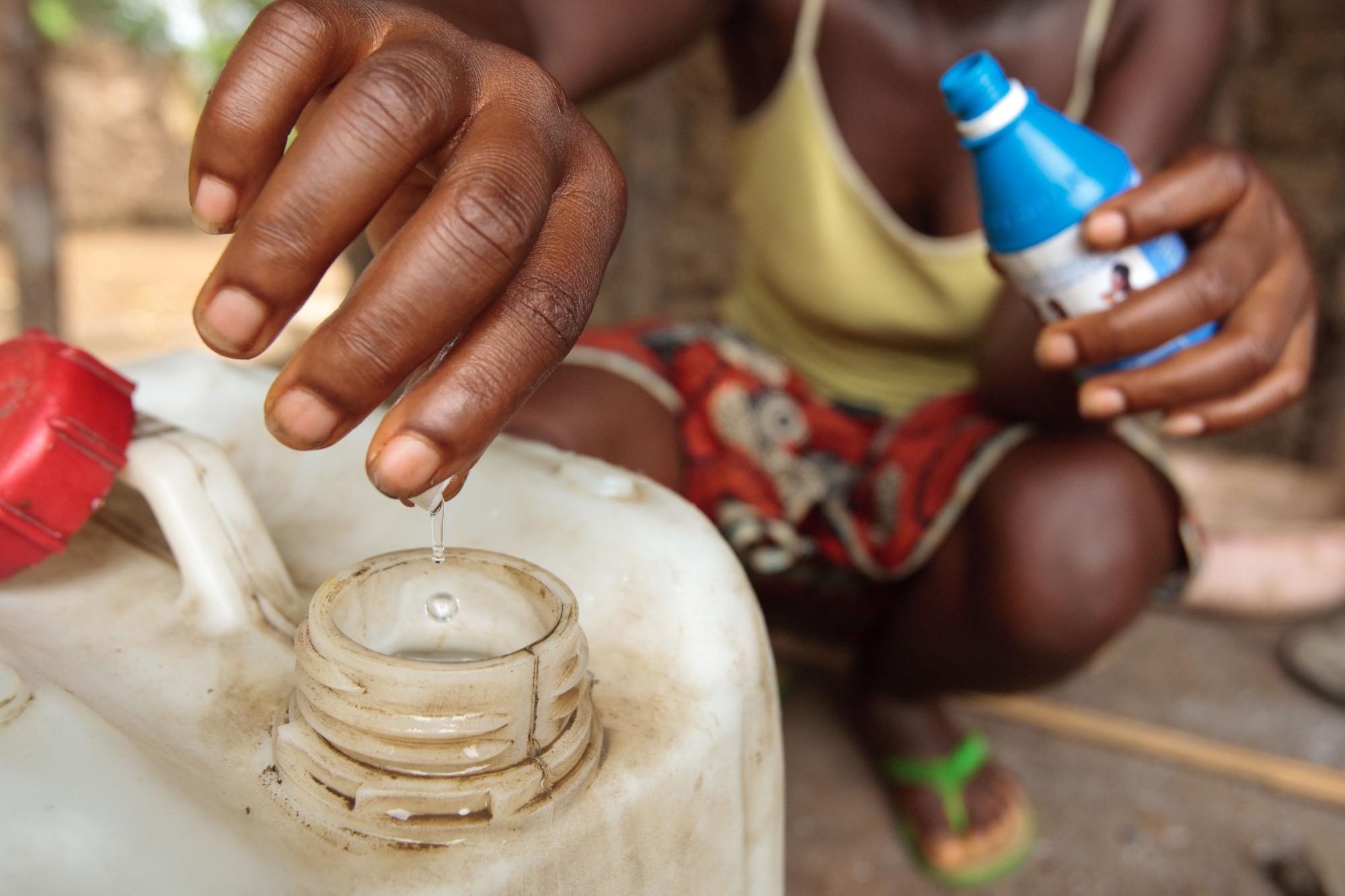
The challenge: Preventable child deaths from unsafe water
In 2022, an estimated two billion people lacked access to safe drinking water, including more than 400 million in sub-Saharan Africa. Drinking contaminated water is a major driver of diarrheal disease and the third leading cause of death in children under five. Pregnant women, young children, and older adults are particularly vulnerable to waterborne illnesses such as cholera, E. coli, and rotavirus, which can be fatal without medical care.
Yet millions of households still rely on untreated water sources such as surface water, unprotected wells, or unchlorinated piped systems.
In many rural and peri-urban contexts, large-scale infrastructure improvements are not feasible in the short term, and these sources are highly vulnerable to contamination.
Previous efforts to identify accessible solutions for safe water have resulted in the development of a variety of affordable point-of-use water treatment products that can be easily used at home. However, use of these products remains persistently low across many contexts. This may be because promotion strategies typically rely on social marketing and discounted prices, which require households to continuously shoulder these costs. This effectively excludes households with limited ability to pay.
Point-of-use water treatment, especially household chlorination, is one of the most affordable and proven solutions available.
The solution: Household water treatment integrated into existing health services
Expanding access to safe water through evidence-based delivery models is essential to reduce child mortality and prevent waterborne disease. The SASWA model makes chlorine-based household water treatment more accessible by integrating delivery into existing maternal and child health (MCH) systems.
One proven approach is to provide free dilute chlorine solution through health facilities, often using a redeemable voucher. By linking distribution to routine health visits, such as antenatal care and immunizations, governments can reach households most likely to benefit and sustain regular use over time.
What does the evidence say?
Randomized evaluations in Kenya and Malawi have shown that:
- Cost matters: Small financial barriers can significantly reduce household use of dilute chlorine for water treatment.
- Free chlorine drives use: In Kenya, only 12 percent of households treated their water when required to co-pay, compared to over 30 percent among those receiving chlorine for free via voucher or home delivery.
- Voucher programs are efficient: Comparable to home delivery in effectiveness, but at lower cost and with better targeting.
- Sustained use is possible: In Malawi, high uptake was maintained for at least 18 months, showing that consistent access through routine health services can sustain regular household use over time.
An estimated $2,868 per life saved, placing chlorine vouchers among the most cost-effective child health interventions.
How does SASWA work?
SASWA supports a flexible voucher-based model that can be adapted and integrated into country systems and infrastructure.
Who receives vouchers?
Pregnant women and caregivers of young children.
Where are vouchers distributed?
Routine health services: antenatal care, immunizations, postnatal visits.
Where are they redeemed?
Health centres, clinics, or partner pharmacies, depending on the context.
How long is the support?
Until the child’s fifth birthday, helping households maintain consistent, long-term use.
Complementary delivery mechanisms, such as chlorine dispensers at shared water points or in-line chlorination (ILC) in piped or tank-fed systems, can also be integrated where appropriate.
Our support to partners
Through SASWA, J-PAL Africa works with governments and implementing partners to:
- Share policy-relevant evidence and implementation insights.
- Provide technical assistance to pilot and adapt voucher-based chlorine subsidies within local contexts.
- Deliver practical resources and guidance on best practices for integration and sustainability.
- Offer early-stage support for chlorine procurement and transition planning.
- Collaborate on pilot implementation, monitoring, evaluation, and learning.
Our goal is to help governments integrate water treatment subsidies into national health systems, designing scalable, cost-effective, and sustainable delivery models so that every child, regardless of income, can drink safe water.
Current partnerships
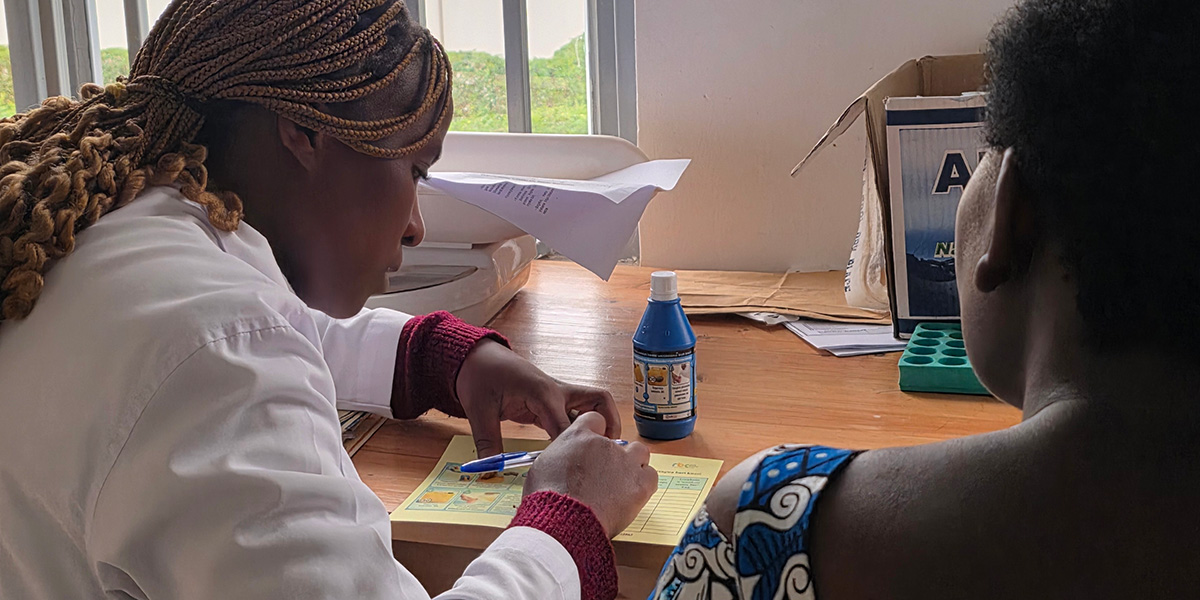
Integrating subsidies for water treatment into Rwanda’s maternal and child health services
Rwanda’s Ministry of Health, with the technical support of J‑PAL Africa, has launched a pilot program that will provide free, easy-to-use chlorine water treatment to households through maternal and child health services.
Work with us
We are actively seeking partnerships with:
- Ministries of health, water, and child welfare
- Implementing partners operating in WASH and health delivery
- Donors interested in scaling cost-effective service delivery
- Researchers exploring program design and evaluation
SASWA is especially relevant in contexts where:
- Diarrheal disease is a major cause of under-five mortality
- Health systems already deliver maternal and child health services
- Governments are seeking affordable, near-term solutions to improve water safety
The SASWA team
The SASWA team is led by a multidisciplinary team based in Tanzania, Kenya, South Africa, and Guinea:
- Nana Touré-Teillard: SASWA Lead
- Bonnyface Ndung'u: Policy Manager
- Karis Neufeld: Policy Manager
- Julia Kaufman: Policy Manager
- Jean Marie Blaise Migabo: Senior Policy Associate
Scientific Advisors
This team is supported by Pascaline Dupas (Princeton University, Economics & School of Public and International Affairs) and Elisa Maffioli (University of Michigan, School of Public Health), who serve as the portfolio’s Co-Scientific Advisors and provide strategic and technical guidance across our work.
Get in touch!
To learn more about SASWA, please contact us at [email protected].