J-PAL J-PAL
The Abdul Latif Jameel Poverty Action Lab
  • About
    • Overview
    • People
    • Strengthening Our Work
    • Code of Conduct
    • Initiatives
    • Events
    • Blog
    • News
    • Press Room
  • Offices
    • Overview
    • Global
    • Africa
    • Europe
    • Latin America and the Caribbean
    • Middle East and North Africa
    • North America
    • South Asia
    • Southeast Asia
  • Sectors
    • Overview
    • Agriculture
    • Crime, Violence, and Conflict
    • Education
    • Environment, Energy, and Climate Change
    • Finance
    • Firms
    • Gender
    • Health
    • Labor Markets
    • Political Economy and Governance
    • Social Protection
  • Evaluations
  • Research Resources
    • About Us
    • Our Work
    • Join ASPIRE
    • Newsroom
  • Policy Insights
  • Evidence to Policy
    • Pathways and Case Studies
    • The Evidence Effect
  • Blog
  • Careers
  • Courses
  • For Affiliates
  • Support J-PAL

Utility menu

  • Blog
  • Careers
  • Courses
  • For Affiliates
  • Support J-PAL

Quick links

  • Evaluations
  • Research Resources
  • Policy Insights
  • Evidence to Policy
    • Pathways and Case Studies
    • The Evidence Effect
  • About

    The Abdul Latif Jameel Poverty Action Lab (J-PAL) is a global research center working to reduce poverty by ensuring that policy is informed by scientific evidence. Anchored by a network of more than 1,100 researchers at universities around the world, J-PAL conducts randomized impact evaluations to answer critical questions in the fight against poverty.

    • Overview

      The Abdul Latif Jameel Poverty Action Lab (J-PAL) is a global research center working to reduce poverty by ensuring that policy is informed by scientific evidence. Anchored by a network of more than 1,100 researchers at universities around the world, J-PAL conducts randomized impact evaluations to answer critical questions in the fight against poverty.

      • Affiliated Professors

        Our affiliated professors are based at over 130 universities and conduct randomized evaluations around the world to design, evaluate, and improve programs and policies aimed at reducing poverty. They set their own research agendas, raise funds to support their evaluations, and work with J-PAL staff on research, policy outreach, and training.

      • Invited Researchers
      • J-PAL Scholars
      • Board
        Our Board of Directors, which is composed of J-PAL affiliated professors and senior management, provides overall strategic guidance to J-PAL, our sector programs, and regional offices.
      • Staff
    • Strengthening Our Work

      Our research, policy, and training work is fundamentally better when it is informed by a broad range of perspectives.

    • Code of Conduct
    • Initiatives
      J-PAL initiatives concentrate funding and other resources around priority topics for which rigorous policy-relevant research is urgently needed.
    • Events
      We host events around the world and online to share results and policy lessons from randomized evaluations, to build new partnerships between researchers and practitioners, and to train organizations on how to design and conduct randomized evaluations, and use evidence from impact evaluations.
    • Blog
      News, ideas, and analysis from J-PAL staff and affiliated professors.
    • News
      Browse news articles about J-PAL and our affiliated professors, read our press releases and monthly global and research newsletters, and connect with us for media inquiries.
    • Press Room
      Based at leading universities around the world, our experts are economists who use randomized evaluations to answer critical questions in the fight against poverty. Connect with us for all media inquiries and we'll help you find the right person to shed insight on your story.
  • Offices
    J-PAL is based at MIT in Cambridge, MA and has seven regional offices at leading universities in Africa, Europe, Latin America and the Caribbean, Middle East and North Africa, North America, South Asia, and Southeast Asia.
    • Overview
      J-PAL is based at MIT in Cambridge, MA and has seven regional offices at leading universities in Africa, Europe, Latin America and the Caribbean, Middle East and North Africa, North America, South Asia, and Southeast Asia.
    • Global
      Our global office is based at the Department of Economics at the Massachusetts Institute of Technology. It serves as the head office for our network of seven independent regional offices.
    • Africa
    • Europe
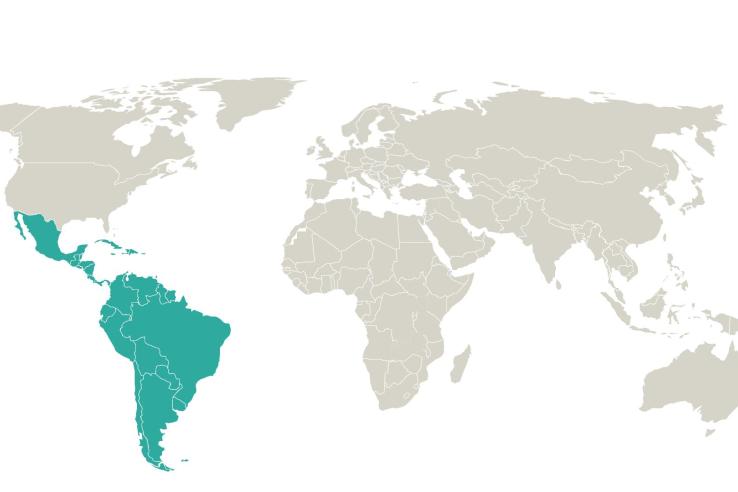
    • Latin America and the Caribbean
    • Middle East and North Africa
      J-PAL MENA is based at the American University in Cairo, Egypt.
    • North America
    • South Asia
    • Southeast Asia
      J-PAL Southeast Asia is based at the Faculty of Economics and Business at the University of Indonesia (FEB UI).
  • Sectors
    Led by affiliated professors, J-PAL sectors guide our research and policy work by conducting literature reviews; by managing research initiatives that promote the rigorous evaluation of innovative interventions by affiliates; and by summarizing findings and lessons from randomized evaluations and producing cost-effectiveness analyses to help inform relevant policy debates.
    • Overview
      Led by affiliated professors, J-PAL sectors guide our research and policy work by conducting literature reviews; by managing research initiatives that promote the rigorous evaluation of innovative interventions by affiliates; and by summarizing findings and lessons from randomized evaluations and producing cost-effectiveness analyses to help inform relevant policy debates.
    • Agriculture
      How can we encourage small farmers to adopt proven agricultural practices and improve their yields and profitability?
    • Crime, Violence, and Conflict
      What are the causes and consequences of crime, violence, and conflict and how can policy responses improve outcomes for those affected?
    • Education
      How can students receive high-quality schooling that will help them, their families, and their communities truly realize the promise of education?
    • Environment, Energy, and Climate Change
      How can we increase access to energy, reduce pollution, and mitigate and build resilience to climate change?
    • Finance
      How can financial products and services be more affordable, appropriate, and accessible to underserved households and businesses?
    • Firms
      How do policies affecting private sector firms impact productivity gaps between higher-income and lower-income countries? How do firms’ own policies impact economic growth and worker welfare?
    • Gender
      How can we reduce gender inequality and ensure that social programs are sensitive to existing gender dynamics?
    • Health
      How can we increase access to and delivery of quality health care services and effectively promote healthy behaviors?
    • Labor Markets
      How can we help people find and keep work, particularly young people entering the workforce?
    • Political Economy and Governance
      What are the causes and consequences of poor governance and how can policy improve public service delivery?
    • Social Protection
      How can we identify effective policies and programs in low- and middle-income countries that provide financial assistance to low-income families, insuring against shocks and breaking poverty traps?
Displaying 6091 - 6105 of 8311
Malian Kwacha
Evaluation

Providing Free Bank Accounts in Chile, Malawi, and Uganda

Researchers partnered with banks in three countries to see if removing the costs to opening basic bank accounts would lead to more households opening and using bank accounts. Overall, use of the accounts was low across all three countries, and being offered a free, basic bank account had no impact on savings, expenditures, health, or education. These results suggest that policies focused only on expanding access to basic bank accounts that already exist in given location are unlikely to improve welfare, on average.
Semi-nomadic herders on horses herding sheep and goats in Mongolia, J-PAL SEA evaluation summary
Evaluation

Land Leases to Semi-Nomadic Herders in Peri-Urban Areas of Mongolia

Herders may change their herding practices to better sustain the land if they own rights to it, which could also translate into bigger and healthier animals, and more income for the herders. In this study, carried out near two cities in Mongolia, researchers evaluated the impact of private property rights on land use and herder income.
Children in a classroom in Indonesia.
Evaluation

The Medium-Term Impact of Conditional Cash Transfers on Health and Education in Indonesia

Researchers examined the medium-term impacts of a large-scale CCT program on health, education, and economic outcomes in Indonesia. Six years following the introduction of cash transfers, the program resulted in reductions in stunting, increased rates of childbirth in the presence of trained birth attendants, and increased school enrollment.
Women working in factory.
Evaluation

Improving Productivity Through Soft Skills Training for Female Workers in the Ready-made Garment Industry in India

Researchers found that, for female sewing workers in the largest private garment exporter in India, participating in a training program improved their soft skills and productivity and the firm experienced high financial returns.
Evaluation

Information to Increase Fuel Efficient Car Purchases in the United States

Researchers studied the impact of providing information about fuel costs on consumers’ car purchases. Providing information about fuel costs had no effect on the fuel efficiency of the vehicles consumers chose to buy.
Panel of five judges listens to woman testifying in front of small crowd
Evaluation

Strengthening Village Courts in Rural Bangladesh

The government of Bangladesh is trying to strengthen local justice systems in rural areas by establishing close-to-home, low-cost village courts that would deal with minor, non-criminal cases. Innovations for Poverty Action is working with researchers to evaluate the impact of a program to improve the village court system on access to and quality of justice for marginalized people, as well as socioeconomic and welfare outcomes.
Women working in Pakistan
Evaluation

Women’s Take-Up of Credit Versus Commitment Savings Products in Rural Pakistan

Saving money and borrowing money are often thought of as two very different financial behaviors. However, in many low- and middle-income countries people may use these products for the same reasons. The National Rural Support Programme in Pakistan and researchers randomly offered female microfinance customers a commitment savings product or a credit product three times over the course of three weeks to test how the design of the financial product impacted take-up. They found that many women had an interest in making a large lump-sum purchase or investment, but simultaneously struggled to save. More than half of women used both a savings product and a credit product over the course of the three weeks, suggesting the two are used interchangeably.
Evaluation

The Impact of Enhanced Business Training for High-Potential Entrepreneurs in Colombia

Small and medium enterprises are thought to be an important source of innovation and employment in developing countries, but entrepreneurs face a number of barriers to expanding their businesses. In Colombia, researchers are examining the impact of a combination of training, mentorship, and networking interventions on business outcomes.
Two students walking: one's jacket reads 'Peking U"
Evaluation

Non-Coercive Mobilization in State-Controlled Elections in China

Person looks at resume during job interview.
Evaluation

Dependence Duration and Labor Market Conditions: Evidence from the United States

Researchers conducted a randomized evaluation to assess the role of employer behavior in generating "negative duration dependence"—the adverse effect of longer unemployment spells—by sending fictitious resumes to real job postings in 100 U.S. cities. Callback rates declined sharply over the first eight months of unemployment, especially in tighter labor markets. The findings are most relevant to young, inexperienced job seekers and may not generalize to older workers.
Young girl in pink jacket and hat outside in rural Peru
Evaluation

Changing Pedagogy to Improve Math Skills in Preschools in Peru

In Peru, researchers evaluated the impact of a tailored inquiry- and problem-based learning approach on preschoolers’ performance in math. The program improved overall mathematics outcomes, which persisted for some content areas even one year after the program ended.
Dark-haired woman poll worker explains to voter on party affiliation and how to register to vote
Evaluation

Understanding the Connection Between Party Affiliation, Partisanship, and Political Beliefs in the United States

Researchers from Yale University conducted a randomized evaluation to examine the effects of political party identification on political attitudes and opinions. Participants in the study who received a printed letter indicating that they must register with a political party to vote in an upcoming election were more likely to affiliate with a party, change their views on political issues, and change their voting behavior.
Evaluation

Spanish-language Radio Advertisements and Latinx Voter Turnout in the 2006 Congressional Elections

Researchers tested the impact of non-partisan Spanish-language radio campaigns on Latinx voter turnout in the November 2006 congressional elections. These radio advertisements significantly increased Latinx voting rates.
At a community center, a man feeds a piece of paper into a machine while a volunteer observes.
Evaluation

Publicizing Tax Credits for Political Contributions in the United States

In Ohio, researchers tested the effect of an informational mailing on the number of tax filers claiming the political contribution tax credit. They found that the campaign generated a moderate increase in the number of individuals claiming the credit, but at a cost of over US$2000 per filer.
A person logging into Facebook online on their laptop device in the United States
Evaluation

Do Online Advertisements Increase Name Recognition or Favorability of Political Candidates in the United States?

In order to assess the effects of online advertising, researchers evaluated the impact of a high volume of Facebook advertising on name recognition and favorability of political candidates. E xposure to Facebook ads did not increase recognition of a candidate’s name or increase positive assessments of the candidate.

Pagination

  • First page « First
  • Previous page ‹
  • …
  • Page 405
  • Page 406
  • Current page 407
  • Page 408
  • Page 409
  • …
  • Next page ›
  • Last page Last »
J-PAL

J-PAL

400 Main Street

E19-201

Cambridge, MA 02142

USA

Contact

+1 617 324 6566

[email protected]


Press Room

Stay Informed

Receive our newsletters

Subscribe


Privacy Policy

Accessibility

MIT