

J-PAL J-PAL
The Abdul Latif Jameel Poverty Action Lab
  • About
    • Overview
    • People
      • Affiliated Professors
      • Invited Researchers
      • J-PAL Scholars
      • Board
      • Leadership
      • Staff
    • Strengthening Our Work
    • Code of Conduct
    • Initiatives
    • Events
    • Blog
    • News
    • Press Room
  • Offices
    • Overview
    • Global
    • Africa
    • Europe
    • Latin America and the Caribbean
    • Middle East and North Africa
    • North America
    • South Asia
    • Southeast Asia
  • Sectors
    • Overview
    • Agriculture
    • Crime, Violence, and Conflict
    • Education
    • Environment, Energy, and Climate Change
    • Finance
    • Firms
    • Gender
    • Health
    • Labor Markets
    • Political Economy and Governance
    • Social Protection
  • Evaluations
  • Research Resources
    • About Us
    • Our Work
    • Join ASPIRE
    • Newsroom
  • Policy Insights
  • Evidence to Policy
    • Pathways and Case Studies
    • The Evidence Effect
  • Blog
  • Careers
  • Courses
  • For Affiliates
  • Support J-PAL

Utility menu

  • Blog
  • Careers
  • Courses
  • For Affiliates
  • Support J-PAL

Quick links

  • Evaluations
  • Research Resources
  • Policy Insights
  • Evidence to Policy
    • Pathways and Case Studies
    • The Evidence Effect
  • About

    The Abdul Latif Jameel Poverty Action Lab (J-PAL) is a global research center working to reduce poverty by ensuring that policy is informed by scientific evidence. Anchored by a network of more than 1,100 researchers at universities around the world, J-PAL conducts randomized impact evaluations to answer critical questions in the fight against poverty.

    • Overview

      The Abdul Latif Jameel Poverty Action Lab (J-PAL) is a global research center working to reduce poverty by ensuring that policy is informed by scientific evidence. Anchored by a network of more than 1,100 researchers at universities around the world, J-PAL conducts randomized impact evaluations to answer critical questions in the fight against poverty.

      • Affiliated Professors

        Our affiliated professors are based at over 130 universities and conduct randomized evaluations around the world to design, evaluate, and improve programs and policies aimed at reducing poverty. They set their own research agendas, raise funds to support their evaluations, and work with J-PAL staff on research, policy outreach, and training.

      • Invited Researchers
      • J-PAL Scholars
      • Board
        Our Board of Directors, which is composed of J-PAL affiliated professors and senior management, provides overall strategic guidance to J-PAL, our sector programs, and regional offices.
      • Leadership
      • Staff
    • Strengthening Our Work

      Our research, policy, and training work is fundamentally better when it is informed by a broad range of perspectives.

    • Code of Conduct
    • Initiatives
      J-PAL initiatives concentrate funding and other resources around priority topics for which rigorous policy-relevant research is urgently needed.
    • Events
      We host events around the world and online to share results and policy lessons from randomized evaluations, to build new partnerships between researchers and practitioners, and to train organizations on how to design and conduct randomized evaluations, and use evidence from impact evaluations.
    • Blog
      News, ideas, and analysis from J-PAL staff and affiliated professors.
    • News
      Browse news articles about J-PAL and our affiliated professors, read our press releases and monthly global and research newsletters, and connect with us for media inquiries.
    • Press Room
      Based at leading universities around the world, our experts are economists who use randomized evaluations to answer critical questions in the fight against poverty. Connect with us for all media inquiries and we'll help you find the right person to shed insight on your story.
  • Offices
    J-PAL is based at MIT in Cambridge, MA and has seven regional offices at leading universities in Africa, Europe, Latin America and the Caribbean, Middle East and North Africa, North America, South Asia, and Southeast Asia.
    • Overview
      J-PAL is based at MIT in Cambridge, MA and has seven regional offices at leading universities in Africa, Europe, Latin America and the Caribbean, Middle East and North Africa, North America, South Asia, and Southeast Asia.
    • Global
      Our global office is based at the Department of Economics at the Massachusetts Institute of Technology. It serves as the head office for our network of seven independent regional offices.
    • Africa
    • Europe
    • Latin America and the Caribbean
    • Middle East and North Africa
    • North America
    • South Asia
    • Southeast Asia
  • Sectors
    Led by affiliated professors, J-PAL sectors guide our research and policy work by conducting literature reviews; by managing research initiatives that promote the rigorous evaluation of innovative interventions by affiliates; and by summarizing findings and lessons from randomized evaluations and producing cost-effectiveness analyses to help inform relevant policy debates.
    • Overview
      Led by affiliated professors, J-PAL sectors guide our research and policy work by conducting literature reviews; by managing research initiatives that promote the rigorous evaluation of innovative interventions by affiliates; and by summarizing findings and lessons from randomized evaluations and producing cost-effectiveness analyses to help inform relevant policy debates.
    • Agriculture
      How can we encourage small farmers to adopt proven agricultural practices and improve their yields and profitability?
    • Crime, Violence, and Conflict
      What are the causes and consequences of crime, violence, and conflict and how can policy responses improve outcomes for those affected?
    • Education
      How can students receive high-quality schooling that will help them, their families, and their communities truly realize the promise of education?
    • Environment, Energy, and Climate Change
      How can we increase access to energy, reduce pollution, and mitigate and build resilience to climate change?
    • Finance
      How can financial products and services be more affordable, appropriate, and accessible to underserved households and businesses?
    • Firms
      How do policies affecting private sector firms impact productivity gaps between higher-income and lower-income countries? How do firms’ own policies impact economic growth and worker welfare?
    • Gender
      How can we reduce gender inequality and ensure that social programs are sensitive to existing gender dynamics?
    • Health
      How can we increase access to and delivery of quality health care services and effectively promote healthy behaviors?
    • Labor Markets
      How can we help people find and keep work, particularly young people entering the workforce?
    • Political Economy and Governance
      What are the causes and consequences of poor governance and how can policy improve public service delivery?
    • Social Protection
      How can we identify effective policies and programs in low- and middle-income countries that provide financial assistance to low-income families, insuring against shocks and breaking poverty traps?
Displaying 8236 - 8250 of 8538
Person

W. Violette Russ

Person

Laure Lepine

Laure Lépine is a Research Associate at the Morocco Innovation and Evaluation Lab (MEL), where she supports the design, implementation, and analysis of research projects aimed at enhancing evidence-based policymaking in Morocco, particularly within the education sector.
Person

Maxfield Hubych

Person

Maha Rageh

Person

Nadeen ElAshmawy

Nadeen ElAshmawy is a Senior Policy Associate at J-PAL Middle East and North Africa where she works on policy analysis and outreach related to translating J-PAL MENA’s research into policy lessons and promoting evidence-informed policymaking in the region.
Person

Nadine Wael

Research Resource
File: Research resource

Reviewing the Impact and Cost-Effectiveness for Local Climate Action within the United States: A Literature Review
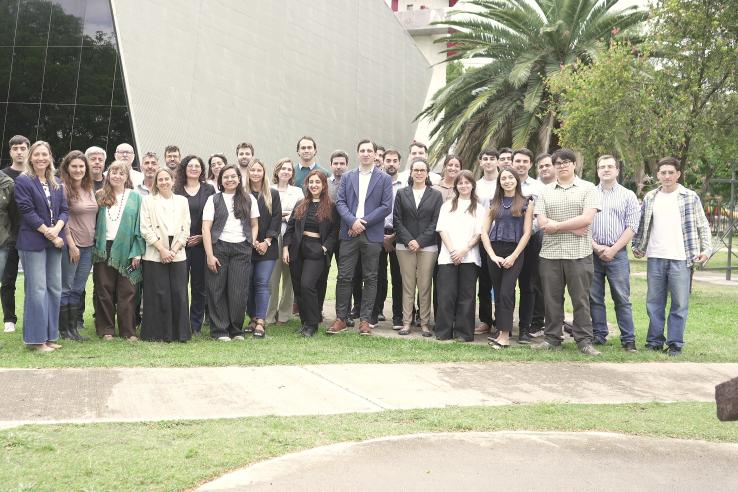
A group of J-PAL LAC staff and trainees pose in a group on grass
Blog

J-PAL LAC’s government partnerships: Córdoba and the path toward a culture of evidence use

Integrating evidence into public sector decision-making is a practical challenge. It requires technical capacity, usable data, and management routines that make it possible to prioritize, learn, and adjust policies in a sustained way. In this context, the Ministry of Economy and Public Management of...
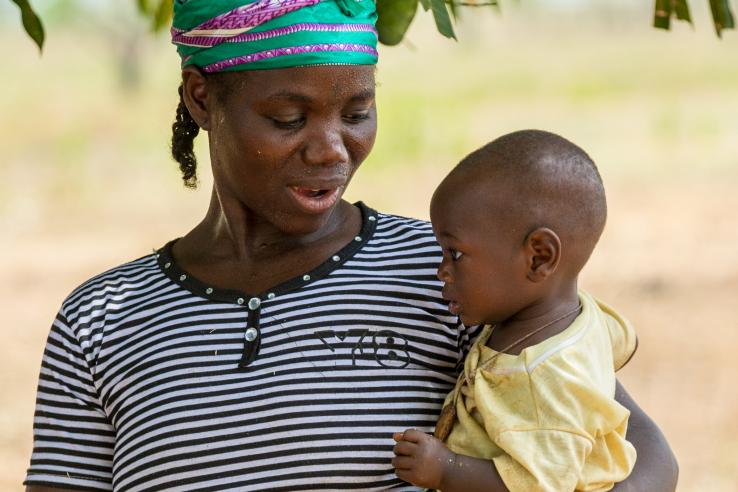
Mother talking to infant
Evaluation

Encouraging Mothers to Practice Speaking with Their Babies in Ghana

In Northern Ghana, researchers tested whether providing information could encourage mothers to talk more with their infants, thereby improving child development. Six to eight months after the intervention, mothers who received the information reported they were more likely to talk to their infants and that their children showed stronger language and communication skills.
Resource
Basic page

RMS Testimonials

J-PAL North America provides strategic and customized Research Management Support (RMS) to researchers in the J-PAL network to navigate early-stage complexities in the design and implementation of randomized evaluations.

Young child gets vaccinated for influenza
Update
J-PAL Updates

February 2026 North America Newsletter

J-PAL North America's February newsletter features a new affiliate spotlight on Jacob Wallace and new research results in influenza vaccination take up. We also highlight an upcoming Climate Action webinar and recently published Climate Action Evidence Review.

A worker in a hard hat and yellow vest observes heat pumps on the rooftop of a building with solar paneling on a roof in the background.
Policy Publication
File: Policy publication

Reviewing the Impact and Cost-Effectiveness for Local Climate Action within the United States: A Literature Review

This literature review, developed by researchers in the J-PAL network, is a comprehensive resource that synthesizes the results of 161 rigorous evaluations of climate actions conducted in high-income countries after 2000. The review categorizes climate actions into five main areas: Energy...

government building
Initiative

US State and Local Innovation Initiative (SLII)

The J-PAL State and Local Innovation Initiative supports US state and local leaders in building a culture of evidence generation and use.
Initiative Resource
Initiative projects and documents

Leveraging Evaluation and Evidence for Equitable Recovery (LEVER) Evaluation Incubator

Resource
Basic page

J-PAL Scholars and Fellows

J-PAL is invested in creating more opportunities to diversify and expand our worldwide research network. The J-PAL Scholars and Fellows programs enable researchers from low- and middle-income countries to drive the research agenda in their regions through the use of randomized evaluations.

Pagination

  • First page « First
  • Previous page ‹
  • …
  • Page 548
  • Page 549
  • Current page 550
  • Page 551
  • Page 552
  • …
  • Next page ›
  • Last page Last »
J-PAL

J-PAL

400 Main Street

E19-201

Cambridge, MA 02142

USA

Contact

+1 617 324 6566

[email protected]


Press Room

Stay Informed

Receive our newsletters

Subscribe


Privacy Policy

Accessibility

MIT