J-PAL J-PAL
The Abdul Latif Jameel Poverty Action Lab
  • About
    • Overview
    • People
      • Affiliated Professors
      • Invited Researchers
      • J-PAL Scholars
      • Board
      • Leadership
      • Staff
    • Strengthening Our Work
    • Code of Conduct
    • Initiatives
    • Events
    • Blog
    • News
    • Press Room
  • Offices
    • Overview
    • Global
    • Africa
    • Europe
    • Latin America and the Caribbean
    • Middle East and North Africa
    • North America
    • South Asia
    • Southeast Asia
  • Sectors
    • Overview
    • Agriculture
    • Crime, Violence, and Conflict
    • Education
    • Environment, Energy, and Climate Change
    • Finance
    • Firms
    • Gender
    • Health
    • Labor Markets
    • Political Economy and Governance
    • Social Protection
  • Evaluations
  • Research Resources
    • About Us
    • Our Work
    • Join ASPIRE
    • Newsroom
  • Policy Insights
  • Evidence to Policy
    • Pathways and Case Studies
    • The Evidence Effect
  • Blog
  • Careers
  • Courses
  • For Affiliates
  • Support J-PAL

Utility menu

  • Blog
  • Careers
  • Courses
  • For Affiliates
  • Support J-PAL

Quick links

  • Evaluations
  • Research Resources
  • Policy Insights
  • Evidence to Policy
    • Pathways and Case Studies
    • The Evidence Effect
  • About

    The Abdul Latif Jameel Poverty Action Lab (J-PAL) is a global research center working to reduce poverty by ensuring that policy is informed by scientific evidence. Anchored by a network of more than 1,100 researchers at universities around the world, J-PAL conducts randomized impact evaluations to answer critical questions in the fight against poverty.

    • Overview

      The Abdul Latif Jameel Poverty Action Lab (J-PAL) is a global research center working to reduce poverty by ensuring that policy is informed by scientific evidence. Anchored by a network of more than 1,100 researchers at universities around the world, J-PAL conducts randomized impact evaluations to answer critical questions in the fight against poverty.

      • Affiliated Professors

        Our affiliated professors are based at over 130 universities and conduct randomized evaluations around the world to design, evaluate, and improve programs and policies aimed at reducing poverty. They set their own research agendas, raise funds to support their evaluations, and work with J-PAL staff on research, policy outreach, and training.

      • Invited Researchers
      • J-PAL Scholars
      • Board
        Our Board of Directors, which is composed of J-PAL affiliated professors and senior management, provides overall strategic guidance to J-PAL, our sector programs, and regional offices.
      • Leadership
      • Staff
    • Strengthening Our Work

      Our research, policy, and training work is fundamentally better when it is informed by a broad range of perspectives.

    • Code of Conduct
    • Initiatives
      J-PAL initiatives concentrate funding and other resources around priority topics for which rigorous policy-relevant research is urgently needed.
    • Events
      We host events around the world and online to share results and policy lessons from randomized evaluations, to build new partnerships between researchers and practitioners, and to train organizations on how to design and conduct randomized evaluations, and use evidence from impact evaluations.
    • Blog
      News, ideas, and analysis from J-PAL staff and affiliated professors.
    • News
      Browse news articles about J-PAL and our affiliated professors, read our press releases and monthly global and research newsletters, and connect with us for media inquiries.
    • Press Room
      Based at leading universities around the world, our experts are economists who use randomized evaluations to answer critical questions in the fight against poverty. Connect with us for all media inquiries and we'll help you find the right person to shed insight on your story.
  • Offices
    J-PAL is based at MIT in Cambridge, MA and has seven regional offices at leading universities in Africa, Europe, Latin America and the Caribbean, Middle East and North Africa, North America, South Asia, and Southeast Asia.
    • Overview
      J-PAL is based at MIT in Cambridge, MA and has seven regional offices at leading universities in Africa, Europe, Latin America and the Caribbean, Middle East and North Africa, North America, South Asia, and Southeast Asia.
    • Global
      Our global office is based at the Department of Economics at the Massachusetts Institute of Technology. It serves as the head office for our network of seven independent regional offices.
    • Africa
    • Europe
    • Latin America and the Caribbean
    • Middle East and North Africa
    • North America
    • South Asia
    • Southeast Asia
  • Sectors
    Led by affiliated professors, J-PAL sectors guide our research and policy work by conducting literature reviews; by managing research initiatives that promote the rigorous evaluation of innovative interventions by affiliates; and by summarizing findings and lessons from randomized evaluations and producing cost-effectiveness analyses to help inform relevant policy debates.
    • Overview
      Led by affiliated professors, J-PAL sectors guide our research and policy work by conducting literature reviews; by managing research initiatives that promote the rigorous evaluation of innovative interventions by affiliates; and by summarizing findings and lessons from randomized evaluations and producing cost-effectiveness analyses to help inform relevant policy debates.
    • Agriculture
      How can we encourage small farmers to adopt proven agricultural practices and improve their yields and profitability?
    • Crime, Violence, and Conflict
      What are the causes and consequences of crime, violence, and conflict and how can policy responses improve outcomes for those affected?
    • Education
      How can students receive high-quality schooling that will help them, their families, and their communities truly realize the promise of education?
    • Environment, Energy, and Climate Change
      How can we increase access to energy, reduce pollution, and mitigate and build resilience to climate change?
    • Finance
      How can financial products and services be more affordable, appropriate, and accessible to underserved households and businesses?
    • Firms
      How do policies affecting private sector firms impact productivity gaps between higher-income and lower-income countries? How do firms’ own policies impact economic growth and worker welfare?
    • Gender
      How can we reduce gender inequality and ensure that social programs are sensitive to existing gender dynamics?
    • Health
      How can we increase access to and delivery of quality health care services and effectively promote healthy behaviors?
    • Labor Markets
      How can we help people find and keep work, particularly young people entering the workforce?
    • Political Economy and Governance
      What are the causes and consequences of poor governance and how can policy improve public service delivery?
    • Social Protection
      How can we identify effective policies and programs in low- and middle-income countries that provide financial assistance to low-income families, insuring against shocks and breaking poverty traps?
Displaying 8371 - 8385 of 8538
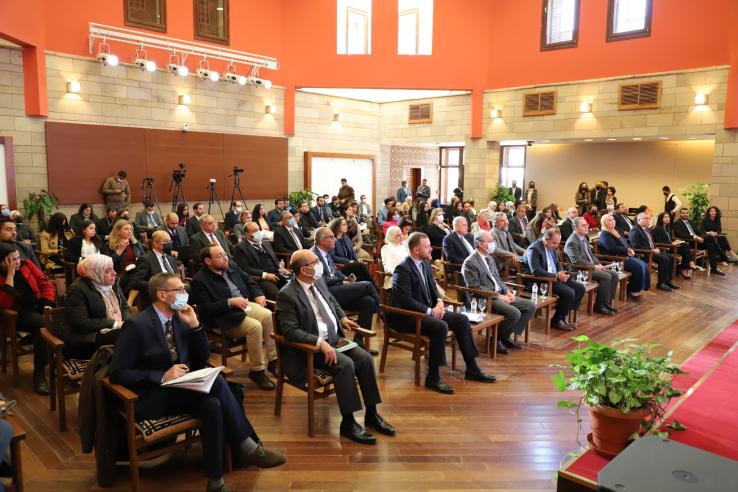
Attendees at Egypt Impact Lab event
Resource
Layout Page

Egypt Impact Lab: Events

In line with EIL’s commitment to advancing evidence-informed policymaking, capacity-building and evidence dissemination efforts have engaged government agencies, development partners, private sector actors, and academic institutions. These efforts aim to foster policy dialogue, strengthen local...

Two men in boat in river
Resource
Layout Page

Egypt Impact Lab: Our Work

Explore how the Egypt Impact Lab drives data-informed development by generating evidence, building government capacity, and strengthening Egypt’s knowledge ecosystem.
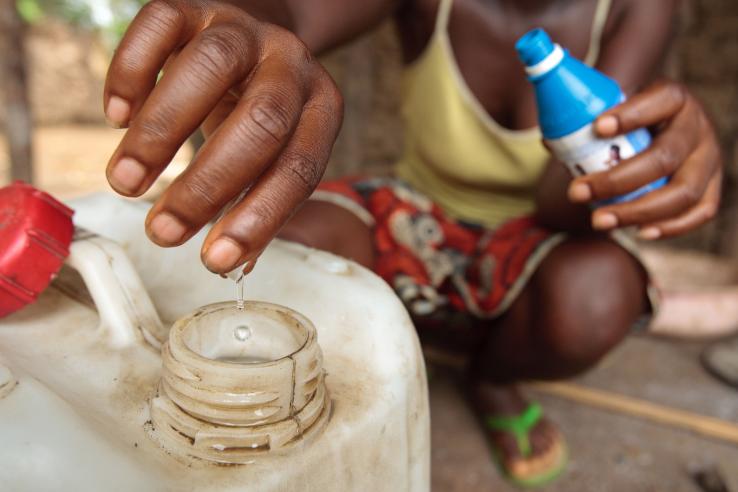
A woman uses a chlorine water treatment product to treat drinking water at home in the village of Kawejah, Grand Cape Mount county, Liberia on Friday April 6, 2012.
Resource
Layout Page

J-PAL Africa: Scaling Access to Safe Water in Africa (SASWA)

A J-PAL Africa portfolio advancing evidence-based solutions to expand access to safe drinking water.
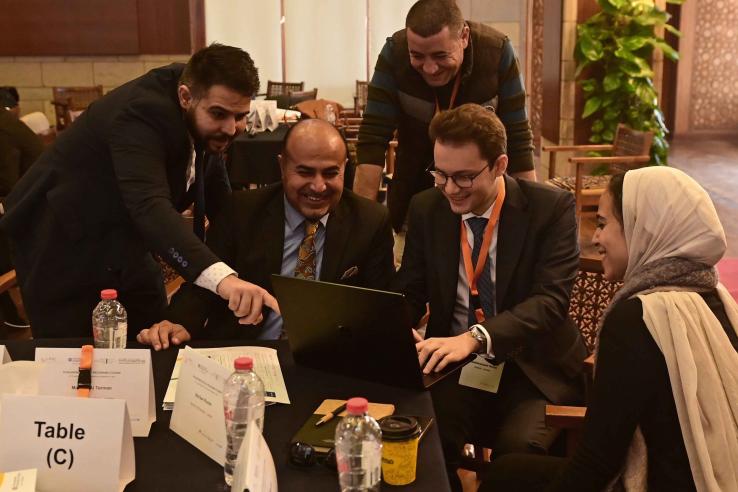
Students smiling while gathered around a laptop during a training
Resource
Layout Page

J-PAL MENA: Scholars Fellowship

The MENA Scholars Fellowship creates a pathway for MENA region-based researchers to build skills and experience to design and conduct randomized evaluations of poverty reduction and social development policies and programs.
Student with headphones looking at a tablet
Resource
Layout Page

J-PAL Africa: Education and Gender Portfolio

J-PAL Africa’s Education and Gender Portfolio works to strengthen education systems across sub-Saharan Africa by ensuring that policy and practice are grounded in rigorous evidence. We focus on advancing learning for students, with a strong emphasis on gender equity in education and girls...
ESP Group Work
Resource
Layout Page

J-PAL MENA: Training Researchers, Policymakers, and Practitioners

We work to foster an environment of evidence-informed decision-making throughout the region by training implementers and policymakers on how to become better producers and users of evidence from impact evaluations. Learn more about offerings and explore past events below.
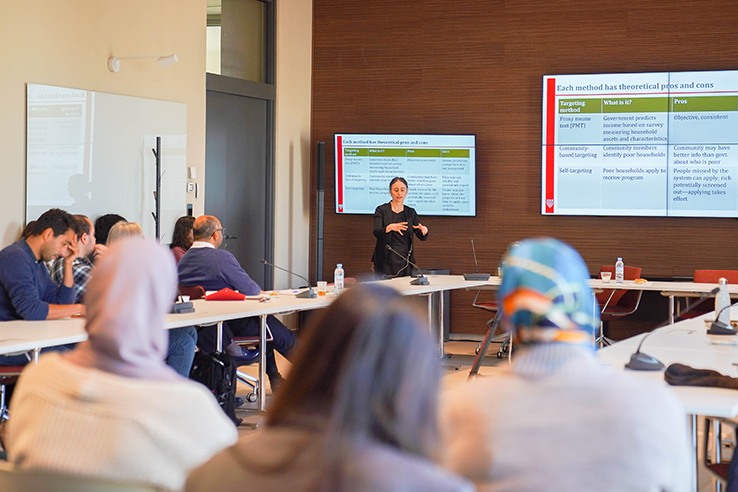
Rema Hanna teaching to a classroom
Resource
Layout Page

J-PAL MENA: Morocco Innovation and Evaluation Lab

The Morocco Innovation and Evaluation Lab aims to foster development in Morocco by ensuring that policy is informed by rigorous scientific evidence and research is translated into action.
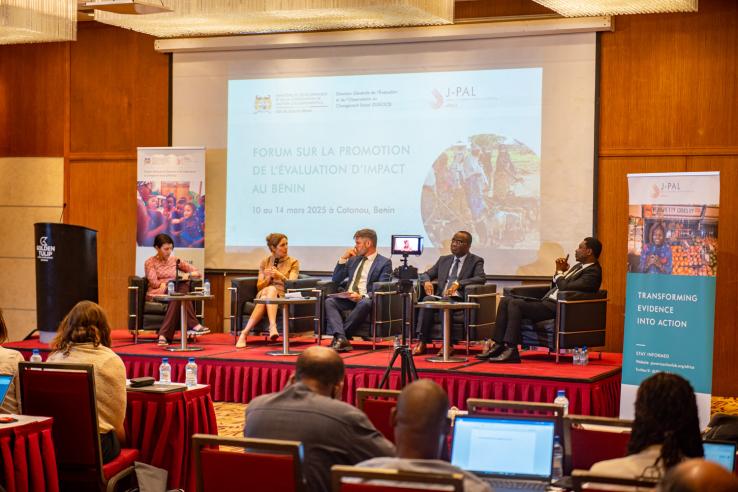
panel discussion, Benin Evidence Forum
Resource
Layout Page

J-PAL Africa: Partnership with the Government of Benin to Strengthen Evidence-Informed Policymaking

In March 2025, J-PAL Africa and the Ministry of Development and Coordination of Government Action (MDC) launched a multi-year partnership to support the generation and use of evidence in public policy across Benin. The collaboration builds on the country’s growing commitment to evidence-informed...
Textile industry employer and employees looking at laptop having a production meeting
Resource
Layout Page

J-PAL Africa: Jobs and Entrepreneurship in Africa Portfolio

Africa will experience transformative population growth from approximately 1.4 billion today to 3.3 billion in 2075. Job creation and access to decent work pose immense challenges. Currently, 85 percent of employment in sub-Saharan Africa is informal, and 82 percent of tertiary educated young...
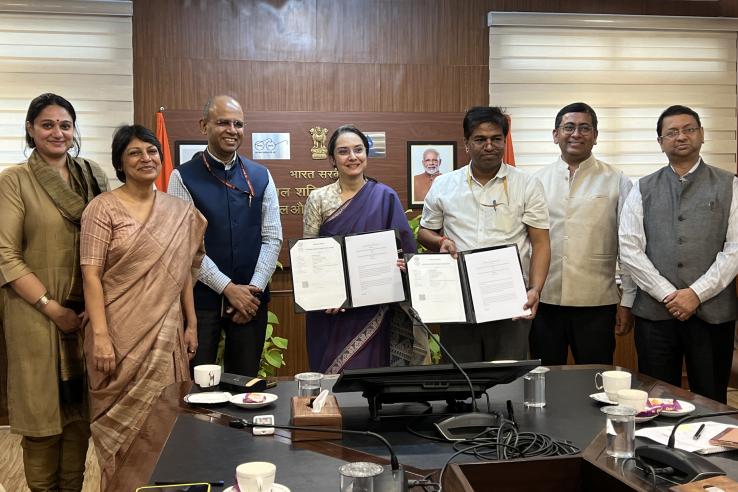
Officials from the Department of Drinking Water and Sanitation and J-PAL South Asia sign a partnership agreement to improve clean water access in India.
Resource
Layout Page

J-PAL South Asia - Our partners

At J-PAL South Asia, our partnerships with governments, civil society organizations, and philanthropic foundations form the backbone of our mission to turn evidence into action. Together, we test ideas, inform policy, and strengthen systems that improve lives on a large scale.
A man installs a solar panel on a rooftop on a sunny day.
Resource
Layout Page

J-PAL North America - Evidence for Climate Action Project

Through the Evidence for Climate Action Project, J-PAL North America aims to generate evidence to identify and advance equitable, high-impact policy solutions to climate change in the United States. J-PAL North America will convene an influential network of government leaders, academic researchers...
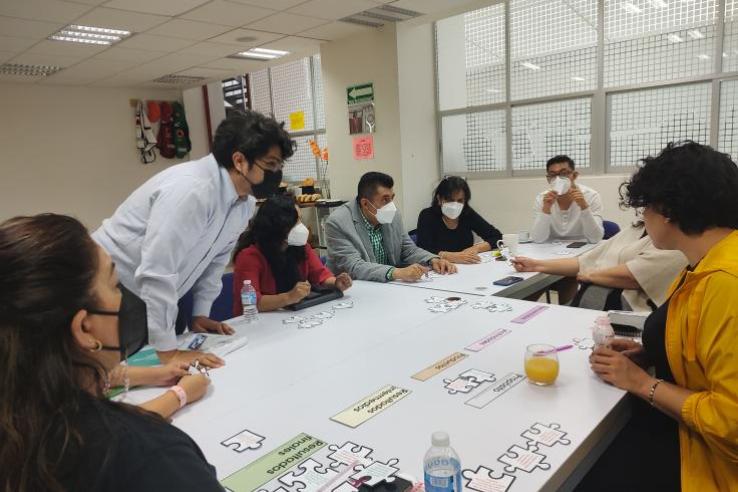
Training with public servants from the Women’s Secretariat from Mexico City
Resource
Layout Page

J-PAL LAC: Government Partnerships

Our work is made possible by the close collaboration with and dedication of many governments across the region. Together, we are driven by a shared belief in the power of scientific evidence to understand what is effective in the fight against poverty.
Two people's hands, those of an old lady and a child, plant a tree in the soil
Resource
Layout Page

J-PAL LAC: Adopting Payment For Ecosystem Services at Scale

Ecosystem services are the benefits humans derive from nature, essential for sustaining life and well-being on the planet. These services encompass a wide range of functions, including the provision of food, water, carbon, soil and temperature regulation. Additionally, ecosystems offer cultural...
Person

Esther Duflo

Esther Duflo is the Abdul Latif Jameel Professor of Poverty Alleviation and Development Economics in the Department of Economics at the Massachusetts Institute of Technology and a Co-Founder and Co-Director of the Abdul Latif Jameel Poverty Action Lab (J-PAL).
Police IECP
Initiative

Initiative for Effective US Crime Policy (IECP)

J-PAL North America’s Initiative for Effective US Crime Policy (IECP) supports randomized evaluations of strategies that foster a more effective and fair criminal legal system.

Pagination

  • First page « First
  • Previous page ‹
  • …
  • Page 557
  • Page 558
  • Current page 559
  • Page 560
  • Page 561
  • …
  • Next page ›
  • Last page Last »
J-PAL

J-PAL

400 Main Street

E19-201

Cambridge, MA 02142

USA

Contact

+1 617 324 6566

[email protected]


Press Room

Stay Informed

Receive our newsletters

Subscribe


Privacy Policy

Accessibility

MIT