

Displaying 8116 - 8130 of 8537

Evaluation
Improving Educational Outcomes through Online Tutoring during Schools Closures in Italy during the Covid-19 Outbreak
Researchers designed a free online tutoring program delivered by volunteer university students to test whether it could mitigate the effects of school closures during the COVID-19 outbreak. They found that the program had a positive outcome on students' learning outcomes, socio-emotional skills, and psychological well-being.

Evaluation
Improving Brick Manufacturing in Bangladesh to Promote Clean Air and Better Health
Researchers evaluated the impact of trainings for brick kiln owners and operators on air pollution, CO2 emissions, and kiln profitability.

Evaluation
Evaluating the Impact of Online Education in Russia
Researchers conducted a randomized evaluation to test the impact and cost-effectiveness of fully online and blended STEM classes in Russia on student test scores. Students in online and blended courses achieved similar scores to students in traditional in-person courses at a lower cost.

Evaluation
Preserving Peace in Rural Liberia through Alternative Dispute Resolution Trainings
In Liberia, researchers examined the short and long-term impacts of introducing alternative dispute resolution (ADR) trainings on the rate at which community members resolved property disputes and the incidence of violence related to those disputes. In the long-run, dispute resolutions became less violent in communities that received the ADR workshops, despite no reduction in the overall incidence of property disputes.

Evaluation
Impact of Recruiting Services on Firms' Job Postings and Hiring in France
Researchers in France studied whether government-provided recruiting services would impact firms’ job postings and hiring by lowering recruiting costs. The recruiting services decreased firms’ hiring costs and increased firms’ job postings and hiring, including much sought-after permanent-contract hires.

Evaluation
Increasing Tuberculosis Detection through Incentivized Peer Referrals in India
Researchers conducted a randomized evaluation to measure the impact of peer referrals by current patients on the screening and identification of tuberculosis cases in India. Peer referrals and outreach by current patients to identified peers were more effective than health-worker led contact-tracing, while combining these interventions with financial rewards was a cost-effective strategy to improve tuberculosis screening and detection.
Evaluation
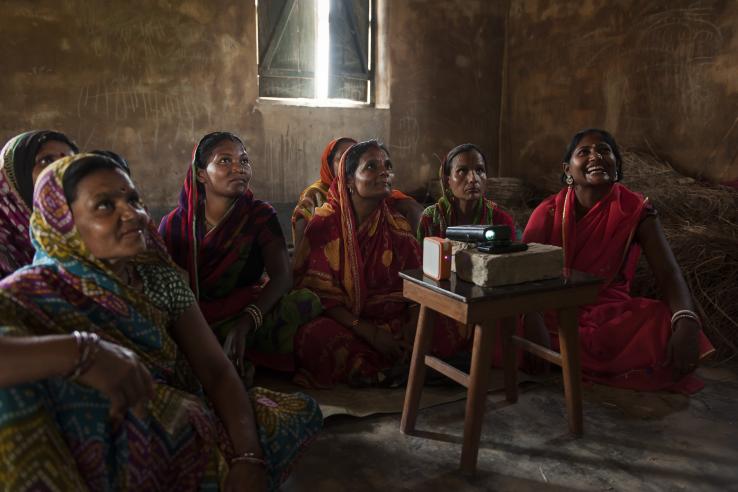
An Evaluation of Digital Green's Agricultural Extension Program in India
In partnership with Digital Green and Jeevika, researchers conducted a randomized evaluation in Bihar, India, to assess the impact of a video-based training on female farmers’ adoption of a climate-smart technique called System of Rice Intensification (SRI), and their yields and profits. Farmers increased their yields and estimated profits and the intervention demonstrated cost-effectiveness.

Evaluation
The Impact of Disbursing Microfinance Loans via Mobile Money Accounts in Uganda
Researchers conducted a randomized evaluation to test disbursing microfinance loans through digital accounts on business outcomes in Uganda. Women who received their loan through a digital account experienced higher business capital and profits compared to those who received their loans via cash.
Evaluation
The Role of Conditional Cash Transfers in Mitigating Income Shocks in Mexico
In rural Mexico, researchers examined whether conditional cash transfers (CCTs) protect families against income shocks and promote investment in children's education.

Evaluation
Using Technology to Promote Electoral Participation in South Africa
Researchers conducted a randomized evaluation of the VIP:Voice, a digital election participation platform, to measure the impact of information and communications technologies on individuals’ political participation. Via the platform, researchers interacted with nearly 100,000 citizens, recruited citizen monitors in 38 percent of the wards of South Africa and deployed 347 citizen monitors to polling places. However, around 50 percent of participants dropped out at each subsequent, and more time-intensive, form of engagement requested via the platform.

Evaluation
Effects of Replicating Charter Schools in Boston, Massachusetts
Researchers studied a policy reform in Boston, Massachusetts, that allowed effective charter schools to replicate their school models at new locations. Results showed that charter schools reproduced their effectiveness at new campuses by following similar sets of standardized protocols, demonstrating the feasibility of charter school replication.

Evaluation
The Effect of Referrals in an Online Labor Market
Workers without social connections may be disadvantaged in the labor market because employers favor applicants who have been referred. Researchers tested three interventions in an online labor market to investigate why employers are more likely to hire referred workers. First, referrals provide a signal that workers will perform well and have lower turnover. Referred workers outperformed and had lower churn than non-referred workers with the same observable characteristics. This is true even at companies to which they were not referred. Second, being referred makes workers more productive. Referred workers were particularly productive when they work with their referrers. However, workers’ concerns about their reputation with their referrer or their referrer’s position at the firm did not lead workers to exert more effort.

Evaluation
Connecting Egyptian Women to Gender-Based Violence Resources via Social Media during Covid-19
Researchers partnered with the Egyptian Center for Women’s Rights to evaluate the effect of educational social media and TV campaigns on women’s attitudes and behaviors around responding to GBV and IPV. The social media campaign increased women’s knowledge and use of resources, but had no impact on their underlying attitudes towards gender equality or gender-based violence.
Evaluation
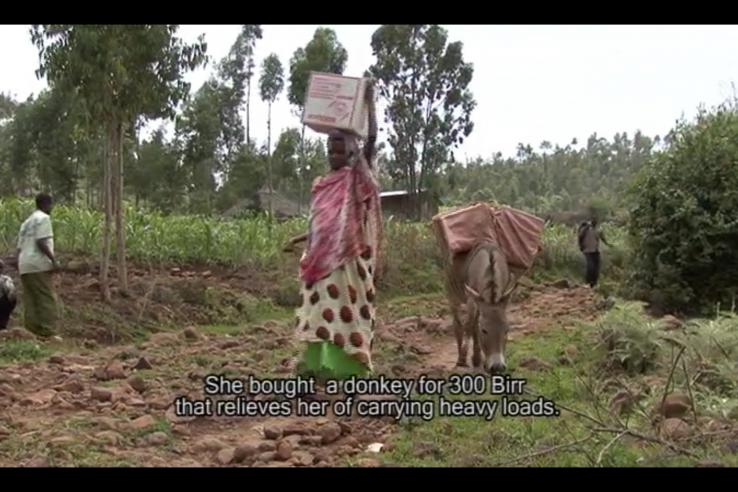
The Impact of Role Models on Parental Aspirations and Investments in Children's Education in Ethiopia
Researchers conducted a randomized evaluation to test whether exposing people to a documentary featuring potential role models impacted parents’ educational aspirations for their children or their actual investments in education, and if these impacts varied by gender. Exposing families to the documentary increased parental aspirations for educational attainment as well as investments in education, but it did not close the gender gap for either.

Evaluation
Information Campaigns to Increase Mobile Banking Adoption in Ghana
In Ghana, researchers worked with a bank that provides services to low-income customers with limited access to mainstream banking to evaluate the impact of sending pre-recorded informational voice calls and text messages on the adoption of mobile banking. Clients that received messages encouraging mobile banking were more likely to use mobile banking services and repay loans on time, while clients that received messages encouraging savings only had no measurable change in behavior.