J-PAL J-PAL
The Abdul Latif Jameel Poverty Action Lab
  • About
    • Overview
    • People
      • Affiliated Professors
      • Invited Researchers
      • J-PAL Scholars
      • Board
      • Leadership
      • Staff
    • Strengthening Our Work
    • Code of Conduct
    • Initiatives
    • Events
    • Blog
    • News
    • Press Room
  • Offices
    • Overview
    • Global
    • Africa
    • Europe
    • Latin America and the Caribbean
      • Growing Futures
    • Middle East and North Africa
    • North America
    • South Asia
    • Southeast Asia
  • Sectors
    • Overview
    • Agriculture
    • Crime, Violence, and Conflict
    • Education
    • Environment, Energy, and Climate Change
    • Finance
    • Firms
    • Gender
    • Health
    • Labor Markets
    • Political Economy and Governance
    • Social Protection
  • Evaluations
  • Research Resources
    • About Us
    • Our Work
    • Join ASPIRE
    • Newsroom
  • Policy Insights
  • Evidence to Policy
    • Pathways and Case Studies
    • The Evidence Effect
  • Blog
  • Careers
  • Courses
  • For Affiliates
  • Support J-PAL

Utility menu

  • Blog
  • Careers
  • Courses
  • For Affiliates
  • Support J-PAL

Quick links

  • Evaluations
  • Research Resources
  • Policy Insights
  • Evidence to Policy
    • Pathways and Case Studies
    • The Evidence Effect
  • About

    The Abdul Latif Jameel Poverty Action Lab (J-PAL) is a global research center working to reduce poverty by ensuring that policy is informed by scientific evidence. Anchored by a network of more than 1,100 researchers at universities around the world, J-PAL conducts randomized impact evaluations to answer critical questions in the fight against poverty.

    • Overview

      The Abdul Latif Jameel Poverty Action Lab (J-PAL) is a global research center working to reduce poverty by ensuring that policy is informed by scientific evidence. Anchored by a network of more than 1,100 researchers at universities around the world, J-PAL conducts randomized impact evaluations to answer critical questions in the fight against poverty.

      • Affiliated Professors

        Our affiliated professors are based at over 130 universities and conduct randomized evaluations around the world to design, evaluate, and improve programs and policies aimed at reducing poverty. They set their own research agendas, raise funds to support their evaluations, and work with J-PAL staff on research, policy outreach, and training.

      • Invited Researchers
      • J-PAL Scholars
      • Board
        Our Board of Directors, which is composed of J-PAL affiliated professors and senior management, provides overall strategic guidance to J-PAL, our sector programs, and regional offices.
      • Leadership
      • Staff
    • Strengthening Our Work

      Our research, policy, and training work is fundamentally better when it is informed by a broad range of perspectives.

    • Code of Conduct
    • Initiatives
      J-PAL initiatives concentrate funding and other resources around priority topics for which rigorous policy-relevant research is urgently needed.
    • Events
      We host events around the world and online to share results and policy lessons from randomized evaluations, to build new partnerships between researchers and practitioners, and to train organizations on how to design and conduct randomized evaluations, and use evidence from impact evaluations.
    • Blog
      News, ideas, and analysis from J-PAL staff and affiliated professors.
    • News
      Browse news articles about J-PAL and our affiliated professors, read our press releases and monthly global and research newsletters, and connect with us for media inquiries.
    • Press Room
      Based at leading universities around the world, our experts are economists who use randomized evaluations to answer critical questions in the fight against poverty. Connect with us for all media inquiries and we'll help you find the right person to shed insight on your story.
  • Offices
    J-PAL is based at MIT in Cambridge, MA and has seven regional offices at leading universities in Africa, Europe, Latin America and the Caribbean, Middle East and North Africa, North America, South Asia, and Southeast Asia.
    • Overview
      J-PAL is based at MIT in Cambridge, MA and has seven regional offices at leading universities in Africa, Europe, Latin America and the Caribbean, Middle East and North Africa, North America, South Asia, and Southeast Asia.
    • Global
      Our global office is based at the Department of Economics at the Massachusetts Institute of Technology. It serves as the head office for our network of seven independent regional offices.
    • Africa
    • Europe
    • Latin America and the Caribbean
    • Middle East and North Africa
    • North America
    • South Asia
    • Southeast Asia
  • Sectors
    Led by affiliated professors, J-PAL sectors guide our research and policy work by conducting literature reviews; by managing research initiatives that promote the rigorous evaluation of innovative interventions by affiliates; and by summarizing findings and lessons from randomized evaluations and producing cost-effectiveness analyses to help inform relevant policy debates.
    • Overview
      Led by affiliated professors, J-PAL sectors guide our research and policy work by conducting literature reviews; by managing research initiatives that promote the rigorous evaluation of innovative interventions by affiliates; and by summarizing findings and lessons from randomized evaluations and producing cost-effectiveness analyses to help inform relevant policy debates.
    • Agriculture
      How can we encourage small farmers to adopt proven agricultural practices and improve their yields and profitability?
    • Crime, Violence, and Conflict
      What are the causes and consequences of crime, violence, and conflict and how can policy responses improve outcomes for those affected?
    • Education
      How can students receive high-quality schooling that will help them, their families, and their communities truly realize the promise of education?
    • Environment, Energy, and Climate Change
      How can we increase access to energy, reduce pollution, and mitigate and build resilience to climate change?
    • Finance
      How can financial products and services be more affordable, appropriate, and accessible to underserved households and businesses?
    • Firms
      How do policies affecting private sector firms impact productivity gaps between higher-income and lower-income countries? How do firms’ own policies impact economic growth and worker welfare?
    • Gender
      How can we reduce gender inequality and ensure that social programs are sensitive to existing gender dynamics?
    • Health
      How can we increase access to and delivery of quality health care services and effectively promote healthy behaviors?
    • Labor Markets
      How can we help people find and keep work, particularly young people entering the workforce?
    • Political Economy and Governance
      What are the causes and consequences of poor governance and how can policy improve public service delivery?
    • Social Protection
      How can we identify effective policies and programs in low- and middle-income countries that provide financial assistance to low-income families, insuring against shocks and breaking poverty traps?
Displaying 331 - 345 of 1305
A group of girls sitting together.
Evaluation

Sahel Women’s Empowerment and Demographic Dividend Project Niger: Safe Spaces and Future Husband Clubs

Researchers are partnering with the Government of Niger to evaluate the impact of empowerment clubs providing adolescents girls with life skills trainings; gender norms clubs designed to change gender-related norms among young men; or both clubs implemented in the same villages on gender norms and women’s empowerment outcomes.
A young child in a workshop
Evaluation

The Effect of Health Insurance on Child Labor in Pakistan

As of 2016, an estimated 151.6 million children aged 5 to 17 were engaged in child labor globally. For low-income households, economic shocks such as expensive accidents or illness are important determinants of child labor, as parents might have to send children to work for additional income. Researchers partnered with the National Rural Support Programme Insurance in Pakistan to introduce expanded health insurance services and evaluate the impact of insurance on child labor. The expanded insurance package reduced both the likelihood that children were working in a hazardous occupation and child labor earnings, especially for boys.
Evaluation

The Impact of a Graduation Program on Livelihoods in Refugee and Host Communities in Uganda

In Uganda, researchers working with USAID are conducting a randomized evaluation to better understand the effectiveness of several variants of a graduation program focused on improving nutrition and self-reliance among populations in and around a refugee settlement.
Two women working in a corn field
Evaluation

The Impact of Advanced Payments on Farmer Welfare and Company Profitability in Zambia

Researchers are adapting and scaling this seasonal credit product in partnership with a private sector company to evaluate the impact on household wellbeing, consumption patterns, wages, and company profitability in Zambia’s Lusaka, Central, Southern, and Eastern provinces.
Market stall in Accra, Ghana
Evaluation

Cash and In-kind Transfers to Increase Profits of Microenterprises in Ghana

Microenterprises often struggle to survive and grow after their initial start-up. A key issue for policymakers is understanding how to best encourage the survival and growth of resource-constrained firms by using policy tools like unrestricted cash grants and conditional transfers of materials or equipment. Researchers conducted a randomized evaluation of male- and female-owned firms in Ghana to identify and distinguish the impacts of cash and in-kind transfers on the profits of microenterprises. Results indicate that the impacts of cash and in-kind transfers vary according to firm size, profitability, and gender, where female-owned, high-profit firms experienced substantial growth with the support of in-kind grants.
Two people look at something on a phone.
Evaluation

Providing Free Internet Connectivity to Improve Financial and Economic Outcomes in Kenya

Researchers are partnering with a leading mobile network operator to investigate how the internet affects financial and economic outcomes, particularly for women.
women sit in circle group meeting dominican republic credit score digital
Evaluation

The Impact of a Women-Specific Credit Scoring Model on Women's Access to Credit in the Dominican Republic

Researchers are partnering with a bank and a mobile money operator in the Dominican Republic to evaluate the impact of credit scoring models designed specifically for women on access to credit.
Female hawkers selling banana in Tanzania.
Evaluation

Mass Media Experiments to Reduce Violence Against Women in Tanzania

Building on an earlier study in Uganda, researchers are working with Innovations for Poverty Action to measure the impact of radio programming on gender-related attitudes and behaviors.
Women working in Pakistan
Evaluation

Women's Take-Up of Credit Versus Commitment Savings Products in Rural Pakistan

Saving money and borrowing money are often thought of as two very different financial behaviors. However, in many low- and middle-income countries people may use these products for the same reasons. The National Rural Support Programme in Pakistan and researchers randomly offered female microfinance customers a commitment savings product or a credit product three times over the course of three weeks to test how the design of the financial product impacted take-up. They found that many women had an interest in making a large lump-sum purchase or investment, but simultaneously struggled to save. More than half of women used both a savings product and a credit product over the course of the three weeks, suggesting the two are used interchangeably.
Evaluation

Using Social Networks to Increase Mobile Money Use in Pakistan

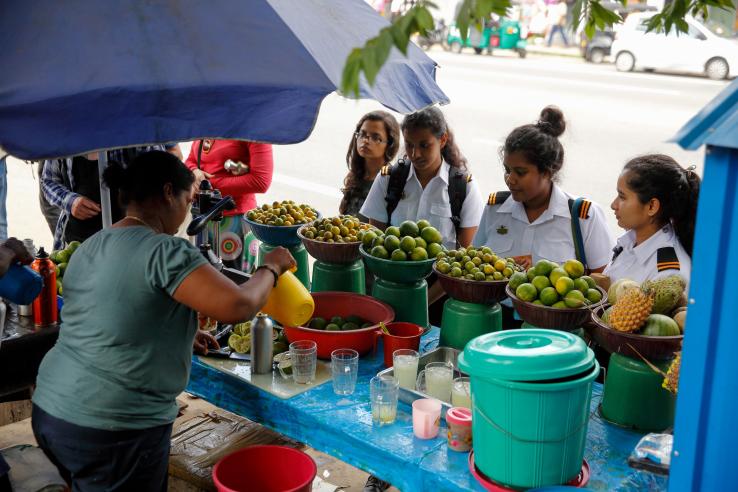
Female-owned business makes fresh fruit juice in Sri Lanka
Evaluation

The Impact of Training and Cash Grants on Female-Owned Businesses in Sri Lanka

Researchers evaluated the impact of a business training intervention, alone and combined with a cash grant, on the income and other business outcomes for self-employed women in Sri Lanka. Researchers found that business training alone was not sufficient to generate business growth, but when combined with a US$129 cash grant, the business training program appeared to boost profits in the short-term.
Evaluation

Cash and Microenterprise Support for the Ultra-Poor in Uganda

In partnership with the Association of Volunteers in International Service, researchers evaluated the impact of the Women’s Income Generating Support (WINGS) program, an initiative which provided low-income Ugandan individuals, mainly women, with financial grants, business skills training, and ongoing supervision on individuals’ economic outcomes. The WINGS program improved individuals’ earnings and access to nonfarm business opportunities in postwar Uganda.
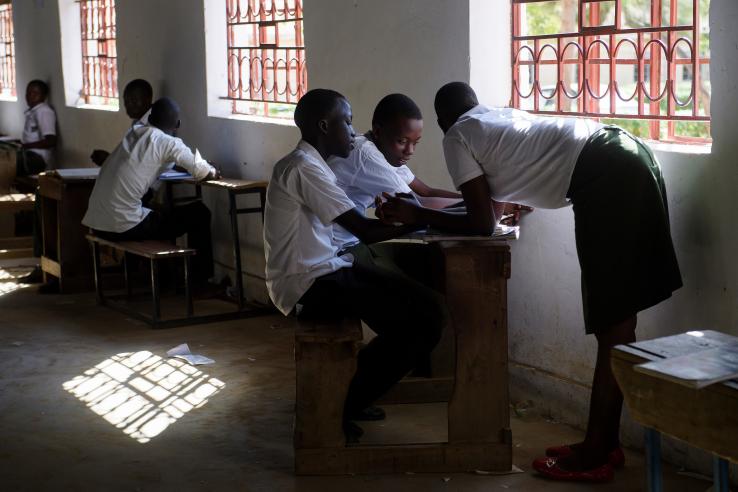
Private secondary school students working on tasks as a group in Uganda
Evaluation

The Impact of Government Subsidies on Private Secondary School Performance in Uganda

Researchers partnered with the Ugandan government to evaluate the impact of a public private partnership (PPP) program with low-cost private secondary schools on absorbing large increases in secondary school enrollment in Uganda. The PPP program led to both greater private school enrollment and higher student performance, with improved performance potentially being linked to increased input availability and positive household-driven selection of PPP student participants.
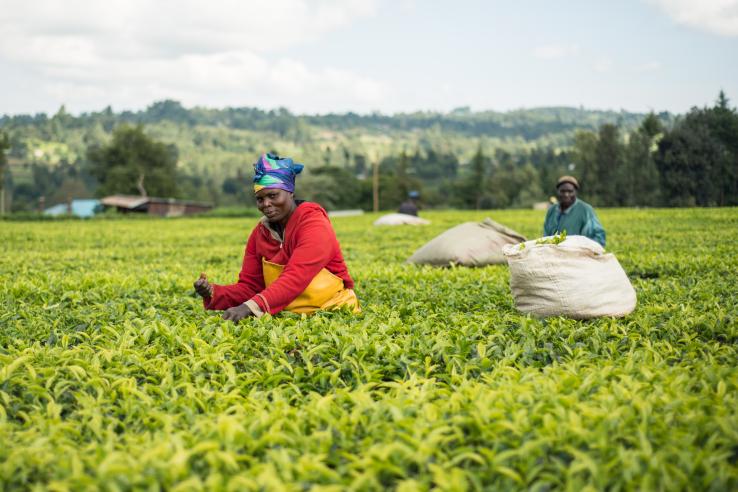
 A farmer picks tea leaves in a tea plantation near the city of Kericho, Kenya.
Evaluation

Consumer information to reduce counterfeit agricultural goods in Kenya

In Kenya, researchers assessed the impact of training farmers to verify seed quality on their seed purchasing decisions and productivity, and the responses of seed markets to these changes. Trained farmers became better able to detect seed quality, more selective about where they bought seeds, and experienced higher yields. Sellers, however, did not improve seed quality or adjust their prices in response to the shifts in farmer demand, possibly due to the high cost of doing so. Instead, many opted to exit the market.
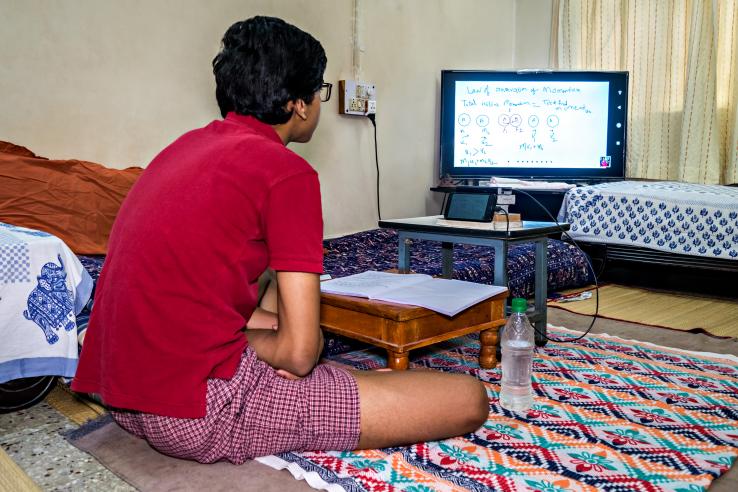
boy sitting in front of his computer for online learning
Evaluation

Providing Post-Training Assistance to Young Jobseekers to Improve Employment Outcomes in India

Researchers are evaluating the impact of providing additional information and resources to those who have completed skills training programs on employment outcomes.

Pagination

  • First page « First
  • Previous page ‹
  • …
  • Page 21
  • Page 22
  • Current page 23
  • Page 24
  • Page 25
  • …
  • Next page ›
  • Last page Last »
J-PAL

J-PAL

400 Main Street

E19-201

Cambridge, MA 02142

USA

Contact

+1 617 324 6566

[email protected]


Press Room

Stay Informed

Receive our newsletters

Subscribe


Privacy Policy

Accessibility

MIT