

Displaying 1996 - 2010 of 7216

Evaluation
Credit, Change, and Lost Sales: A Field Experiment Among Firms in Kenya
Researchers in Kenya issued a questionnaire to firms which may have made lost sales and profits due to poor change management became more salient. A second intervention more explicitly emphasized the costs of having insufficient change. Highlighting the importance of carrying correct change helped firms to change their behavior and increase profits.

Evaluation
The Role of Financial Incentives in Recruiting Public Sector Employees
The ability and integrity of civil servants can have important consequences for the lives of the poor. Researchers analyzed the impact of financial incentives and characteristics of the work environment on attracting qualified applicants to Mexico’s public sector. Offering higher wages attracted individuals with higher previous earnings, higher IQs, and more desirable personality traits. These applicants were also at least as publicly-motivated as applicants that did not receive the higher wage offering.
Evaluation
Smoothing the Cost of Education: Micro-Savings in Ugandan Primary Schools
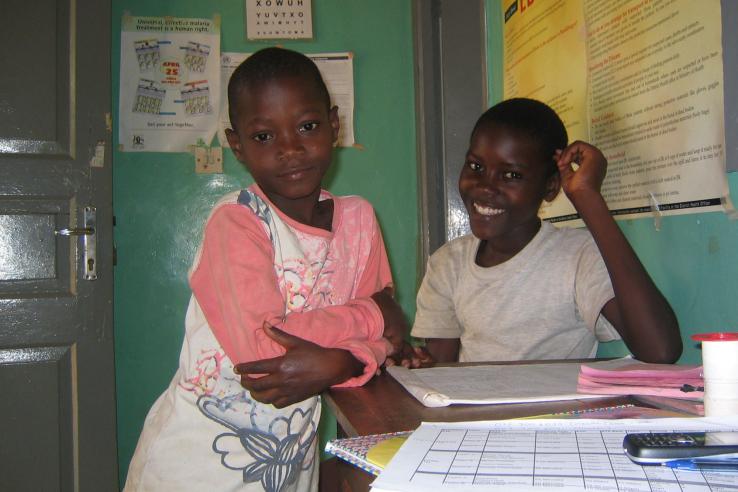
In Uganda, researchers tested whether a school-based savings program reduced dropout rates by enabling students and their families to save for school-related expenses. A version of the program that labeled savings for educational purposes, rather than fully committing money to educational expenses, increased the amount students saved, expenditures on educational supplies, and test scores.

Evaluation
Returns to Consulting in the Philippines
Researchers in the Philippines are examining the various constraints hindering SME growth and evaluating whether graduate business students can effectively teach management skills and improve small business performance.
Evaluation
Governance and the Effectiveness of Public Health Subsidies in Ghana, Kenya, and Uganda
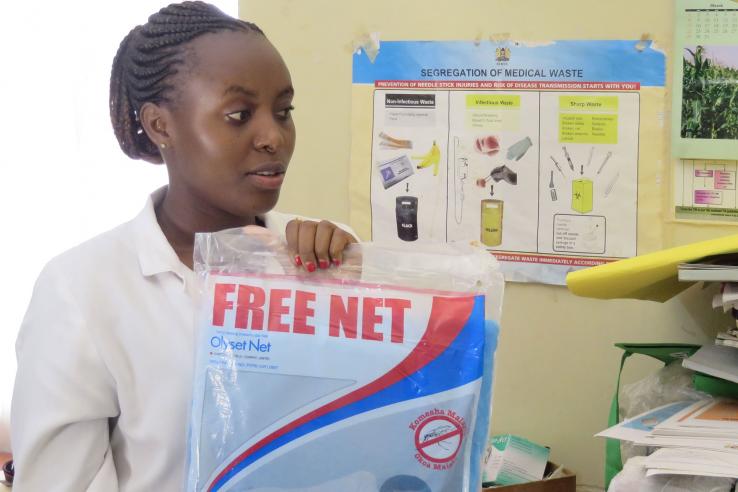
Heavily subsidizing essential health products like insecticide-treated bed nets has the potential to substantially decrease child mortality in sub-Saharan Africa, but there is widespread concern that poor governance and limited accountability among health workers undermines the effectiveness of subsidy programs . Researchers measured the impact of several financial and monitoring incentives on the quality of bed net delivery to pregnant women in Ghana . The incentives had no impact on the quality of delivery. Audits in Ghana, Kenya, and Uganda revealed that around 80 percent of targeted recipients received a bed net subsidy as intended and leakage of products to ineligible recipients was limited. A system change that moved the point of delivery from the clinic to a local shop via vouchers worsened program coverage, reducing the likelihood of a woman receiving a net at her fist visit by 17.8 percentage points.
Evaluation
The Impact of PROGRESA on Health in Mexico
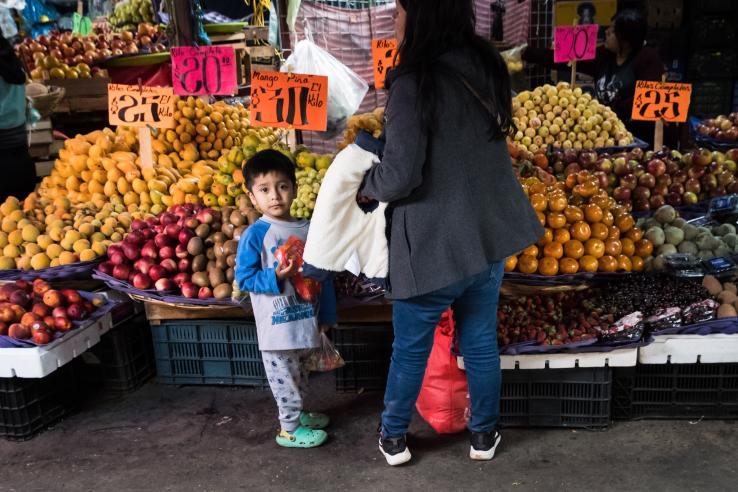
Conditional cash transfer (CCT) programs are designed to incentivize parents to invest in their children's health and wellbeing, while providing cash transfers to improve their current welfare. Researchers evaluated the impact of Mexico’s national CCT program (“PROGRESA”) on a wide range of health outcomes. Preventive care utilization increased by more than half, and both children and adults experienced significant improvements in health. Children experienced fewer illnesses, a reduction in anemia, and an increase in height.

Blog
Adapting to learning needs in the wake of COVID-19 using data and evidence
A conversation with TaRL Africa, J-PAL, and the Ministry of National Education of Côte d’Ivoire. Originally posted by the Brookings Institute.
Evaluation
Guidance and Information for Improved Education Decisions in Ghana
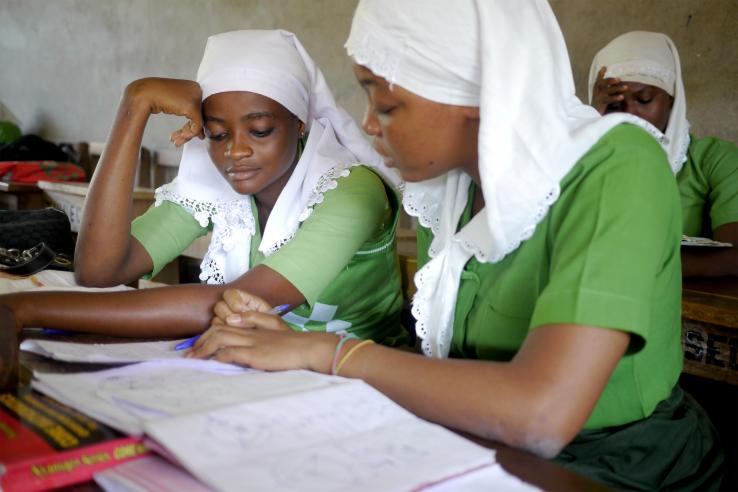
Researchers in Ghana conducted a randomized evaluation to test whether a program informing students and parents about the secondary school choice process and school quality helped students make more strategic decisions about which schools to attend, and whether these choices led to better educational outcomes for students. Results indicated that increasing parents’ access to this information increased parental involvement in students’ educational choices.

Evaluation
Role of Conditional Cash Transfers in Early Childhood Development in Mexico
There is substantial evidence that, in the short-term, conditional cash transfer (CCT) programs improve health and nutritional outcomes for young children. Researchers studied the effects of a CCT program in Mexico, which required school attendance and preventive medical care, on child health and development up to a decade after the launch of the program. They found that larger cumulative cash transfers resulted in significantly better outcomes in many aspects of children’s physical, cognitive, and language development. The improvements in child development were more linked to the cash transfers themselves than to the required health and education components.
Evaluation
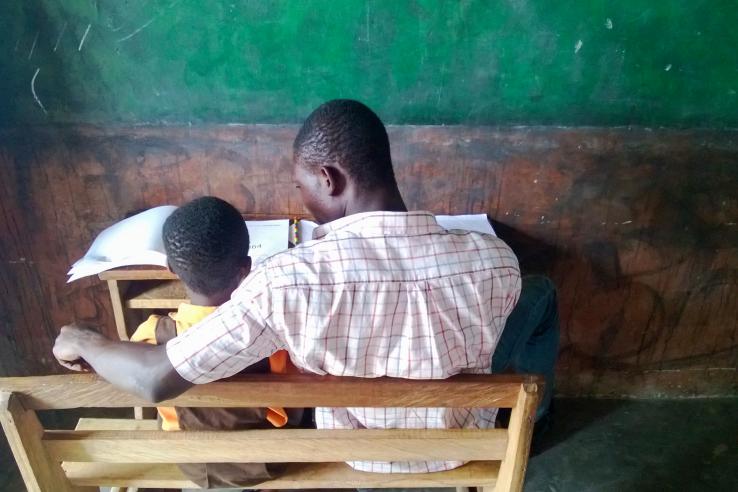
The Importance of Management Support for Teacher-Led Targeted Instruction in Ghana
Researchers partnered with Ghana Education Services (GES), The National Teaching Council (NTC), The National Council for Curriculum and Assessment (NaCCA), The National Inspectorate Board (NIB), and UNICEF to evaluate whether additional managerial support from head teachers and circuit supervisors could increase the likelihood that teachers implement targeted instruction in their classrooms. The results will help inform Ghana’s Ministry of Education on how teacher-led targeted instruction can be replicated at scale in Ghana.
Evaluation
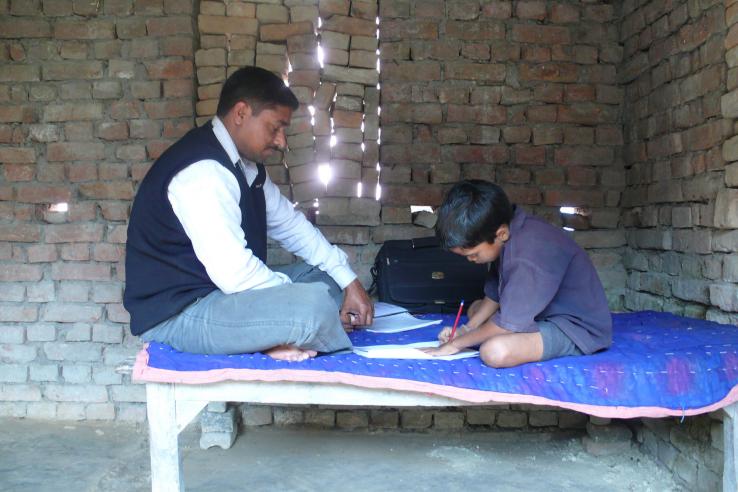
Educational Incentives for Parents and Children in India
A common strategy for increasing school attendance is to offer cash rewards or other incentives to households, usually to the parents, when their children attend or perform well in school. In Gurgaon, India, researchers tested whether giving education incentives to parents or children influenced the incentives’ impact on educational outcomes. All of the incentive schemes had a substantial impact on test scores. Giving incentives to parents was more effective for high-performing students, whereas giving incentives to children was more effective for low-performing students. This suggests that incentivizing parents was more effective when they were good at motivating and supporting their children.
Evaluation
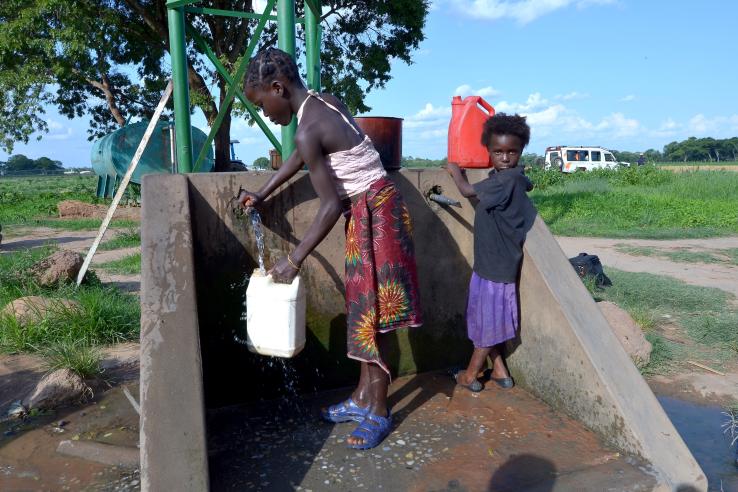
The Effect of Information and Subsidies on Chlorine Usage in Zambia
Informational campaigns and price subsidies are common ways to increase the use of health products in developing countries, but little is known about the effect of combining these tools. In Zambia, researchers investigated whether households’ demand for chlorine at varying subsidy levels was dependent on their knowledge of the product. They found that providing additional information about chlorine significantly increased the impact of price subsidies on demand for the product. However, in the absence of a subsidy, information provision had no significant effect on take-up.

Update
J-PAL Updates
New study: In Iraq, mixed-religion soccer teams helped build social cohesion, healed wounds after war
A new study, released today in Science, points to a way to help repair social ties and promote coexistence after war. New findings show that among persecuted Christians in post-ISIS Iraq, playing on soccer teams with Muslim players helped promote more open attitudes toward Muslims, but only Muslim...

Evaluation
School Communication Strategies and School Outcomes in France
In France, researchers evaluated the impact of various school communication strategies designed to encourage parents to participate in their children’s schooling. They found that personalized invitations increased parental participation in school meetings, especially for parents of low-performing children and from poor socio-economic backgrounds.
Person
Rodrigo Soares
Rodrigo R. Soares is Lemann Professor of Brazilian Public Policy and International and Public Affairs at Columbia University. He is also the Jorge Paulo Lemann Professor of Economics at Insper - São Paulo, Brazil and a Research Fellow at IZA. His research centers on development economics, ranging...