








J-PAL J-PAL
The Abdul Latif Jameel Poverty Action Lab
  • About
    • Overview
    • People
      • Affiliated Professors
      • Invited Researchers
      • J-PAL Scholars
      • Board
      • Leadership
      • Staff
    • Strengthening Our Work
    • Code of Conduct
    • Initiatives
    • Events
    • Blog
    • News
    • Press Room
  • Offices
    • Overview
    • Global
    • Africa
    • Europe
    • Latin America and the Caribbean
      • Growing Futures
    • Middle East and North Africa
    • North America
    • South Asia
    • Southeast Asia
  • Sectors
    • Overview
    • Agriculture
    • Crime, Violence, and Conflict
    • Education
    • Environment, Energy, and Climate Change
    • Finance
    • Firms
    • Gender
    • Health
    • Labor Markets
    • Political Economy and Governance
    • Social Protection
  • Evaluations
  • Research Resources
    • About Us
    • Our Work
    • Join ASPIRE
    • Newsroom
  • Policy Insights
  • Evidence to Policy
    • Pathways and Case Studies
    • The Evidence Effect
  • Blog
  • Careers
  • Courses
  • For Affiliates
  • Support J-PAL

Utility menu

  • Blog
  • Careers
  • Courses
  • For Affiliates
  • Support J-PAL

Quick links

  • Evaluations
  • Research Resources
  • Policy Insights
  • Evidence to Policy
    • Pathways and Case Studies
    • The Evidence Effect
  • About

    The Abdul Latif Jameel Poverty Action Lab (J-PAL) is a global research center working to reduce poverty by ensuring that policy is informed by scientific evidence. Anchored by a network of more than 1,100 researchers at universities around the world, J-PAL conducts randomized impact evaluations to answer critical questions in the fight against poverty.

    • Overview

      The Abdul Latif Jameel Poverty Action Lab (J-PAL) is a global research center working to reduce poverty by ensuring that policy is informed by scientific evidence. Anchored by a network of more than 1,100 researchers at universities around the world, J-PAL conducts randomized impact evaluations to answer critical questions in the fight against poverty.

      • Affiliated Professors

        Our affiliated professors are based at over 130 universities and conduct randomized evaluations around the world to design, evaluate, and improve programs and policies aimed at reducing poverty. They set their own research agendas, raise funds to support their evaluations, and work with J-PAL staff on research, policy outreach, and training.

      • Invited Researchers
      • J-PAL Scholars
      • Board
        Our Board of Directors, which is composed of J-PAL affiliated professors and senior management, provides overall strategic guidance to J-PAL, our sector programs, and regional offices.
      • Leadership
      • Staff
    • Strengthening Our Work

      Our research, policy, and training work is fundamentally better when it is informed by a broad range of perspectives.

    • Code of Conduct
    • Initiatives
      J-PAL initiatives concentrate funding and other resources around priority topics for which rigorous policy-relevant research is urgently needed.
    • Events
      We host events around the world and online to share results and policy lessons from randomized evaluations, to build new partnerships between researchers and practitioners, and to train organizations on how to design and conduct randomized evaluations, and use evidence from impact evaluations.
    • Blog
      News, ideas, and analysis from J-PAL staff and affiliated professors.
    • News
      Browse news articles about J-PAL and our affiliated professors, read our press releases and monthly global and research newsletters, and connect with us for media inquiries.
    • Press Room
      Based at leading universities around the world, our experts are economists who use randomized evaluations to answer critical questions in the fight against poverty. Connect with us for all media inquiries and we'll help you find the right person to shed insight on your story.
  • Offices
    J-PAL is based at MIT in Cambridge, MA and has seven regional offices at leading universities in Africa, Europe, Latin America and the Caribbean, Middle East and North Africa, North America, South Asia, and Southeast Asia.
    • Overview
      J-PAL is based at MIT in Cambridge, MA and has seven regional offices at leading universities in Africa, Europe, Latin America and the Caribbean, Middle East and North Africa, North America, South Asia, and Southeast Asia.
    • Global
      Our global office is based at the Department of Economics at the Massachusetts Institute of Technology. It serves as the head office for our network of seven independent regional offices.
    • Africa
    • Europe
    • Latin America and the Caribbean
    • Middle East and North Africa
    • North America
    • South Asia
    • Southeast Asia
  • Sectors
    Led by affiliated professors, J-PAL sectors guide our research and policy work by conducting literature reviews; by managing research initiatives that promote the rigorous evaluation of innovative interventions by affiliates; and by summarizing findings and lessons from randomized evaluations and producing cost-effectiveness analyses to help inform relevant policy debates.
    • Overview
      Led by affiliated professors, J-PAL sectors guide our research and policy work by conducting literature reviews; by managing research initiatives that promote the rigorous evaluation of innovative interventions by affiliates; and by summarizing findings and lessons from randomized evaluations and producing cost-effectiveness analyses to help inform relevant policy debates.
    • Agriculture
      How can we encourage small farmers to adopt proven agricultural practices and improve their yields and profitability?
    • Crime, Violence, and Conflict
      What are the causes and consequences of crime, violence, and conflict and how can policy responses improve outcomes for those affected?
    • Education
      How can students receive high-quality schooling that will help them, their families, and their communities truly realize the promise of education?
    • Environment, Energy, and Climate Change
      How can we increase access to energy, reduce pollution, and mitigate and build resilience to climate change?
    • Finance
      How can financial products and services be more affordable, appropriate, and accessible to underserved households and businesses?
    • Firms
      How do policies affecting private sector firms impact productivity gaps between higher-income and lower-income countries? How do firms’ own policies impact economic growth and worker welfare?
    • Gender
      How can we reduce gender inequality and ensure that social programs are sensitive to existing gender dynamics?
    • Health
      How can we increase access to and delivery of quality health care services and effectively promote healthy behaviors?
    • Labor Markets
      How can we help people find and keep work, particularly young people entering the workforce?
    • Political Economy and Governance
      What are the causes and consequences of poor governance and how can policy improve public service delivery?
    • Social Protection
      How can we identify effective policies and programs in low- and middle-income countries that provide financial assistance to low-income families, insuring against shocks and breaking poverty traps?
Displaying 6886 - 6900 of 7213
man giving his credit card to a woman in a pos service kiosk
Blog

How data and AI are reshaping access to finance

Access to financial services like banking and credit is a foundational driver of inclusive and sustainable economic development. By expanding access to financial services, enabling innovation, and facilitating people to buy, sell, and compete in the market, households and businesses can be empowered...
group of people attending a lecture
Blog

Why people matter in high-growth entrepreneurship in Africa

Access to finance is a foundational driver of inclusive and sustainable economic development. By expanding access to financial services, enabling innovation, and facilitating market participation, finance can empower households and firms, reduce poverty, and unlock growth opportunities. Over the...
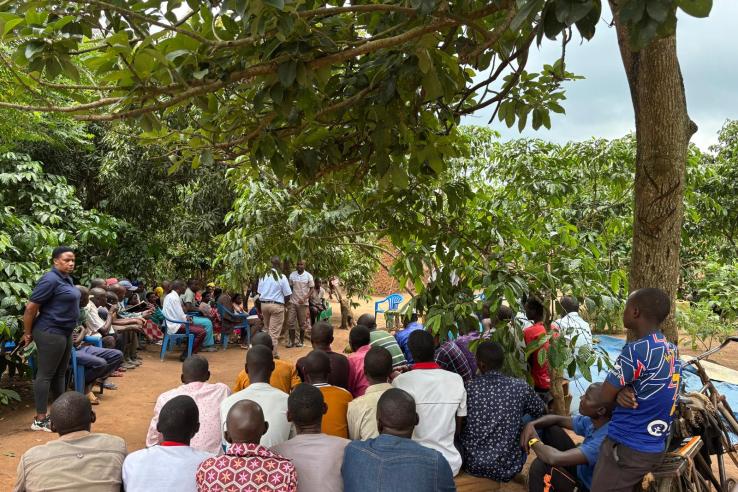
A group of villagers sits in plastic chairs while two men stand and demonstrate agricultural techniques.
Evaluation

A Universal Program to Raise the Well-being of Rural Communities in Uganda

Many programs that aim to help people in poverty are tailored to specific households. But often, entire communities can be living in poverty. Researchers partnered with the NGO Raising the Village to conduct a randomized evaluation of a universal livelihoods program in Uganda that offered a bundle of services including trainings to entire villages. Households across wealth levels in villages offered the program became better off, increasing their income, wealth, and consumption.
Women walking through a field in Bangladesh
Evaluation

Protecting Agricultural Households Against Floods Through Flexible Microfinance in Bangladesh

Floods are an extremely destructive and increasingly common threat to rural agricultural households in countries without strong social safety nets. Researchers conducted a randomized evaluation to study the welfare impacts of a new microcredit product which guarantees credit access to agricultural households after a flood. Households eligible for the Emergency Loan increased their profitable investments prior to a flood event and stabilized their consumption after a flood occurred. The emergency loans were also profitable for the private organization giving out the loan.
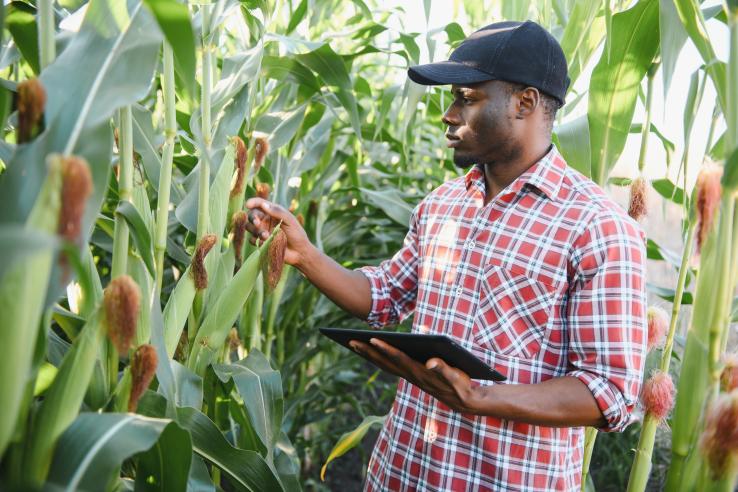
person in a field
Blog

From farm to finance: Financing challenges along agricultural value chains

This is the fifth post on challenges along agricultural value chains in a series highlighting five priority areas for financial inclusion in Africa. In 2025, J-PAL Finance Sector Co-Chairs Emily Breza and Emanuele Colonnelli convened a group of researchers in Nairobi, Kenya with J-PAL Affiliated...
young entrepreneur of small company putting a adhesive note on glass in office during team meeting formulating business strategies.
Blog

Building venture markets where none exist: Coordination, capital, and evidence

Access to finance is a foundational driver of inclusive and sustainable economic development. By expanding access to financial services, enabling innovation, and facilitating market participation, finance can empower households and firms, reduce poverty, and unlock growth opportunities. Over the...
People waiting outside bank for government grant payment.
Blog

Where international finance meets development: The role of currency risk

Access to finance is a foundational driver of inclusive and sustainable economic development. By expanding access to financial services, enabling innovation, and facilitating market participation, finance can empower households and firms, reduce poverty, and unlock growth opportunities. Over the...
Research Paper
File: Research paper

“We’re All in This Together”: Experimental Evidence from a Universal Livelihoods Program

Two researchers having a discussion
Update
J-PAL Updates

May 2026 North America Newsletter

J-PAL North America's May newsletter features newly funded projects across four RFPs, a new policy brief on Emergency Financial Assistance, and an upcoming Evidence Matters webinar.
Person

Sara van Nes

Person

Laura Ruiz

Laura Ruiz-Gaona is a Senior Research Associate at J-PAL North America
Child playing with colors
Resource
Layout Page

J-PAL LAC: Pathways to Preschool

The Pathways to Preschool project, the result of a partnership between J-PAL Latin America and the Caribbean, Bracell Foundation, Itaú Social, academia and the public sector, aims to strengthen learning and the development of children in preschool.
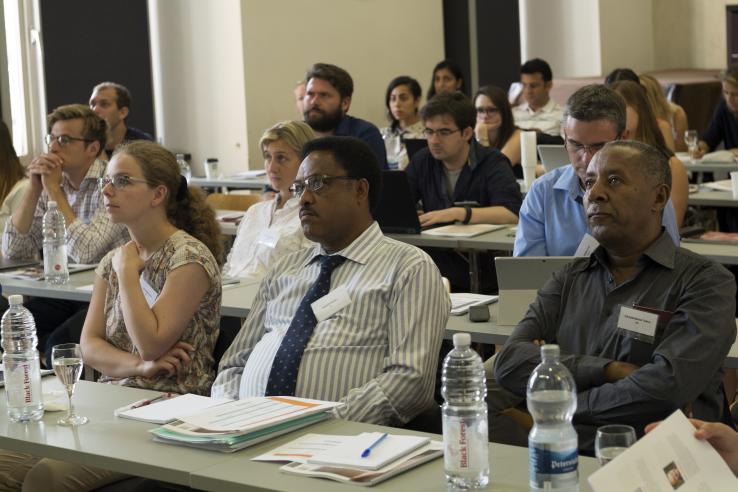
Group of people participating in lecture event
Event

Webinar Informativo: Matching Workshop 2026

Organized through the Lemann Collaborative, the 2026 Matching Workshop is a two-day convening that will take place at the University of Zurich on September 2–3, 2026. The event is designed to connect Brazilian reform entrepreneurs — leaders within governments, NGOs, foundations, and other...
Job

Research Manager - Inclusion Economics Nepal at Governance Lab -J-PAL South Asia

Job

Director of Finance - Development Innovation Laboratory

Pagination

  • First page « First
  • Previous page ‹
  • …
  • Page 458
  • Page 459
  • Current page 460
  • Page 461
  • Page 462
  • …
  • Next page ›
  • Last page Last »
J-PAL

J-PAL

400 Main Street

E19-201

Cambridge, MA 02142

USA

Contact

+1 617 324 6566

[email protected]


Press Room

Stay Informed

Receive our newsletters

Subscribe


Privacy Policy

Accessibility

MIT