J-PAL J-PAL
The Abdul Latif Jameel Poverty Action Lab
  • About
    • Overview
    • People
      • Affiliated Professors
      • Invited Researchers
      • J-PAL Scholars
      • Board
      • Leadership
      • Staff
    • Strengthening Our Work
    • Code of Conduct
    • Initiatives
    • Events
    • Blog
    • News
    • Press Room
  • Offices
    • Overview
    • Global
    • Africa
    • Europe
    • Latin America and the Caribbean
      • Growing Futures
    • Middle East and North Africa
    • North America
    • South Asia
    • Southeast Asia
  • Sectors
    • Overview
    • Agriculture
    • Crime, Violence, and Conflict
    • Education
    • Environment, Energy, and Climate Change
    • Finance
    • Firms
    • Gender
    • Health
    • Labor Markets
    • Political Economy and Governance
    • Social Protection
  • Evaluations
  • Research Resources
    • About Us
    • Our Work
    • Join ASPIRE
    • Newsroom
  • Policy Insights
  • Evidence to Policy
    • Pathways and Case Studies
    • The Evidence Effect
  • Blog
  • Careers
  • Courses
  • For Affiliates
  • Support J-PAL

Utility menu

  • Blog
  • Careers
  • Courses
  • For Affiliates
  • Support J-PAL

Quick links

  • Evaluations
  • Research Resources
  • Policy Insights
  • Evidence to Policy
    • Pathways and Case Studies
    • The Evidence Effect
  • About

    The Abdul Latif Jameel Poverty Action Lab (J-PAL) is a global research center working to reduce poverty by ensuring that policy is informed by scientific evidence. Anchored by a network of more than 1,100 researchers at universities around the world, J-PAL conducts randomized impact evaluations to answer critical questions in the fight against poverty.

    • Overview

      The Abdul Latif Jameel Poverty Action Lab (J-PAL) is a global research center working to reduce poverty by ensuring that policy is informed by scientific evidence. Anchored by a network of more than 1,100 researchers at universities around the world, J-PAL conducts randomized impact evaluations to answer critical questions in the fight against poverty.

      • Affiliated Professors

        Our affiliated professors are based at over 130 universities and conduct randomized evaluations around the world to design, evaluate, and improve programs and policies aimed at reducing poverty. They set their own research agendas, raise funds to support their evaluations, and work with J-PAL staff on research, policy outreach, and training.

      • Invited Researchers
      • J-PAL Scholars
      • Board
        Our Board of Directors, which is composed of J-PAL affiliated professors and senior management, provides overall strategic guidance to J-PAL, our sector programs, and regional offices.
      • Leadership
      • Staff
    • Strengthening Our Work

      Our research, policy, and training work is fundamentally better when it is informed by a broad range of perspectives.

    • Code of Conduct
    • Initiatives
      J-PAL initiatives concentrate funding and other resources around priority topics for which rigorous policy-relevant research is urgently needed.
    • Events
      We host events around the world and online to share results and policy lessons from randomized evaluations, to build new partnerships between researchers and practitioners, and to train organizations on how to design and conduct randomized evaluations, and use evidence from impact evaluations.
    • Blog
      News, ideas, and analysis from J-PAL staff and affiliated professors.
    • News
      Browse news articles about J-PAL and our affiliated professors, read our press releases and monthly global and research newsletters, and connect with us for media inquiries.
    • Press Room
      Based at leading universities around the world, our experts are economists who use randomized evaluations to answer critical questions in the fight against poverty. Connect with us for all media inquiries and we'll help you find the right person to shed insight on your story.
  • Offices
    J-PAL is based at MIT in Cambridge, MA and has seven regional offices at leading universities in Africa, Europe, Latin America and the Caribbean, Middle East and North Africa, North America, South Asia, and Southeast Asia.
    • Overview
      J-PAL is based at MIT in Cambridge, MA and has seven regional offices at leading universities in Africa, Europe, Latin America and the Caribbean, Middle East and North Africa, North America, South Asia, and Southeast Asia.
    • Global
      Our global office is based at the Department of Economics at the Massachusetts Institute of Technology. It serves as the head office for our network of seven independent regional offices.
    • Africa
    • Europe
    • Latin America and the Caribbean
    • Middle East and North Africa
    • North America
    • South Asia
    • Southeast Asia
  • Sectors
    Led by affiliated professors, J-PAL sectors guide our research and policy work by conducting literature reviews; by managing research initiatives that promote the rigorous evaluation of innovative interventions by affiliates; and by summarizing findings and lessons from randomized evaluations and producing cost-effectiveness analyses to help inform relevant policy debates.
    • Overview
      Led by affiliated professors, J-PAL sectors guide our research and policy work by conducting literature reviews; by managing research initiatives that promote the rigorous evaluation of innovative interventions by affiliates; and by summarizing findings and lessons from randomized evaluations and producing cost-effectiveness analyses to help inform relevant policy debates.
    • Agriculture
      How can we encourage small farmers to adopt proven agricultural practices and improve their yields and profitability?
    • Crime, Violence, and Conflict
      What are the causes and consequences of crime, violence, and conflict and how can policy responses improve outcomes for those affected?
    • Education
      How can students receive high-quality schooling that will help them, their families, and their communities truly realize the promise of education?
    • Environment, Energy, and Climate Change
      How can we increase access to energy, reduce pollution, and mitigate and build resilience to climate change?
    • Finance
      How can financial products and services be more affordable, appropriate, and accessible to underserved households and businesses?
    • Firms
      How do policies affecting private sector firms impact productivity gaps between higher-income and lower-income countries? How do firms’ own policies impact economic growth and worker welfare?
    • Gender
      How can we reduce gender inequality and ensure that social programs are sensitive to existing gender dynamics?
    • Health
      How can we increase access to and delivery of quality health care services and effectively promote healthy behaviors?
    • Labor Markets
      How can we help people find and keep work, particularly young people entering the workforce?
    • Political Economy and Governance
      What are the causes and consequences of poor governance and how can policy improve public service delivery?
    • Social Protection
      How can we identify effective policies and programs in low- and middle-income countries that provide financial assistance to low-income families, insuring against shocks and breaking poverty traps?
Displaying 796 - 810 of 7147
Person

Pamela Jakiela

Pamela Jakiela is a Professor of Economics at Williams College and a non-resident fellow at the Center for Global Development. She conducts research on a range of development topics including gender, early childhood, and social protection, with a particular focus on survey design, measurement, and...
Person

John List

John A. List is the Kenneth C. Griffin Distinguished Service Professor in Economics at the University of Chicago. His research focuses on questions in microeconomics, with a particular emphasis on using field experiments to address both positive and normative issues.
A woman wearing a mask helps an older woman to tie on her mask.
Event

Social protection in the COVID-19 era: What does the evidence tell us?

J-PAL Southeast Asia’s Scientific Directors Rema Hanna and Benjamin A. Olken will present evidence-based insights on how to strengthen safety nets to protect the poor during COVID-19. The webinar will also feature Indonesia’s Deputy Minister of Finance to discuss how lessons from evidence presented...
Children sit at desks looking at tablets
Evaluation

Teacher Training and Student Achievement in Science: Evidence from France

Researchers evaluated the impact of its science and technology teacher training program on the educational interests and academic achievement of affected students. Student outcomes improved in the short-run during the year the teacher received the training and worsened in the year after teachers received the training.
A woman tutoring a young student with braids through a lesson on a tablet at her home in Urban India.
Evaluation

The Impact of Private Tutoring Prices on Student Attendance and Performance in India

Researchers conducted a randomized evaluation to measure the demand for private tutoring services and estimate how pricing can influence enrollment in these services. Results suggest that higher prices reduced demand for private tutoring and also led to higher drop-out rates over time, with no impact of tutoring on test scores.
Evaluation

Vocational Training and Cash Transfers for Youth Employment and Entrepreneurship in Kenya

In Kenya, researchers are studying the impacts of a program that combines vocational training with one-time cash grants to boost youth employment and entrepreneurship.
Screenshot of Iraqi job platform
Evaluation

Improving Job Matching Among Youth in Iraq

Researchers evaluated the whether providing objective information helps jobseekers target better-suited jobs.
Woman stands in front of classroom chalkboard while student stands facing her
Evaluation

Supplementary Math Courses For Girls to Improve Numeracy Skills and Professional Aspirations in Benin

Researchers are evaluating the impact of temporary supplemental math teachers on girls’ numeracy skills, professional aspirations, and early career labor market outcomes.
Students in the Dominican Republic grin at the camera
Evaluation

Education Mismatch and Motivational Messages

Researchers are evaluating the impact of providing information on national rank and scholarships can reduce dropout among high-performing students.
Evaluation

Targeting the Ultra Poor in Yemen

To test this theory, researchers evaluated a multi-faceted approach aimed at improving long term income of the ultra-poor in multiple countries, including Yemen.
A woman bows her head in prayer while seated in a pew
Evaluation

Belief Systems and Poverty Alleviation in the Philippines

In the Philippines, researchers conducted a randomized evaluation to measure the impact of an evangelical Protestant religious values and theology education program on individuals' economic and subjective wellbeing.
Evaluation

The Impact of Malaria Diagnostics in Uganda

Three people reviewing health insurance plans.
Evaluation

Information to Increase Insurance Take-up and Reduce Market Risk in the United States

Researchers studied the impact of reminder letters addressing possible barriers related to information and behavior on insurance take-up, as well as their impact on health insurance market risk. The reminder letters reducing informational and behavioral barriers to enrollment increased insurance take-up and lowered the average market risk.
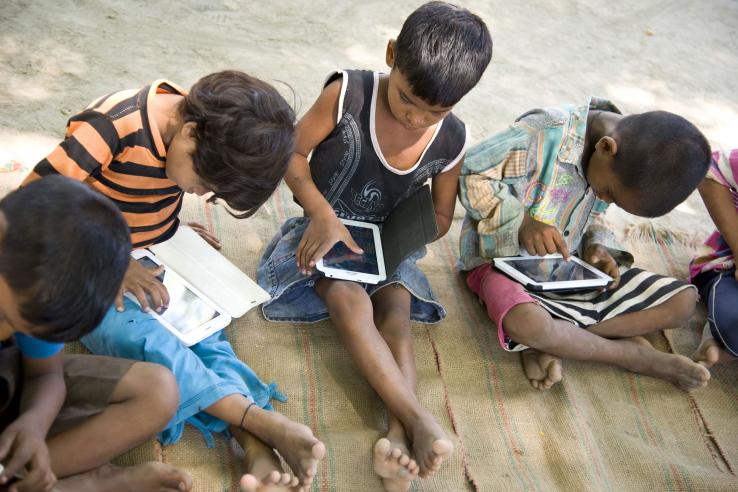
Students in an Indian village studying on tablets
Evaluation

Leveraging Technology to Incentivize Student Effort in India

Using a technology-based math curriculum, researchers evaluated the impact of different incentive types—rewarding continuous effort in the classroom versus rewarding test performance—on student learning. Results indicate that effort-based incentives can be a more effective and cost-effective way of improving learning than incentives focused on test scores.
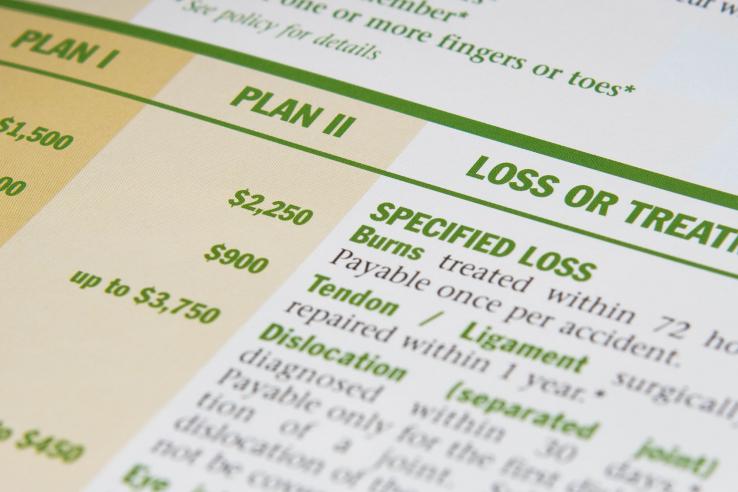
Close-up of an insurance plan in the United States.
Evaluation

Improving Consumer Choices on Health Insurance Marketplaces in the United States

Researchers studied the impact of providing personalized and generic information about potential savings via letters and e-mails on enrollee health plan choices.
Pagination

  • First page « First
  • Previous page ‹
  • …
  • Page 52
  • Page 53
  • Current page 54
  • Page 55
  • Page 56
  • …
  • Next page ›
  • Last page Last »
J-PAL

J-PAL

400 Main Street

E19-201

Cambridge, MA 02142

USA

Contact

+1 617 324 6566

[email protected]


Press Room

Stay Informed

Receive our newsletters

Subscribe


Privacy Policy

Accessibility

MIT