

July 2026 Global Monthly Newsletter
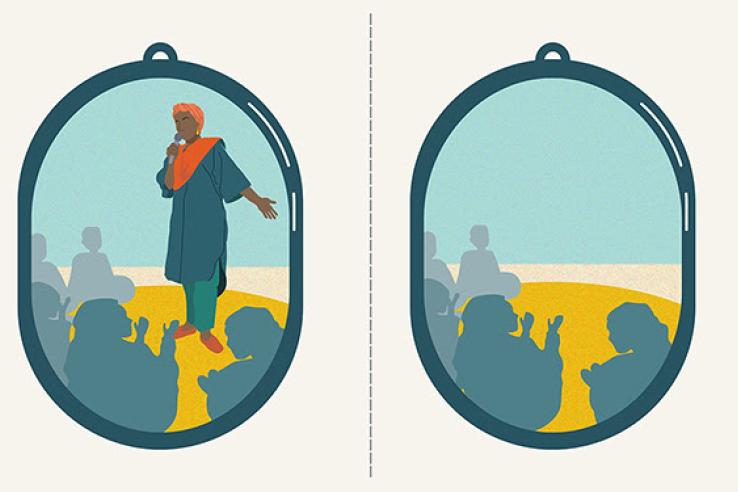
How does an evaluation's design impact a study's credibility?
When researchers design a study—such as a randomized evaluation—they rely on assumptions, like the assumption that people in a study are split into truly random groups. The credibility of any impact evaluation depends on whether those assumptions are plausible in a given context. J-PAL Research and Training Lead Michala Riis-Vestergaard explores what those assumptions are, why they matter, and how to assess them across different evaluation designs.
Evidence in action in Latin America: Policy wins from Brazil and Guatemala
🇧🇷 Rio de Janeiro, Brazil announced a collaboration with J-PAL and UChicago’s Emissions Market Accelerator to bring the first emissions trading market to South America.
🇬🇹 Guatemala’s Ministry of Social Development is establishing a policy innovation lab, a project that builds on J-PAL Latin America and the Caribbean (LAC) and Universidad del Valle de Guatemala’s Construyendo Futuros (Growing Futures) initiative, to help ministry teams design, test, and improve programs before taking them to scale.
Learn more about how J-PAL supports governments turning evidence to policy. Explore J-PAL LAC's government partnerships »
The Bab Amal program: A door of hope in Egypt
“Bab Amal,” which translates to “A Door of Hope,” is helping some of Egypt's poorest families build stable livelihoods. The program, a variation of the Graduation approach, was implemented by the Sawiris Foundation for Social Development and evaluated by J-PAL Middle East and North Africa. The results: families owned more livestock, earned more income, had more access to food, and more women entered the workforce. With positive results holding strong for 40 months, the program is scaling to reach 100,000 households across upper Egypt. Read the policy brief »
EVIDENCE TO POLICY
Improving cash transfers with machine learning
📍Togo
Policy issue: During the Covid-19 pandemic, officials in Togo wanted to expand their emergency cash transfer program but didn’t have up-to-date information on which households were most vulnerable. Traditional methods for collecting new data were time consuming and costly.
Evaluation: Researchers partnered with the Togolese government to test whether analyzing survey, mobile phone, and satellite data using machine learning could help identify the people most in need more quickly and accurately.
Results: The approach helped identify and enroll more than 138,500 vulnerable people for emergency cash transfers, reaching more eligible families than traditional geographic targeting efforts. Those who received the transfers ate more food, had better mental health, and improved their economic well-being.
Research in action: The government of Togo and GiveDirectly used this approach to support the expansion of the country’s emergency cash transfer program to rural areas, reaching roughly 820,000 people nationwide. Similar approaches have since been adapted in Malawi, Bangladesh, and the Democratic Republic of the Congo, laying the groundwork for faster, more cost-effective targeting of social assistance in response to floods, droughts, and other humanitarian crises.
NEW POLICY INSIGHT
Mobile phones can expand learning opportunities by supporting, not replacing, human interaction
A new J-PAL Policy Insight synthesizes thirty studies on how mobile phones impact student learning.
Policy issue: Students, teachers, parents and administrators need to share timely information with one another but in some communities, long distances, poor roads, school closures, and busy schedules can make this process costly and slow. Given that 95 percent of the global population has a phone in their pocket, could texting offer a low-cost way to deliver instruction, support teachers, and engage families?
Findings: In high-income settings where data systems are strong and parents already engage regularly with schools, simple text messages with practical, personalized information work well. In low- and middle-income countries, texts alone aren't enough. Programs that pair phone-based outreach with more intensive support, like tutoring by phone or cash incentives for teachers, show stronger results. The interventions that were most effective at improving student learning were ones that delivered practical, personalized information and used proven education programs like tailored instruction.
FEATURED BLOGS
Institutionalizing and accelerating climate action through governments
At London Climate Action Week last month, J-PAL's Air and Water Labs co-hosted a conversation with Community Jameel bringing together government leaders from South Africa, Egypt, and India. Each country is working with J-PAL on innovative solutions, like an emissions trading scheme in Gujarat and Maharashtra and free basic electricity for low-income households in Cape Town. Together, they discussed how collaborative, long-term partnerships between researchers and institutions can turn evidence into sustained climate resilience. Read more »
Researcher perspective: Students need guidance, not just access, when it comes to AI
J-PAL Invited Researcher Sebastian Gallegos (Universidad Adolfo Ibanez) designed and deployed a course-specific AI assistant in an undergraduate econometrics course in Chile to evaluate how students use AI. His findings suggest that institutional guidance may play a central role in determining whether AI tools support or hinder learning. Read more »
Learning across borders: How global exchange is helping shape Egypt’s Universal Health Insurance reform
As Egypt rolls out its universal health insurance reforms, one major challenge has emerged: how to reach informal workers. J-PAL Middle East and North Africa’s Egypt Impact Lab hosted a Knowledge Exchange Webinar Series to connect Egyptian policymakers with government leaders from Chile, Thailand, and Indonesia who had tackled similar questions over decades of expanding their own health coverage systems. These conversations helped Egyptian officials sharpen their approach and could pave the way for one of the first randomized evaluations on bringing informal workers into a national health insurance system in Egypt. Read more »
FEATURED EVENT
WEBINAR: Targeting foundational skills to improve learning at scale in Zambia
🗓️ July 28 | 8:45-10:00am EST | Zoom
Join us for a webinar on the impact of Zambia's "Catch Up" program, a government-led adaptation of the Teaching at the Right Level (TaRL) approach. J-PAL Invited Researcher Andreas de Barros (University of California, Irvine) and representatives from the Zambian Ministry of Education will share details of the program, evaluation findings, and cost-effectiveness. A panel discussion will follow, featuring representatives from the Center for Global Development, the Gates Foundation, TaRL Africa and VVOB.
🗞️ MEDIA HIGHLIGHTS
For Viksit Bharat, the most important foundations need to be laid in the classroom – at the right level
The Indian Express
Innovative projects explore ways to deal with extreme heat
MIT News
J-PAL joins leading institutions to launch Smart Buys Alliance for Evidence-Based Development
J-PAL
From RCT to real-world impact: How our accelerator is adapting the evidence on immunization demand in Nigeria
Evidence Action
RGUHS delegation visits MIT, Harvard to explore healthcare and research collaboration
Vartha Bharati
📄 NEW RESEARCH PAPERS
Information, Intermediaries, and International Migration
Authors: Samuel Bazzi (University of California, San Diego), Lisa Cameron (University of Melbourne), Simone Schaner (University of Southern California), and Firman Witoelar (Australia National University)
Authors: Jacobus Cilliers (Georgetown) and James Habyarimana (Georgetown)
On the Doorstep of Adulthood: Entrepreneurship and Fertility of Young Women in Tanzania
Authors: Lars Ivar Oppedal Berge (Norwegian School of Economics), Kjetil Bjorvatn (Norwegian School of Economics), Fortunata Makene (Economic and Social Research Foundation), Linda Helgesson Sekei (NIRAS International Consulting), Vincent Somville (Norwegian School of Economics), Bertil Tungodden (Norwegian School of Economics)