Image
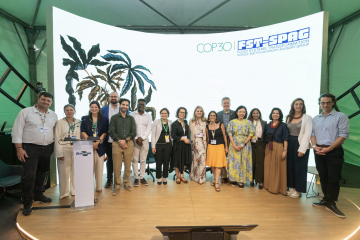
As rising temperatures threaten to reverse gains in the fight against poverty, communities on the frontlines need solutions that work. Launched in August 2020, the King Climate Action Initiative (K-CAI) identifies, tests, and scales up evidence-informed solutions addressing threats to people’s well-being, health, livelihoods, and the environment caused by climate change. Since 2020, K-CAI’s funded research has informed policies and programs improving the lives of nearly 33 million people.
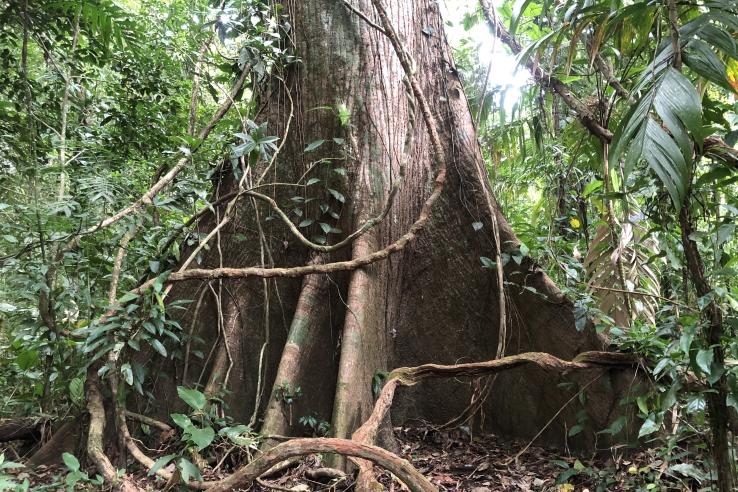
Spanning 40 countries, projects from the K-CAI portfolio demonstrate how evidence‑driven climate policy can deliver meaningful benefits for both people and the planet. Shipping companies are testing methods to reduce emissions globally through personalized targets for captains. Farmers in Niger are increasing profits by restoring their land. Emerging evidence on payments for protecting nature is giving governments actionable advice for cost‑efficient solutions and better results.
By supporting teams of researchers working with implementers to move from a small pilot, to a full experiment, to a large-scale roll-out, K-CAI helped transform promising ideas into policy solutions. For example, in Bangladesh, brick kiln owners and workers learned new ways to reduce their fuel costs and cut air pollution from burning coal. As a result, families, schoolchildren, and workers in Bangladesh are breathing cleaner air.
“The K-CAI support allowed us to immediately respond to the Government of Bangladesh's request that we work with them to scale the intervention across Bangladesh. We anticipate that this successful collaboration will unlock support for progressively upgrading kilns across the country.” - Stephen Luby, K-CAI Invited Researcher
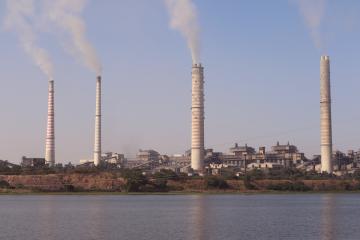
In India, smarter regulation through emissions trading has already improved air quality for over 20 million people. By introducing the world’s first particulate matter cap‑and‑trade system, and expanding to include sulfur oxides, this approach showed that market-based mechanisms can dramatically cut pollution while lowering compliance costs.
Based on this research, governments around the world are working with the new Emissions Market Accelerator launched by K-CAI, the University of Chicago’s Energy Policy Institute, and J-PAL South Asia to clean up cities’ and nations’ air around the world. The success of this model signals a paradigm shift. It shows that robust, evidence-driven regulation can thrive in low- and middle-income settings and paves the way for future carbon markets that could accelerate low- and middle-income countries’ climate ambitions.
“Both ecology and economy should work hand in hand, and ETS [emissions trading schemes] is one way of making that happen.” - Jitendra Vakharia, President, South Gujarat Textile Processors Association
K-CAI’s launch galvanized J-PAL’s global research network to pitch and test hundreds of solutions at the intersection of climate and poverty—then take action by partnering with governments. Five years ago, when K-CAI launched through a groundbreaking gift of $25 million, we envisioned a “playbook” of cost-effective and equitable climate solutions. Now, researchers have contributed to make this a reality–highlighting mitigation, adaptation, pollution‑reduction, and energy access solutions.
Nearly 250 researchers have proposed over 300 research ideas to K-CAI, building coalitions of researchers, implementers, and partnering organizations or governments to pitch ideas for the fight against climate change and poverty. Out of these 300+ proposals received through eight competitive funding rounds, K-CAI funded 45 randomized evaluations and nearly 50 pilots. Using this evidence, 16 scale-ups have been funded to expand the reach and impact of evidence-informed climate policies, and the impact goes far beyond these funded projects.
“The downstream impacts [of researchers inspired by K-CAI funding to kick off new environmental projects and courses] could be quite impressive, and it wouldn't have happened without K-CAI funding.” - Teevrat Garg, J-PAL Affiliate and K-CAI funded researcher
With nearly fifteen papers and working papers produced in a few short years–and new papers, scale-ups, and spin-outs emerging–K-CAI researchers are rapidly closing the loop from research to actionable climate and poverty findings.
Explore our library of K-CAI evaluations and scale-ups below.
Since 2023, the Air and Water Labs, launched through K-CAI, have enabled governments to test ideas with J-PAL researchers and then turn them into action in three countries. The labs help policymakers make data-informed decisions to ensure that effective programs reach communities and people most in need.
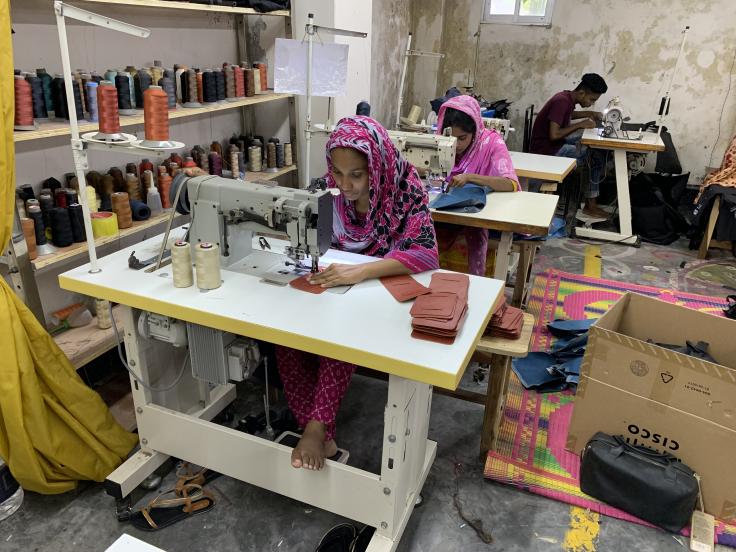
K-CAI has filled important evidence gaps and expanded our playbook of equitable climate policies. Even with this progress, more action is needed to help communities adapt and thrive. Wrapping up our first five years, K-CAI will keep scaling successful innovations from our portfolio. We’re excited to grow our work in important intersections like climate and health, climate and agriculture, sustainable growth and supply chains, nature-based solutions, and clean energy access. In this evolving landscape, K-CAI continues to push the frontier of climate innovation where it’s needed most.
K-CAI is actively seeking new partnerships to scale proven solutions from our portfolio and expand our evidence generation on under-resourced issues. If you are interested in partnering with us to fight climate change and poverty, or to learn more about using this evidence to inform policy, please contact us.