


Image
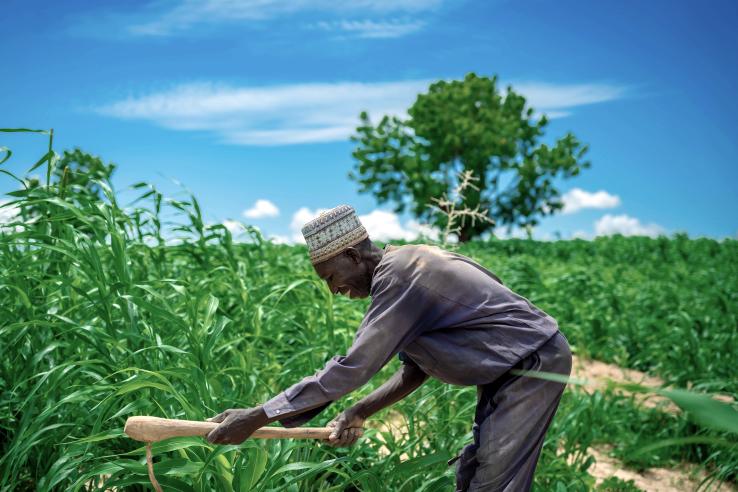
Smallholder farmers across Africa face multiple, interconnected constraints, including access to appropriate inputs and information, limited availability of affordable credit, long distances to input suppliers and buyers, and difficulty finding reliable markets for their crops. This makes improving agricultural productivity not only a question of identifying technologies or programs that work. It’s also about understanding who they work for, under what conditions, and what farmers need to benefit from them.
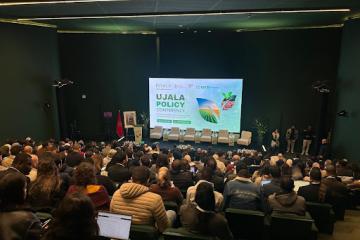
On September 17, 2026, the UM6P–J-PAL Applied Lab for Agriculture (UJALA), OCP Nutricrops, and OCP Africa (as part of OCP Nutricrops’ ecosystem) convened the online session “Driving Resilient Food Systems in Africa: Science, Innovation, and Policy Pathways for SDG Delivery” as part of the Science Summit during the 81st United Nations General Assembly. The discussion brought together Tavneet Suri, co-chair of J-PAL’s Agriculture sector and UJALA, Hope Michelson, J-PAL affiliated professor, and Hajar Alafifi, CEO of OCP Africa.
Drawing on research and implementation experience across Africa, the discussion highlighted three connected challenges: accounting for differences across farmers and farming conditions, understanding the multiple constraints that shape farmers’ decisions, and using research and implementation together to identify solutions that can work at scale.
Heterogeneity is a defining feature of agriculture. Differences in soils, rainfall, infrastructure, market access, and input and output prices can shape both how well a technology performs and whether it is profitable for a farmer to adopt. These differences can occur not only across countries or regions, but between nearby farms and across seasons. Research by J-PAL affiliated professors Tavneet Suri and Christopher Udry suggests that this heterogeneity is particularly important for understanding patterns of agricultural technology adoption in Africa.
Suri’s earlier research on hybrid maize in Kenya illustrates how these differences can occur at a local level and shape farmers’ decisions. Farmers varied substantially in both the returns they could obtain from the technology and the costs they faced in accessing it. Some farmers who did not adopt hybrid maize seeds had high estimated potential gross returns but faced high acquisition costs, while for others the technology itself offered lower returns.
This complicates a simple story in which a profitable technology exists, and the main challenge is convincing farmers to adopt it. Low adoption does not necessarily mean that farmers are passing up an equally profitable opportunity: average effects can mask important differences in the returns farmers can expect, and the constraints they face; and technologies themselves may not be equally profitable everywhere.
The question, then, is not simply whether a technology works, but where, when, and for whom it works, and what it takes to make promising solutions work under different conditions.
Recognizing this heterogeneity has practical implications for how agricultural programs are designed and delivered. Identifying a promising technology is only part of the challenge. Programs also need to understand what may prevent farmers from benefiting from it and how those constraints vary across settings.
These constraints can also interact. Access to appropriate fertilizer, knowledge about soil conditions, finance, markets, irrigation, and other technologies can jointly shape whether farmers are able to benefit from an innovation. Addressing one may therefore have limited effects if another continues to constrain farmers.
OCP Africa’s implementation experience illustrates an approach that combines tailored agricultural solutions with services that address constraints to their use. This work includes soil testing and mapping, customized fertilizer recommendations, farmer training, last-mile delivery, access to input and output markets, and partnerships with actors across agricultural systems. The value of this approach lies in how these services work together, since improving one may have limited effects when another constraint remains.
Responding to heterogeneity is not only about adapting the technology itself. Whether farmers can benefit from an intervention depends on the broader system through which it is delivered: whether appropriate inputs are available and affordable, whether farmers can access finance and markets, and whether technologies reach them at the right time.
This shifts some of the focus away from asking why farmers do not adopt a promising technology toward asking what needs to change in the conditions around that decision.
Adapting solutions to farmers’ circumstances is only part of the picture. A pragmatic approach to agricultural research means considering both which constraints an intervention can meaningfully address, and where in the system solutions to those constraints may lie. Farmers may face many constraints at once, and solutions may require action at different levels, whether from implementing organizations and governments or other actors across the agricultural system.
Research in Tanzania co-led by Hope Michelson illustrates why identifying the relevant constraint matters. Tailored fertilizer recommendations increased fertilizer use and helped farmers maintain their yields only when combined with financial support. Yet five years after the initial experiment, once support had ended, these gains did not persist, suggesting that the intervention had temporarily relaxed an important financial constraint without removing the underlying barrier facing farmers.
Pragmatism also matters in deciding how success is measured. Higher yields do not necessarily mean that farmers are better off if achieving them requires substantial additional spending on fertilizer, labor, financing, or other inputs. Evaluating agricultural solutions therefore requires looking beyond productivity to whether they generate sufficient returns for farmers and ultimately improve their livelihoods.
Taken together, these lessons suggest that moving from a promising intervention to a scalable solution requires considering the conditions in which it works, how it can be implemented, and whether it delivers meaningful benefits for farmers.
This is where research and implementation can complement each other. Implementation experience can reveal constraints and practical questions that emerge in real-world settings, while rigorous evaluations can test whether proposed solutions improve farmers’ outcomes, why impacts differ, and whether adaptations make programs more effective.
This is the approach UJALA seeks to support through its partnerships with researchers and implementing organizations: identifying important questions from the field, drawing on existing evidence, rigorously testing possible solutions, and feeding what is learned back into program design and decisions about scale.
About UJALA: The UM6P–J-PAL Applied Lab for Agriculture funds rigorous research and works with researchers and implementing partners to develop, test, and scale evidence-based agricultural solutions that benefit small-scale farmers worldwide. It also disseminates findings to inform policy and practice. Learn more about UJALA-supported research projects.
