


How can we reduce crime, violence, and conflict?: Insights from the latest GCCI Evidence Wrap‑Up

Posted on:
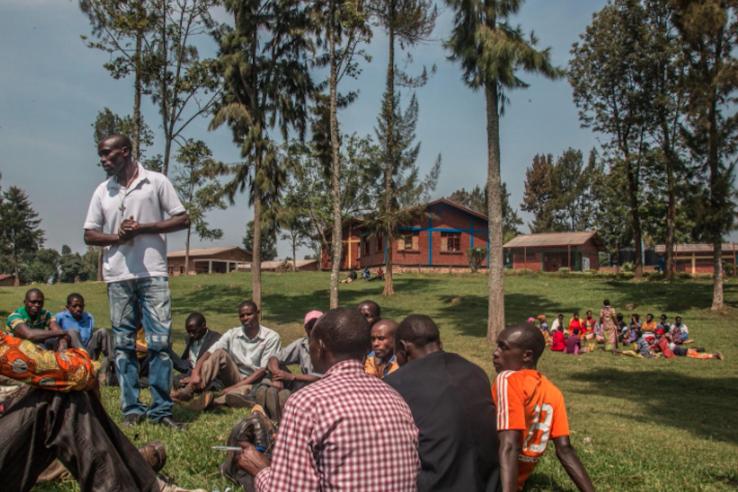
A man presents to a group of young men with palm trees in the background.
A man leads a group dialogue in a park. Photo credit: Yagazie Emezi, Getty Images, Images of Empowerment

In 2025, more than 830 million people were exposed to conflict. While large scale wars account for a substantial share of violence, interpersonal violence is more widespread and costs society more. More lives are claimed each year by intentional homicides than armed conflict and terrorism combined. So how can we make people safer? 

Researchers are studying programs like policing reforms, justice provisions, peacebuilding programs, and more. Over two decades, they’ve built a growing body of evidence on programs that work, and the conditions that maximize their potential. The Governance, Crime, and Conflict Initiative staff have been working to capture the scope, depth, and implications of this research.

Today, this team shares an updated edition of the GCCI Evidence Wrap-Up, which synthesizes findings from randomized evaluations so policymakers, practitioners, and donors can make informed decisions to build a safer world.

New this year:

  • 50 new studies, and updated results from older programs. 
  • More research  in low- and middle-income countries (LMICs) on strategies for improving criminal justice systems and increasing access to justice.
  • A more in-depth analysis of behavior change programs like cognitive behavioral therapy (CBT)-informed programs.
  • New evidence on climate shocks and conflict, and how they affect  group decision-making around when and how to use violence.
  • More evidence on intergroup contact and dialogue as a tool for reducing prejudice in fragile settings, and emerging evidence of backlash effects in some contexts.
  • New evidence on strategies for shifting social norms around gender-based violence, like training, dialogue, and mass media campaigns.

Chapter-by-chapter snapshot

The wrap-up is organized around six core questions on what works to reduce crime, violence, and conflict. Below is a brief summary of each chapter, including the types of programs studied  and key insights. Expand any section to dive deeper into the details of a program, the researchers' findings, and where we still have questions. 

Chapter 1: What works in policing and building police capacity?

Police and security-sector institutions are trying new approaches to improve their performance, enhance public safety, and strengthen their ties to the communities they serve. But underlying causes of crime and violence can vary across contexts, and police agencies differ in capacity, legitimacy, and local relationships. As such, no single policing model works everywhere. Effective policing  must match the strategy to the specific problem.

Emerging insights include:

Chapter 2: What works in justice provision, including criminal justice and corrections?

Peoples’ access to justice is essential for maintaining peace, enforcing rights, and building trust between citizens and the state. Yet formal institutions for seeking justice are often overburdened, inaccessible, or absent altogether—leaving disputes unresolved and citizens without a solution.

Emerging takeaways include:

  • Making it easier for people to settle disputes through both state and community-based dispute resolution centersmediation training, and alternative dispute resolution mechanisms can reduce negotiation breakdowns and decrease burden on courts.
  • Providing tailored information on potential court outcomes to plaintiffs and court performance feedback to judges can speed up the resolution of court cases and strengthen  peoples’ trust in the judicial system.
  • Effective courts and mediation processes may strengthen a government’s legitimacy by improving citizens’ beliefs about that government’s capacity and responsiveness.
  • Better coordination between state and local authorities may expand peoples’ access to justice and help resolve disputes, though these systems may appeal differently to different groups of people. .
  • AI tools can help identify bias in judicial decision‑making, revealing where additional guardrails may be needed, particularly in pre-trial bail decisions.

Chapter 3: What works in shifting individuals’ behaviors away from crime and violence?

In many settings, a small share of individuals are responsible for a disproportionate amount of crime and violence. 

This chapter focuses on two broad strategies to reduce or prevent violent behavior among individuals at the highest risk of committing crimes or engaging in violence: (1) behavior change programs focused on shifting how people think and make decisions, and (2) vocational training and employment programs, which seek to help change the opportunity costs of engaging in violent or criminal activity.

Emerging insights include:

  • Behavior change programs, such as cognitive behavioral therapy, that focus on individuals at highest risk for committing crimes or engaging in violent behaviors may be effective at reducing violent behavior.
  • Training people to think differently in challenging situations can reduce violence and make communities safer.  Programs focused on behavior change techniques implemented in El Salvador, Liberia, and the United States suggest that this may be a cost-effective approach to reducing youth engagement in criminal activities. 
  • Evidence on vocational training and employment programs is mixed and context‑dependent. Studies from LMICs are limited and show modest or uneven impacts. In  high-income contexts certain programs, like summer youth employment programs, can reduce criminal involvement
  • More research is needed to understand the circumstances under which violence and conflict respond to improvements in people’s financial situations.
     

Chapter 4: How do criminal organizations and malign non‑state armed groups make strategic choices between violent and non‑violent action?

Today, a wide range of malign non-government actors—including militias, terrorist organizations, and urban criminal gangs—drive a growing share of global violence. Emerging evidence sheds light on how these actors make decisions in response to economic shocks and  competition over resources, as well as influxes of foreign aid or counterinsurgency efforts. 

Emerging insights include:

  • Economic shocks—such as those triggered by commodity price fluctuationsclimate variability, and trade disruptions—can influence violence by changing opportunity costs and resource competition, often prolonging or intensifying existing conflicts.. 
  • Loss of income may increase violence by shifting people toward armed activity, whereas a shift in profitable resources like oil and gold may increase violence by increasing competition for control over these valuable resources.
  • Stabilizing incomes through insurancepublic works, or social protection paired with stronger transparency in control over resources  can help blunt the impacts of economic shocks and curb violence.
  • The evidence on foreign aid in conflict‑affected settings is mixed, with impacts depending heavily on the type of aid—whether it is easily captured—and the timing of its delivery. While aid can in theory reduce violence by improving economic opportunities, strengthening state capacity, or building public support, it may also exacerbate conflict when armed groups strategically divert or exploit these resources.
  • When delivering aid in conflict-affected settings, governments and NGOs should reduce opportunities for sabotage or capture by armed groups. 
     

Chapter 5: What works in peacebuilding, reconciliation, and post‑conflict recovery?

Following conflict, rebuilding trust and social bonds is necessary to support peace negotiations and prevent backsliding into violence. Programs that can foster this include community‑driven reconstruction, reconciliation, and intergroup dialogue initiatives. 

Emerging insights include:

  • Community‑driven development and reconstruction programs can improve infrastructure and quality of government services, but rarely shift social cohesion or institutions on their own. 
  • While community reconciliation can successfully rebuild social ties, it may also impose psychological costs. Pairing these programs with dedicated counseling and trauma-informed support to people may be critical for helping them process painful memories that are resurfaced.
  • Contact between groups of people can lead to small reductions in prejudice and discrimination, but these tend to be modest and confined to one-on-one interactions. Emerging evidence of backlash effects highlights the need for caution and points to ways in which it can be counterproductive.
  • Perspective‑taking and personal narrative programs can improve peoples’ empathy and social behavior, including towards people displaced by conflict. Open questions remain regarding their  impact and performance in places experiencing active or ideological conflict.

Chapter 6: What works in combating violence against women?

Gender-based violence (GBV) and violence against women (VAW), including sexual, emotional, economic, or psychological violence or abuse, remains a challenge around the world. Roughly one in three women have suffered physical or sexual violence by an intimate partner in their lifetimes, with far-reaching physical, psychological, and economic consequences for survivors and their families. This chapter focuses on addressing these challenges including by shifting harmful gender norms and attitudes, increasing economic empowerment, and improving the responsiveness of institutions to these issues. 

Emerging insights include:

  • Gender‑transformative programming, such as gender training, shows mixed but generally promising impacts on reducing intimate partner violence (IPV). Effects depend on their format and intensity. Adapting a program’s content to a community’s culture may improve participation and survivors’ well-being, but more is needed to know exactly which parts of gender training have the greatest impact.  
  • Media and edutainment campaigns can shift attitudes and awareness around GBV, but evidence linking these shifts to a reduction in violence remains limited. Public screenings of anti-VAW content have shown promise for shifting community-level acceptance of GBV.
  • Cash and food transfers appear promising for reducing IPV in some contexts. These interventions may work by increasing women’s empowerment and economic independence, and by reducing household conflict. In some settings, even when cash transfers reduced IPV overall, certain subgroups experienced increases—underscoring the need for more research to understand when backlash may occur. 
  • Early evidence on strengthening police responsiveness to GBV suggests that making it easier for women to report violence by increasing the presence of female officers who are institutionally supported or establishing women-focused spaces in police stations can increase crime reporting and/or registration.

Learn more

For much more on all of the above themes, including summaries of innovative programs, new results, and open questions, we encourage you to browse the full wrap-up.

If you are considering whether a program or intervention may be suitable for an experimental evaluation, are looking to draw on this evidence for program design, or are interested in GCCI‑supported research, please get in touch by emailing us at: [email protected].
Authored By