

Displaying 3811 - 3825 of 7218

Blog
Broadening participation in economics, part four: Mentorship program development considerations
In the final post of our four-part series on the collaborations that shape the Economics Transformation Project, J-PAL staff summarize the design of several mentorship programs in economics and discuss next steps for ETP.

Blog
Transparent and accessible data: J-PAL alumna collaborated on an innovative approach with the Chilean government and researchers
Transparent and accessible data can be vital for researchers in the development of evidence-informed policies. In Chile, the State opened a door for researchers to access local transparent data to work together to answer key questions. Amanda Dawes, a J-PAL Latin America and the Caribbean alumna...

Policy insight
Encouraging micro and small enterprises to formalize
Informal firms are defined as those that operate outside of the legal and regulatory system and are therefore not registered for the required business operating licenses. Operating formally may allow firms to grow by expanding their customer base, paying fewer fines, and gaining access to more...

Blog
BAE Incubator partner series, part two: Compass Family Services on taking evaluation to the next level
The Bay Area Evaluation (BAE) Incubator supports Bay Area service providers with implementing and evaluating cash transfer programs to assess their impact on homelessness and housing stability. In part two of our BAE Incubator partner series, Compass Family Services reflects on their experiences as...
Blog
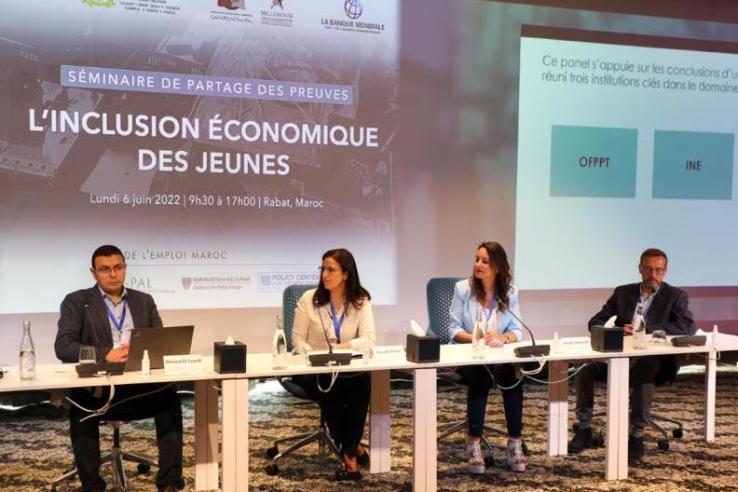
Youth economic inclusion in Morocco: An evidence sharing seminar
The Morocco Employment Lab hosted an evidence sharing seminar on youth economic inclusion last month. At the seminar, Dr. Younes Sekkouri, Minister of Economic Inclusion, Small Business, and Skills in Morocco, reaffirmed that a key priority of the government is to foster youth economic inclusion...
Event
Information Session on Two J-PAL North America Evaluation Incubator Opportunities
Join J-PAL North America's Homelessness and Housing Stability team and the State and Local Innovation Initiative to learn about two Evaluation Incubator opportunities.
Person
Shrddha Rajesh
Person
Gopika Vipin
Person
Himmat Singh Chouhan
Update
J-PAL Updates
March 2021 J-PAL MENA Newsletter
Newsletter updates on evidence-informed policy making in the MENA region.

Update
J-PAL Updates
July 2022 North America Newsletter
J-PAL North America's July newsletter features our Economics Transformation Project blog series and new research results on a STEM pipeline program and the Nurse-Family Partnership program.
Evaluation
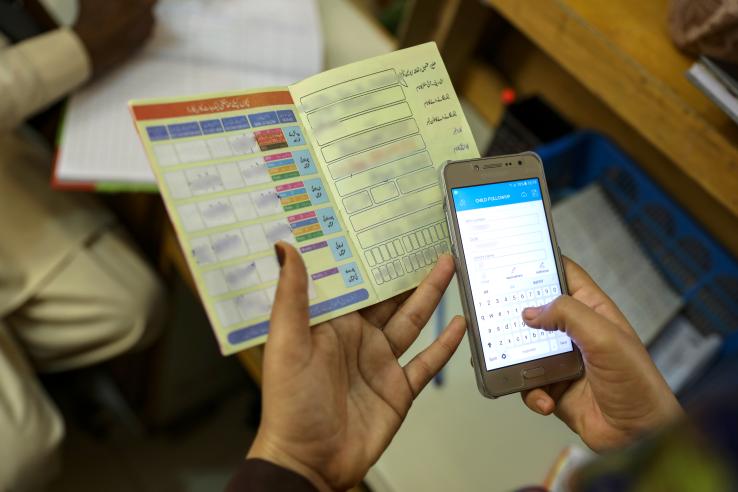
Providing Conditional Cash Transfers to Encourage Childhood Immunization in Pakistan
In Pakistan, researchers conducted an evaluation to test the impact of different types of mobile conditional cash transfers (mCCTs) on childhood immunization coverage and timeliness. Overall, small mCCTs led to increases in rates of immunization coverage at a low administrative cost. Additionally, researchers found that design details like payment certainty, schedule, and delivery method are important considerations.

Evaluation
School's Out: How Summer Youth Employment Programs Impact Academic Outcomes (in Boston)
Researchers evaluated the impact of Boston’s Summer Youth Employment Program, which uses a lottery to provide youth with part-time work and skills training during the summer, on students’ educational outcomes. The program significantly increased high school graduation rates among participating students, partly by reducing dropout and absenteeism rates.

Evaluation
Matching Small Firms with Apprentice Workers in Ghana
Researchers evaluated the effects of a national apprenticeship training program on the firms that received apprentices. Firms that received apprentices increased their profits as well as employment.

Blog
Beyond the evidence: Reflections from a past high school tutor
Research Associate Lisa Turley Smith recounts her experience as a high school tutor and shares how she saw first-hand the positive impacts of tutoring.