J-PAL J-PAL
The Abdul Latif Jameel Poverty Action Lab
  • About
    • Overview
    • People
      • Affiliated Professors
      • Invited Researchers
      • J-PAL Scholars
      • Board
      • Leadership
      • Staff
    • Strengthening Our Work
    • Code of Conduct
    • Initiatives
    • Events
    • Blog
    • News
    • Press Room
  • Offices
    • Overview
    • Global
    • Africa
    • Europe
    • Latin America and the Caribbean
      • Growing Futures
    • Middle East and North Africa
    • North America
    • South Asia
    • Southeast Asia
  • Sectors
    • Overview
    • Agriculture
    • Crime, Violence, and Conflict
    • Education
    • Environment, Energy, and Climate Change
    • Finance
    • Firms
    • Gender
    • Health
    • Labor Markets
    • Political Economy and Governance
    • Social Protection
  • Evaluations
  • Research Resources
    • About Us
    • Our Work
    • Join ASPIRE
    • Newsroom
  • Policy Insights
  • Evidence to Policy
    • Pathways and Case Studies
    • The Evidence Effect
  • Blog
  • Careers
  • Courses
  • For Affiliates
  • Support J-PAL

Utility menu

  • Blog
  • Careers
  • Courses
  • For Affiliates
  • Support J-PAL

Quick links

  • Evaluations
  • Research Resources
  • Policy Insights
  • Evidence to Policy
    • Pathways and Case Studies
    • The Evidence Effect
  • About

    The Abdul Latif Jameel Poverty Action Lab (J-PAL) is a global research center working to reduce poverty by ensuring that policy is informed by scientific evidence. Anchored by a network of more than 1,100 researchers at universities around the world, J-PAL conducts randomized impact evaluations to answer critical questions in the fight against poverty.

    • Overview

      The Abdul Latif Jameel Poverty Action Lab (J-PAL) is a global research center working to reduce poverty by ensuring that policy is informed by scientific evidence. Anchored by a network of more than 1,100 researchers at universities around the world, J-PAL conducts randomized impact evaluations to answer critical questions in the fight against poverty.

      • Affiliated Professors

        Our affiliated professors are based at over 130 universities and conduct randomized evaluations around the world to design, evaluate, and improve programs and policies aimed at reducing poverty. They set their own research agendas, raise funds to support their evaluations, and work with J-PAL staff on research, policy outreach, and training.

      • Invited Researchers
      • J-PAL Scholars
      • Board
        Our Board of Directors, which is composed of J-PAL affiliated professors and senior management, provides overall strategic guidance to J-PAL, our sector programs, and regional offices.
      • Leadership
      • Staff
    • Strengthening Our Work

      Our research, policy, and training work is fundamentally better when it is informed by a broad range of perspectives.

    • Code of Conduct
    • Initiatives
      J-PAL initiatives concentrate funding and other resources around priority topics for which rigorous policy-relevant research is urgently needed.
    • Events
      We host events around the world and online to share results and policy lessons from randomized evaluations, to build new partnerships between researchers and practitioners, and to train organizations on how to design and conduct randomized evaluations, and use evidence from impact evaluations.
    • Blog
      News, ideas, and analysis from J-PAL staff and affiliated professors.
    • News
      Browse news articles about J-PAL and our affiliated professors, read our press releases and monthly global and research newsletters, and connect with us for media inquiries.
    • Press Room
      Based at leading universities around the world, our experts are economists who use randomized evaluations to answer critical questions in the fight against poverty. Connect with us for all media inquiries and we'll help you find the right person to shed insight on your story.
  • Offices
    J-PAL is based at MIT in Cambridge, MA and has seven regional offices at leading universities in Africa, Europe, Latin America and the Caribbean, Middle East and North Africa, North America, South Asia, and Southeast Asia.
    • Overview
      J-PAL is based at MIT in Cambridge, MA and has seven regional offices at leading universities in Africa, Europe, Latin America and the Caribbean, Middle East and North Africa, North America, South Asia, and Southeast Asia.
    • Global
      Our global office is based at the Department of Economics at the Massachusetts Institute of Technology. It serves as the head office for our network of seven independent regional offices.
    • Africa
    • Europe
    • Latin America and the Caribbean
    • Middle East and North Africa
    • North America
    • South Asia
    • Southeast Asia
  • Sectors
    Led by affiliated professors, J-PAL sectors guide our research and policy work by conducting literature reviews; by managing research initiatives that promote the rigorous evaluation of innovative interventions by affiliates; and by summarizing findings and lessons from randomized evaluations and producing cost-effectiveness analyses to help inform relevant policy debates.
    • Overview
      Led by affiliated professors, J-PAL sectors guide our research and policy work by conducting literature reviews; by managing research initiatives that promote the rigorous evaluation of innovative interventions by affiliates; and by summarizing findings and lessons from randomized evaluations and producing cost-effectiveness analyses to help inform relevant policy debates.
    • Agriculture
      How can we encourage small farmers to adopt proven agricultural practices and improve their yields and profitability?
    • Crime, Violence, and Conflict
      What are the causes and consequences of crime, violence, and conflict and how can policy responses improve outcomes for those affected?
    • Education
      How can students receive high-quality schooling that will help them, their families, and their communities truly realize the promise of education?
    • Environment, Energy, and Climate Change
      How can we increase access to energy, reduce pollution, and mitigate and build resilience to climate change?
    • Finance
      How can financial products and services be more affordable, appropriate, and accessible to underserved households and businesses?
    • Firms
      How do policies affecting private sector firms impact productivity gaps between higher-income and lower-income countries? How do firms’ own policies impact economic growth and worker welfare?
    • Gender
      How can we reduce gender inequality and ensure that social programs are sensitive to existing gender dynamics?
    • Health
      How can we increase access to and delivery of quality health care services and effectively promote healthy behaviors?
    • Labor Markets
      How can we help people find and keep work, particularly young people entering the workforce?
    • Political Economy and Governance
      What are the causes and consequences of poor governance and how can policy improve public service delivery?
    • Social Protection
      How can we identify effective policies and programs in low- and middle-income countries that provide financial assistance to low-income families, insuring against shocks and breaking poverty traps?
Displaying 241 - 255 of 1305
A mentor is coaching a program participant
Evaluation

Intensive Case Management to Overcome Barriers to Self-Sufficiency in the United States

Researchers worked with the City of Rochester and local social service providers to evaluate the Bridges to Success program, in which participants were paired with mentors who helped them move towards economic self-sufficiency.
A stack of case files in a room full of files.
Evaluation

Impact of Customized Information and Mediation on Labor Court Settlement Rates in Mexico

Researchers conducted two randomized evaluations to test the impacts of providing customized information on predicted case outcomes or conciliation services on labor court settlement rates in Mexico. Both interventions nearly doubled the immediate settlement rate, but only when the plaintiff was there to personally receive the information, and evidence suggests that the interventions increased payments to workers.
garment workers in a factory
Evaluation

Foreign multinational enforcement of local workplace safety laws in Bangladesh

A researcher partnered with the Alliance for Bangladesh Worker Safety, a consortium formed by US multinational companies, to evaluate the impact of privately enforcing local labor laws on garment factories in Bangladesh. Enforcing the legally-required creation and operation of workplace safety committees increased factories’ compliance with the labor law and some measures of factory safety, without reducing factory efficiency. These effects persisted in the long run and were stronger among factories with good managerial practices.
Evaluation

Teacher Rotation and Student Outcomes: Experimental Evidence from Uganda

In partnership with a rural district in Eastern Uganda, researchers are conducting a randomized evaluation to study whether rewarding top-performing teachers with a future posting of their choice incentivizes teachers to improve their attendance and the quality of their teaching.
side profile view of Chinese police officer
Evaluation

Testing Alternative Job Evaluation Schemes to Improve Civil Servants’ Work Performance in China

Employers often rely on subjective performance evaluations by supervisors to gauge the performance of workers–particularly in the public sector, where civil servants’ work performance is hard to measure. However, relying on the opinions of local supervisors could cause subordinates to prioritize pleasing their supervisors rather than focusing on productive tasks and work responsibilities. Researchers conducted a randomized evaluation testing the impact of two alternative subjective performance evaluation schemes on subordinates’ work performance.
A surveyor interviews a study participant
Evaluation

Using Mobile Phones to Connect Politicians and Voters in Pakistan

In Pakistan, researchers are evaluating the impact of using mobile phones to directly connect politicians with voters and give voters the opportunity to provide real-time feedback to their elected representatives.
Evaluation

Mobilizing Local Leaders to Rebuild the Social Compact in Pakistan

Researchers will investigate whether mobilizing local political leaders to strengthen the link between local collections and urban services can increase citizens’ willingness to pay for services, improve service delivery, and ultimately revitalize the social compact.
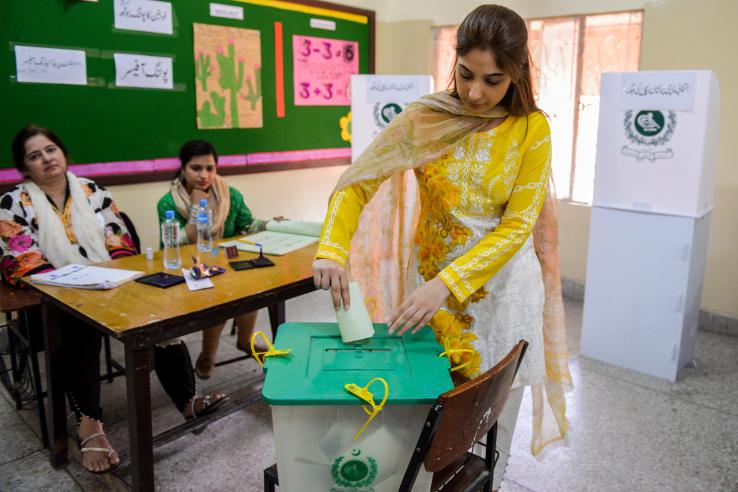
A voter casts her vote at a polling station during the by-election in Lahore, Pakistan, October 14, 2018
Evaluation

Changing Politicians’ Responsiveness through the Provision of Voter Information in Pakistan

Uninformed elected leaders or voters can negatively affect political accountability, such as decision-making on what and how public services are delivered to citizens. The researcher partnered with the Pakistan Muslim League-Nawaz party in Lahore to evaluate the demand and responsiveness of local politicians to information about their citizens’ preferences.

People riding
Evaluation

The Impact of Reducing Tax Rates and Strengthening Enforcement on Revenue Collection in the DRC

In partnership with the Provincial Government of Kasaï-Central in the Democratic Republic of Congo, researchers conducted a randomized evaluation during the 2018 property tax collection campaign to test the impact of lower property tax rates and stronger tax enforcement on revenue collection. Reducing property tax rates from current levels increased government revenue due to higher tax compliance.
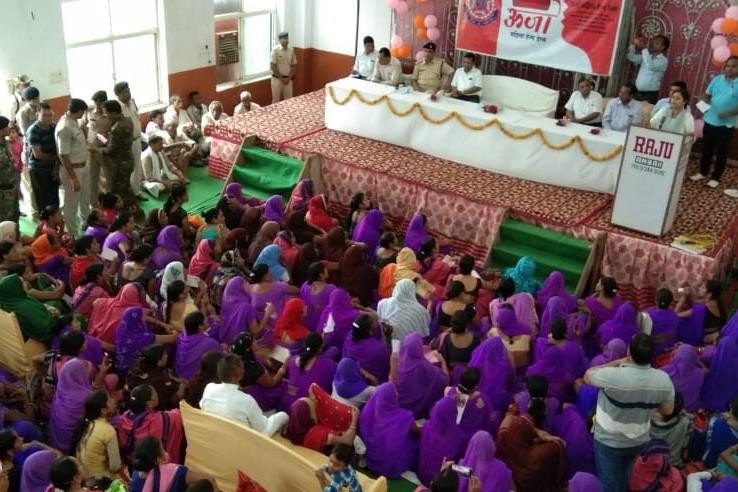
Women attend a community outreach session on women's help desks.
Evaluation

Increasing Access to Security and Justice through Women's Help Desks in Police Stations in India

Researchers are employing an RCT to evaluate whether the establishment of police station-level Women’s Help Desks (WHDs), as well as the deployment of additional female personnel to these WHDs, improves the responsiveness of frontline officers to women, as well as levels of crime and crime reporting.
Evaluation

Cash-for-Work Program to Improve Social Cohesion between Syrian Refugees and Host Communities in Jordan

Researchers use a large-scale RCT to evaluate a program aimed to improve cohesion between Syrian refugees and their host communities in Jordan.

A mother bottle feeds her baby in Nigeria.
Evaluation

The Impact of Financial Incentives for Traditional Birth Attendants on Postnatal Care Use in Nigeria

Researchers evaluated whether giving traditional birth attendants (TBAs) cash incentives for maternal postnatal referrals can increase uptake of skilled maternal postnatal care. Cash rewards increased referrals made by TBAs by 182 percent and more than tripled the proportion of clients that attended postnatal care. However, clients of incentivized TBAs were still much less likely to receive postnatal care compared to mothers delivering in a health facility, suggesting that other potential barriers may prevent women from seeking and accessing care.

Bustling market in Lagos, Nigeria.
Evaluation

Priming Adverse Events and Reports of Depression in Nigeria

To better understand how to measure and report depression, researchers randomized the order of questions in a national survey to examine the effect of triggering memories of difficult events, such as conflicts, shocks, and death, on reported levels of depression across households in Nigeria. They found that having his/her painful memories triggered, respondents who experienced an adverse event were more likely to report symptoms of depression.

Two people look at a job pamphlet.
Evaluation

Raising Awareness about Job Training in Germany

Researchers evaluated the effects of an information campaign on workers’ awareness of and participation in a program that subsidizes skills-building training in Germany. Results showed that the information campaign doubled workers’ awareness of the program on average, but had no effects on program take-up or on labor market outcomes one to two years later. However, the campaign was successful in encouraging participation in other non-subsidized training services among workers aged below 45 years old.
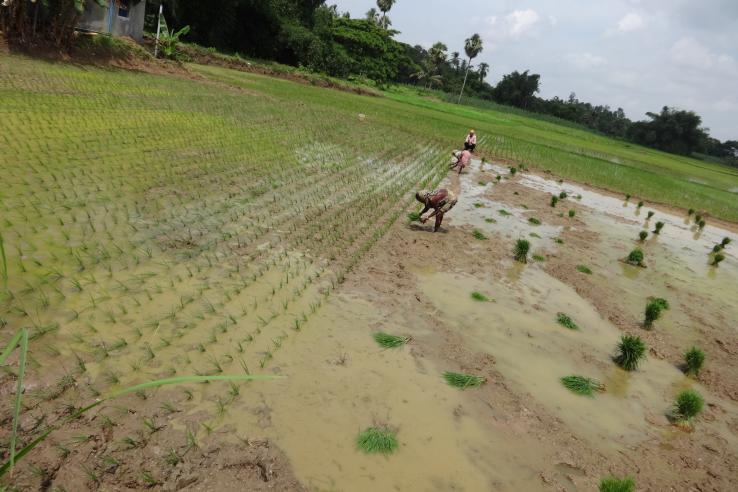
Flood-tolerant rice growing in Odisha, India
Evaluation

Diffusing New Seeds through Social Networks in Indian Village Economies

The researcher conducted a randomization in rural Odisha in India, by comparing adoption of a new seed variety through farmer-to-farmer networks in one half as benchmarked by door-to-door sales of the same seed. Trading between farmers leads to substantial under-adoption of agricultural technology relative to the door-to-door sales. Diffusion is partially but not fully explained by social networks.

Pagination

  • First page « First
  • Previous page ‹
  • …
  • Page 15
  • Page 16
  • Current page 17
  • Page 18
  • Page 19
  • …
  • Next page ›
  • Last page Last »
J-PAL

J-PAL

400 Main Street

E19-201

Cambridge, MA 02142

USA

Contact

+1 617 324 6566

[email protected]


Press Room

Stay Informed

Receive our newsletters

Subscribe


Privacy Policy

Accessibility

MIT